
How Lionfish As Invasive Species Affect Their Surroundings and Us
The impact on other marine animals and humans
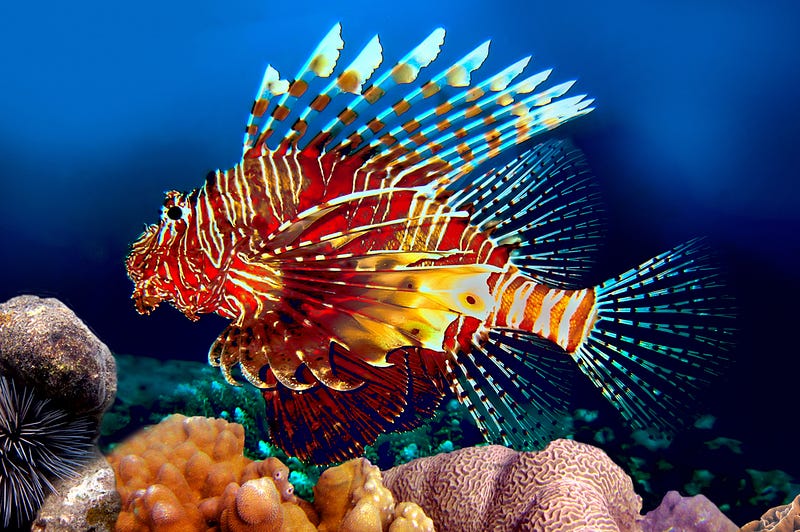
When we think about biodiversity, we normally think about preserving species. This is because many species are currently going extinct. But to preserve biodiversity, it is sometimes also important to get rid of certain species in some areas. I already explained why sea urchins are killed in kelp forests in “How Kelp Restoration Projects Impact Biodiversity”.
Also, species that are invasive in certain areas can be important to remove. This is because invasive means that they don’t naturally occur in this area and are harming the environment and native species. An example is the lionfish, which is invading the Caribbean Sea.
The lionfish, a native of the Indian and Pacific Oceans and the Persian Gulf, was first seen in the western Atlantic Ocean in 1985, off the coast of Florida. In the next few years, it was seen occasionally off the east coast of North America, then began being seen off the Atlantic islands like Bermuda, the Bahamas, and the Turks in the early 2000s. By 2008, they had spread throughout the Caribbean Islands, including Jamaica, Haiti, and the Dominican Republic, and to Central America. This is also shown in this animation:
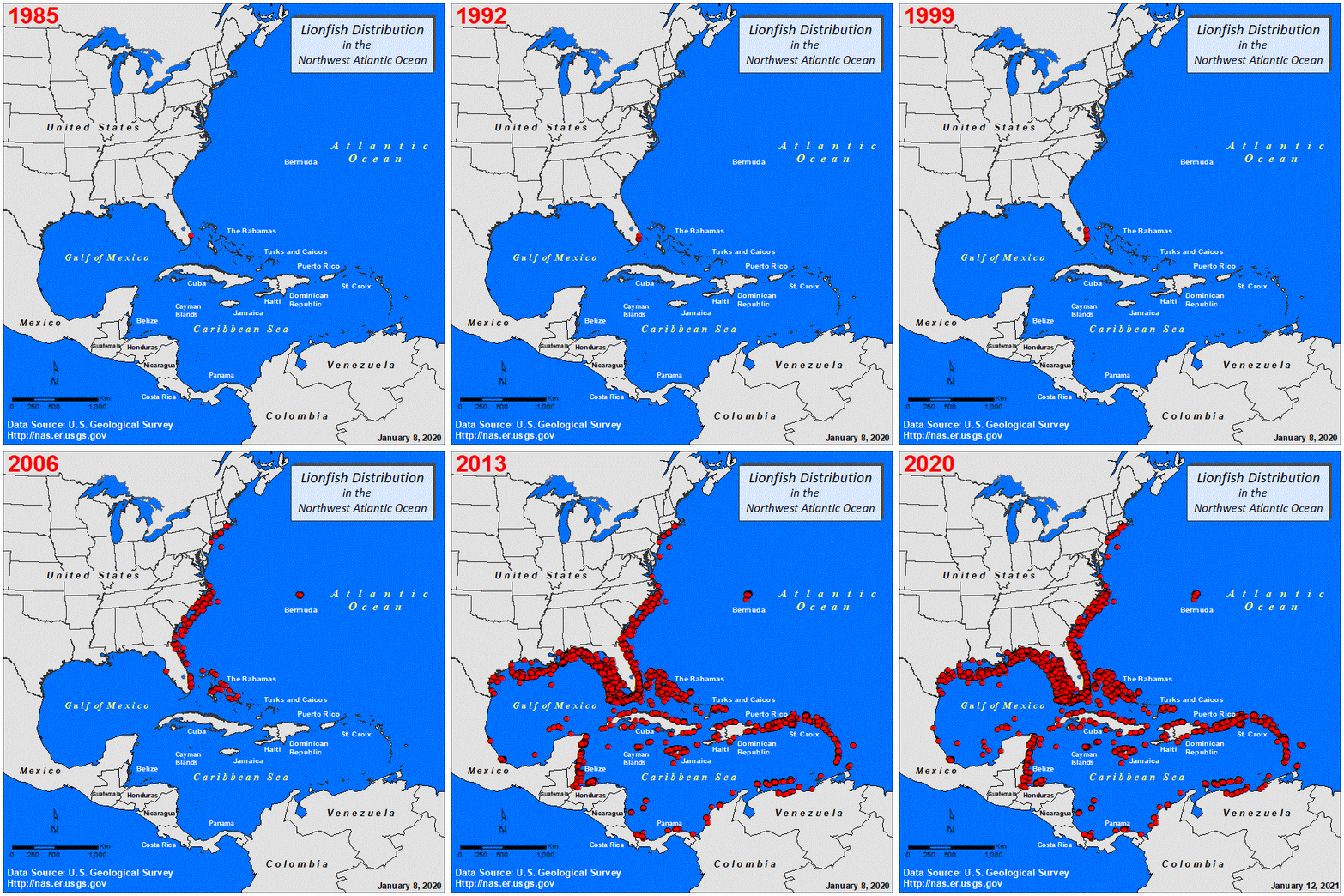
Lionfish were able to extend their territory because of several factors. These factors include:
- Lionfish can travel long distances and even cross barriers that stop other fish species, such as large sandy areas.
- Most species don’t recognize lionfish as a predator but it can eat a wide range of other marine animals. The large diameter of its mouth and the ability to expand its stomach up to 32 times the normal size even allow lionfish to consume larger fish. And without food, it can survive up to 10 weeks.
- Lionfish grow rapidly, are with 45 cm (17.7 inches) rather large, and live with up to 10 years rather long.
- Lionfish mature early and can produce a lot of offspring because they breed all year around and can produce between 1,800 and 42,000 eggs per laying.
Having spread rapidly throughout the Caribbean, the lionfish became a threat to the Caribbean marine environment. This is how they affect their surroundings and us:
Impact through competition
The first way that lionfish affect their surroundings is by competing for available resources. Available resources are for example food and shelter. This is because lionfish have started to live in the same habitat and consume the same prey as native species. As a consequence, fewer resources are available for the animal species that already lived there before the lionfish occupation.
Competition for available food is a concern because it can affect the behavior and growth of native species and can even impact their survival and population size. Also, the prey population is affected as lionfish grow faster, consume more prey, and consume prey faster than native species.
Competition for shelter and space is a concern because it requires native species to be active more and have less time to rest. As a consequence, the native species’ growth can be affected and they are more likely to be hunted. In some cases, lionfish can share shelter with other fish.
These changes in available food and shelter also change how the ecosystem functions. For example, lionfish’s presence on coral reefs can limit the amount of time parrotfish graze on algae that form on coral. When algae build up on coral reefs, they affect the reef’s health. Also, these changes affect the food webs and as a result the entire ecosystem.
Impact by predation
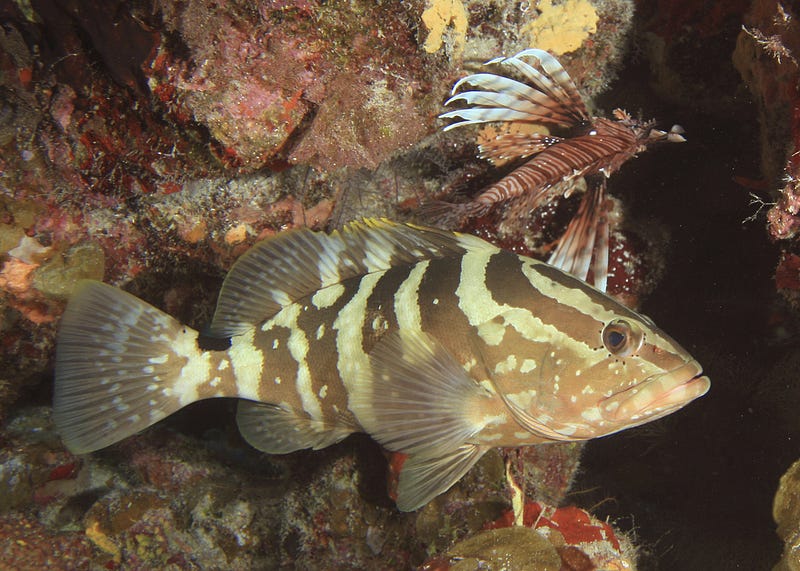
The second way that lionfish affect their surroundings is by predation. This is possible because lionfish eat other marine animals. They are not picky and instead eat whatever other marine inhabitants are available, including large herbivores and crustaceans such as shrimp and crabs. Smaller lionfish prefer crustaceans, while larger lionfish prefer fish, especially young fish as they are easy to catch. They hunt marine animals by cornering their prey against a rock or other obstruction. They can also expel fast water jets to disorient the prey and create a current to move the prey toward their large mouth. When the prey gets close, they usually grab it by the head and swallow it in one piece. This aggressive hunting style can have large effects on populations of native marine inhabitants. In this video, you can see a lionfish hunting:
Also, lionfish eat so much that they can hunt native species to extinction locally. This is possible because they consume prey faster than their populations can recover. This is critical because removing some marine animals from the food chains can change the whole ecosystem. For example, parrotfish and surgeonfish not only have a limited amount of time to graze on coral reefs but when they are almost or completely gone, this allows algae to grow and affect the coral reef’s health even more.
Impact on human activities
The third way that lionfish affect their surroundings is through their impact on human activities. For example, lionfish affect fishing activities in the Caribbean because they eat snapper and grouper, reducing the adult population and the types of fish available for commercial fishing. As this in turn affects the livelihood around the local fishing industry, lionfish populations are now being managed.
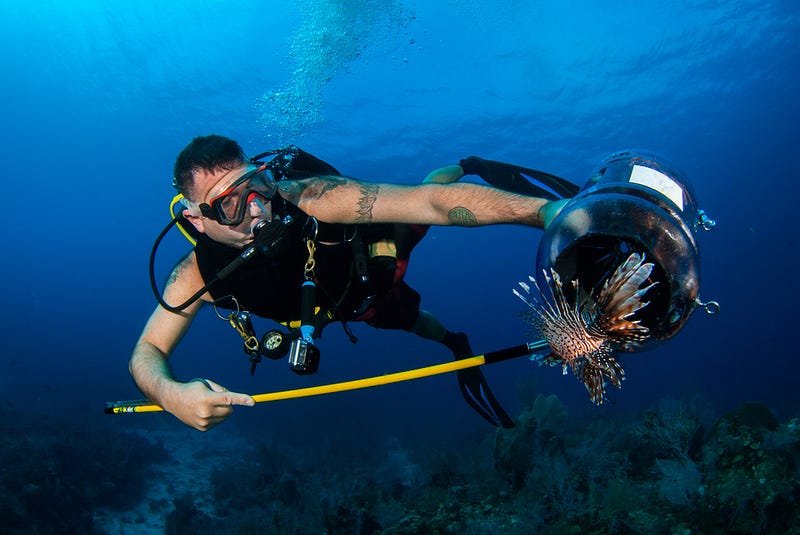
To manage their populations, they are captured as finding a natural biological control involving a natural enemy has been unsuccessful so far. They are captured during scientific expeditions, guided dives, and periodic fishing programs. These activities have been successful in reducing the average size of lionfish and their numbers. For example, one specialized form of fishing, international fishing tournaments, have attracted sports fishermen and divers from all over the world, which not only decreases the lionfish population but also increases international awareness of the invasion. Cuba, for example, has sponsored 5 tournaments, in which 103 fishermen have caught 660 lionfish.
Conclusion
So, invasive species such as lionfish affect their surroundings by competing for food and shelter with native species and by eating native species. As this in turn affects human fishery, they are now being captured to control their numbers.
How we can take action
Here are practical ideas of what you and I can do to reduce the lionfish population:
- Trying lionfish for dinner as it is not only delicious white meat but also helps reduce the population
- Attending a lionfish tournament
- Supporting fishing cooperatives that assist in the management of invasive species
- Telling friends and neighbors about the harms of invasive species and encourage them to never release a non-native species into the wild
Which one of these can you implement in your daily life? And do you have further ideas of what you and I could do? Thank you in advance for putting them into practice and sharing them in a comment to this question to inspire all of us.
Did you enjoy this article? Then I’m sure you’ll love my book “A Guide to A Healthier Planet” as well. Check it out at:
About the author
Dr. Erlijn van Genuchten is a an internationally recognized environmental sustainability expert. She is a science communicator, helping scientists in the fields of nature and sustainability increase the outreach of their results and allowing us all to put scientific insights into practice and contribute to a sustainable future. Erlijn has inspired thousands of people around the world — for example — by supporting the United Nations with her expertise, her book “A Guide to A Healthier Planet” published by Springer Nature, her YouTube channel Xplore Nature, and her posts on social media.
- More about her book “A Guide to a Healthier Planet”
- Invite Dr. Erlijn van Genuchten as speaker
- Xplore Nature YouTube channel
- Science communication support
- Toward (a green) peace of mind community — resolving eco-anxiety
- Website
Credit
This article is based on:


