
How Kelp Restoration Projects Impact Biodiversity
Worldwide efforts to restore and create kelp forests
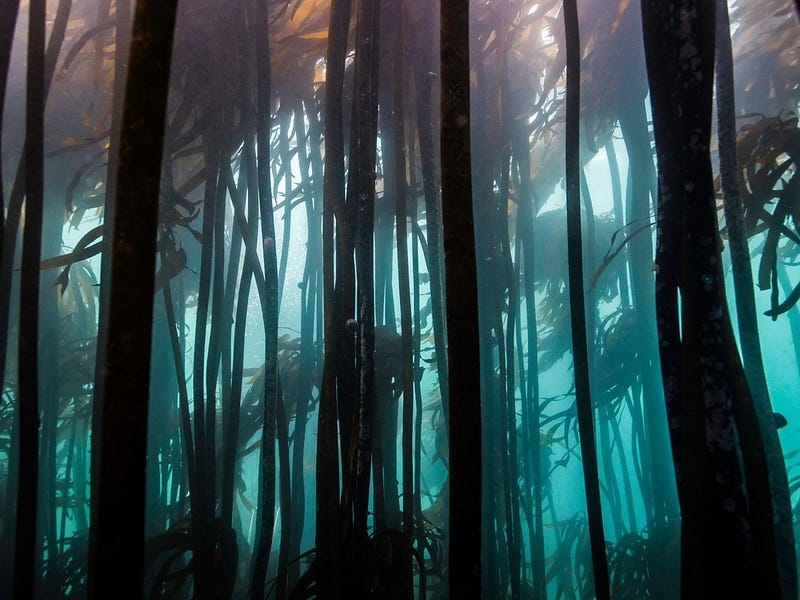
When talking about forests, we usually think of and mean forest consisting of trees on the ground. This type of forest covers 30% of our planet’s land, which means about 9% of the Earth’s surface. These forests are extremely important for our planet, sometimes even called the lungs of our planet because they offer many ecosystem functions, such as converting carbon dioxide (CO2) from the atmosphere into oxygen (O2), for us and other organisms to breathe. Ecosystem functions are the physical, chemical, and biological processes that keep the ecosystem balanced and support life on Earth.
But hidden from view is another type of forest that is very important for our planet as well. These forests are marine kelp forests. Kelp is a fast-growing type of brown seaweed. Marine kelp forests cover 1/3 of our planet’s coastlines and also provide many ecosystem functions. These include:
- converting CO2 into oxygen and storing the captured carbon for a long time
- lowering the water’s acidity level (making it more basic/alkaline)
- being a habitat for over 1,500 animal and plant species
In this video, you can visit a kelp forest and meet many different species:
Also, they provide many ecosystem services to the about 750 million people who live within a 50 km (31 miles) distance of these forests. Ecosystem services are the benefits that ecosystems provide to humans. For example, they allow fishery, have cultural value by bringing forth myths, are used in art, and are a place for people to interact with the ocean and nature.
Unfortunately, the kelp forests around the world have declined by 40–60% in the last 50 years and some have disappeared completely. This is because they are threatened by many biological, physical, and chemical threats.
As these declining kelp forests directly threaten biodiversity in these areas and as a consequence, ecosystem services vanish, it is important to bring kelp forests back. Bringing kelp forests back can involve forest restoration or afforestation. Restoration involves allowing existing forests to recover, for example by reducing excessive predators; afforestation involves growing kelp forests in areas that previously didn’t contain such forests by adding spores or planting mature plants on artificial reefs. Also, it is critical to protect existing, healthy kelp forests, for example by limiting water pollution. Here are examples of how such efforts impact kelp forests and biodiversity around the world:
Japan
Kelp restoration efforts in Japan started in the 1700s. Since then, the country has initiated hundreds of projects, especially in the last decade. One of the reasons is that it is commercially important: Saccharina species are a popular food, which fishers started to harvest in the 1300s.
Japan’s efforts include both restoration and afforestation of kelp forests. Initially, this involved for example throwing stones in coral reefs, putting stone blocks on a sandy seabed, and removing competing algae such as turf algae.
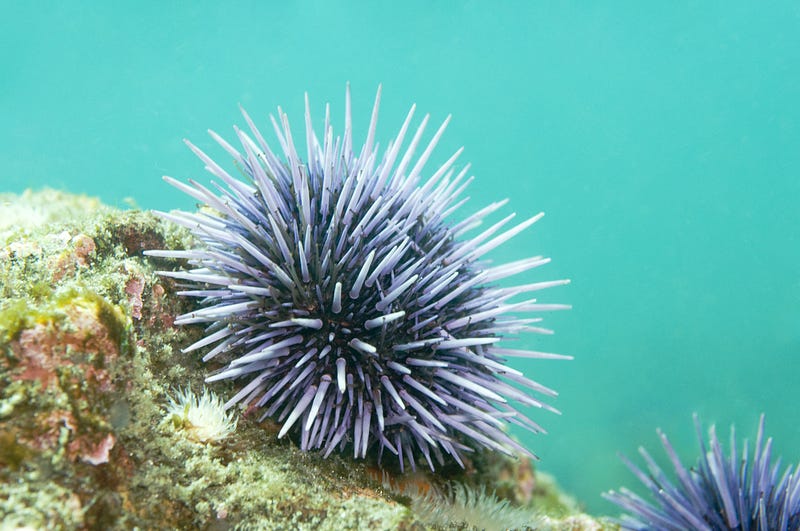
Also, they started removing sea urchins and fish that were eating kelp. As these efforts were not always successful, they continued to improve their strategies, for example by using concrete blocks instead of stones for artificial reefs and using chains, rotators, and underwater excavators to remove competitor algae. Especially removing grazers seemed key to kelp restoration success, but only as long as the kelp was protected. By selling these grazers as food commercially, it is possible to benefit both communities and biodiversity.
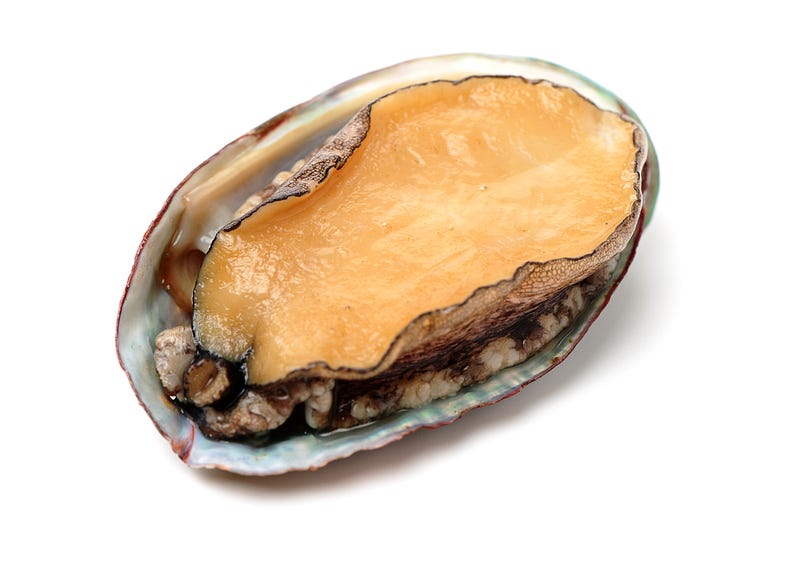
Based on these lessons learned, the largest successful kelp restoration project was started in 1999, which involves placing small concrete blocks in thriving kelp forests so that spores can settle on these blocks and be brought to other areas. This project has been so successful that also other marine species with reduced populations due to fishery were able to recover. For example, abalone fishery became prohibited but may be allowed again.
Yet, current activities are restricted by factors such as limited funding, industrialized and urbanized coastlines, increased water temperatures, and more frequent and stronger typhoons and flooding (further reading: “How We Can Tell That Climate Change Impacts Cyclone Intensity”). Also, some projects are used as offsetting projects, which means that they aim at compensating harm done to our planet. These can be carbon offsetting projects, which compensate for CO2 emissions, or biodiversity offsetting projects, which compensate for loss of biodiversity. But importantly, these offsetting practices may not truly replace lost biodiversity and can even unintentionally support damaging practices. And policies concerning these offsetting projects can only ensure limited loss of kelp forests and biodiversity as opposed to growing new kelp forests. Instead, the government can enforce increasing kelp populations by setting directives and installing laws that provide funds for restoration.
California, USA
Kelp restoration efforts in California, USA, started in 1958. These efforts were initiated because kelp populations had declined due to low water quality and overharvesting. Kelp was harvested as it is an important source of various materials since the early 1900s. These materials include alginates, potash, and acetone. Alginates are for example used for (animal) food, fertilizers, and pharmaceuticals. Potash and acetone were for example used to produce explosives during World War I. Also, some areas were destroyed by warm water from a nuclear power plant.
The first restoration effort involved transplanting Macrocystis, a type of brown kelp. Soon afterward, also grazing fish and urchins were manually or chemically killed. Many of these restoration projects were successful, while others failed due to storms, heat waves, and urchin invasions. Also, afforestation projects were started. Initially, available materials such as old trams were used, but later, more solid rocky materials were used.
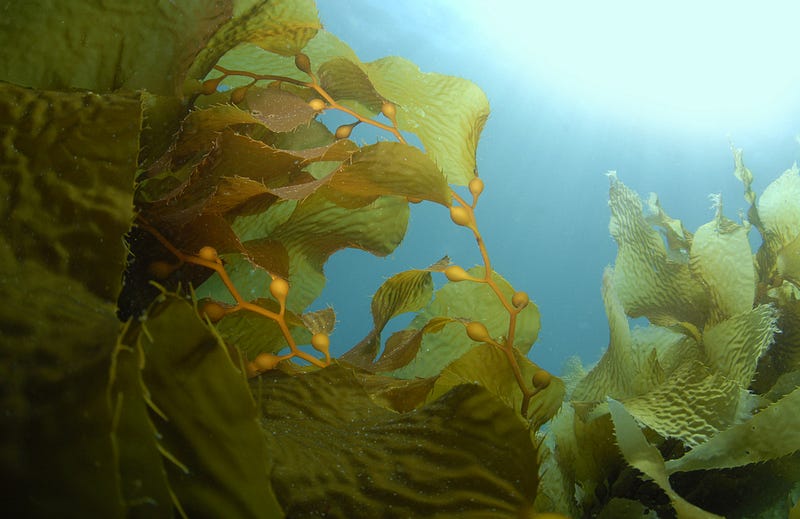
Recently, further projects have been initiated to restore kelp forest habitats that were earlier destroyed by industrial projects. For example, bull kelp is being restored along 350 km of coastline, due to the loss of over 95% of kelp in less than a decade. Restoring these forests will not only contribute to the economic and social well-being of California coastal communities but will also benefit the marine ecosystem.
To ensure these positive changes last, these areas are monitored, and — if necessary — further actions are taken so that ecosystem functions are secured. Further actions are for example developing regulations, reducing urchin grazing through recreational and commercial diving, using images from airplanes to understand how the forest develops over time, ensuring genetic diversity, and education. These further actions will help prevent future kelp forest degradation and biodiversity loss. Instead, they support climate-resilient solutions that allow these forests to thrive under changing environmental circumstances, such as more grazing fish as sea temperatures rise.
Australia
Kelp restoration efforts in Australia are also recent. These efforts have focused on removing urchins from spiny kelp forests, restoring giant kelp, and restoring the locally extinct fucoid crayweed (Phyllospora comosa):
- Removing urchins has been done with the help of fishery organizations that normally focus on fishing abalone and urchins. As urchins have been spreading so much in this area, expanding their range south from continental Australia, they also included urchins that are under normal circumstances unprofitable to harvest.
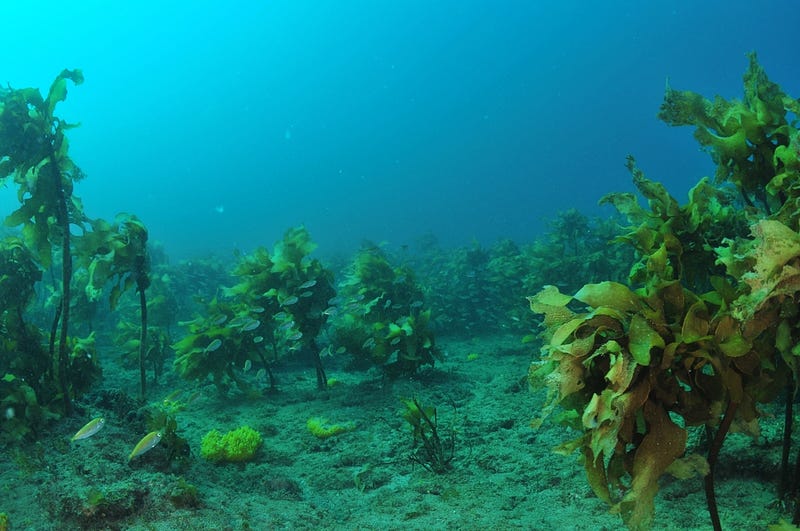
- Restoring giant kelp already took place between 1997 and 2001, but only on a small scale, without lasting results. This limited success was caused by extreme events such as storms, warmer seawater, and marine heat waves. Today, scientists are developing giant kelp from the remaining plants that can deal with warmer temperatures. The resulting kelp will be planted into the ocean.
- Restoring the locally extinct fucoid has been initiated in 2011. They apply genetic mixing of populations and identify genetic layouts that are resistant to environmental changes due to climate change.
How we can take action
As kelp forests are so important, it is great to know that countries around the world are putting initiatives for their restoration into practice. And the good news: we can contribute too! Here are practical ideas of what you and I can do to support kelp:
- Participating in a beach cleanup event to prevent pollution of kelp forests
- Using sustainable fishing practices to prevent damaging kelp forest ecosystems
- Supporting conservation organizations
- Donating to a kelp restoration initiative
- Buying sustainably produced seafood
Which one of these can you implement in your daily life? And do you have further ideas of what you and I could do? Thank you in advance for putting them into practice and sharing them in a comment to this question to inspire all of us.
About the author
Dr. Erlijn van Genuchten is a an internationally recognized environmental sustainability expert. She is a science communicator, helpings scientists in the fields of nature and sustainability increase the outreach of their results and allowing us all to put scientific insights into practice and contribute to a sustainable future. Erlijn has inspired thousands of people around the world through — for example — by supporting the United Nations with her expertise, her book A Guide to A Healthier Planet published by Springer Nature, and her posts on social media.
- More about her book “A Guide to a Healthier Planet”
- Invite Dr. Erlijn van Genuchten as speaker
- Apply for science communication support
- Erlijn’s website
Credit:
This article is based on three scientific publications:
- Eger, A. M., Aguirre, J. D., Altamirano, M., Arafeh-Dalmau, N., Arroyo, N. L., Bauer-Civiello, A. M., … & Vergès, A. (2023). The Kelp Forest Challenge: A collaborative global movement to protect and restore 4 million hectares of kelp forests. Journal of Applied Phycology, 1–14.
- Eger, A. M., Marzinelli, E. M., Christie, H., Fagerli, C. W., Fujita, D., Gonzalez, A. P., … & Vergés, A. (2022). Global kelp forest restoration: past lessons, present status, and future directions. Biological Reviews, 97(4), 1449–1475.
- Elliott Smith, E. A., & Fox, M. D. (2022). Characterizing energy flow in kelp forest food webs: a geochemical review and call for additional research. Ecography, 2022(6), e05566.


