
How Dinosaurs May Have Influenced Human Aging
Feeling you age? Maybe you should blame the dinosaurs!

Many people wish they could age slower and live longer. While humans rank among the longest-living mammals, numerous reptiles and other creatures exhibit significantly slower aging processes with minimal signs of wear.
So why them and not us? What prevents us from reaching 200 years or more? And why do we have to age so quickly?
According to Joao Pedro de Magalhaes, an esteemed expert on the subject [1], the aging processes of mammals, and therefore humans, may have been deeply influenced by…dinosaurs!
How? Let’s find out!
The ‘longevity bottleneck’ hypothesis
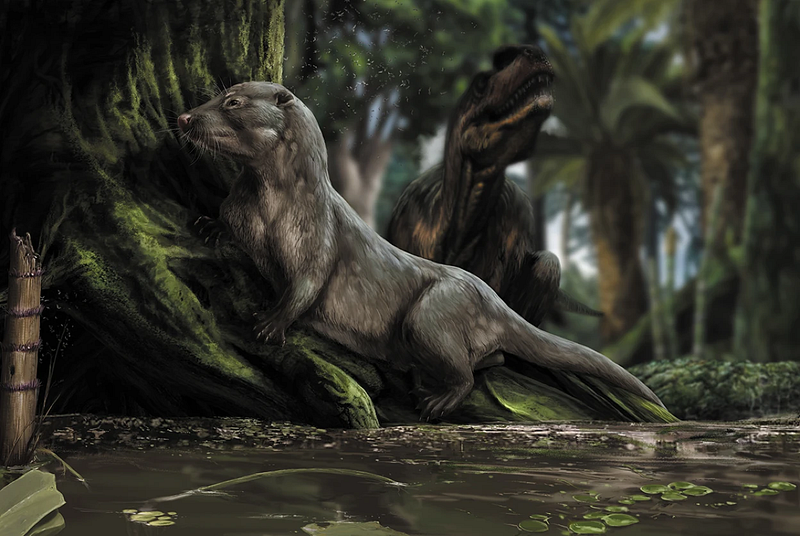
In the animal kingdom, instances of remarkable repair and regeneration abound, but these traits were perhaps unnecessary for early mammals living during the Mesozoic Era [2] which strived to evade becoming prey for predatory dinosaurs.
Our mammalian ancestors contends Professor de Magalhaes, likely occupied lower rungs of the food chain during the Age of the Dinosaurs, necessitating adaptations for survival through swift reproduction. To be able to reproduce swiftly though comes at a cost: it absorbs immense sums of energy that compete with the energy required for body maintenance. Over a long time, it can lead to the slow accumulation of unrepaired cellular damage which results in aging.
The prolonged evolutionary pressure during the Mesozoic, which spanned more than 100 million years, is posited to have enduring effects on the aging patterns observed in humans and other mammals today. More specifically, the evolutionary pressure over this enormous timescale likely drove the loss or deactivation of genes associated with longevity, such as those involved in tissue regeneration and DNA repair.
Professor de Magalhaes calls the above-mentioned assumption the ‘longevity bottleneck’ hypothesis. According to him, the genetic legacy of the Mesozoic Era persists, influencing the aging trajectories of modern mammals, which, despite growing large and living long, age comparatively faster than many reptiles.
Although currently speculative, the ‘longevity bottleneck’ hypothesis presents numerous intriguing avenues for exploration. Among these is the thought-provoking proposition that the higher incidence of cancer in mammals, including humans, compared to other species, may trace its roots to our evolutionary history.
Epilogue
Unlike some reptiles and amphibians that exhibit negligible signs of aging, mammals, including humans, undergo a discernible aging trajectory.
Professor Joao Pedro de Magalhaes’ hypothesis posits a compelling connection between the prolonged dominance of dinosaurs and the aging patterns observed in mammals. By considering the genetic legacy of the Mesozoic Era, his hypothesis offers valuable insights into the evolutionary forces shaping the aging process over millions of years.
Notes
[1] Joao Pedro de Magalhaes is a Professor of Molecular Biogerontology at the Institute of Inflammation and Aging at the University of Birmingham.
[2] The Mesozoic Era is the second-to-last era of Earth’s geological history, lasting from about 252 to 66 million years ago, comprising the Triassic, Jurassic and Cretaceous Periods. It is characterized by the dominance of archosaurian reptiles, such as the dinosaurs; a hot greenhouse climate; and the tectonic break-up of Pangaea. The Mesozoic is the middle of the three eras since complex life evolved: the Paleozoic, the Mesozoic, and the Cenozoic.
Relevant Reads
Source
João Pedro de Magalhães, The longevity bottleneck hypothesis: Could dinosaurs have shaped ageing in present‐day mammals?, BioEssays (2023). DOI: 10.1002/bies.202300098


