avatarCailian Savage

Free AI web copilot to create summaries, insights and extended knowledge, download it at here

3703

Abstract

s it considered. That included high-prestige universities like UC Berkeley and UCLA.</p><p id="ba12">MIT, Caltech and John Hopkins University all reject the consideration of family status as well. If Ivy League institutions like Harvard really want to preserve diversity, an end to the legacy system is the most obvious first step.</p><figure id="5d26"><img src="https://cdn-images-1.readmedium.com/v2/resize:fit:800/0*0DUfzaMWsrvlXpXw"><figcaption>Photo by Anthony Hall on Unsplash</figcaption></figure><p id="53a9">It’s worth noting that legacy admissions are just as unpopular with Americans as race-based affirmative action. Most Americans believe in meritocracy, and they are consistent in their support for that principle.</p><h2 id="bdf4">Accept the best students from each high school</h2><p id="d000">This approach was pioneered by UT Austen, and is quite simple: the university guarantees places for the best students from each high school graduating class, whether that means the top 5% or 10% of students.</p><p id="8f61">Because American neighbourhoods and schools are so segregated by race and income, this has the effect of driving up attendance from underrepresented groups, particularly black and Latin students. Housing segregation is a shameful part of modern American history; this approach would make something positive out of it.</p><figure id="6e6f"><img src="https://cdn-images-1.readmedium.com/v2/resize:fit:800/0*Nb-fHgrD-jwxqDLQ"><figcaption>Photo by Unseen Histories on Unsplash</figcaption></figure><p id="4382">Best of all, it has a strong appearance of fairness and would be relatively easy to administer. You’re also selecting people with a proven record of work ethic and achievement, meaning the students are more likely to be psychologically comfortable in an elite university environment.</p><p id="65a7">As a bonus side effect, it might seriously limit the capacity of private schools or those in wealthy areas to secure elite university places for mediocre students by paying for tutoring, standardized test preparation, and enrichment activities that most high schools don’t have the budget to provide.</p><figure id="94bf"><img src="https://cdn-images-1.readmedium.com/v2/resize:fit:800/0*ZDyWNsFLxvvtOFsc"><figcaption>Photo by Joshua J. Cotten on Unsplash</figcaption></figure><h2 id="78ca">Prioritize poor students, regardless of race</h2><p id="029e">Outside the US, countries with affirmative action tend to target it on the basis of overall socioeconomic deprivation rather than race alone. In Britain, for example, elite universities might consider factors <a href="https://www.undergraduate.study.cam.ac.uk/applying/contextual-data#:~:text=These%20three%20types%20of%20contextual%20data%20are%20presented,particularly%20careful%20attention%20during%20the%20initial%20application%20stage.">like</a>:</p><ul><li>whether the applicant has ever been entitled to free school meals</li><li>whether the child has been in a care home or estranged from their family</li><li>whether the applicant’s school or area have low rates of access to higher education or low standardized test results</li></ul><figure id="7274"><img src="https://cdn-images-1.readmedium.com/v2/resize:fit:800/0*xsL1ZL2Enb5zvERe"><figcaption>Photo by Obi - @pixel7propix on Unsplash</figcaption></figure><p id="cfb2">These will often, but not always correlate, with ethnic minority status. The downside (from a racial diversity perspective) is that a wealthy black student might be disadvantaged if competing with a poor white student, as opposed to race-based affirmative action schemes, which mostly benefit upper-middle-class minority students.</p><p id="245e">At Harvard, over 70% of black

Options

, Latin and Native American students have college-educated parents that earn above the average wage. As The Atlantic <a href="https://www.theatlantic.com/ideas/archive/2022/10/supreme-court-harvard-affirmative-action-legacy-admissions-equity/671869/">puts</a> it, this is a form of trickle-down economics, which apparently works just fine when the hoped-for outcome is progressive.</p><p id="d8d2">If race-conscious admission is about compensating for socioeconomic disadvantage, which is usually how arguments in favor of it are presented, then it seems more likely simply to directly target those who are disadvantaged, rather than targeting minorities and hoping, incorrectly, that they will be poor.</p><figure id="222f"><img src="https://cdn-images-1.readmedium.com/v2/resize:fit:800/0*swebW9V9dtJclJqu"><figcaption>Photo by Tom Parsons on Unsplash</figcaption></figure><h2 id="77f6">Increase transfers from community colleges</h2><p id="4071"><a href="https://www.insidehighered.com/news/2018/04/13/growing-number-community-colleges-focus-diversity-and-inclusion">Most</a> Americans from minority backgrounds that are taking part in higher education are doing so at community colleges.</p><p id="e9a4">America’s often-overlooked community colleges are one of the most incredible achievements of its higher education sector. They offer good education at much more affordable rates than private 4-year colleges like Harvard.</p><p id="f6b4">Community college students generally transfer to 4-year universities at a much lower rate than they would like. If America’s elite colleges want to expand their outreach, community colleges are one route to doing so.</p><figure id="33ca"><img src="https://cdn-images-1.readmedium.com/v2/resize:fit:800/0*8ah_X8K_3PxIyKhg.jpg"><figcaption>By Tracie Hall— DSC_0109, CC BY-SA 2.0</figcaption></figure><h2 id="cc6f">Working with schools to make minority students more competitive</h2><p id="d586">At the heart of the college admissions debate is that generations of racism in the US have left non-Asian minority candidates with weaker application profiles. Their standardized test grades and record of enriching activities is considerably lower.</p><p id="e839">Instead of ignoring that, universities should help fix it by reaching out to minority groups years before they’re ready to apply to college, to ensure that they have access to the materials, tutoring and activities that minority groups often miss out on.</p><figure id="d39a"><img src="https://cdn-images-1.readmedium.com/v2/resize:fit:800/0*ijCT_kQnrmdUxh7G"><figcaption>Photo by JESHOOTS.COM on Unsplash</figcaption></figure><h2 id="9118">Targeting areas with large minority communities</h2><p id="fdf6">It’s not as well-known as its race-based affirmative action policies, but Harvard <a href="https://www.vox.com/scotus/2023/6/29/23767756/affirmative-action-college-admissions-race-sffa-ruling">does</a> give a boost to applicants from “Sparse Country”, referring to predominantly white rural communities in places like the Great Plains and Mountain West.</p><figure id="22cc"><img src="https://cdn-images-1.readmedium.com/v2/resize:fit:800/0*wD-svy16zyfhttAM"><figcaption>Photo by David Sink on Unsplash</figcaption></figure><p id="98cf">In theory, it could give similar boosts to candidates from other areas likely to be underrepresented in higher education, like violent inner-city neighborhoods.</p><p id="0cf4">In all likelihood, the end of race-conscious admissions in America will not shut minorities out of higher education — it will just force colleges to develop more holistic evaluations of privilege, and to become more creative in their outreach to these groups.</p></article></body>

How Colleges Can Stay Diverse Without Affirmative Action

The next few years will test the commitment of American universities to diversity.

When the Supreme Court outlawed race-based affirmative action in universities earlier this week, much of the American political establishment was surprised. I wasn’t; I wrote about it back in February, and think that given the conservative nature of the current Supreme Court and the details of the case in question, such a decision was inevitable.

To give a quick summary: Harvard University thought it had too many Asian-American students and not enough Latin or African-Americans, so they designed their admissions systems to make it much harder for ethnic Asian students to get in, mostly by implying that Asian-Americans had personalities less suited to leadership than other applicants of other backgrounds.
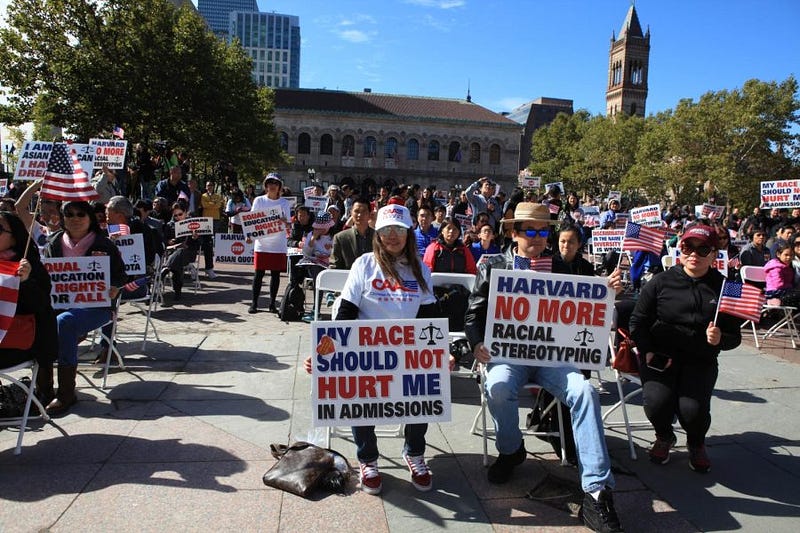
Photo by Students for Fair Admissions — Wikimedia Commons

To balance out far higher SAT scores for Asian applicants, they were systematically evaluated as being less likeable, charismatic, courageous and kind than white, black or Latin students.

That sounds like straightforward racism to me, and I think it’s extremely disingenuous to present this ruling as nothing more than a power grab by white supremacists. Harvard should not be getting a free pass for such a problematic policy.

“Race-conscious” admissions won’t be returning to American colleges anytime soon. The concept is extraordinarily unpopular with the public — Republicans, Democrats, whites, blacks, Hispanics and Asians all disagree with race or ethnicity playing a part in college admissions. In today’s polarized America, it’s actually quite difficult to think of another policy with less public support.

Photo by Bruce Mars on Unsplash

But many American colleges remain committed to maintaining ethnic diversity on campus. Now that they’ve lost one of their blunter instruments, how will they compensate?

Abolishing legacy admissions

If you support meritocracy, it’s hard to see how you could support legacy admissions.

Given the history of discrimination against racial and ethnic minorities in the US, a policy which benefits the children of university graduates has an obvious impact on suppressing diversity — indeed, it originated as a way to insulate white Americans against higher numbers of Jews and immigrants applying to universities.

Photo by Element5 Digital on Unsplash

Despite its current reputation for liberalism, California abolished affirmative action back in 1996. This led to the University of California system, the nation’s biggest public college system, removing legacy admission from the factors it considered. That included high-prestige universities like UC Berkeley and UCLA.

MIT, Caltech and John Hopkins University all reject the consideration of family status as well. If Ivy League institutions like Harvard really want to preserve diversity, an end to the legacy system is the most obvious first step.

Photo by Anthony Hall on Unsplash

It’s worth noting that legacy admissions are just as unpopular with Americans as race-based affirmative action. Most Americans believe in meritocracy, and they are consistent in their support for that principle.

Accept the best students from each high school

This approach was pioneered by UT Austen, and is quite simple: the university guarantees places for the best students from each high school graduating class, whether that means the top 5% or 10% of students.

Because American neighbourhoods and schools are so segregated by race and income, this has the effect of driving up attendance from underrepresented groups, particularly black and Latin students. Housing segregation is a shameful part of modern American history; this approach would make something positive out of it.

Photo by Unseen Histories on Unsplash

Best of all, it has a strong appearance of fairness and would be relatively easy to administer. You’re also selecting people with a proven record of work ethic and achievement, meaning the students are more likely to be psychologically comfortable in an elite university environment.

As a bonus side effect, it might seriously limit the capacity of private schools or those in wealthy areas to secure elite university places for mediocre students by paying for tutoring, standardized test preparation, and enrichment activities that most high schools don’t have the budget to provide.

Photo by Joshua J. Cotten on Unsplash

Prioritize poor students, regardless of race

Outside the US, countries with affirmative action tend to target it on the basis of overall socioeconomic deprivation rather than race alone. In Britain, for example, elite universities might consider factors like:

  • whether the applicant has ever been entitled to free school meals
  • whether the child has been in a care home or estranged from their family
  • whether the applicant’s school or area have low rates of access to higher education or low standardized test results

Photo by Obi - @pixel7propix on Unsplash

These will often, but not always correlate, with ethnic minority status. The downside (from a racial diversity perspective) is that a wealthy black student might be disadvantaged if competing with a poor white student, as opposed to race-based affirmative action schemes, which mostly benefit upper-middle-class minority students.

At Harvard, over 70% of black, Latin and Native American students have college-educated parents that earn above the average wage. As The Atlantic puts it, this is a form of trickle-down economics, which apparently works just fine when the hoped-for outcome is progressive.

If race-conscious admission is about compensating for socioeconomic disadvantage, which is usually how arguments in favor of it are presented, then it seems more likely simply to directly target those who are disadvantaged, rather than targeting minorities and hoping, incorrectly, that they will be poor.

Photo by Tom Parsons on Unsplash

Increase transfers from community colleges

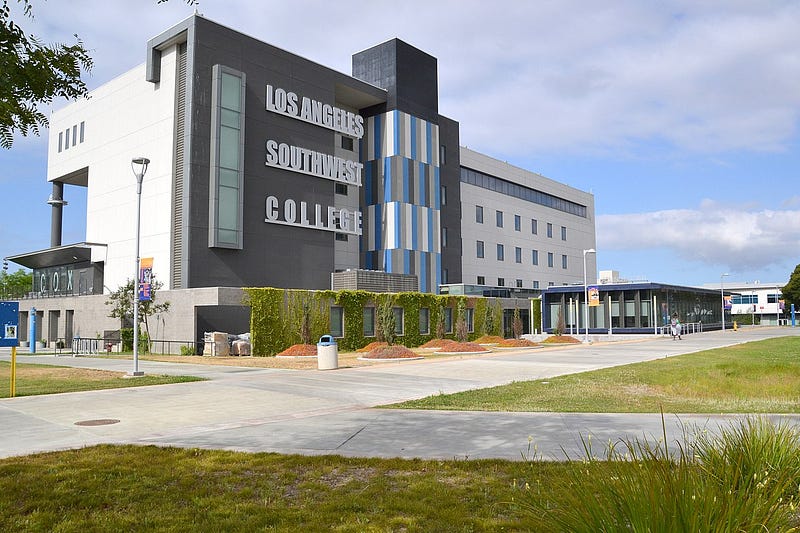
Most Americans from minority backgrounds that are taking part in higher education are doing so at community colleges.

America’s often-overlooked community colleges are one of the most incredible achievements of its higher education sector. They offer good education at much more affordable rates than private 4-year colleges like Harvard.

Community college students generally transfer to 4-year universities at a much lower rate than they would like. If America’s elite colleges want to expand their outreach, community colleges are one route to doing so.
By Tracie Hall— DSC_0109, CC BY-SA 2.0

Working with schools to make minority students more competitive

At the heart of the college admissions debate is that generations of racism in the US have left non-Asian minority candidates with weaker application profiles. Their standardized test grades and record of enriching activities is considerably lower.

Instead of ignoring that, universities should help fix it by reaching out to minority groups years before they’re ready to apply to college, to ensure that they have access to the materials, tutoring and activities that minority groups often miss out on.

Photo by JESHOOTS.COM on Unsplash

Targeting areas with large minority communities

It’s not as well-known as its race-based affirmative action policies, but Harvard does give a boost to applicants from “Sparse Country”, referring to predominantly white rural communities in places like the Great Plains and Mountain West.

Photo by David Sink on Unsplash

In theory, it could give similar boosts to candidates from other areas likely to be underrepresented in higher education, like violent inner-city neighborhoods.

In all likelihood, the end of race-conscious admissions in America will not shut minorities out of higher education — it will just force colleges to develop more holistic evaluations of privilege, and to become more creative in their outreach to these groups.

News
Politics
Philosophy
Education
Society
Recommended from ReadMedium