
Affirmative Action Will Become Illegal In The US This Year
And it might be a good thing for minorities.
Few topics incite such controversy as affirmative action, or positive discrimination. How could there ever be anything “positive” about something as undeniably bad as discrimination?
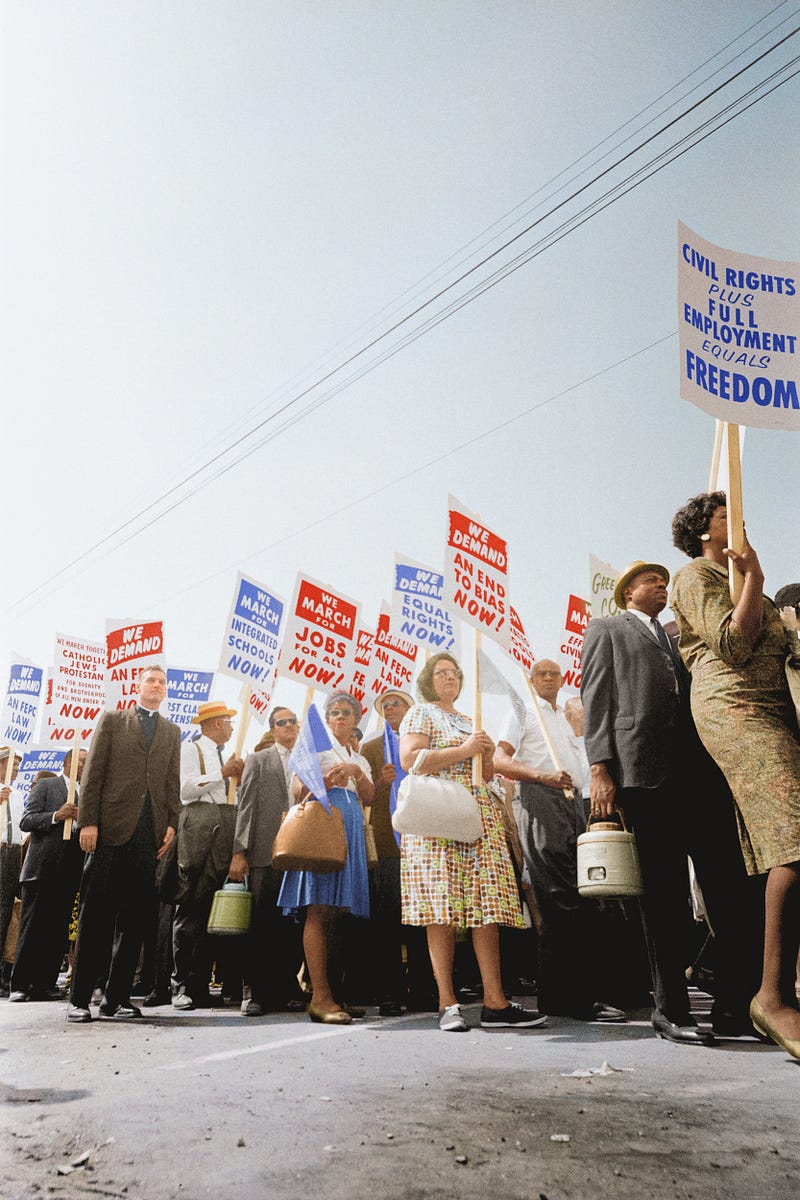
On one corner, you have people arguing that equity is more important than equality; that the only way to give disadvantaged minorities an equal chance is to prioritize them for competitive positions.
On the other side of the ring, you have people who feel that affirmative action spits in the face of meritocracy and is patronising to the minority groups it aims to help.
It might seem like a relatively even debate on Facebook or cable news, but the American public’s views on affirmative action are actually pretty unconflicted: they overwhelmingly think affirmative action is bad.
For example, nearly three-quarters of Americans believe race, gender and ethnicity shouldn’t be factors for college admission (the most high-profile example of affirmative action in America), including 87% of Republicans but also 62% of Democrats.

Americans of all major racial groups share this opinion, with the least enthusiastic background (African Americans) still agreeing 59% of the time.
So the American people don’t want these types of positive discrimination — and they might soon get what they want, because the Supreme Court is expected to ban it later this year.
The main immediate cause is Students for Fair Admissions v. President and Fellows of Harvard College, a legal case which will be heard by the Supreme Court later this year. Students for Fair Admissions (SFFA) has accused Harvard’s affirmative action-based admissions process of racial discrimination against Asian-American applicants.
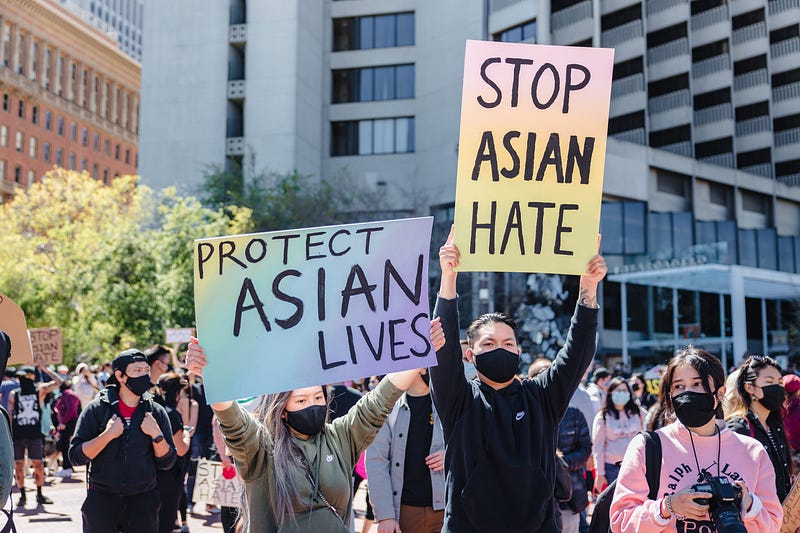
At first glance, it would be hard to argue that Asian Americans are underrepresented at Harvard, since they made up 22% of domestic students in the freshman class at the time the case was brought, despite only making up about 7% of the US population.
But Asian Americans significantly outperform all other ethnic groups in the standardized testing criteria for college admission. Economist Peter Arcidiacono established that if Harvard relied exclusively on academic criteria, the Asian American share would rise to over 50%.
One of the most striking ironies of Harvard’s admissions policy was that the average Asian American male had a 25% chance of acceptance.
But if that candidate’s profile (grades, extracurriculars, socioeconomic background etc) remained the same but they were a White male instead, their chances would rise to 36%; if they were Hispanic or African American, the chances would go up to 77% and 95% respectively.

Most of the Asian American underrepresentation can be attributed to a single nebulous measurement: the personality score, where Asian Americans received significantly lower assessments than other ethnic groups.
What is especially interesting about this criterion is that an applicant’s personality score is significantly correlated with their academic performance for other ethnic groups, presumably because they are more articulate and have a broader vocabulary.
That trend, however, doesn’t hold for Asian Americans, which suggests that Harvard is simply using this subjective criterion as a way to tacitly reduce the prevalence of Asian Americans in the student body.

That likelihood is reinforced by the fact that Asian Americans are better rated on the in-person element of personality scoring, and seem to do worst when scored by the admissions office (which mostly deals with essays).
The biggest beneficiaries seem to be African Americans, since their share of the student body is virtually identical year-on-year, which implies that Harvard has a minimum number of African Americans they want to accept every year, and is willing to mark down other groups (mostly Asian Americans in practice) to ensure they get enough.
It’s easy to say that Harvard’s policies are more influenced by a desire to include African and Hispanic Americans than a desire to exclude Asian Americans, but even White students benefit substantially from the current process at the expense of a minority group.

If Harvard was truly committed to fairness rather than the appearance of diversity, there are better ways to achieve it, like prioritising applicants from a lower socioeconomic background or who are the first in their family to attend college.
The current system doesn’t do this — less than a third of their African American students, for example, are considered to be disadvantaged.
But there’s an even more obvious way to equal the playing scales, one with almost no serious argument against it: abolish legacy admissions. A legacy applicant has a 34% chance of admission to Harvard compared to 6% for a non-legacy applicant.
43% of white Harvard students are ALDC, which refers to athletes, faculty children, legacy students, or those on the dean’s interest list (i.e have relatives who donated to Harvard); this is a vastly higher share than for all other ethnic groups.
You can defend the athletes as having got their place through a kind of merit, but 75% of these ALDC students would have been rejected if they didn’t belong to that group.
So Harvard can have both diversity and merit if it’s willing to sacrifice some money and political influence to do so.

And if the Supreme Court bans affirmative action, Harvard and similar elite universities will probably be forced to do exactly that, since the only viable way of maintaining a large body of African American students would be to abolish or heavily limit legacy preferences.
The Supreme Court is expected to abolish affirmative action later this year.
If it does, we’ll probably see a tidal wave of left-wing dismay and outrage. Twitter activists will accuse the Supreme Court of fascism, AOC will hint that the US is no longer a democracy, and lots of people who’ve never left California will threaten to move to Canada.
But what such a decision would actually do is end one of the last true examples of systematic racism that exists in the US, and a system which tells Asian Americans: “Your hard work isn’t as valuable as the hard work of someone with a different skin tone”.
There are still Asian Americans alive today who remember being interned in prison camps during World War II. I imagine they’re very proud (and surprised) that younger generations of Asian Americans have established themselves so well in American society.
Hopefully, they live long enough to see a time when America’s most powerful institutions can no longer discriminate as openly against Asian Americans as they do now.