
How Coca-Cola kidnapped Santa Claus?

Not seriously, did you know that Coca-Cola popularized the version of Santa Claus that we know today?
Previously, he could often be found in various colors, I had a toy of a completely white Santa Claus as a child. This was the case until Coca-Cola dressed him in their distinctive red color — #F40009.
Do you remember any Coca-Cola commercials where they sell their product? Honestly, I don’t. But I remember the feeling of warmth while watching their commercials, especially during the Christmas holidays.
Santa Claus drinks Coca-Cola, children drink it, adults drink it, the Coca-Cola truck passes by everywhere with its logo and everyone is happy and satisfied. They don't sell you the product, they primarily sell the emotions that go with their product.
I remember when I was 4 years old, I had a toy given with a pack of Coca-Cola.
A metal truck painted in the recognizable colors and marks of the brand. Once I was throwing plush toys with my younger sister in the room, and everything was great until she found that little truck and hit me in the head with it.
That was the moment when Coca-Cola was etched into my head, literally. xD
Joking aside, Coca-Cola is the world’s largest producer of carbonated beverages.
In addition to Cola, the company owns another 200 brands distributed in over 200 countries around the world. (the only 2 countries where you cannot buy Coca-Cola are Cuba and North Korea).
The Coca-Cola logo is even more recognizable than the cross. There is almost no person in the world who has never tasted this drink.
The question arises as to how they are successful in their work.
Coca-Cola annually spends an incredible 4 billion dollars on marketing. The essence of their marketing campaigns is the awakening of warm emotions, getting closer to the broad masses of people. Throughout its history, it had countless campaigns that strengthened the brand image in this way.
In addition to classic commercials and the slogan “Taste the Feeling”, Coca-Cola also used guerrilla marketing.
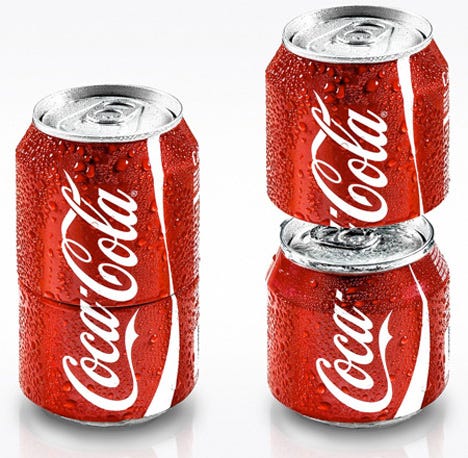
They advertised cans that could be split in half and shared with someone. They also printed the names of “ordinary” people on their packaging, even sacrificing their logo just to get closer to people.
This shows the main difference between the branding of Pepsi and Coca-Cola. While Coca-Cola insists on people, Pepsi most often uses famous personalities in their campaigns, such as Messi.
Don’t get me wrong, that’s not bad either, but the numbers tell us who is more successful in this business.
Coca-Cola visual identity
The distinctive colors and logo contribute to the fact that even in the distance, even if we couldn’t read what is written on the billboard, we know that it’s about Coca-Cola.
The red color they use conveys a reminiscence of warmth, energy, and love, while the logo written in that archaic font conveys some firmness, elegance, and recognizability that has been etched into the subconscious of generations past.
The worst business blunder Coca-Cola ever made was when they attempted a rebranding.
This mistake happened in 1985 when they released a new version of Coke, which had a new logo, a new packaging design, and a new recipe.
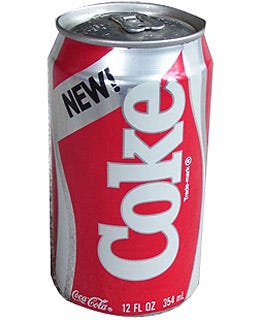
People did not like this idea at all, and those who grew up with this brand felt betrayed in a way, so Coca-Cola was forced to quickly return to the original recipe and visual identity.
Some people benefited from this incident.
Those who knew that Coke would make this move anticipated a negative reaction from people, so they bought large stocks of the old Coke and sold it for a much higher price when it briefly went off the market.
From this example, we saw how important brand building is. In addition to the large amount of sugar it contains and probably a lot of addictive substances, I still think that for most people, when they hear the distinctive sound of opening a red can, the first association will still be warmth, happiness, and connection with close people.
If you liked the story, you can support me by following me on Medium. Thanks and goodbye.


