
How Climate Change is Fueling Stronger Hurricanes
And the uncertainties ahead in a world of false promises and loopholed environmental policies.
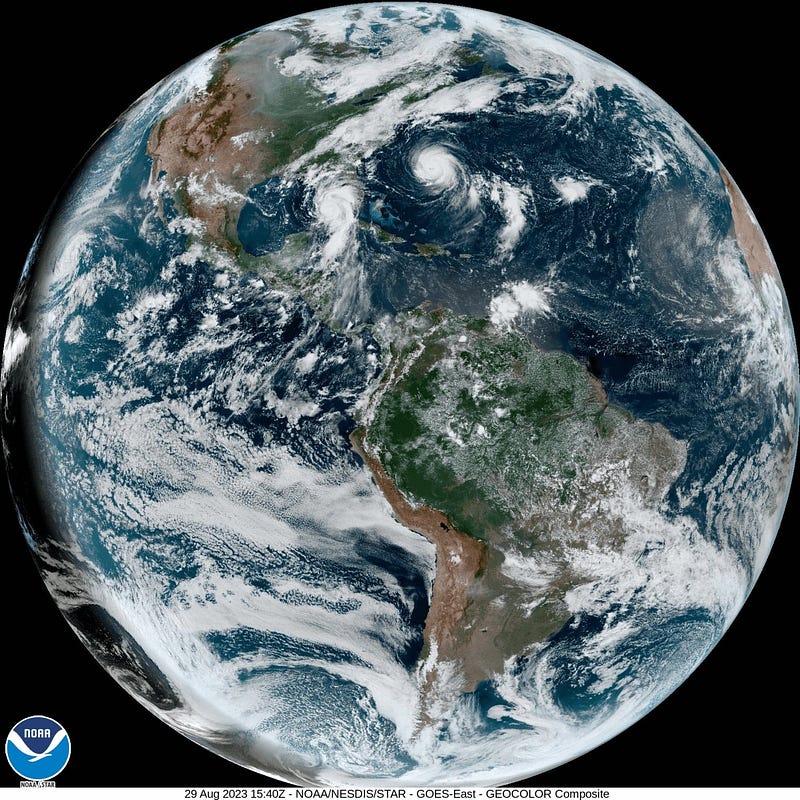
Our life is inextricably linked to the health of our environment. And water is the link that ties us to everything on Earth. Pretty much everything is made of water, or at least “with” water: our bodies and clothes, our industries and constructions. Even unsuspected consumers like server farms drink crazy amounts of water. And let’s not even mention the 160 liters we exhaust to make one kilogram of plastic.
The entire cycle of evaporation, precipitation, runoff, and global water movement is at the heart of our climate system, no matter where you live. But the ocean ecosystem, moving water around the globe, is now in peril. Pollution, overexploitation, and massive greenhouse gas emissions are pushing it to the brink. Weather patterns are changing due to warmer ocean temperatures. And it’s not just those living on the shores who bear the brunt; the oceans’ wrath knows no boundaries.
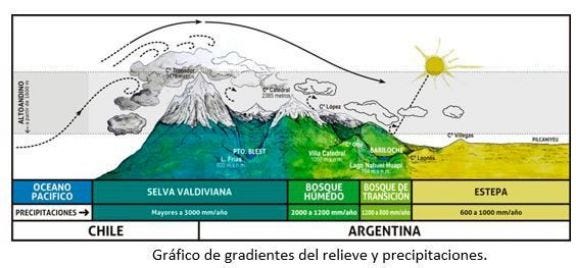
My hometown in Patagonia is 150 kilometers away from the closest ocean, the Pacific. Yet, most of our weather is dictated by what happens there: storms and cyclones develop in the southern Pacific, then hit the shores of Chile, to further climb the Andes Mountain Range, and finally appear on this side of the continent, fading away towards the arid steppe and the Atlantic shore of Argentina. If there’s any anomaly, like this winter, we definitely feel it.
This heat gain in the oceans is picking up pace and leading to alarming consequences, with The Guardian reporting that more than 90% of the heat caused by adding greenhouse gases to the atmosphere through burning fossil fuels is taken up by the ocean: “the devastating floods in eastern Australia had likely been made worse by warming oceans” and such risks “would continue to rise as the ocean took up more heat”.
Hotter oceans fuel stronger hurricanes (but aren’t their sole food)
Jeff Masters, a meteorologist at Yale Climate Connection, told Bloomberg Green that “every 1 degree Celsius increase in ocean temperature increases a hurricane’s destructive potential by 50%”. As temperatures rise, so do evaporation and heat transfer from the oceans to the air. So when storms navigate across warm oceans, they pull in more water vapor and heat.
Still, we need to keep certain considerations in mind. Hurricanes result from a combination of factors; merely having hot ocean water does not guarantee hurricane formation; wind shear also plays a crucial role. And, though climate change is undeniably intensifying its destructive potential, it doesn’t necessarily lead to a higher overall number of hurricanes. So, what does?
Three factors why hurricanes are becoming more destructive
- Sea Level Rise: Hurricane storm surge occurs when the winds from a storm push the ocean onto the land. The surge (the part produced by the wind), the tide, and the background average sea level determine the total flooding. The non-linearity of flood damages, where you get zero damage until past a threshold, means that even a slight sea level rise can exponentially increase damages. And even if the number of these storms remains relatively constant, the rising sea level due to climate change causing polar ice melting is making every tropical cyclone more destructive.
- Rainfall: The air can hold more water vapor in a warmer climate. When tropical cyclones draw in this moisture-laden air, they intensify rainfall. The logic is simple: more water vapor leads to heavier rain, so more water falls in a shorter time, stressing drainage systems. Just look around: this phenomenon is everywhere. The IPCC supports that there is high confidence that anthropogenic climate change contributed to extreme rainfall amounts during intense tropical cyclones. Oh, and that they’ll get worse as the globe continues warming.
- Intensity: The IPCC says it is likely that the global proportion of Category 3–5 tropical cyclone instances has increased globally over the past 40 years, and the ratio of Category 4–5 TCs will very likely increase globally with warming. And even basic physics supports that hurricanes get more intense as the climate warms, with climate models showing evidence of strengthening tropical cyclones. Research published in Nature Communications finds that rising temperatures provide the right conditions for storms to become dangerous hurricanes as high humidity in the atmosphere and warmer sea-surface temperatures quickly lead to stronger winds. These are known as ‘rapid intensification’ events. Dr Liz Stephens, associate professor in climate risks and resilience at the University of Reading, said of the study: “This new study shows that climate change is making rapid intensification of tropical cyclones more likely”. More than 400 people were killed in the Philippines in late 2021 after Typhoon Rai rapidly intensified overnight, shortly before making landfall.
Uncertainties ahead
There’s a lack of comprehensive understanding of why a specific number of hurricanes form annually. Predicting changes in the annual count remains challenging. Some models even suggest a decline, but the yearly count becomes irrelevant when considering the damage caused by individual storms.
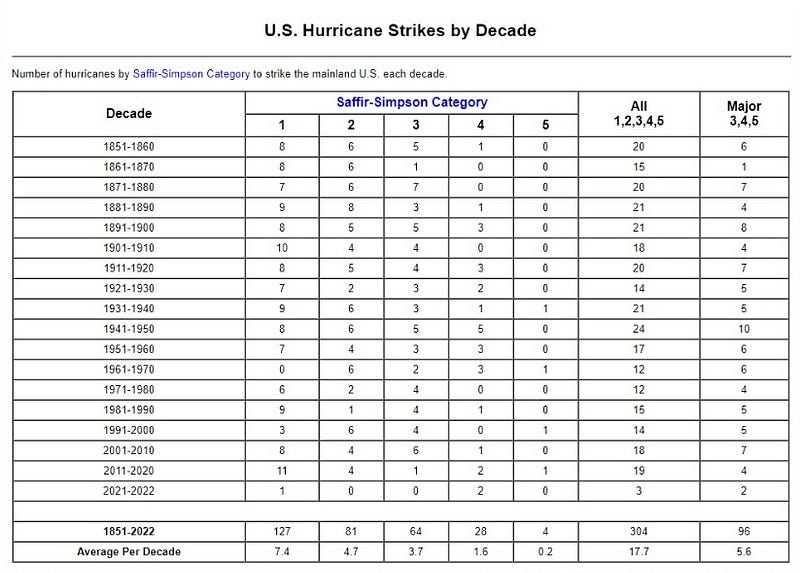
Climate deniers might argue that there’s no upward trend in hurricanes’ observed (or normalized) damage. Yet, this argument overlooks critical factors. Insurance premiums are soaring, and companies are retreating from vulnerable areas, reflecting the growing risk of damage. This suggests a significant disconnect between perceived damage and the true economic impact of tropical cyclones.
No matter how many international agreements pledge to protect the oceans, diminish emissions, or save biodiversity, the outcome is always the same: leaders set a variety of vague, distant targets and then find loopholes to circumvent these principles. As soon as they fail to reach them, they immediately set some new ones. And on it goes. It might sound ludicrous, but it works well to keep things running smoothly and maintain high popularity. Since the public pays little attention to these unsuccessful climate and biodiversity promises, and the media often seeks positive news for balanced reporting, the general message is that action is happening. It might not always go perfectly, but there’s a sincere effort and some progress, so let’s not always focus on the negatives, is the credo speech. These unclear and non-committal statements naturally lead to a lot of optimistic news coverage.

Meanwhile, we keep perpetuating oceans as dumping grounds for any kind of waste, such as the latest discharging of Fukushima nuclear water. Believing that oceans are limitless sponges and that this won’t affect the water cycle while still producing abundant food and supporting complex ecosystems is, simply put, ridiculous.
There’s evidence everyday of how the ocean is reacting to these cumulative changes, despite the efforts of climate deniers selectively emphasizing specific facts to support their views and conveniently ignoring others. (See, for example, this recent piece in The New Climate. by Kenny Minker on whales and offshore wind).
When our leaders talk about solving the climate crisis, we should ask them which timeline they refer to. If they claim the climate movement isn’t providing solutions, we should ask them which problems they are talking about. Is it related to all emissions or only those not accounted for or hidden in statistics?
The path to safeguarding our oceans and our environment from the climate crisis requires not only sound science but also political will led by honesty, integrity, and courage. Delaying action to meet our international targets will make it more difficult and expensive. The inaction of the past must be offset in the future.
Our oceans, and indeed our planet, depend on it.
Thank you for your thorough reading and support!
If you crave more insights into climate change, scientific progress, and geopolitics with a Patagonian twist, subscribe to the newsletter Antarctic Sapiens and dive into thought-provoking content weekly.