
How Children Can Benefit From This Weird 2020
What they can learn and develop, other than academic things
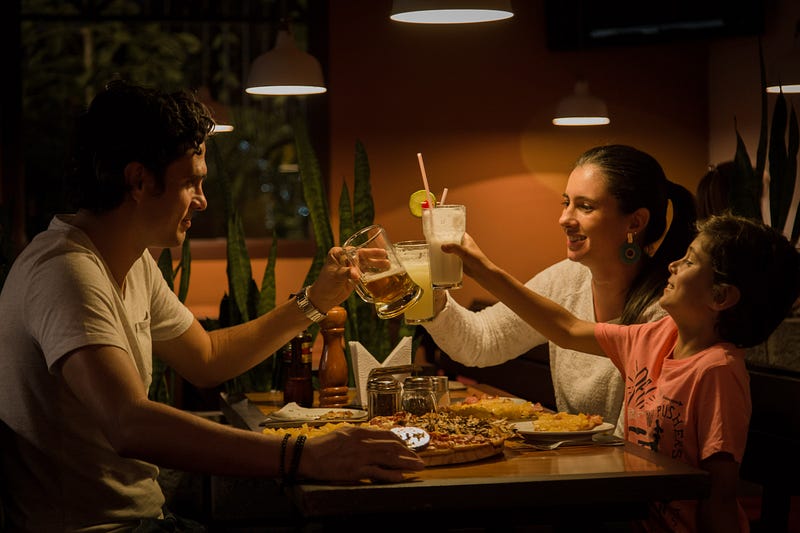
I have been thinking a lot about children and the times they’ve gone through this year — for them, eternal, a life — and I’ve felt admiration for their online teachers and homeschooling parents. Tough times, indeed, as for everybody. But children happen to be particularly affected because they’re fragile, yet at the same time, the most adaptable to what is. And this is what is: endless months of lockdowns — partial or total — meaning for most children the loss of their most important to-do: learn.
And by ‘learn’ I mean the other things that they need to learn about life as a whole, not only academically speaking but for them to grow as individuals.
When toddlers go to daycare, they learn that they’re not the center of the world and that other toddlers also exist, wanting the same toy, for instance. In kindergarten, when they draw the sky in blue and the grass in green, one using up-and-down strokes while using sideward strokes for the other, they’re getting ready for writing, really. It’s not just art. Playtime is learning time.
This goes on as they grow older and their tasks at school and homework grow harder. Socially speaking, they learn to negotiate and they learn to follow rules. They acquire — or should — respect towards authority figures and their peers — again, they should if they are not to become bullies. They pick up abilities to take care of themselves and their belongings.
Now, all these learnings have been taken away from them. Not that they’re not developing somehow, of course. Let’s not forget that the home is the first school. Parents’ upbringing comes first and is essential: good manners, for one, should be picked up at home. But what children acquire away from home, at school, is invaluable. As so, is this year depriving them of it?
However, we must make do with what we do have and what is. One must adapt or die, so let’s adapt, will you. That’s why it was interesting for me to find a Facebook post that reflected on how to make the best of this era when children have been forced to grow, evolve, and flourish — not only ‘learn’ — at home solely.
The interesting point of this post was not that it transformed the gloomy outlook — current and ahead — into something hopeful and optimistic, but something truly useful and valuable; not wishful thinking, no. It made sense to take advantage of this challenge, even if it seemed to be just a post from a school using what I thought to be originally an image from teachwire.net, with no author’s name.
Doing my research to properly quote the content I discovered that it is a poem, ‘What if instead of behind these kids are ahead?’, by Jaime Ragsdale, a schoolteacher and founder of Altogether Mostly, a site where teachers and parents can share and learn how to deal with parenting and schooling in these times. I found this helpful.
The reason why I found this poem inspiring is that we can either feel and suffer and hate every second of this, thinking and feeling that it’s been a waste of valuable time in our lives… or we can see all of it from a different perspective.
What if they enjoy the simple things, like their own backyard and sitting near a window in the quiet. What if they notice the birds and the dates the different flowers emerge, and the calming renewal of a gentle rain shower?
— Jaime Ragsdale
We can think kids are being lazy doing nothing at times… or we can see it as the idle time that’s necessary for dreaming and creating. They may be enjoying the unappreciated art of getting bored — something frowned upon in recent parenting — and getting unbored by themselves. Without the drama and the guilt and the obligation from parents to entertain them every second of the day.
We can see it as a never-ending load of housework… or see that kids learn the basic — yet frequently forgotten — art of running a home by letting them run their rooms, their laundry, their messes. Parents will go crazy, yes. Kids will complain, yes, or not and probably not mind wearing the same clothes for days and days on end… until they can do it no longer and do their clothes.
We can see these lockdowns as imprisonment of too many for too long in too tiny shared spaces… or we can appreciate the unusual treasure of living and eating and negotiating together as a family: this is something this generation hadn’t experienced, maybe not even the young parents themselves. Long office hours and long commutes have made this kind of intimate family interaction almost non-existing in many households.
We can see this as a set back in the development of children — not going to school, not ‘learning’ properly, not engaging with peers and teachers in person — or we can see it as a place to develop emotional intelligence. Because that is learned at home primarily from their parents, from the earliest of ages… and lately it’s become too thin and scarce in many homes where there’s no time and too many distractors, namely electronic devices. It’s a chance to regain that lost asset.
Of course, locked-down homes are too crowded and responsibilities and tasks — professional, housework, and education-wise — take up a lot of the hours of the day, but since there’s no place to go, there’s room for parenting, which in turn develops that emotional intelligence.
Because success in life, and it’s been proven, does not relate to or depend on academic success. Valedictorians do not necessarily become successful people, not even happy. Academic subjects do not build a person. Definitely there will be an academic gap everywhere when this is over — whenever and however that is — but that can be overcome. What cannot be overcome any later in life is what we don’t acquire as to our emotional intelligence from the start.
To tell you the truth, I was going to begin this piece writing about another poem that I read long ago, one that meant so much to me that I even had it enlarged, printed, and framed, hanging in my office. The ‘What if’ poem had triggered me thinking again about what’s been lost and what’s been gained. Because we have gained some valuable things, we must admit. No, we must not admit but rather acknowledge, to be grateful, and to be fair.
But then this other poem, ‘All I really need to know I learned in kindergarten’, by Robert Fulghum, after making sense of what is and what we can get out of this, after writing arguments regarding the emotional intelligence that kids learn at home, the points in Fulghum’s poem seemed contradictory. All of that is learned where exactly? At home, or in fact at school? Are these two points of view opposing?
Fulghum’s words covertly do talk about EI. Share. Be fair to people. Don’t hit. Clean up. Wash your hands. Stick together — even if now it cannot be done physically. But also things like equality, basic sanitation, love, a balanced life, warm cookies and milk for all. The poem also says these skills and notions learned in kindergarten can and should be exercised and applied in adulthood.
So maybe, just maybe they’re not really opposing or contradictory. The point is that children should be taught and exposed to these skills of EI anywhere and everywhere as long as they do, and more importantly, adults should remember them and, indeed, extrapolate them forever. It’s no kids stuff. It’s no childish rules of thumb: it’s what life should be about.
What Fulghum’s poem is saying, and remains valid these days — also for the future immediately ahead and in the long term — is that:
ALL I REALLY NEED TO KNOW about how to live and what to do and how to be I learned in kindergarten. Wisdom was not at the top of the graduate school mountain, but there in the sandpile at Sunday School.
— Robert Fulghum
The two main points in both poems regarding the upbringing and education of children are that EI is taught, developed, acquired in childhood, be it at home — as is the case nowadays, again — or at school, and that becoming a decent human being has to do with that, not so much with academic knowledge — grades, medals, diplomas, IQ tests.
So, let us all focus on these other skills and intelligence — because what we will all need to resume life after this has little to do with IQ and SATs — and put school subjects aside, for the time being, being what it is now, so that this generation benefits from supposedly seeming behind while, in fact, they can be ahead. Is the glass half empty or half full? What do you, dear reader, choose to see?
And let us all, adults, remember what we learned in kindergarten, will you? It’d be a good thing, for a change.


