
Mental Health
How Can You Make It Easier? My Top 3 Mantras for Minimalist Living
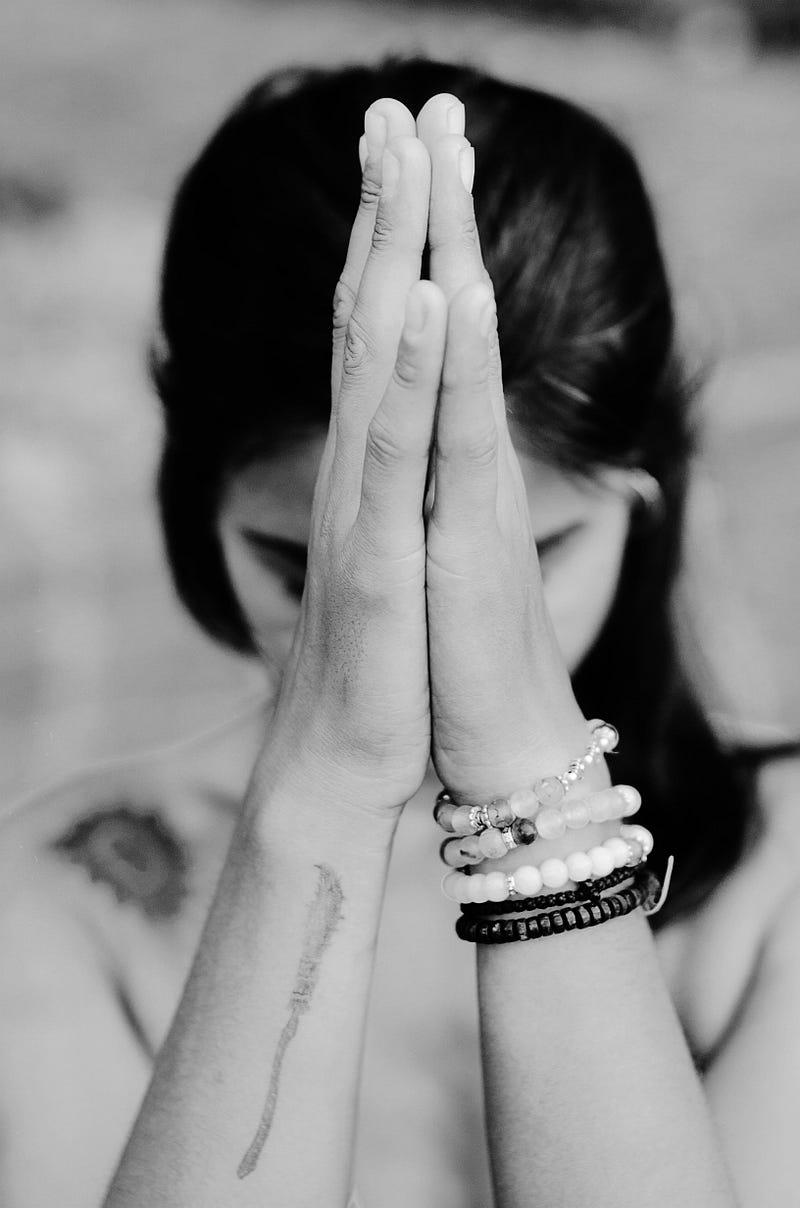
Mantras are a vehicle, a support, and a seed.
As a vehicle, they guide movements of body, mind, and spirit. They direct the course of things — the course of our being and continuous becoming.
As a support, they protect us from unhelpful story loops, patterns, and to-do lists. They keep us from getting tangled in distractions and details.
They bring us back to simplicity. Back to what matters.
And as a seed, they hold tremendous potential. Potential for growing our sphere of awareness and our sphere of choice. Potential for becoming the fullest, most authentic expression of ourselves.
When working with clients and in personal practice, I lean into mantras daily.
For me, they are intimately tied to Taoism…and to minimalism.
How so?
Well, Taoism and minimalism are about getting really simple and really clear. Parsing away what’s extra, they create space — and spaciousness.
From this place of “less clutter, more clarity,” moving with the natural flow of things comes easier.
This brings ease. It creates room for what’s important…and for the good in us to come forth.
As you read through the mantras that follow, I encourage you to hold all this in heart-mind…and to make them yours.
- Where and how might they serve you as a vehicle, support, and seed?
- You might work with one for a day, a week, or longer.
- You might use them as journal prompts, if that’s helpful.
- You might weave them into other practices — whether reflective, spiritual, physical, or practical.
Just know, however you use them, there is great power in persistence, patience, and time.
With consistent, mindful practice, you will be building a “muscle” and changing patterns.
Slowly, slowly you will shift the course of things. Shift the course of your own life, being, and becoming.
1. Just One Thing
For me, multitasking is pretty much always a bad idea. Even though I’m “good” at it. Even when it makes me “efficient.”
Because, even if I appear to multitask with deftness and ease, it always leaves me anxious. Ease, spaciousness, and deep listening are sacrificed.
Sound familiar? Or not like you at all?
Either way, here’s an experiment:
- For today, try doing just one thing.
- Meaning, do one thing at a time — and follow through — before taking up something else.
- Even little “something else’s” count. Do one thing. Follow through. Then do the next.
If you’re like me, this won’t be easy. That’s useful information. It’s part of a practice that, with time, will make doing *just one thing* easier.
Watch what arises. Notice what’s uncomfortable. Get curious.
To all of it, bring a gentle touch.
- If you notice yourself doing more than one thing, pause.
- Softly, softly bring yourself back. Start anew.
- Then, at the end of today, see how you feel.
See whether you listened more. Created space. Found ease.

2. Three Percent Less
When working with clients, I often ask them to do “10 percent more” of something. Something that nourishes them. Something they know makes them feel better.
- Could be eating delicious, real food.
- Or taking time to stretch and move.
- Or clearing clutter from their laptop or desk.
- Or simply pausing before an open window.
Whatever it is, I request *just* 10 percent more.
This sort of homework can be helpful for those struggling to get started with big changes.
An alternative to all or nothing, “10 percent more” opens up space and alters the trajectory.
It makes the seemingly impossible possible again.
And yet…for some, “10 percent more” doesn’t work.
For some, the struggle isn’t about doing more…but doing less. Their to-do lists have to-do lists, in other words. And they’re a little too good at getting stuff done. (I sure know this one!)
Working in this place myself, I tried different homework on for size, asking myself to do 10 percent less of what I was overdoing.
But you know, that still felt off. Ten was just too much. Checking in, and investigating what was true, I eventually settled on three.
Three percent less feels possible, for me, in this moment.
Your turn.
- Would 10 percent more of something be helpful?
- Or 10 percent less?
- Is 10 too much?
- Not enough?
- Play with it.
- Try both questions.
- Test different numbers.
Start with a percentage that feels impossibly high, then move down one number at a time, checking in along the way.
See what resonates — and what feels possible — in this moment.
3. Where Can You Make It Easier?
Ease is on my mind quite a lot. First, because of my work with clients and trying to ease their way through big changes in eating, drinking, and lifestyle.
Second, because of having a full life and schedule myself and struggling with my own addiction to perfectionism.
So. A few thoughts on ease, and making things easier.
One of my meditation teachers says:
“Ease creates room for what’s good in us to come forth.”
I love that. It’s less about “doing” or “fixing” and more about creating space and allowing.
It speaks to the natural unfolding of things. The natural unfolding of ourselves.
Another way to work with this is using ease as a teacher.
Specifically, try to cultivate as much ease as possible…then notice what takes you out of that place.
What takes you away from ease? Away from things feeling easy?
When faced with a choice that would clearly hurt your sense of ease, ask:
Is doing such-and-such worth it? Is it worth losing your ease over?
Now, if you’re doing this sort of exploration, I recommend bringing an abundance of self-kindness and gentleness to the process.
Even if you get “bad news” about yourself or your patterns, practice allowing space around that.
Practice finding ease even in moments of discomfort — not by repressing the discomfort, but by giving it lots of space and giving yourself space to really feel it.
Whereas unease is claustrophobic, ease is very spacious.
Want a starting point for finding this spacious place? Start here:
- Keep things simple (including “food rules”).
- Care instead of worry (it’s not like worrying helps anyway).
- Let go of something (perhaps a routine, a responsibility, a job, even a relationship).
- Ask for support (whether from the Universe, loved ones, friends, or a healing practitioner).
Ask yourself…
- Where can I make it easier today?
- Where can I make room for what’s good to come forth?
The Tao Te Ching, a foundational Taoist text, describes the ancient masters as subtle, profound, and responsive.
Simple, like uncarved blocks, they were attuned to the flow of self, nature, and Universe.
From this place, they could see the cycles of things. They could trace the rise and fall…the ebb and flow….the patterns of being and becoming.
They could act from a place of stillness — and clarity.
My wish for you, as you work with the mantras above, is to touch into such a place.
By getting really simple — and practicing with an abundance of gentleness, curiosity, and care — I hope you will move toward a fuller, more fulfilled expression of yourself.
I’ll be over here practicing too, and rooting for you along the way.
Thank you for reading. I’m a doctor of Chinese Medicine and write about sobriety and soulful living. Find all my links here: