
4 Proven, Simple Ways We Can Change Our Brain, Body & Life
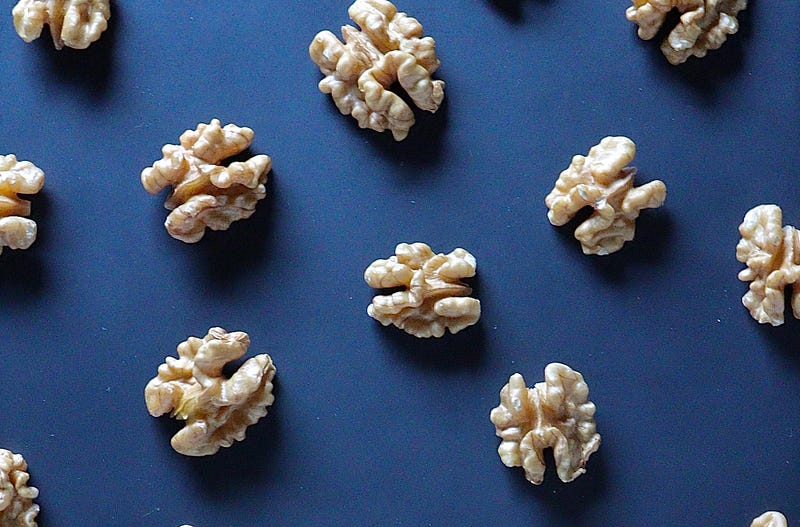
The brain is an enchanted place. One seemingly essential to “self” yet otherworldly in its invisible, enigmatic workings.
Seeking to expose its secrets and mysteries, the shapers of last century’s biomedical brain paradigm set out to organize them with fixed lines and segmented spaces.
They imagined a static, standardized, separate brain — one that was unchanging, distinct from the larger body-mind ecology, and divisible into sharply defined parts with clearly defined functions.
But with the amassment of data over recent decades, a new neuroscience paradigm emerged.
Visionary neuroscientists questioned and pushed beyond imagined lines and stagnant metaphors. Using increasingly sophisticated brain imaging technologies, they proved that our brains are always changing. They are, in effect, plastic throughout the course of our lives.
Such “neuroplasticity” characterizes brain structure and function. These exist in dynamic, responsive relationship with each other, the whole body-mind, and our environment.
More than just an updated abstraction, this revolutionary insight into the mind’s mysteries is guiding efforts to deliberately and effectively shape ourselves and others.
Neuroscientists and health practitioners are leveraging our deepening intimacy with how the brain works to design therapeutic approaches capable of influencing mental-emotional patterns and enhancing cognitive ability, motor skills, and sensory sensitivity.
The emergent neuroplasticity paradigm, while still more niche than mainstream, is expanding healing and wellness possibilities.
And yet, the essential insights of this paradigm are not new. Awareness of an ever-changing, responsive, embodied mind has existed since ancient times, interwoven within myriad philosophies and practices long before the emergence of biomedicine or neuroscience.
Taoism — which had its own momentous impact on healing and wellness through its influence on Chinese Medicine — is one such philosophy and practice.
As Alan Watts writes in Tao: The Watercourse Way:
Certain Chinese philosophers writing in, perhaps, the fifth and fourth centuries [B.C.E.] explained ideas and a way of life that have come to be known as Taoism — the way of man’s cooperation with the course or trend of the natural world, whose principles we discover in the flow patterns of water, gas, and fire (xiv).
The mind, as part of this flow, is holistic, interconnected, and responsive. It is continuously transforming, exists in relationship, and is, in short, plastic within the transactional, cyclical intelligence of the Universe.
The DIY approach
Don’t have access to biohacking practitioners blending cutting-edge discoveries with ancient wisdom? All’s not lost.
Four proven methods of boosting neurogenesis (literally, “neuron generation”) are simple, accessible, and free of charge (Begley):
- Paying close attention
- Embracing novelty
- Engaging in physical exercise
- Existing within an enriched environment
Now, I said these are simple. I did not say easy — at least at first. For most of us, they take:
- Intention
- Mindfulness
- Curiosity
- Discipline
- Practice
- Patience
- Time
Most unfortunately, most of the above are out of style (at least when it comes to conscious cultivation and lasting volition).
But if you want to change your body and mind in real, sustained ways (plus shift habits, relationships, deep-rooted patterns, and limiting beliefs), they’re the answer.
They’re also accessible, in one form or another, to most of us. Implementation can look a million ways and can be extra modest or extra extra.
Some examples to get you brainstorming:
- Pay close attention: Meditate; draw; read a real book; engage in mindful, focused yoga practice or breathing; engage in mindful, focused anything that requires full presence; do one thing at a time; leave your phone at home
- Embrace novelty: Change up your routine; visit places outside of your usuals and comfort zone; explore something new as an enthusiastic beginner; leave your phone at home
- Engage in physical exercise: Take a walk (ideally, outside); stretch your body in ways that are intuitive and delicious; engage in other movement that works for you and feels good; if you can’t move your limbs, focus on breath and posture; leave your phone at home
- Exist within an enriched environment: immerse yourself in a culture different from your own (whether in your own locale or another one); edit what you consume intentionally and rigorously; choose surroundings (online and off) that make you feel expansive, curious, and alive; leave your phone at home
These ideas are illustrative only. The possibilities are endless!
As you consider what your version might look like, remember that quicker and bigger is rarely best. Being able to actually stick with a thing in a consistent, steady way is golden.
[Sidebar: If you think you can’t stick with a thing or learn to pay attention, check out Jim Kwik.]
Whether you lean towards the deeper knowing of Taoist sages, the research-backed studies of neuroplasticians, or some alchemical combination, our body and mind are always changing.
They — and we — emerge continuously, over a lifespan and perhaps before and beyond.
In this, you have tremendous agency. You get to participate in shaping who you are and who you become.
Question is, do you feel like it? Is it worth more to you than checking out and skimming life’s surface?
There’s not a “right” answer to this. But I encourage you to ask the question and get really honest.
That already changes the course of things. That already sets body-mind-life change in motion.
Notes:
Begley, Sharon. Train Your Mind, Change Your Brain: How a New Science Reveals Our Extraordinary Potential to Transform Ourselves. Foreword by the Dalai Lama. New York: Ballantine Books, 2007.
Watts, Alan, with Al Chung-liang Huang. Tao: The Watercourse Way. New York: Pantheon Books, 1975.
If you want to read more Medium articles without those annoying restrictions, please consider becoming a member by using my referral link below. I get a portion from your $5 monthly fee at no extra cost to you. Please and thank you!


