
How Can You Ensure Safety And Survival In The Mountains?
Surviving in the mountains is not only a great pleasure but also a challenge for those who engage in nature and outdoor activities, and those who want to live an alternative life away from the vanity of today’s reality.
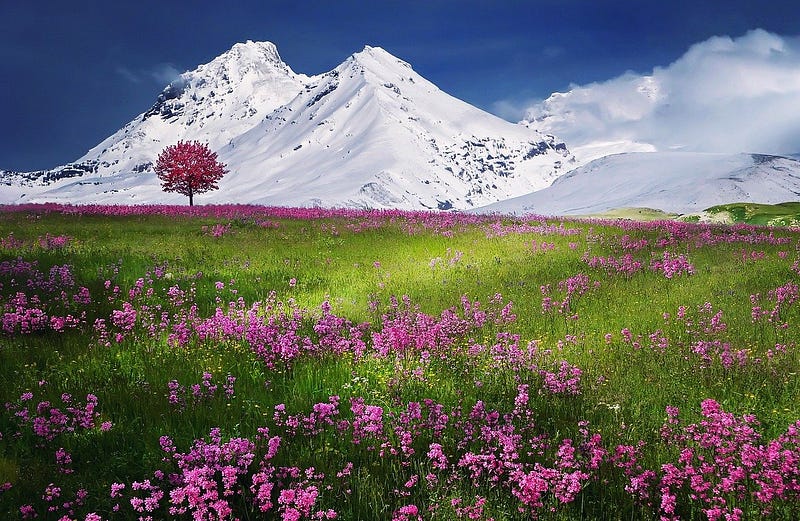
There is no season for the mountains. Either in winter or summer period they offer major benefits to those who prefer them. However, if you are willing to get isolated in nature, you should also have the appropriate supplies. There are many survival guides, especially for beginners, which you should better read and keep with you throughout your journey.
Stay warm, find shelter, light a fire, stay hydrated, maintain clear thinking and composure. These are the main things to keep in mind when dealing with such difficult conditions.
Panic
Probably the biggest enemy that someone who gets lost on the mountain has to face is panic. A slight difficulty can swell under the influence of panic and lead to misguided movements.
Starting a pointless walk in the fog will only make you even more disoriented and more difficult to get found. Anyone who is equipped to deal with such situations is certainly more likely to go through this adventure more painlessly.
Orientation
It is easy to maintain a sense of direction, observing the morphology of the ground and your position. More precisely, you should search for easily visible places, a mountain peak or a village, and the sun if it has no clouds. In such a way you will gain a good sense of where you are.
The difficulty arises when it is dark, foggy, or snowy. That’s when the compass is a lifeline. There are many compasses on the market. What you should be interested in, when buying a new one, is to be reliable and to have a small volume so that you can carry it with you.
Some people wonder why to use compasses when GPS is available. GPS is a source of security when you are in the mountains and it is the best option to get navigated. However, you must never forget that it is powered by batteries, and as it is an electronic machine you never know when it will stop working…
Contact
A whistle is a very useful communication tool. Of course, hunters have also a weapon, but the cartridges in such situations are “gold”, and they can not afford to waste them. A whistle that sounds far away and increases the chances of your rescuers hearing you, can prove to be a simple and life-saving solution.
A flashlight would be a good means of communication, as well as a mirror or a polished metal. The cell phone is probably the easiest solution, but there is no signal everywhere, while the battery might need charging or break down when you need it.
Protection
Hypothermia, the excessive loss of body heat, occurs most quickly when the body is exposed to water or air. Especially if it is winter or you are hunting at very high altitudes -where the weather changes very easily-, a light garment (made of thermal insulation material) and a good waterproof one (that folds and is easily transported) are lifesavers if being exposed to cold and water.
Fire
Fire, in addition to its usefulness, also provides psychological support that is vital in such moments. There are many lighters, many of which can be found in nature, such as the bark of the birch tree, as well as the pine cones.
However, you never know where you will get lost and what kind of lighters you will find. So, it would be good to have a little tube with a tire and a lighter. Waterproof matches or a spark plug that is not affected by the rain would be both good options, under these circumstances.
Water
Water is more valuable than food. A hermit crab with a liter of water is enough for a day or two. You can also collect water from rain or snow. Water from a river or lake should be boiled for about 20 minutes before being consumed.
Supplies
The best survival kit will be of no use if it is so bulky that you have to leave it in the car, instead of keeping it with you. There are many survival kits on the market that are ideal for hunters and athletes.
An average mountain survival kit should include the following equipment:
- Flashlight for lighting
- Split saw
- Sparkler
- Compass
- Loud whistle
- Sugar sachets
- Coffee bag
- Portable survival stove
- Flashlight
- Aspirins and patches
Anyway, if you do not live this experience you will never understand what is necessary for you. In addition to the ready-made guidance lists, there are also individualized needs that only you can provide to yourself.


