
British Network Television & Radio
How can someone accurately predict their own murder?
‘Death in Paradise’: S1.E3. “Predicting Murder”…
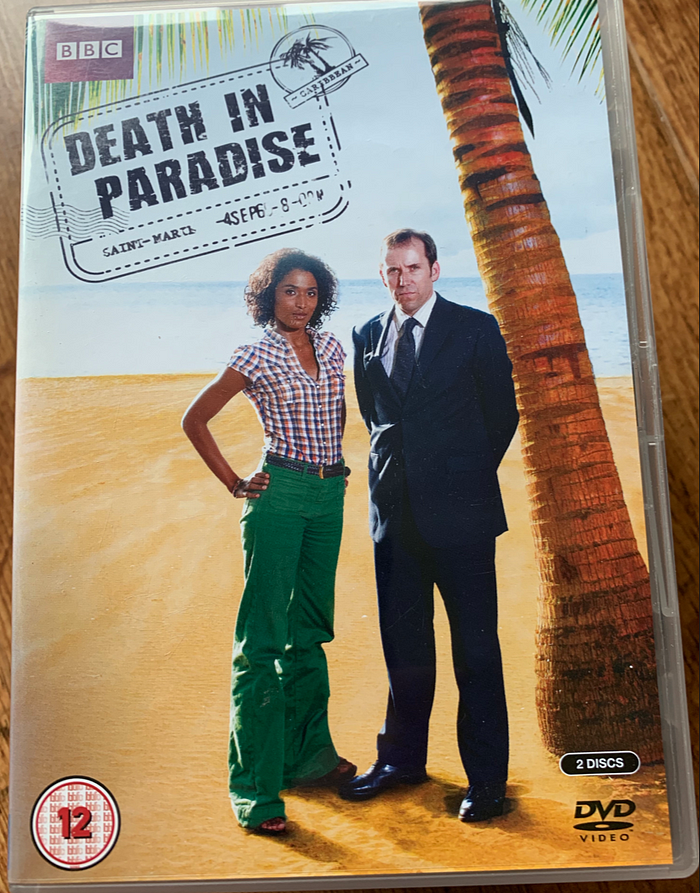
Death in Paradise, created by Robert Thorogood, is set on the fictional Caribbean island. It was only a matter of time before someone referenced voodoo. ‘Predicting Murder’, directed by Charles Palmer from a teleplay written by the Death in Paradise series creator, took us there sooner than a lot of people predicted.
The episode, brilliantly well-paced, features some well-known acting talents. Clare Holman, Nicholas Farrell, and Michael Maloney, respectively playing Molly Kerr, Nicholas Dunham, and Father Charles Dean in Palmer’s ‘Predicting Murder’, have all at one time or another appeared in ITV’s long running police drama Midsomer Murders. Both Farrell and Maloney have also made guest appearances in BBC One’s Father Brown.
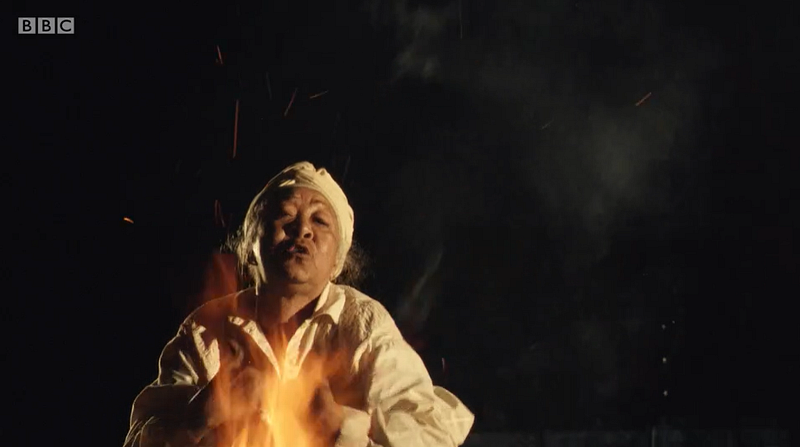
Mona Hammond, even though her character isn’t afforded much screen time, does an amazing job making us believe Angelique Morel knows the identity of her future murderer. Initially, when she references a scared man, first impressions suggest she could be talking about pretty much anyone.
OK. There aren’t a lot of people on the island but still, even in a small population, there must be at least a dozen or so people that match Morel’s murderer description. At least it wasn’t the cute school maintenance man. Tom Hilton, played by William Vanderpuye, bears no resemblance to the person Morel speaks of in her vision.
When a voodoo priestess predicts her own murder as well as the man responsible, a skeptical Poole believes the truth lies in an old missing persons case. When a voodoo priestess predicts her own murder as well as the man responsible, a skeptical Poole believes the truth lies in an old missing persons case.
The episode opens Morel, a voodoo priestess, predicting her own death at the hands of a scared man. Officer Dwayne Myers, visible in the scene, is present when she makes the prediction. How she could possibly know of her own pending murder?
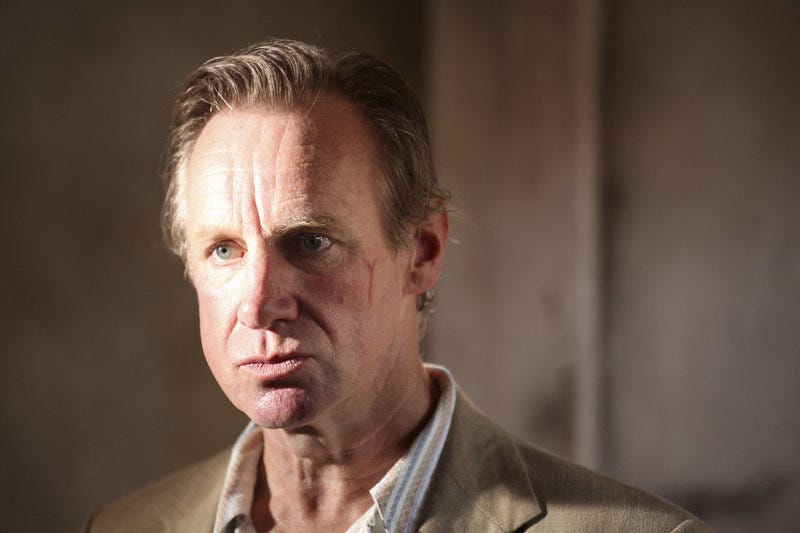
Curiously, not long there after, Morel is discovered dead at the island’s local school. When the head master arrives, noting a scar on his face, it really doesn’t take a rocket scientist to figure out it was Nicholas Dunham that Morel was talking about.
Detective Inspector Richard Poole soon learns, years earlier, an affair took place in the school. The affair led to a woman, Morel’s daughter, disappearing. Commissioner Selwyn Patterson, at the time of Mrs. Dunham’s disappearance, was the investigating officer.
Patterson found nothing suggesting Dunham had somehow killed his own wife. No body was ever discovered. It was a real mystery. Patterson, noting Dunham had a new patio, went to the lengths of having it dug up in the hopes of finding Mrs. Dunham’s body. Nothing was found.
Officer Fidel Best, having attended the school himself, knows all the staff personally and he finds it difficult to believe any of them would have murdered Morel. It doesn’t help Dunham is one of the island’s most respected residents.
The head master, after Detective Sergeant Camille Bordey, requests his one phone call. The phone call is placed off-camera. When Patterson shows up at the police station displeased that Dunham had been arrested, obviously, connecting the dots to that one phone call really isn’t a difficult task.
Poole, because Dunham has an alibi for the time Morel was apparently murdered, is left wondering if someone could be trying to frame him. Who could want to frame Dunham for murder?
It always comes back to Morel’s murder. The science reveals cyanide poisoning. Cyanide is a rapidly acting, potentially deadly chemical that interferes with the body’s ability to use oxygen. Death is quick.
Poole, further to his Morel investigation, fixates on Dunham’s patio and the supplies purchased to construct it. The police inspector ponders the amount of lime purchased. There is something niggling at the back of his mind that just will not go away. Why purchase too much lime? It just doesn’t make any sense.
Science plays a huge part in bringing the murderer to justice but, curiously, not for the murder you’re thinking of. Lime, because of the high pH value, can be used to speed up the decomposition of dead bodies. It’s the high pH that accelerates the natural process of decomposition. It breaks down the cell walls of bacteria and other microorganisms.
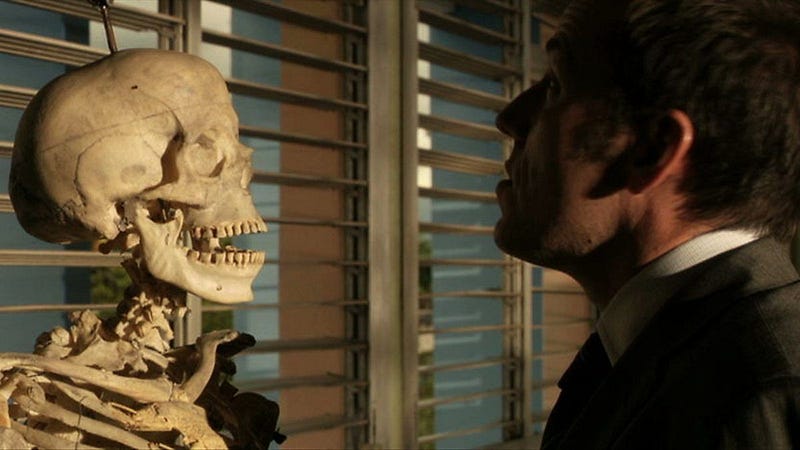
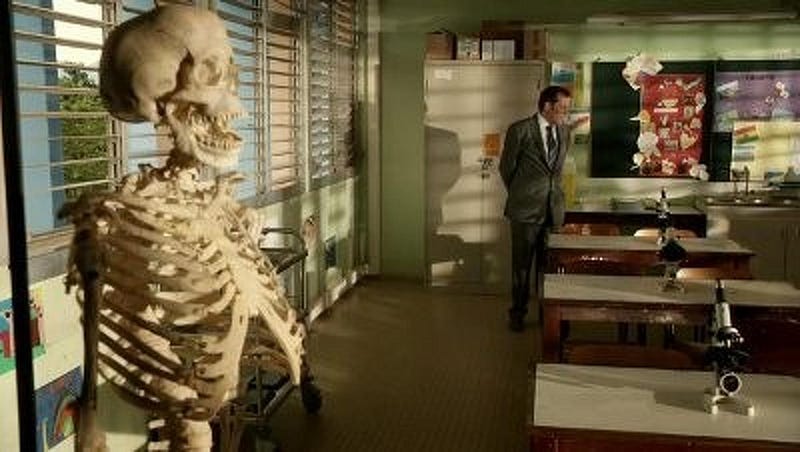
Mrs. Dunham, or rather her skeleton, was in Dunham’s science classroom the entire time. It had been there for years. Identifying Mrs. Dunham’s bones, because of two fractures to an arm, was fairly easy.
That just left Poole with Morel’s murder to solve and there was only one way, as the police inspector put it, the voodoo priestess could know she was going to die. Morel killed herself and, because she knew Myers was at her gathering, was able to convince the officer it was Dunham that had murdered her. Catherine Bordey was also present when Morel made her prediction. It was all very convincing.
Morel, well-acquainted with the plants growing on the island, knew which ones to use and she extracted her own cyanide.
Music Used in Charles Palmer’s “Predicting Murder”…
- My Native Woman performed by Gregory Isaacs
- Dreadlocks in Moonlight performed by Lee “Scratch” Perry
- Red Up performed by Aswad
- The Big Boss of Dubs performed by Tommy McCook and The Aggrovators


