
British Network Television & Radio
Who killed D.I. Charlie Hulme?
‘Death in Paradise’: S1.E1. “Arriving in Paradise”
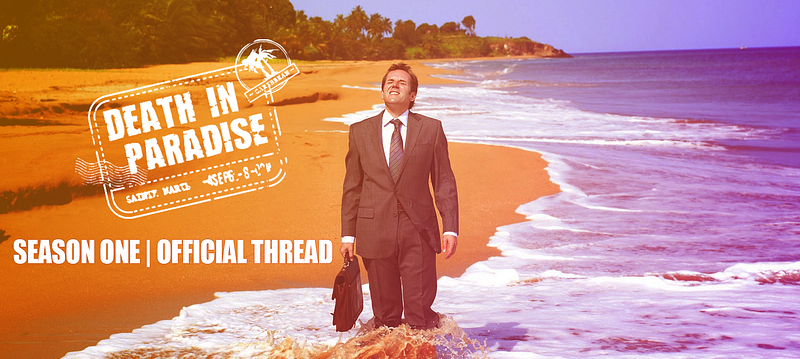
‘Arriving in Paradise’, directed by Charles Palmer from a teleplay written by Death in Paradise series creator Robert Thorogood, opens with a very important scene. It gives the identity of the murderer before a murder has been committed. How can you murder someone in a locked room?
D.I. Charlie Hulme, seemingly murdered in a locked room, was short and killed only after the door had been unlocked from the outside. I Shot the Sheriff, a song written by Jamaican reggae musician Bob Marley, gave us the murderer’s identity.
Marley’s song, momentarily heard during the episode’s teaser sequence, is Sgt. Lily Thompson’s ringer tone. It’s a little too on-the-nose. Much of the episode revolves more around the how and the why Hulme was murdered. Only the unobservant would have missed the obvious.
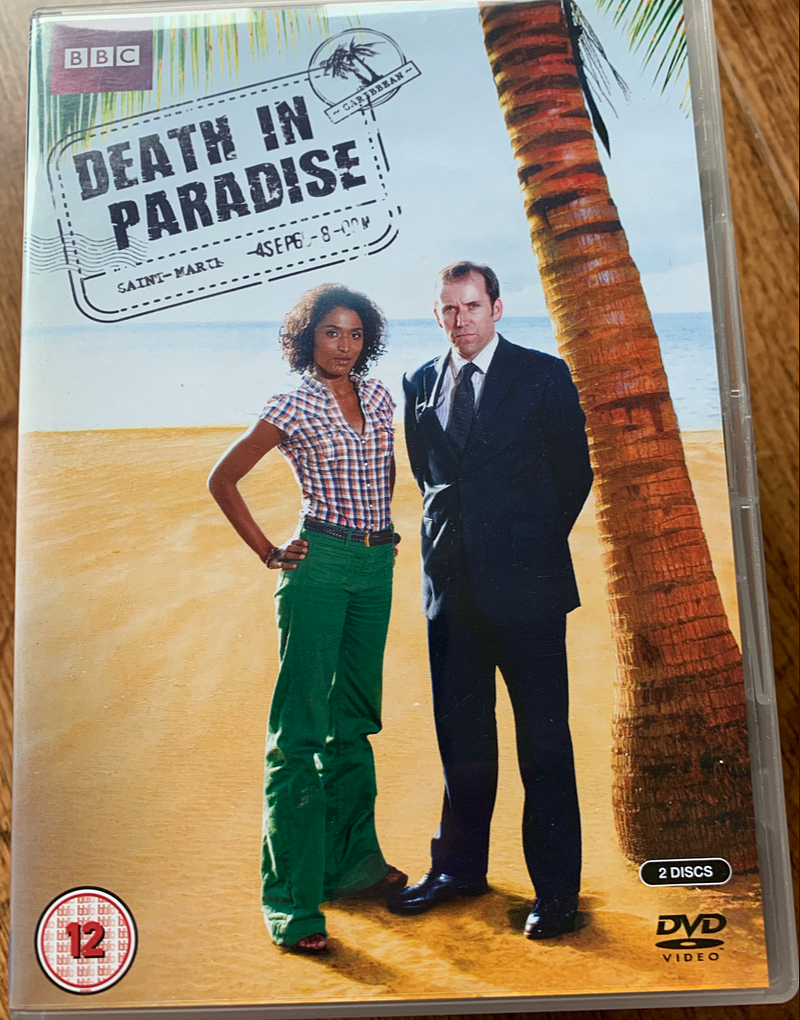
An uptight London cop is sent to a remote Caribbean island to solve the murder of a fellow British policeman, found dead in a sealed panic room. To solve the crime, he must contend with sun, sand, surf, and a mysterious woman on the scene.
‘Arriving in Paradise’, the first Death in Paradise episode, introduces viewers to series lead characters DI Richard Poole, Officer Dwayne Myers, Officer Fidel Best, and Commissioner Selwyn Patterson. DS Camille Bordey, because she’s undercover, isn’t immediately revealed.
The series main characters are respectively played by Ben Miller, Danny John-Jules, Gary Carr, Don Warrington, and Sara Martins. Catherine Bordey, playing series regular character Élizabeth Bourgine, doesn’t show up until the second episode.
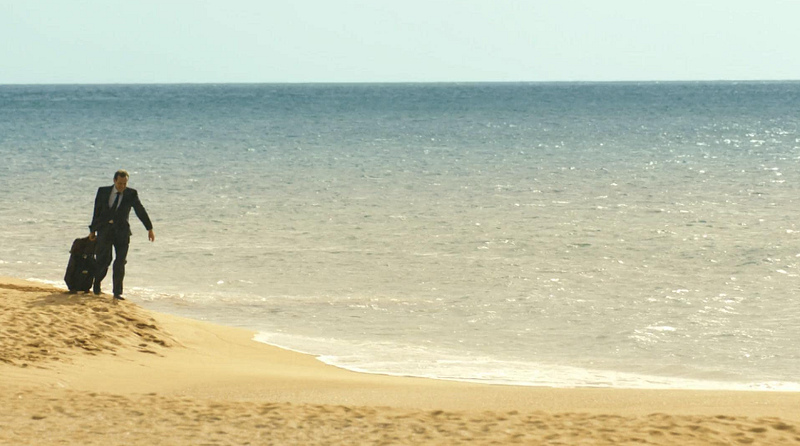
The first series premiere, perfectly paced, does a lot of heavy lifting. Poole, like a fish out of water, unwillingly flies to Saint Marie to solve Hulme’s mysterious murder. The more the visiting detective inspector ponders the situation, obviously, the more the case becomes increasingly clear.
Death in Paradise, like a lot of other British police procedurals, is reliant on guest talent bringing their A-game to the episodes. Rupert Graves, playing James Lavender, is instantly recognisable British acting talents.
Graves, further to being a highly respected thespian, is an accomplished film and television actor. Anyone familiar with BBC One’s Sherlock will immediately recognise Graves. Graves, in Sherlock, played D.I. Greg Lestrade in at least 13 episodes.
The actor, as a thespian, brought to the Theatr Clwyd stage a brilliantly well-realised interpretation of the titular Wolfgang Amadeus Mozart for Simon Callow’s Amadeus. Seeing is believing. The Peter Shaffer written Amadeus is magnificent.
Graves, like fellow guest talent Coralie Audret and Lenora Crichlow, is simply splendid. The episode also features Sean Maguire, Coralie Audret, Karl Collins, Laurence Joseph, and Dominik Bernard.
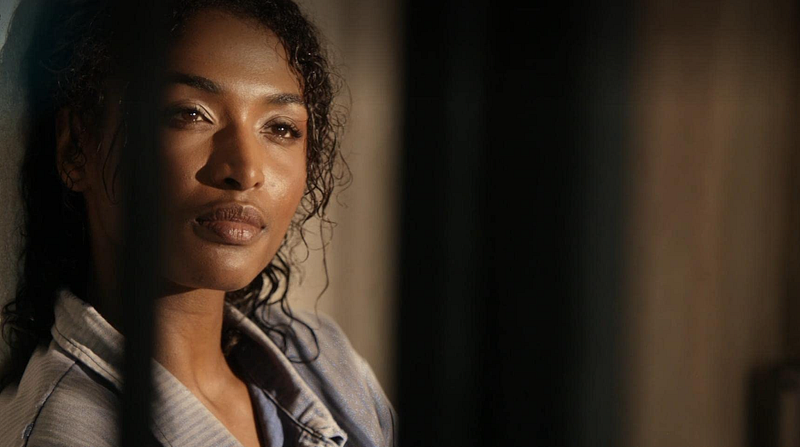
Martins’s character, unbeknownst to Poole, is an undercover police officer. Patterson, after Poole discovers the police station cell empty, spills the metaphorical beans. Someone at the police station is working both sides of the fence. Bordey’s call, in an off-screen scene, must have been placed to the Police Commissioner. It’s only a matter of connecting all the right dots.
Earlier in the episode, attempting to keep her cover, Bordey had pretended she was Hulme’s cleaner. Bordey, not known to local police officers, had been quietly observing activities from a comfortable distance. Both Myers and Best are completely oblivious to Bordey’s true intent. Myers believes Bordey’s tourist routine. How could the local policemen not know Bordey is Catherine Bordey’s daughter?
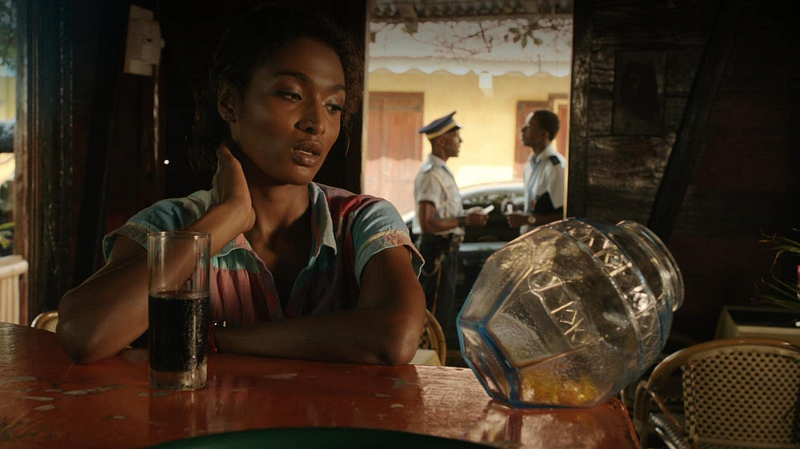
Naturally, even though neither Patterson nor Bordey can trust anyone, doesn’t immediately reveal the ongoing undercover operation to Poole. Poole is correctly irritated. The visiting DI, as we saw throughout the episode, is easily irritated.
Myers, possibly every bit as much set in his ways as the visiting DI is with his methodology, frequently finds fault in his ‘English’ policing methods. It’s horses for courses. Myers berates Best for calling Poole the new “chief”, but later, he does it himself after the DI reveals the true murderer’s identity.
The “chief” comment, noting Poole’s facial expression, doesn’t go unnoticed. Both Best and Myers had previously only seemed to tolerate the visiting detective inspector. Myers calling Poole “chief” suggests at least a modicum of respect has been found.
Poole’s observational skills, quickly noting a certain book doesn’t have any writing down the spine, are impressive. The way Poole presents the evidence, in many ways, is similar to the way author Agatha Christie wrote scenes for fictional private detective Hercule Poirot.
Poole, as the story unfolds, learns his murdered predecessor was having an affair with Sarah Lavender. The affair suggests a possible motive for Lavender wanting Hulme dead. Finding Lavender dead on the beach seemingly puts the case to bed.
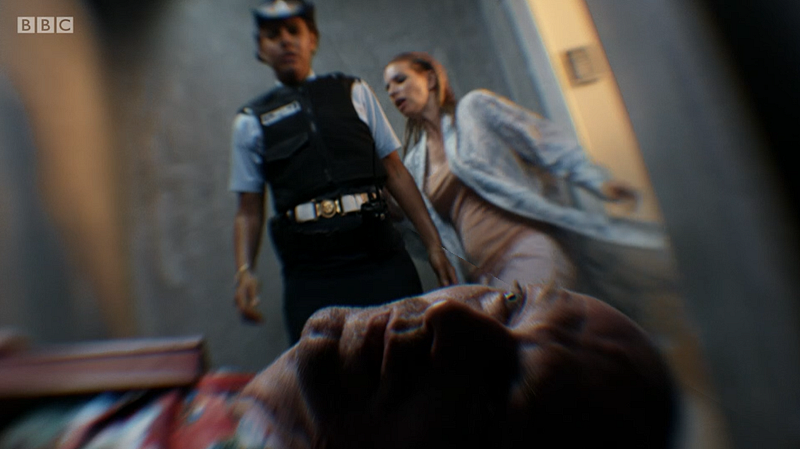
Speer, better known for playing DCI Walter Valentine in Father Brown and DI David Bradford in London Kills, is no stranger to playing police officers. His Death in Paradise character, more of a cameo appearance, is a short-lived affair. Speer’s character, DI Charlie Hulme, is dead before the opening credits begin.
Poole, a detective that likes every t crossed and i dotted, isn't happy. The content of Hulme’s safety deposit box, including money and blank passports, creates more questions than answers. The story keeps coming back to the same question. How can you murder someone in a locked room?
Hulme, having been shot at, locked himself in the panic room whilst Lavender flees the scene. The DI, moments after Thompson unlocks the door, is seemingly discovered dead from an apparent gunshot wound. Thompson, part of Lavender’s human trafficking, had shot Hulme with a compressor equipped gun.
Music Used in Charles Palmer’s “Arriving in Paradise”…
- Sunday Shining performed by Finley Quaye
- Storm Shine Mix performed by Alpha and Horace Andy
- I Shot The Sheriff performed by Bob Marley and The Wailers
- Balla Daffe performed by Orchestra Baobab
- Baddest Ruffest performed by Backyard Dog
- Baby I Love You performed by Carl Dawkins
- A Loving Melody performed by Tommy McCook and The Aggrovators
- Denham Town performed by Winston and George
- Top Rank performed by Sly Dunbar
- Coumba performed by Orchestra Baobab
- House of Fun performed by Madness