avatarOlivia Love

Free AI web copilot to create summaries, insights and extended knowledge, download it at here

4036

Abstract

many of these products continue to proliferate in the legal grey market. Knowing that many of them are made through chemical extraction processes, it is important for consumers to be aware of the potential risks and hazards associated with Delta-8 THC products.</p><p id="76fe">Such risks with Delta-8 THC products include possible variations in purity, potency, and potential side effects. As per the information I gleaned from The Plant Medicine Podcast when buying any kind of cannabis products, it is best to have full-spectrum cannabis products and also be able to read a Certificate of Analysis, which can help assure the consumer that the product actually contains what it is being marketed as.</p><div id="a4fd" class="link-block"> <a href="https://readmedium.com/when-artists-stand-by-plant-medicine-b4396760f61a"> <div> <div> <h2>When Artists Stand By Plant Medicine</h2> <div><h3>Culturally, there has long been a relationship between altered states and art.</h3></div> <div><p>medium.com</p></div> </div> <div> <div style="background-image: url(https://miro.readmedium.com/v2/resize:fit:320/1*[email protected])"></div> </div> </div> </a> </div><p id="e4fc"><b>So how does Delta-9 THC differ from Delta-8 THC</b>?</p><p id="2791">Like Delta-8 THC, Delta-9 THC can be isolated from both female cannabis plants and hemp plants. However, the concentration of delta-9 THC varies significantly between the two.</p><p id="89bf">Female cannabis plants, particularly those bred for recreational or medicinal purposes, tend to have higher levels of delta-9 THC, often ranging from 5% to 30% or more of the total dry weight of the plant. These plants are cultivated specifically for their psychoactive properties and are commonly referred to as marijuana.</p><p id="33a6">On the other hand, hemp plants, which are a type of cannabis plant, have much lower levels of delta-9 THC, typically below 0.3% by dry weight. Hemp plants are grown primarily for industrial purposes, including the production of fibers, seeds, and CBD (cannabidiol) extracts. The low THC content in hemp makes it non-psychoactive and legal under certain regulations in many jurisdictions.</p><p id="9399">In essence, while both female cannabis plants and hemp plants contain Delta-9 THC, the concentration levels differ significantly, with cannabis (female) plants having higher levels of THC and hemp (male) plants having very low levels to comply with legal standards.</p><div id="86d0" class="link-block"> <a href="https://healinglivmama.medium.com/medicine-journeys-how-do-cannabis-and-psilocybin-interact-25729e7ba339"> <div> <div> <h2>Medicine Journeys: How Do Cannabis and Psilocybin Interact?</h2> <div><h3>Cannabis can help support a psychedelic journey, but must be done so with caution and preparation. </h3></div> <div><p>healinglivmama.medium.com</p></div> </div> <div> <div style="background-image: url(https://miro.readmedium.com/v2/resize:fit:320/1*[email protected])"></div> </div> </div> </a> </div><p id="35f1"><b>How is Delta-9 THC produced?</b></p><p id="e5c7">Delta-9-tetrahydrocannabinol (THC) is primarily synthesized in cannabis plants through enzymatic processes. In the plant, THC exists in its acidic form, THC-A (tetrahydrocannabinolic acid). When cannabis is heated, such as through smoking or cooking, THC-A undergoes decarboxylation, a chemical process where a carboxyl group is removed, resulting in the formation of delta-9 THC, which is the psychoactive compound responsible for the “high” associated with cannabis use.</p><p id="247d">In terms of extraction processes, THC can also be extracted from cannabis plant material using various methods such as sol

Options

vent extraction (using ethanol, hydrocarbons, or supercritical CO2), mechanical separation (using pressure and sieving techniques), or heat-based extraction methods (such as rosin pressing).</p><p id="7db7">Moreover, just like Delta-8 THC, synthetic Delta-9 THC can also be produced in laboratories through chemical synthesis methods, although this is less common due to regulatory restrictions and the availability of naturally derived THC from cannabis plants.</p><p id="8843">For the consumer, while these two compounds may be more readily available than full spectrum cannabis products because of legality, the processes used to create both Delta-8 THC and Delta-9 THC general entail chemical, solvent extraction processes. As such, consumers must be discerning and understand how their products are made. When possible, it is best to buy full-spectrum cannabis products that include a certificate of analysis (COA).</p><p id="b9a8"><b>What Can a Certificate of Analysis Tell Us for Cannabis Products?</b></p><ul><li><b>Product Safety</b>: A COA provides information about the safety of the product by detailing the levels of various compounds, including cannabinoids, terpenes, pesticides, heavy metals, residual solvents, and microbial contaminants. It ensures that the product is free from harmful substances and meets regulatory safety standards.</li><li><b>Cannabinoid Content</b>: The COA indicates the cannabinoid profile of the product, including the levels of THC, CBD, and other cannabinoids. This information helps consumers understand the potency and effects of the product they are purchasing.</li><li><b>Quality Assurance</b>: The COA helps ensure that the product meets quality standards and consistency in its composition. It allows consumers to verify the authenticity and quality of the product they are purchasing.</li><li><b>Transparency and Accountability</b>: Providing a COA demonstrates transparency and accountability on the part of the manufacturer or retailer. It allows consumers to make informed decisions about the products they are consuming and helps build trust between consumers and producers.</li><li><b>Regulatory Compliance</b>: In many jurisdictions, providing a COA is a legal requirement for cannabis products. It helps ensure compliance with regulations and standards set by regulatory authorities.</li></ul><p id="a6cd">If you found this information helpful, please consider following me, subscribing to get my content, and/or <a href="https://buymeacoffee.com/healinglivmama">buying me a coffee</a>!</p><p id="4d18">More about me on my <a href="https://linktr.ee/healinglivmama">Linktree</a></p><div id="8718" class="link-block"> <a href="https://linktr.ee/healinglivmama"> <div> <div> <h2>transformational health coach and earth medicine advocate | Linktree</h2> <div><h3>In-person and remote counseling on spiritual, transformational, and holistic health and healing</h3></div> <div><p>linktr.ee</p></div> </div> <div> <div style="background-image: url(https://miro.readmedium.com/v2/resize:fit:320/0*U5ITJkVxb38o5fkv.jpg)"></div> </div> </div> </a> </div><div id="fbb1" class="link-block"> <a href="https://readmedium.com/why-we-need-earth-technologies-to-counteract-conventional-medicine-and-digital-technologies-f9f923216385"> <div> <div> <h2>Why We Need Consciousness Tools to Counteract Western Medicine & Big Tech</h2> <div><h3>It no coincidence that these ancient technologies are re-emerging in public consciousness. </h3></div> <div><p>medium.com</p></div> </div> <div> <div style="background-image: url(https://miro.readmedium.com/v2/resize:fit:320/1*BG5FQwpH2sAZ3h0SGZn8Kw.jpeg)"></div> </div> </div> </a> </div></article></body>

How are Delta-8 THC and Delta-9 THC Produced?

In case you are wondering how some cannabis can exist in legal grey areas.
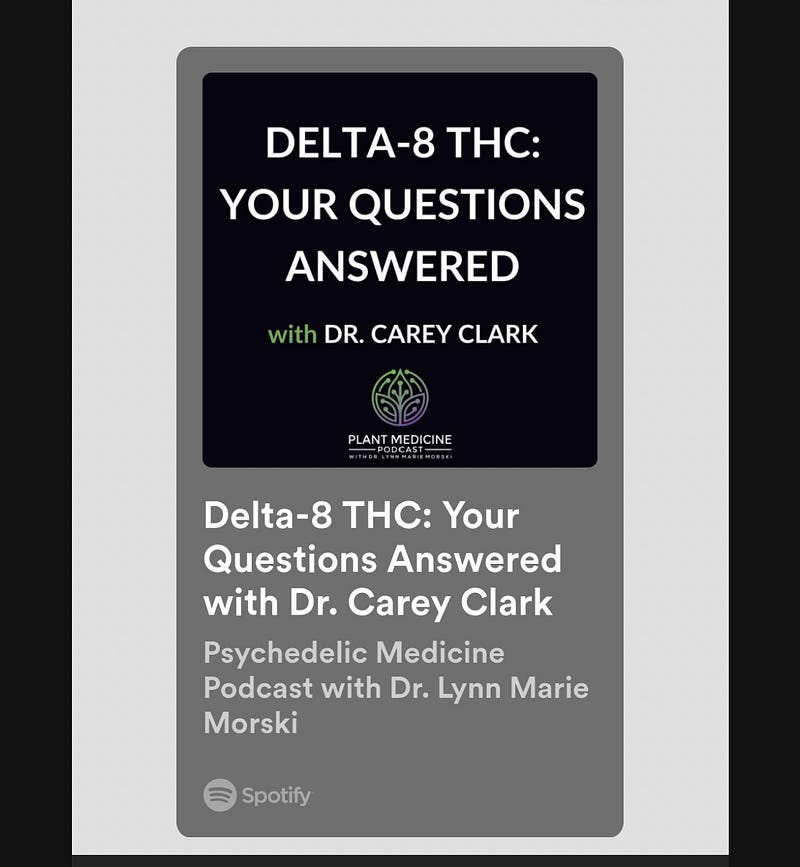
Screenshot by author, Spotify episode linked below

You may have wondered, as I have, how many cannabis products or derivatives are able to exist in the legal grey market.

I recently listened to a Spotify episode, Delta-8 THC: Your Questions Answered, with Dr. Carey Clark, and the episode was both illuminating and affirmative for information I had already known. I had believed that Delta-8 THC was able to exist, in part, in the legal grey area because it is a hemp-derived product. I learned, however, that this is not necessarily true: Delta-8 THC is derived from CBD, generally with use of solvents or made synthetically.

So what exactly is Delta-8 THC?

Delta-8-tetrahydrocannabinol (delta-8 THC) is a cannabinoid naturally found in very low concentrations in cannabis plants. However, it can also be produced through chemical conversion or extraction processes, typically from cannabidiol (CBD), which is more abundant in hemp plants.

There are various methods to convert CBD into Delta-8 THC. One common method involves the use of catalysts and solvents to rearrange the molecular structure of CBD into Delta-8 THC. This process usually involves the following steps:

  • Isolation of CBD: CBD is extracted from hemp plant material using methods such as CO2 extraction, ethanol extraction, or other solvent-based techniques.
  • Isomerization: After CBD is isolated and extracted, it is then subjected to a chemical reaction known as isomerization, where the molecular arrangement is altered to produce delta-8 THC. This typically involves the use of acidic conditions, heat, and catalysts to facilitate the conversion of CBD into Delta-8 THC.
  • Purification: The resulting mixture created from the isomerization process is then purified to remove any remaining impurities, solvents, or byproducts, resulting in a more concentrated and refined Delta-8 THC product.

While Delta-8 THC products are subject to regulatory oversight, and the legality of Delta-8 THC can vary depending on local laws and regulations, many of these products continue to proliferate in the legal grey market. Knowing that many of them are made through chemical extraction processes, it is important for consumers to be aware of the potential risks and hazards associated with Delta-8 THC products.

Such risks with Delta-8 THC products include possible variations in purity, potency, and potential side effects. As per the information I gleaned from The Plant Medicine Podcast when buying any kind of cannabis products, it is best to have full-spectrum cannabis products and also be able to read a Certificate of Analysis, which can help assure the consumer that the product actually contains what it is being marketed as.

So how does Delta-9 THC differ from Delta-8 THC?

Like Delta-8 THC, Delta-9 THC can be isolated from both female cannabis plants and hemp plants. However, the concentration of delta-9 THC varies significantly between the two.

Female cannabis plants, particularly those bred for recreational or medicinal purposes, tend to have higher levels of delta-9 THC, often ranging from 5% to 30% or more of the total dry weight of the plant. These plants are cultivated specifically for their psychoactive properties and are commonly referred to as marijuana.

On the other hand, hemp plants, which are a type of cannabis plant, have much lower levels of delta-9 THC, typically below 0.3% by dry weight. Hemp plants are grown primarily for industrial purposes, including the production of fibers, seeds, and CBD (cannabidiol) extracts. The low THC content in hemp makes it non-psychoactive and legal under certain regulations in many jurisdictions.

In essence, while both female cannabis plants and hemp plants contain Delta-9 THC, the concentration levels differ significantly, with cannabis (female) plants having higher levels of THC and hemp (male) plants having very low levels to comply with legal standards.

How is Delta-9 THC produced?

Delta-9-tetrahydrocannabinol (THC) is primarily synthesized in cannabis plants through enzymatic processes. In the plant, THC exists in its acidic form, THC-A (tetrahydrocannabinolic acid). When cannabis is heated, such as through smoking or cooking, THC-A undergoes decarboxylation, a chemical process where a carboxyl group is removed, resulting in the formation of delta-9 THC, which is the psychoactive compound responsible for the “high” associated with cannabis use.

In terms of extraction processes, THC can also be extracted from cannabis plant material using various methods such as solvent extraction (using ethanol, hydrocarbons, or supercritical CO2), mechanical separation (using pressure and sieving techniques), or heat-based extraction methods (such as rosin pressing).

Moreover, just like Delta-8 THC, synthetic Delta-9 THC can also be produced in laboratories through chemical synthesis methods, although this is less common due to regulatory restrictions and the availability of naturally derived THC from cannabis plants.

For the consumer, while these two compounds may be more readily available than full spectrum cannabis products because of legality, the processes used to create both Delta-8 THC and Delta-9 THC general entail chemical, solvent extraction processes. As such, consumers must be discerning and understand how their products are made. When possible, it is best to buy full-spectrum cannabis products that include a certificate of analysis (COA).

What Can a Certificate of Analysis Tell Us for Cannabis Products?

  • Product Safety: A COA provides information about the safety of the product by detailing the levels of various compounds, including cannabinoids, terpenes, pesticides, heavy metals, residual solvents, and microbial contaminants. It ensures that the product is free from harmful substances and meets regulatory safety standards.
  • Cannabinoid Content: The COA indicates the cannabinoid profile of the product, including the levels of THC, CBD, and other cannabinoids. This information helps consumers understand the potency and effects of the product they are purchasing.
  • Quality Assurance: The COA helps ensure that the product meets quality standards and consistency in its composition. It allows consumers to verify the authenticity and quality of the product they are purchasing.
  • Transparency and Accountability: Providing a COA demonstrates transparency and accountability on the part of the manufacturer or retailer. It allows consumers to make informed decisions about the products they are consuming and helps build trust between consumers and producers.
  • Regulatory Compliance: In many jurisdictions, providing a COA is a legal requirement for cannabis products. It helps ensure compliance with regulations and standards set by regulatory authorities.

If you found this information helpful, please consider following me, subscribing to get my content, and/or buying me a coffee!

More about me on my Linktree

Cannabis
Health
Mental Health
Plant Medicine
Self Care
Recommended from ReadMedium