
How an 8-Year Minimalism Journey Helped Me Find Inner Peace
Peeling away the layers, I discovered what it means to feel “good enough.”
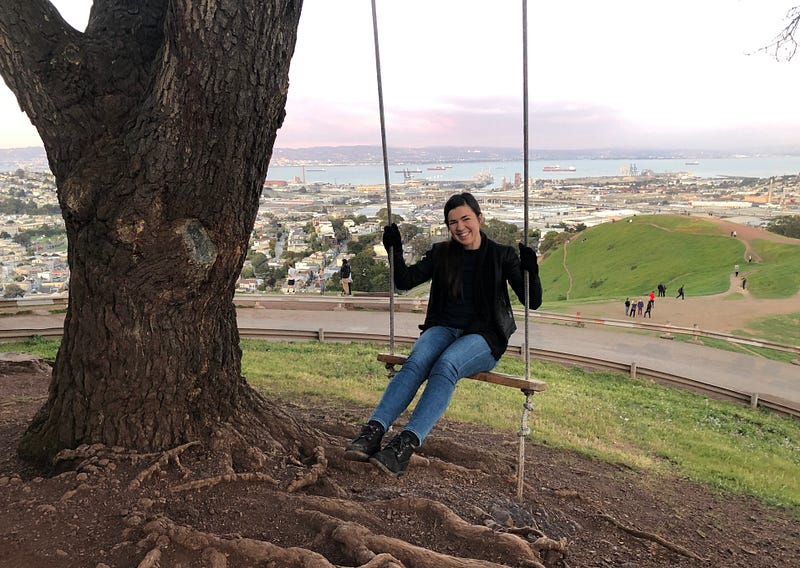
Over the past two years, I’ve started to prioritize my inner world. But much earlier, about eight years ago, I got into minimalism. Since then, the habit of letting go has become an ongoing and profound spiritual practice. By letting go of everything unimportant and unnecessary, you begin to glimpse the truth of who you are.
So eight years ago, I cleared out my wardrobe closet and donated the majority of my physical possessions. As I created literal and emotional space, I felt freer to pursue my dreams. Since college, I’ve traveled through Europe twice, moved to sunny California, had career success and burnout in the tech world, and more recently took a long, soul-searching sabbatical.
Like peeling layers of an onion, I released external visions of success and slowly discovered my authentic Being.
About five years ago, I experienced a period of deep depression, and I turned to meditation and spiritual books. I read “Siddhartha” by Hermann Hesse, “Wherever You Go, There You Are” by Jon Kabat Zinn, and Eckhart Tolle’s books “The Power of Now” and “A New Earth.” I started meditating daily; if nothing else, it made my thoughts more positive.
During this recent soul-searching sabbatical, I’ve circled back to my spiritual journey with a deeper resonance. There’s something about feeling like a failure that makes you question how you’ve been measuring yourself. You wonder: What does it actually mean to “feel good enough”?
Releasing unnecessary clothes
Surrounded by bins and boxes full of clothes, I felt my thoughts racing. God, I can barely breathe in here. Why do I have so much stuff?
Crying on the floor, I knew I needed a change. I guess I thought if I had the right clothes, maybe I’d seem cool. If I wore fancy clothes, it wouldn’t be obvious that I grew up with so many “cheap” things from sales bins and thrift stores.
But when I looked closer, that pink hoodie didn’t fit too well. I felt self-conscious when I wore the tight dress, and those flared jeans rarely saw the light of day.
Maybe I deserve to feel good in my clothes. And maybe, it’s okay to wear only my favorites, even if that meant repeating outfits.
Rethinking my career
In college, I strived to achieve straight A’s, a perfect resume, and a high income. But nearing graduation, I felt terrified of being “stuck in a box” for the next forty years.
So I read more books, starting with a book called “Life 101” I must have found at a used bookstore. Along the way, I absorbed “4-Hour Workweek” by Tim Ferriss and “The 80/20 Principle” by Richard Koch.
If I could be more with less, maybe I didn’t have to push myself so hard. Maybe, I wouldn’t need to work in a box, follow a “traditional” career path, or “climb a ladder.”
Letting go of anxiety
Last year I met with a professional astrologist; she had a depth psychology background. “You get in your head a lot, don’t you?” she said. Yes, I do. Since childhood, I remember staying up at night when I accidentally offended someone. I worried that I must be a terrible person.
But five years ago, my anxiety peaked. Little did I know, the uber-charming and “successful” man I dated was highly narcissistic. That was the first time I realized my thoughts and emotions were separate from me. I could watch them and be the Being that experienced my mind.
Though anxiety feels complex and painful, it forced me to pay attention. With more attention, I found clarity and made changes. Meditation and accepting the present moment softened the edges until I could gradually let the anxious thoughts go. Plus, I’ve found numerous helpful techniques and ways to reframe anxiety.
Becoming more intentional
So you know, this journey has not been linear at all. Looking back, I can see some of the through lines, the ways I’ve slowly grown. But when I measured myself by the number of impressive goals I accomplished, even simplicity goals, I’ve always encountered disappointment.
Starting with core values has been one of the more helpful exercises. Brene Brown, a well-known vulnerability researcher, describes living through your values in her book: “Dare to Lead.” She recommends narrowing it down to your top two values. As you get into the practice of living by your values, tough decisions get a bit easier.
If family had been one of my core values, I probably wouldn’t have moved across the country. If job security or loyalty were my priorities, I would not have left my corporate job (even though they offered me a promotion).
Instead, I value love and courage. By listening for inner resonance, I made choices that felt more intuitive. I took unfamiliar and uncertain paths, which led me here.
Defining personal success
If you don’t take the time to understand what success means to you, someone else always will. In “7 Habits of Highly Effective People,” Stephen Covey used a metaphor that stuck with me:
Think about all the detailed planning that goes into the blueprint for designing a house. Now consider how much thought you’ve put into creating your life.
Of course, there’s a nice balance here. I’ve learned the hard way that ambition can be damaging if you’re not fully grounded in the moment. I’ve landed on a nice ebb and flow: creating gentle goals in the direction of my dreams, then letting go and focusing on the next step.
Minimalism has become a refreshing counter-cultural movement, like a cure for capitalism. Rather than defining yourself by your possessions or social status, with minimalism, you turn inward. Living a simple life typically means opting out of the “rat race” or hierarchal cultures.
The truth is, your ego will never be satisfied with any level of external “success.” We will always be superior and inferior in some way to other people. But when you stop defining your success through comparison, you’ll save yourself great heartache and enjoy more peace.
Letting go of role-playing
As I’ve been rereading Tolle’s books, the sections on role play have really resonated. In some peripheral way, I’ve noticed my habit of shape-shifting for a long time. I heard the tone of my voice change in different social situations.
The thing is, playing roles gets exhausting quickly. In a single week, one person might play the role of their job title, a parent, friend, sibling, lover, or customer. What I never realized, we play into these roles because we think we have to. Acting in ways that strengthen outer identities will bury our true essence.
The good news is that when you notice how you shift in different interactions, you’re already beginning to free yourself. Once you believe that you are already good enough, life becomes simple.
You become most powerful in whatever you do if the action is performed for its own sake rather than as a means to protect, enhance, or conform to your role identity. The ego plays roles because of one unexamined assumption: I am not enough. Give up defining yourself. You won’t die. You’ll come to life. — Tolle.
Discovering minimalism eight years ago has been an incredible journey. When I look back over the years, I see how the pieces fit together:
- Clearing my wardrobe led to greater self-ownership.
- Decluttering my things forced me to identify my priorities.
- Knowing my values led to a clear focus.
- With focus, I pursued one version of success.
- Through successes and failures, I discovered my inner world again and again.
If you’re interested in minimalism and simplicity, you have numerous options for inspiration. Influencers like Courtney Carver, Joshua Becker, Matt D’Avella, Mario Kondo, and The Minimalists share helpful content for taking action now. You can even find documentaries on Netflix: “Less is Now” and “Minimalism: A Documentary About the Important Things.”
You can always begin with something small: maybe a “junk drawer” or your closet. I still refer to Kondo’s famous question: “Does this spark joy?”
If you want less chaos and more peace in your life, here are a few possible action steps:
- Try a simplicity challenge to declutter your physical possessions.
- Find a minimalist blog that resonates and subscribe.
- Listen to a simplicity podcast –I highly recommend the “Soul & Wit” podcast.
- Start by noticing what items feel emotionally heavy; maybe put them in a box for now.
- Practice saying “No” to anything that isn’t adding value to your life.
Mostly, I remember that the journey matters more than the destination. Everything external changes, fades, and eventually comes to an end. Our physical possessions or external achievements never bring us the peace we’re hoping for. Instead, try letting go. Most likely, you’ll find the very few things that matter most.
I write inspiring, uplifting, and empowering content on transformative topics. Join the Weekly Love News on my website to receive free newsletters each Tuesday in your inbox.