
Explore computer vision Demos
How AI Can Find Art Like Yours
How AI understands images | DEMO
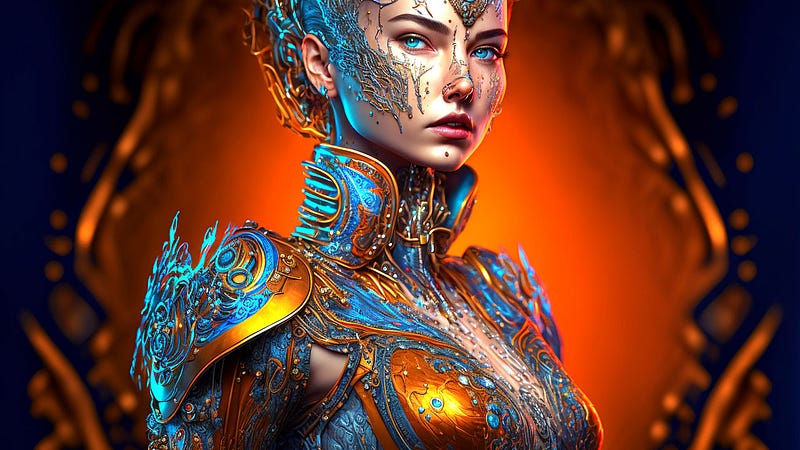
How do images get recognized by machine learning?
Machines don’t look at the whole picture; they only care about the values of the pixels and the patterns they make. They just take an item’s pixel pattern and compare it to other patterns.
🦎Privately Run State-of-the-Art Generator
Self-supervised learning is a class of machine learning in which the model trains itself to learn one part of the input from another part of the input. It is also called predictive learning or learning from the past. In this step, the unsupervised problem is turned into a supervised problem by automatically making the labels for it.
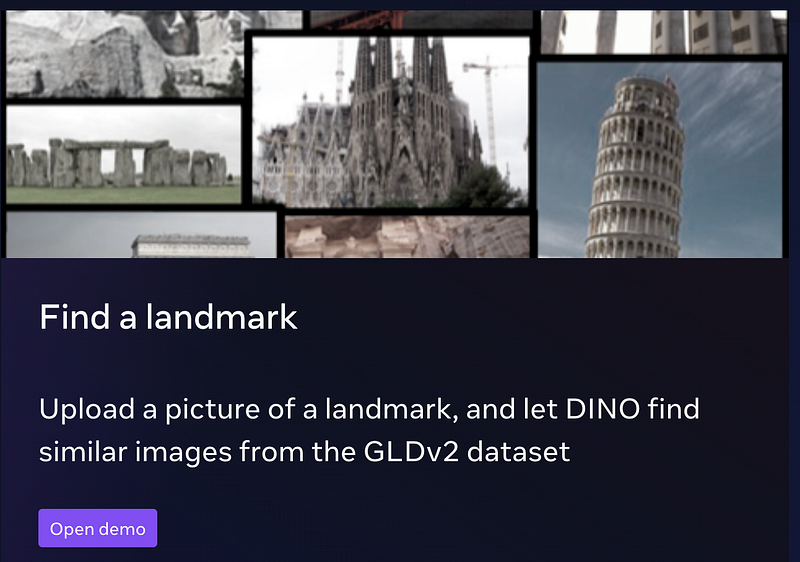
Go ahead and look around the Demos that self-supervised learning
Meta AI has released the first external demo of their self-supervised learning work, focusing on the Vision Transformer model that is pretrained with the DINO algorithm. DINO has become popular due to its ability to understand the semantic layout of an image, and the new demo will allow users to experience its capabilities firsthand. This includes finding similar pictures or pieces of similar images, regardless of their position, location, or lighting in an image.
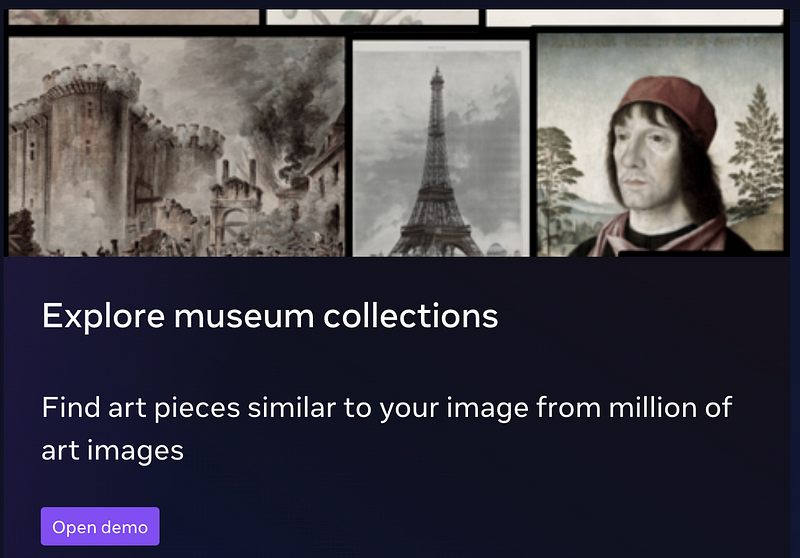
DINO provides characteristics and descriptions that may be used to compare photos when someone accesses the demo and enters or specifies a patch. These outputs may be used to calculate the distance between two photos, like 3D points defined by three integers. (A cat is “far away” from an automobile, yet near to a dog and even closer to another cat.) The DINO demo uses this distance feature to get the nearest picture or patch-match the closest patch.
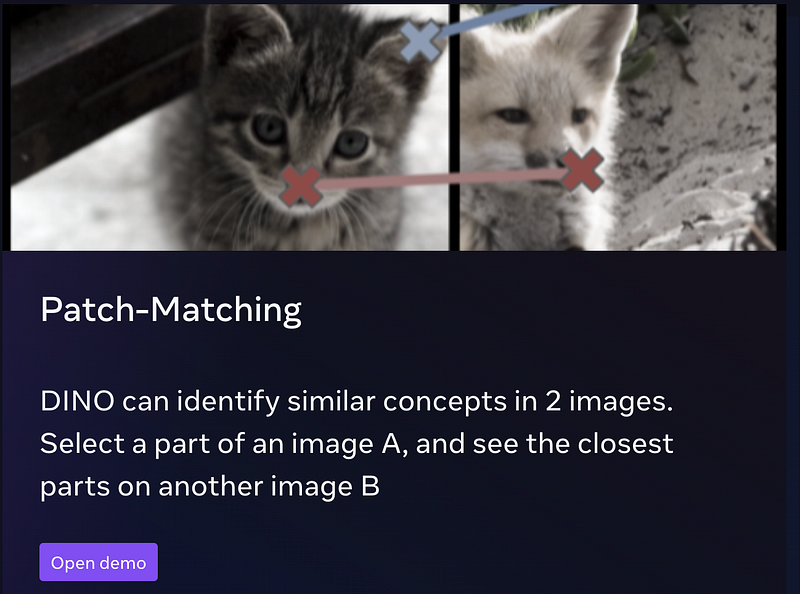
Demonstrating DEMOS
Self-supervised learning will help us develop the metaverse and new AR/VR experiences. Self-supervised learning helps us comprehend real-world situations and how individuals perceive them, which are too large and varied for labeled data sets. For AI to learn from everything it sees and hears, self-supervised learning is needed.
DINO advances self-supervised learning and has many promising future uses, but the authors want to utilize it as part of open research on ethical AI. Unfortunately, uploading human faces is against the demo’s conditions of use. Thus the researchers add a detector.
I invite you to explore the concept of Creative Machine Learning tools by reading and learning from the many articles found on 🔵 MLearning.ai 🟠
- Check out my instagram with new material every week
- If you enjoyed this, follow me on Medium for more
- Want to collaborate? Let’s connect on LinkedIn
- https://linktr.ee/evartology
Data Scientists must think like an artist when finding a solution when creating a piece of code. Artists enjoy working on interesting problems, even if there is no obvious answer.
All our writers (members) receive the opportunity to be promoted on our social media, which increases the popularity of articles published on MLearning.ai
- Linkedin (38K+ ML-professionals)
- Twitter (5.4K+ followers)
- Instagram (2.4K + followers )
- Sketchfab * — individual vRooML!
- Youtube
- Apple Podcasts
- Substack


