
Hope for Afghanistan
Lessons from a hibiscus plant
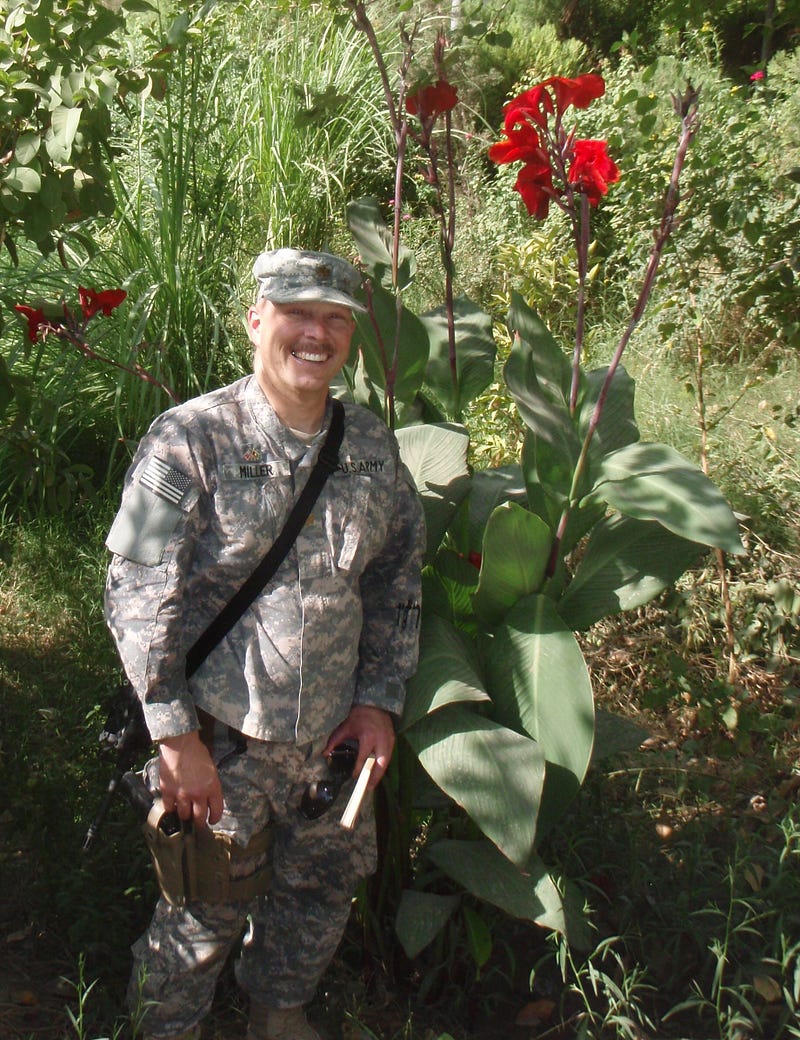
We nearly missed our last chance to get out of Afghanistan. If we hadn’t climbed aboard when we did, there’s no telling when we might have reached the United States. No, it wasn’t August 2021. It was May 2009. And we weren’t boarding a plane leaving Kabul, but rather a Blackhawk helicopter leaving Asadabad, the capital of Kunar Province and location of Forward Operating Base (FOB) Fiaz.
We were finishing our tour serving as mentors to the Afghan National Police in Kunar. We wanted to stay until the last possible moment to make sure the new team was well-prepared. We wanted to give the Afghans with whom we worked the best possible chance to help move their country forward.
It may have been naïve and overly optimistic, but I had hope for Afghanistan. I found hope in those with whom we worked. I met elders who seemed to sincerely want a peaceful future rather than the tribal conflicts and long wars that littered the country’s past. I met young men (we had almost no interactions with Afghan women) who seemed committed to that peaceful future and might provide the foundation for effective self-government.
It was early May, and Costco had their first delivery of hibiscus plants. I knew nothing about hibiscuses (hibisci?), but my wife was pretty good with flowers, especially orchids. I even refer to her as the “Orchid Whisperer” because people give her dying orchids and she revives them, though they are a lot of work. How much harder could a hibiscus be? After consulting with the Orchid Whisper, I was ready to pick one out.
Many of the plants had beautiful blooms which tempted me, but I had an epiphany; choose one with a lot of buds but no flowers. That should mean more blossoms to enjoy at home.
Of course, there were risks with that approach. We wouldn’t know the color of the flowers (those with blooms had a range of colors); we wouldn’t even know for certain it would bloom. I decided the risks were worth the potential rewards.
We made it from Asadabad to Kabul in time for our flight home, but the US military was just beginning to increase (surge as it was being called) the number of troops in Afghanistan while pushing a more robust counterinsurgency (COIN) effort. The intent was to improve the Afghan people’s support for the central government while improving their independence throughout the country.
That meant ramping up the use of Agribusiness Development Teams (ADTs) and more Key Leader Engagements (KLEs; yes, the military likes its acronyms). The ADTs were showing farmers how to improve their productivity and, hopefully, convincing them to grow food crops instead of the highly profitable opium many were currently growing (and that often supported insurgents like the Taliban).
KLEs were intended to convince elders and other residents of small remote villages they could trust the central government to provide security. The villages could then refuse to assist insurgents who often threatened them unless they supported those insurgents.
The surge in troops with an emphasis on ADTs, KLEs, and other COIN tactics were meant to strengthen the roots of Afghanistan’s young democracy. It was hoped they would provide the ingredients needed to grow stronger and self-sustaining. We couldn’t know for certain that a true democracy would bloom or what it might look like, but we as a country, along with many other countries, were willing to make that investment. Our political leaders thought the risk was worth the potential rewards.
We put the hibiscus on our patio where it could be seen from the kitchen and dining room. We watered it according to the instructions on the tag. And then nothing. In fact, not only were the buds not blooming, many leaves were turning yellow and dropping off.
It was getting cold at night (40’s) and not overly warm during the day, so we moved the plant inside until the outside temps climbed. Once the days were warmer, we put it outside but brought it back in at night. We adjusted the watering.
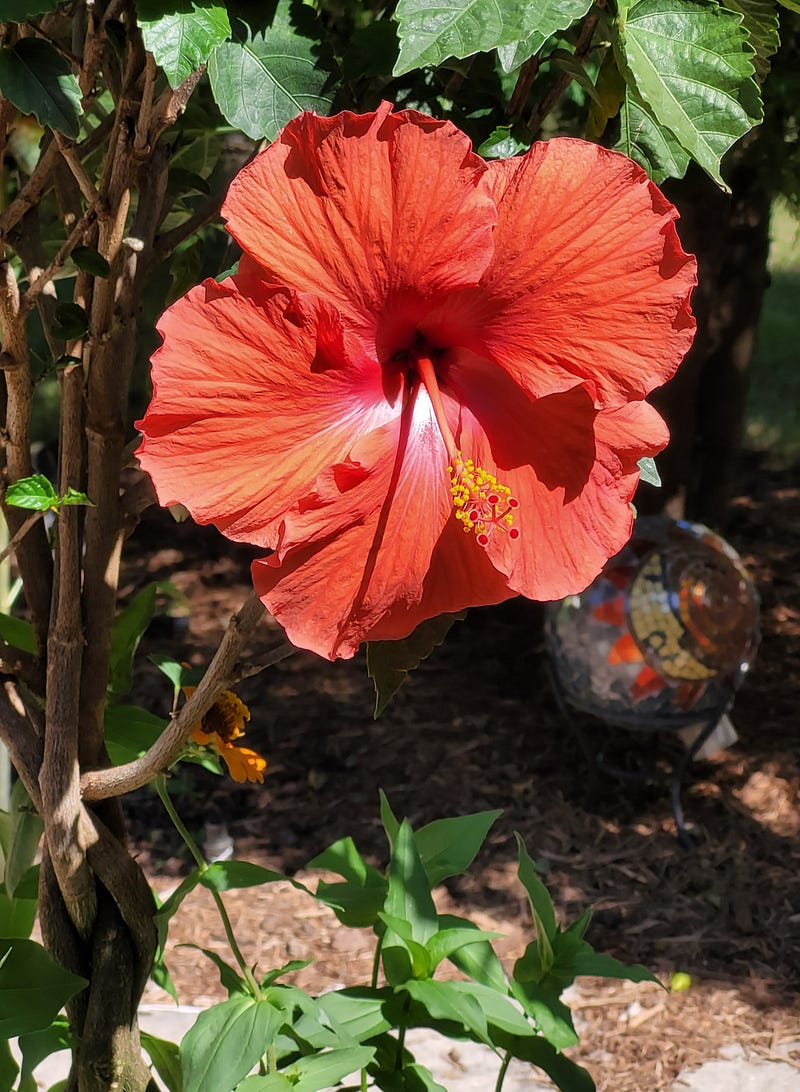
Leaves were still turning yellow, but we finally got a bloom. It was a big beautiful red flower. It lasted one day, but another flower bloomed. We would get one new flower each day as the previous day’s flower came to the end of its life. It wasn’t what I expected, but we were still happy with the modest show we enjoyed each day.
After returning from Afghanistan, I followed events there closely. I was still hopeful and optimistic about the country, but I also saw death and destruction. A few weeks after we left, the team that replaced us was attacked in the middle of Asadabad. No one was killed, but several people were injured.
There were numerous other attacks and battles in Kunar, including the Battle of Ganjigal, which hit especially close to home. In September 2009, two mentor teams with which I had worked just a few months earlier were on their way to a Key Leader Engagement along with their Afghan National Army and Border Police mentees. The invitation to the KLE was a set-up, and they walked into an ambush.
Four US Marines, a US Army Soldier, and an interpreter were killed. Dozens of Afghan soldiers and police were also killed or wounded. It was a painful reminder of the costs of our efforts to bring true freedom and democracy to Afghanistan. Two Medals of Honor were awarded for that battle. In addition to Ganjigal, there were brutal battles at nearby COP Bari Alai and COP Keating among others.
During this time, I also stayed in contact with friends who were on an ADT assigned to Kunar. They were doing really positive things helping local farmers with crops and animals, but the “surge” soon ended, and US and coalition forces started to pull back. The ADT program ended and US bases were turned over to the Afghan National Army to use and run.
This was supposed to reflect that the Afghan security forces — The Army, Police, and Border Police — were becoming self-sufficient. They were supposed to be able to function on their own without constant support — and too often the planning and leadership — from coalition partners. I remained hopeful and optimistic, but those feelings were starting to wane.
Eventually we were able to leave the hibiscus outside permanently and, in June, we experienced the sort of weather we expected a tropical plant to love — hot and humid. We were still getting one flower per day, but also still getting yellow leaves that died and dropped away.
The OW (Orchid Whisperer) started spritzing the hibiscus with water a couple times each day, and it seemed to like that. The leaves stopped turning yellow, but the blooms also came to an end. The plant itself looked very healthy now, but there were no more buds. The big green leaves were nice to look at, but I was disappointed there were no more flowers.
The OW decided to plant some zinnia seeds in the hibiscus’ pot in hopes of getting at least a little more color, and we continued watering and spritzing.
Over the 13 years since climbing on that Blackhawk, and as the war in Afghanistan approached two full decades, my hope and optimism were replaced with deep concern for the friends and colleagues left behind as well as for the future of the country.
Though I did meet Afghans who were fine with the old ways, I worked with many who wanted the country to move into the 21st Century. They wanted all children to receive an education, boys and girls. They wanted the freedom to listen to music, to enjoy sports, and to safely travel throughout Afghanistan and freely to other countries. They wanted to leave behind tribes, warlords, and the violence and dangers they brought. They wanted the economic opportunities that came with education, peace, and freedom.
Three of the interpreters I worked closely with made it to the US. Another kept running into the Special Immigrant Visa (SIV) bureaucracy, despite letters of support and other assistance from me and other US service members with whom he worked.
One of those who got to the US returned to Afghanistan to get married, but he had to leave his wife and the rest of his family in Kabul when he came back to the US.
I don’t know what happened to most of the Afghan police with whom I worked including those with whom I became friends. Many of the police served because they wanted to bring security, peace, and eventually prosperity to Afghanistan. The same was true for other interpreters, contractors, and workers from our FOB. The longer I’d been gone from Kunar, the less likely these dreams seemed to be.
A few weeks later, the hibiscus had some new buds, and eventually another brilliant red flower bloomed. We turned the pot each day so we could better see that day’s offering. I joked about these single 24-hour flowers, noting the contrast with orchids, which provided multiple flowers that lasted for months. As if it heard, understood, and wanted to prove me wrong, the hibiscus went on a tear. In one day, four flowers bloomed. The next day brought multiple blooms. And the next. And the next.
For over a month now, not a day has passed without several hibiscus flowers blooming. In addition, the zinnias have thrived and added their own small splash of color. We continue to water and spritz, but that is a small price to pay for the beauty we are enjoying each day.
A few weeks ago, chaos and tragedy began to erupt in Afghanistan. The US and other coalition countries began their full withdrawal of military forces. Rather than begin to function on their own, the Afghan government collapsed in a matter of days. The Taliban took control of the country with little resistance.
Then the exodus began. Tens of thousands of foreign nationals — including thousands of Americans — realized they must leave the country. The same was true for the tens of thousands of Afghans who supported the coalition forces and now faced the very real threat of execution by the Taliban. Among these thousands were my friends and families of friends.
The interpreter I previously helped did make it out along with his wife and children. It was not, however, the US that rescued them, but rather a European government agency with whom he had also worked.
The wife and two siblings of the interpreter who had returned to get married got out, but other family members were still in Kabul last I heard.
Another interpreter, now a US citizen and living in the US, has parents and other family members hiding due to threats from the Taliban. They made some progress getting to Kabul and the airport but were unable to get any further and are not at extreme risk.
We may wonder if our investment in a plant, or a pet, or a relationship with another human being will provide returns worth the effort. This is especially true when we are not certain — or may be fully clueless — what actions will be effective and what actions may actually be detrimental.
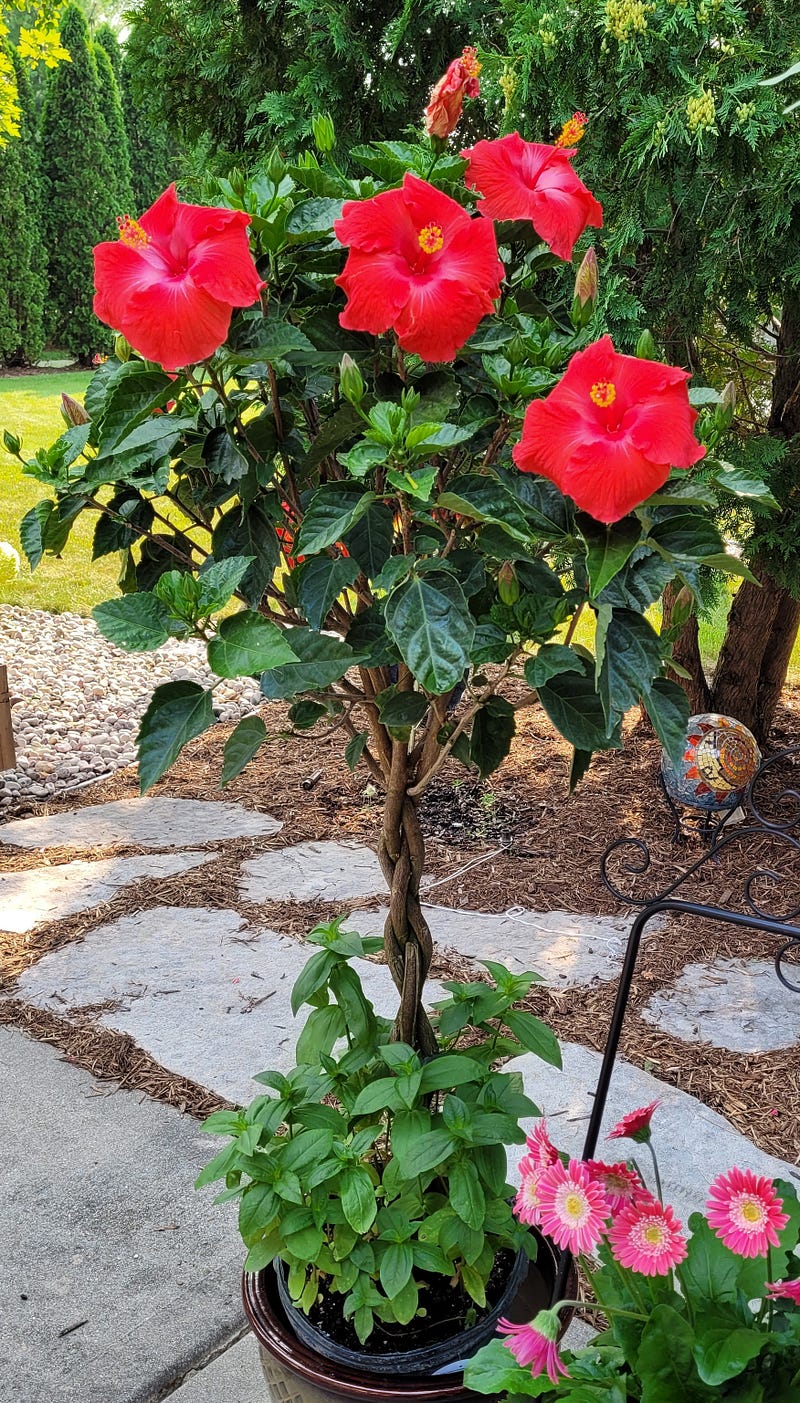
With the hibiscus, we have no real idea what contributed to the eventual outpouring of beautiful blooms. Was it the right amount of watering? The spritzing? Keeping it inside when cold? Finally getting heat and humidity? The addition of the zinnias? Probably it was a combination of these things and, maybe, just not giving up on and continuing to care for it.
The US and most other countries that supported the war in Afghanistan have now left, and it’s unclear the nature and scope of future support to the country. Yet many Americans and people from other nations will not give up on the Afghan people. We will strive to support them in some way or other in hopes they will one day bloom into a self-supporting democracy.
Maybe that is naïve and overly optimistic, but I choose that over the alternatives. And there’s no real way of knowing if the efforts of the past 20 years have somehow contributed to a future Afghan government that is free and democratic and truly supported by the people.
Did we fertilize the roots of that future by showing Afghans we were willing to give up our liberties and luxuries and sometimes our lives to help another nation and its people? Could our willingness to drink tea and break bread with people of such a vastly different culture show we do care about their future?
Could our efforts to build schools, clinics, roads, and other infrastructure — sometimes opposed by those threatened by such construction — demonstrate our commitment and lay the foundation for a new generation of Afghans who are willing to commit themselves to building a better Afghanistan?
As with our hibiscus, we don’t know what the future will bring for Afghanistan. There are people already showing a willingness to stand up to the Taliban and even to die to retain a self-governing country. These appear to be young people; possibly those to whom we provided aid and security over the past 20 years. Maybe they will dictate the future of their country in ways we cannot imagine.
If so, we won’t know which, if any, of our actions made a difference, but I’d like to think every positive step we took planted seeds — some of which germinated — or provided a bit of water, light, or nutrients. And everything we do to help those who escaped Afghanistan will further these efforts because most will continue to nurture their roots in the country. They will make sure those left behind know the future they could have, but only if they are willing to make their own sacrifices to achieve it.
I have come to truly embrace Afghanistan and its people, but it is facing its darkest days in almost 20 years. There is every reason to lose hope. Yet every day I am greeted with a reminder not to lose hope. The new flowers blooming on our hibiscus each day are a reminder our support for the Afghan people may yet bear fruit. We must be patient and provide what support we can then trust in their strength and resolve.
In the darkest days, we must find hope where we can. For now, I am finding that in a hibiscus plant.
To learn more about the Battle of Ganjigal, see the book “Into the Fire” by Dakota Meyer and Bing West.
To learn more about Afghanistan Agribusiness Development Teams, see the book “The Kunar ADT and the Afghan COIN Fight” by LTC David M. Kelly.
For a perspective on the changing nature and scope of US and coalition efforts in Kunar Province, see the book “The Hardest Place” by Wesley Morgan.
You may also enjoy:
Kevin Miller is a Boomer who joined the Army during the Cold War and continues to serve. He has spent 30-plus years working in K-12 education as a teacher, administrator, and consultant and is now on a mission to reinvent our school model. His book Know Power, Know Responsibility provides the imperatives for a complete redesign of schools and the way to get there. See his website knowresponsibility.com to learn more.


