
New York City/Manhattan/Garment District
Honoring Her Father
February Six Word Photo Story Challenge: “Statues”
They came for freedom and work.
At the turn of the 20th Century, New York City rapidly became the heart of the garment and fashion industry. By 1910, 70% of women’s and 40% of men’s clothing were produced in Manhattan.
Jewish immigrants pouring into the U.S. from Eastern Europe were refused employment by most businesses but were welcomed into the garment factories. Although only about 10% of Jewish immigrants were professional tailors, most knew how to sew and make clothing. Soon, 60% of New York Jews worked in the garment industry,
The clothing factories were known as sweatshops because of the long hours, crowded buildings, and low pay.
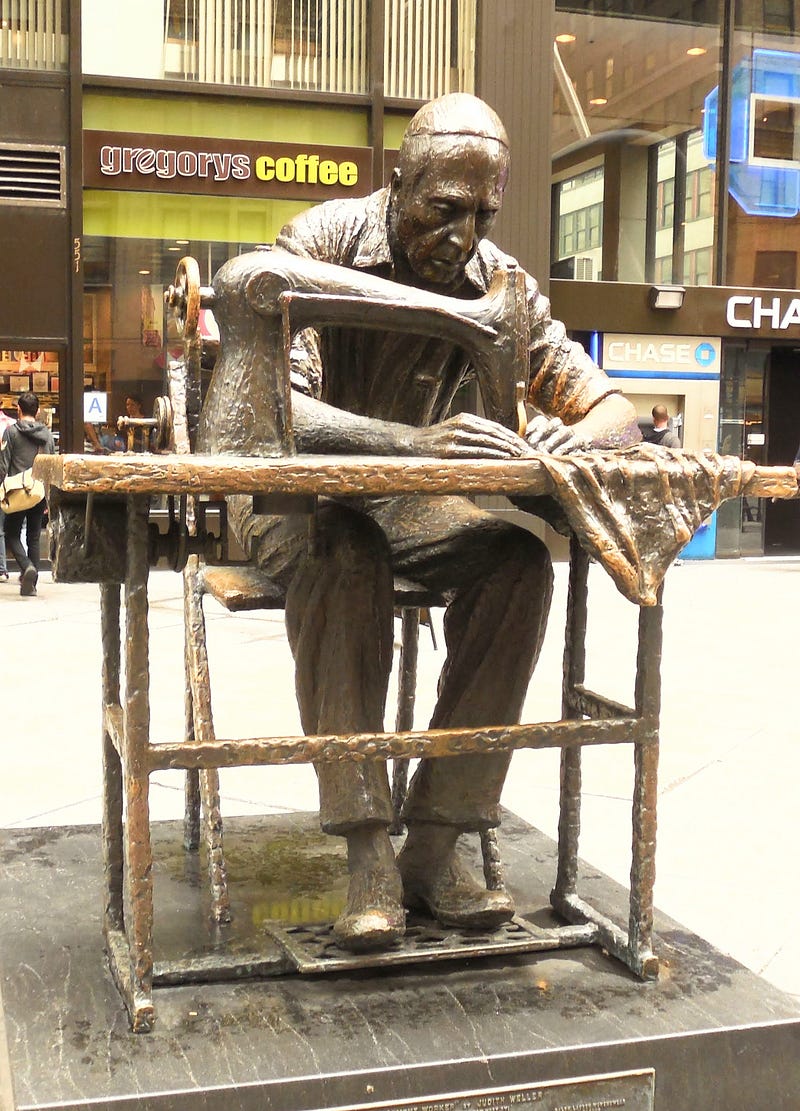
Sculptor Judith Weller created this 8-foot bronze statue in honor of her father, a garment worker, and as a tribute to NYC’s early garment industry. The statue, originally a temporary work of art to be displayed from October 31, 1984 to October 31, 1985, became a permanent landmark at the corner of 39th Street and 7th Ave. It depicts a Jewish male garment worker wearing a yarmulke while intently sewing a piece of fabric.
In her artist statement, Judith Weller said:
The human figure expresses my struggle, anxiety, frustration, yearning, and hope. It offers unlimited and inexhaustible possibilities.
© Dennett 2024
Other Statue stories for your enjoyment: