
Honfleur: The Port-Town Painted a Thousand Times
This colourful harbour is beloved by artists.
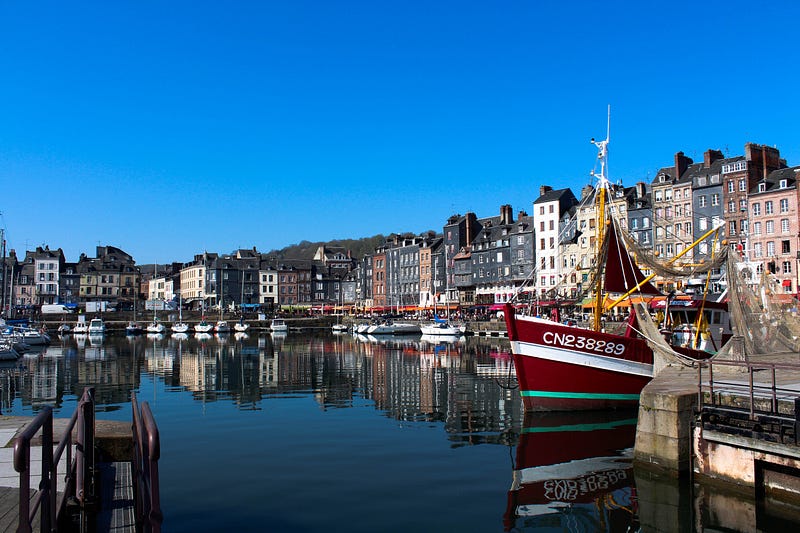
Honfleur has been synonymous with artists. Whether that be local greats, like Honfleur’s own, Eugene Boudin, or his protégé, Claude Monet. To passers-by seduced by the port town’s quaintness. However, you don’t have to be a budding artist to enjoy this pretty Norman port town.
First glance at The Vieux Bassin
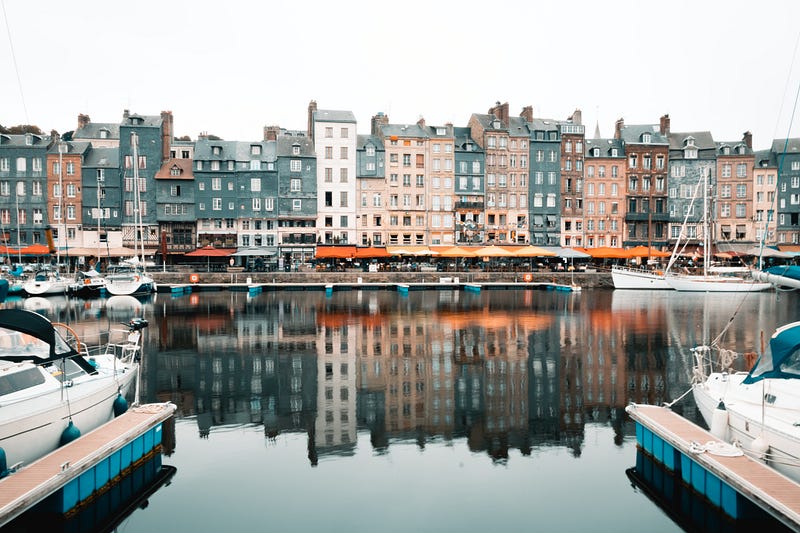
After finding a free parking lot located near the town centre of Honfleur (take note UK), we made our journey to the famous Le Vieux Bassin.
On first impression, the harbour is incredibly quaint, and it was easy to see why this particular viewpoint is so keenly captured on canvas by amateurs and professionals alike.
I am no artist by any means, far the contrary in fact (drawing anything beyond a stick figure would prove challenging enough), but I do notice how capturing this harbour would test your skills.
The buildings themselves, rise and fall in height, almost at random in a soundwave-like fashion. The faces of these buildings lend perfectly to the textured nature of paint on canvas. Some stand exposed with bare brickwork on show, others clad in smooth, dark slate. However, it is the half-timbered buildings standing centuries old, that prove most striking; a teaser for what’s beyond the harbour.
The tightly positioned buildings almost look in competition with one another, each vying for a position overlooking the water.
This body of water reflects the claustrophobic irregularity, mockingly mirroring the buildings above in its distorted watery visage.
History Time: This enchanting town, wasn’t always a point of interest for impressionist painters. The highly sought-after town was built in the 11th century, seeing a lot of action during the turbulent Hundred Years War (1337–1453), in which Honfleur traded hands repeatedly between the French and the English.
It wasn’t until the colonial era that the port town would be used to its full potential. Trade was booming for Honfleur, with Honfleur’s shipowners making their fortunes largely from the lucrative cod-fishing industry and the terrible Triangular Slave Trade. Interestingly, Samuel de Champlain set sail from this very port, on his way to founding the Canadian city of Quebec.
In the 19th century, the neighbouring city of Le Havre took over as the region’s trading powerhouse, making Honfleur defunct of its initial purpose. Nowadays, it is a haven for painters and travellers, with the only maritime action coming by way of yacht and sailboat owners.
The Backstreets of Honfleur
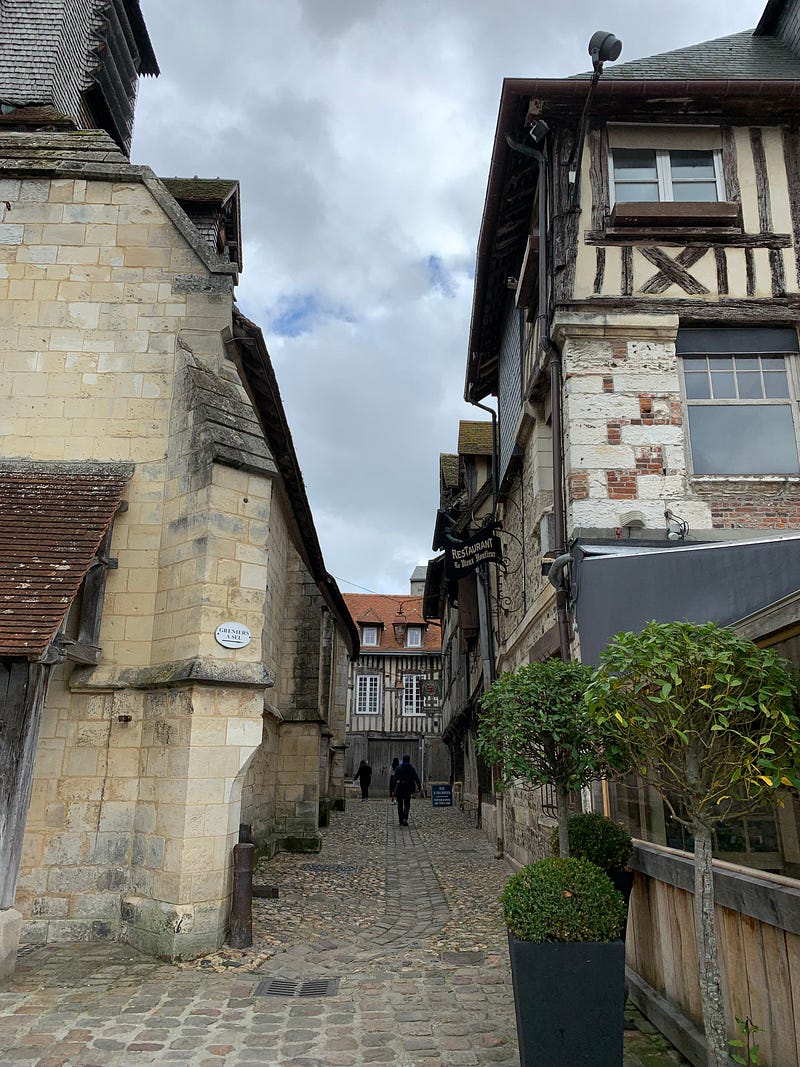
As we peeled ourselves away from the Vieux Bassin, we decided to venture into the cobbled backstreets of Honfleur.
These cobbled pathways lead you to the past, as do the aforementioned half-timbered houses. You almost half-expect someone to launch a bucket of household waste from the windows above your head, like in the good ole days.
The buildings jut out above, some by design, others bowing under the weight of time, altered by the passing centuries.
These characterful, misshapen buildings have mostly been turned into independent shops, each one selling a variety of goods well worth indulging in. From handmade soaps to regional goods like cider and biscuits. We often found ourselves purchasing snacks to try, then squirrelling them away to enjoy by the harbourfront. We particularly enjoyed trying the Kouignette, a miniature version of Brittany’s famous Kouign Amann.
The Creepy Wooden Church of Honfleur
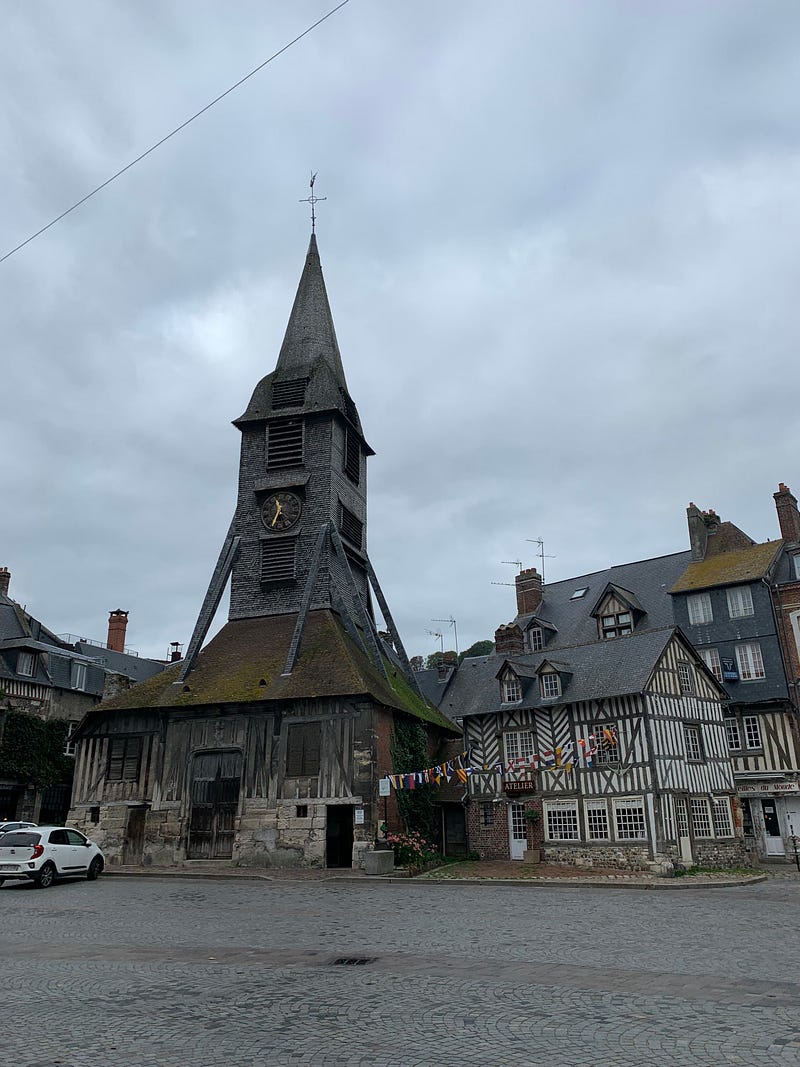
It didn’t take long for us to stumble upon the town’s well-known St Catherine Church, located in the main square.
What I found interesting about this church was that the bell tower was completely separate. Built-in the 15th century, the nave was constructed like an upside-down boat, a common style for fishing towns as it was the only way the local woodworkers knew how to build large structures.
Due to the bell tower being a beacon for lightning strikes, the tower was built away from the church. This was to avoid setting the wooden church ablaze (screw anyone living adjoined to the bell tower I suppose, as long as the church is alright).
Is it just me or does the bell tower look kind of creepy? 👻
Seafood Feast
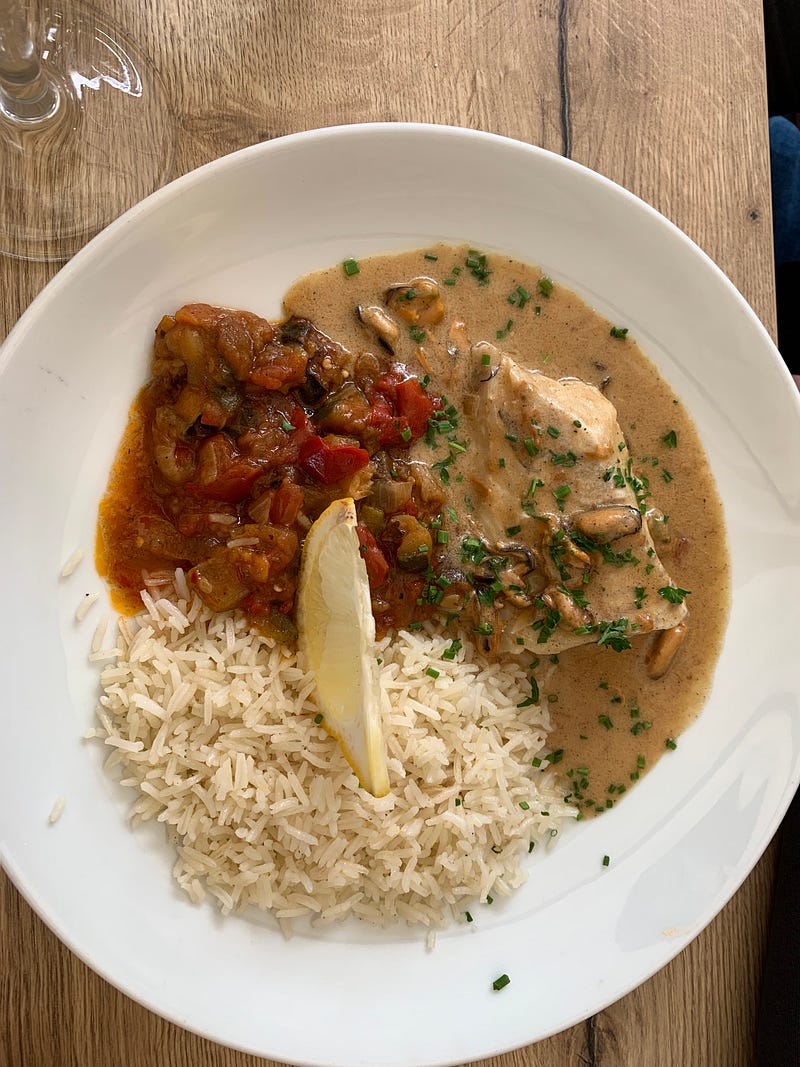
I would be remiss if I didn’t mention the food scene of Honfleur. Unsurprisingly, the focus is seafood with most restaurants offering Fruit De Mer, a platter of different shellfish meant to be eaten in a group or pair.
The Vieux Bassin has plenty of options, but I was dubious of their authenticity. The common ‘Fish and Chips’ on many of their menus didn’t inspire confidence. The back streets and near the church square appeared to have better options, as did opposite the Vieux Bassin.
The restaurant we ate at was great, with plenty of regional options for you to try. For starters I went for the fish soup, complete with croutons, cheese and smoky Dijon mustard.
The Main is pictured above, cod Dieppoise. Tender, flaky cod covered in Dieppoise sauce, which is a cream and white wine seafood stew with mussels. The third course was a wedge of Pont-l’Eveque cheese, a local camembert-like cheese from a nearby town.
To finish I had the Tarte Normand. A shortcrust apple tart, with a sweet almond frangipane cream filling, served with a dollop of creme fraiche.
Overall, Honfleur was the perfect introduction to Normandy and a place well worth exploring for half a day.
Thanks for reading! Check out the link below to find out why you should choose Normandy for your next French escape!


