avatarJair Ribeiro

Free AI web copilot to create summaries, insights and extended knowledge, download it at here

2610

Abstract

ower travel costs, and no more circling for parking spaces will make our daily commutes quicker, less stressful, and more affordable. It’ll also reduce harmful CO2 emissions, improving the quality of air that we breathe.</p><p id="5d96">Different cars are capable of varying levels of autonomy, described on a scale of 0 to 5, and essential to an understanding before we talk about an autonomous vehicle’s operation.</p><p id="4978">The more technological solutions in actuators and sensors the automobile incorporates, the greater its degree of automation. As there are several stages in development, regulations and technical definitions also need to adapt.</p><p id="ed22">For this reason, the Society of Automobile Engineers (SAE) created a classification to differentiate vehicles according to their degree of automation, making it easier for consumers and maintenance professionals to identify the models. The following five levels have been determined:</p><p id="9f82"><b>Level 0</b>: <i>Your car today </i>— humans control all significant systems.</p><p id="0d8a"><b>Level 1</b>: <i>Driver assistance</i> — specific systems, such as cruise control or automatic braking, can be controlled by the vehicle, one at a time. At this level, the driver still handles most of the car’s functions but with a little autonomous help. For example, a level one vehicle might provide you with a brake boost if you edge too close to another vehicle, or it might have an adaptive cruise control function to control your distance and speed.</p><p id="2866"><b>Level 2</b>: <i>Partial automation</i> — the vehicle offers at least two simultaneous automatic functions, such as acceleration and steering, but requires human beings for safe operation. Partial automation enables drivers to disengage from some driving functions. Level 2 vehicles can assist with tasks like steering, acceleration, braking, and maintaining speed. However, drivers still need to have both hands on the wheel and be ready to take control if necessary.</p><p id="b93e"><b>Level 3</b>: <i>Conditional automation</i> — the vehicle can manage all critical safety functions under certain conditions. Still, the driver must take over when alerted. At this level, cars can be considered truly autonomous, but only under ideal road conditions.</p><p id="b303"><b>Level 4</b>: <i>High automation </i>— the vehicle is fully autonomous in some driving scenarios, although not all. At Level 4, vehicles are capable of steering, accelerating, and braking on their own. They’re also able to monitor road conditions, respond to obstacles, determine when to tu

Options

rn, and change lanes.</p><p id="5454"><b>Level 5</b>: <i>Full automation </i>— the vehicle is fully capable of autonomy in all situations, requiring no human interaction. Vehicles can steer, accelerate, brake, and monitor road conditions like traffic jams. Essentially, Level 5 automation enables the driver to sit back and relax without paying any attention to the car’s functions whatsoever.</p><p id="71dc">If you want to read more about Autonomous Vehicles, please have a look at these articles:</p><div id="c01e" class="link-block"> <a href="https://jairribeiro.medium.com/an-introduction-to-autonomous-vehicles-b39024788cd6"> <div> <div> <h2>An Introduction to Autonomous Vehicles</h2> <div><h3>Autonomous vehicles have long lived in our imagination since the Jetsons, and if we can imagine, we can do it. The…</h3></div> <div><p>jairribeiro.medium.com</p></div> </div> <div> <div style="background-image: url(https://miro.readmedium.com/v2/resize:fit:320/0*DoDliEry7v11bQm5)"></div> </div> </div> </a> </div><div id="ee62" class="link-block"> <a href="https://towardsdatascience.com/how-autonomous-vehicles-will-redefine-the-concept-of-mobility-582f8701a5f8"> <div> <div> <h2>How Autonomous Vehicles will redefine the concept of mobility.</h2> <div><h3>Autonomous cars are already among us, and some actions have already been taking regarding auto repair shops and dealer…</h3></div> <div><p>towardsdatascience.com</p></div> </div> <div> <div style="background-image: url(https://miro.readmedium.com/v2/resize:fit:320/0*F-OPuji5_j-i-8hJ)"></div> </div> </div> </a> </div><div id="0c71" class="link-block"> <a href="https://readmedium.com/the-ethics-of-ai-and-autonomous-vehicles-5ddfa0fa2726"> <div> <div> <h2>The Ethics of AI and Autonomous Vehicles</h2> <div><h3>In a perfect world, AI should be developed to avoid unethical issues, but that may be unlikely since those issues can…</h3></div> <div><p>medium.com</p></div> </div> <div> <div style="background-image: url(https://miro.readmedium.com/v2/resize:fit:320/0*hHOekVIZXlgXA70P)"></div> </div> </div> </a> </div></article></body>

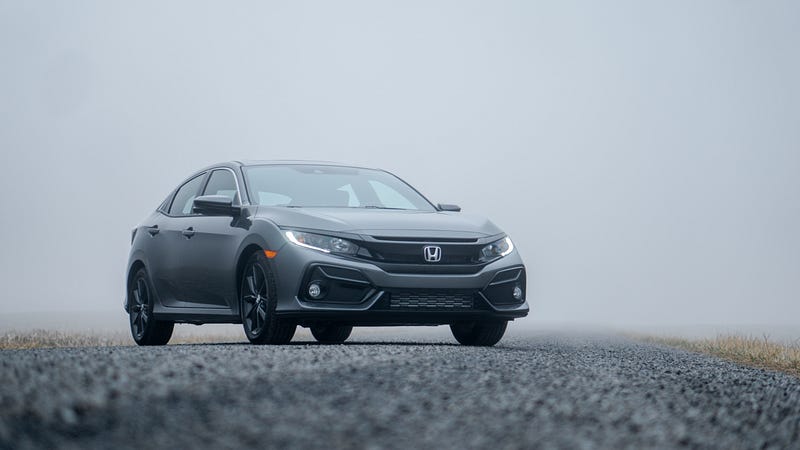
Photo by Zach Vessels on Unsplash

Honda will be the first to bring autonomous vehicles to the masses

Honda will be first to mass-produce level 3 autonomous cars by the end of March 2021

Honda claims it will be the world’s first automaker to mass-produce sensor-packed level 3 autonomous cars that will allow drivers to let their vehicles navigate congested expressway traffic, meeting the SAE Level 3 standards.

The automaker has plans to produce and sell a version of its Honda Legend luxury sedan with fully approved automated driving equipment in Japan from next March.

They announced the news via press release (via Reuters), and this follows the approval by the Japanese government of the company’s “Traffic Jam Pilot” autonomous tech, which for the first time, will allow drivers to take their eyes off the road while it’s engaged.

The race to build self-driving cars is a crucial technology battleground for automakers. Technology companies such as Google parent Alphabet Inc also invest billions of dollars in a field expected to boost car sales.

Autonomy Levels

Autonomous driving is a technology that will change how we will travel and move goods across the world.

Reduced traffic congestion, lower travel costs, and no more circling for parking spaces will make our daily commutes quicker, less stressful, and more affordable. It’ll also reduce harmful CO2 emissions, improving the quality of air that we breathe.

Different cars are capable of varying levels of autonomy, described on a scale of 0 to 5, and essential to an understanding before we talk about an autonomous vehicle’s operation.

The more technological solutions in actuators and sensors the automobile incorporates, the greater its degree of automation. As there are several stages in development, regulations and technical definitions also need to adapt.

For this reason, the Society of Automobile Engineers (SAE) created a classification to differentiate vehicles according to their degree of automation, making it easier for consumers and maintenance professionals to identify the models. The following five levels have been determined:

Level 0: Your car today — humans control all significant systems.

Level 1: Driver assistance — specific systems, such as cruise control or automatic braking, can be controlled by the vehicle, one at a time. At this level, the driver still handles most of the car’s functions but with a little autonomous help. For example, a level one vehicle might provide you with a brake boost if you edge too close to another vehicle, or it might have an adaptive cruise control function to control your distance and speed.

Level 2: Partial automation — the vehicle offers at least two simultaneous automatic functions, such as acceleration and steering, but requires human beings for safe operation. Partial automation enables drivers to disengage from some driving functions. Level 2 vehicles can assist with tasks like steering, acceleration, braking, and maintaining speed. However, drivers still need to have both hands on the wheel and be ready to take control if necessary.

Level 3: Conditional automation — the vehicle can manage all critical safety functions under certain conditions. Still, the driver must take over when alerted. At this level, cars can be considered truly autonomous, but only under ideal road conditions.

Level 4: High automation — the vehicle is fully autonomous in some driving scenarios, although not all. At Level 4, vehicles are capable of steering, accelerating, and braking on their own. They’re also able to monitor road conditions, respond to obstacles, determine when to turn, and change lanes.

Level 5: Full automation — the vehicle is fully capable of autonomy in all situations, requiring no human interaction. Vehicles can steer, accelerate, brake, and monitor road conditions like traffic jams. Essentially, Level 5 automation enables the driver to sit back and relax without paying any attention to the car’s functions whatsoever.

If you want to read more about Autonomous Vehicles, please have a look at these articles:

Autonomous Cars
Autonomous Vehicles
Self Driving Cars
AI
Recommended from ReadMedium