
Homemade Crusty Bread
Making your own bread is healthier than you think
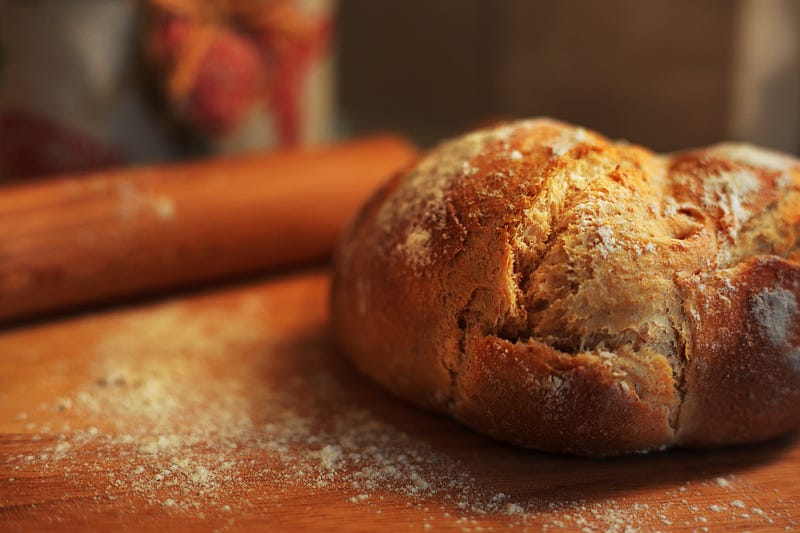
White bread healthy? Wait, what?
With all the low-carb hype out there in cyberspace, bread has been demonized in recent years. If you make it yourself, however, bread can be surprisingly good for you. And it’s so simple to make.
You may feel great about your nutritional choices when you reach for that whole-grain loaf at your local grocery store, but don’t be fooled. Whole grain breads are often low in fiber, not to mention laden with sugar, salt, preservatives, flavor enhancers and trans fats. According to Scientific American:
The American Society for Nutrition (ASN) reaffirmed in a report that fiber-rich whole grains lower the risks of diabetes and heart disease. Media outlets such as Reuters duly reported the news, but many failed to point out a crucial detail: some whole grains may do nothing to reduce disease risks. In fact, many foods legally marketed as whole grains could actually harm health.
Not only does processing strip nutrients from store-bought bread, but manufacturing methods can also result in products that cause sharp blood sugar spikes.
In addition, antioxidants degrade during manufacturing and additives can cause metabolic issues. The result: that so-called healthy bread is going to cause you to gain weight. David Ludwig, a professor of nutrition at the Harvard School of Public Health, states:
Whole grain products can “possibly increase hunger, lead to overeating and increase the risk for diseases related to insulin resistance, like diabetes and heart disease.”
So what’s the solution?
Well, there are plenty. My personal favorite is homemade bread.
Not only is the act of baking bread therapeutic, but its limited ingredients mean you’re not getting any unpronounceable additives or preservatives. Not to mention the fact that your homemade bread won’t have unnecessary trans fats, sugar or salt. And it tastes so much better than store-bought bread.
Is there anything better than the smell of fresh-baked bread? In fact, several studies have documented the positive effect baking has on mental health.
A 2017 study published in the Journal of Positive Psychology found that people who do small, creative acts regularly, such as baking and cooking, feel more relaxed and happy.
As someone who worked as a baker and who still bakes regularly, I promise you this is true.
I used to think making bread from scratch was an involved process, but I could not have been more wrong. It’s super easy and the prep takes less time than a trip to the grocery store.
The recipe below requires no kneading and takes zero baking ability to pull off. It has just four ingredients: flour, sea salt, water and yeast. I literally threw them into my mixing bowl and used a dough hook to combine everything. Time spent: about five minutes.
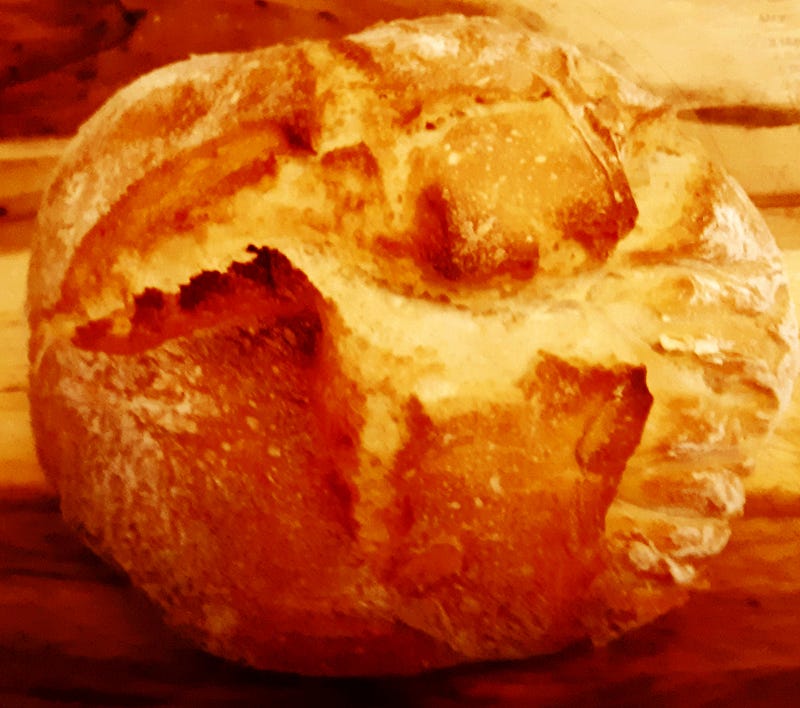
I covered my mixing bowl with a dishcloth and let the dough sit for a couple of hours while I wrote. After turning it onto a lightly floured surface and shaping it into a ball, I scored the top (a little too deeply, hence the messy look of my bread). I transferred the dough to a lightly greased cooking sheet and set it in a pre-heated oven. Time spent: again, maybe five minutes.
I didn’t use the recommended baking stone or a dutch oven but the bread still tasted fabulous. The key is to make sure you keep a tray filled with two inches of water on the lowest rack so the dough will steam properly. This method will give your bread a wonderful, crusty texture on the outside and a warm, moist feel on the inside. Make sure you pre-heat your oven with the water inside so the bread will steam immediately; otherwise the crust will be soft, not crunchy.
I was in a bit of a rush when I made my bread yesterday, so I didn’t let it rise the full time and the crumb — i.e. the pattern of air pockets in the bread — was slightly smaller than it should have been. So the loaf was a little dense but, again, it tasted great.
I confess I don’t make homemade bread as much as I’d like. When I’m short on time though, I make sure to choose a fresh loaf from the bakery section of the grocery store, not a processed one in the bread aisle.
Want to make your crusty bread even healthier? Add a handful of herbs, fresh or dried. Serve it with olive oil and rosemary. Or top it with bruschetta. I made some last night and the impromptu recipe took about 10 minutes. I combined diced tomatoes, garlic, basil, fresh pepper and olive oil then topped thick slices with the mixture. Everybody loved it.
The Italian bread recipe I tried was from ciaflorentina.com but the variations are, truly, endless. When I made mine I doubled the ingredients for a larger loaf. If you want to try another kind of bread, a simple Google search will give you more recipes than you’ll ever have time to make: ciabatta, focaccia, honey-wheat bread, French bread, real whole-grain bread, and on and on.
Rustic Italian Crusty Bread
Ingredients
- 3.25 cups all purpose flour + more for dusting
- 1 tsp sea salt
- 1.5 cups warm water
- 2 tsp active dry yeast
Instructions
- In a large mixing bowl or your kitchen aid mixer add the flour, salt and yeast. Use a spatula or the paddle attachment and mix to combine well.
- Pour in the warm water and keep mixing until everything is incorporated and a soft dough has formed. It will still stick to the bottom of the bowl and that is OK.
- Cover the bowl with some plastic wrap loosely and a tea towel. Allow the dough to rise at room temperature for 2 to 3 hours until doubled in size.
- Sprinkle some flour on your kitchen counter and dump the bread dough on it. Flour your hands to help it out of the bowl as it will be sticky. Don’t panic, this is normal.
- With floured hands fold the dough onto itself forming it into a round ball. Do not knead it, do not handle it anymore than you need to. Use a sharp knife and lightly carve an X in the top of the loaf or just make a few cuts across.
- Place the bread dough on top of a lightly floured pizza peel, cardboard or parchment paper and allow it to rest while your oven is heating up.
- Preheat your oven to 450”F with a pizza stone inside for about 45 minutes before baking the bread. Fill an oven proof bowl with 2 inches of water and place it on the bottom rack. This will create the steam that will cause the crust to become crispy as it bakes.
- Once your oven is hot sprinkle the pizza stone with some semolina flour or corn meal and carefully slide the bread loaf on top. Bake the bread for about 35 to 45 minutes until golden brown all over and cooked through.
- Transfer the bread to a cooling rack and allow to cool off completely before slicing into it. You can also let it cool inside the oven with the door slightly open.
Dutch Oven Method
- Instead of a pizza stone preheat your oven with a dutch oven inside. Once hot, carefully place the bread loaf inside the dutch oven ideally using parchment paper for easy transfer. Cover with the lid and bake for 30 minutes. Remove lid and bake another 5 minutes until golden brown on top. Remove the bread from the dutch oven and transfer to a cooling rack or it won’t stay crispy.
Sources:
Whole-Grain Foods Not Always Healthful — Scientific American
Rustic Italian Crusty Bread Recipe Video • CiaoFlorentina
Baking Your Own Bread Has Therapeutic Benefits | HuffPost Canada Life (huffingtonpost.ca)
Much thanks to Lucy The Eggcademic (she/her) for tagging me in her prompt: What’s a healthy habit you want to treat yourself to more often? I didn’t end up writing a poem, but I hope this article is helpful anyway.
To join in, answer the prompt and tag a few people.
If you liked this article, you might also enjoy this one:


