
Homeless in an MMO (Part 3)
Examining MMO Housing/Halls in: ESO, Istaria, Eve Online, FFXIV, PoED, Dynasty Online, Facebook/Mobile.
This is a continuation from Part 2, which can be found here:
Here we are going to cover several more MMOs and their contribution to the Player Housing and Guild Hall discussion:
#4 Elder Scrolls Online
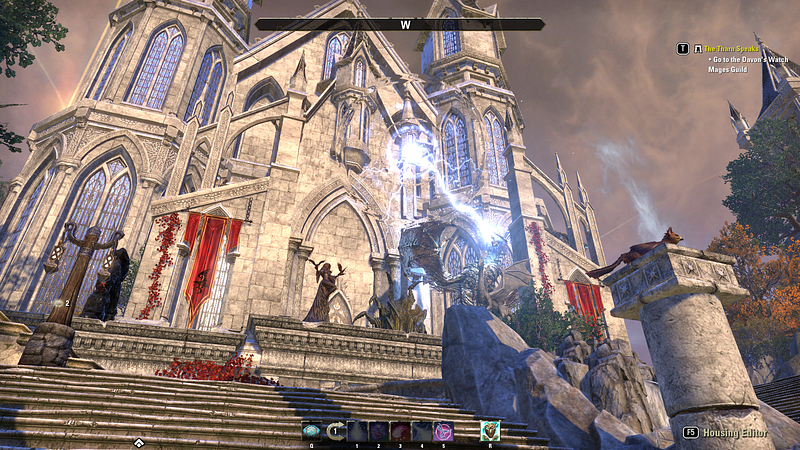
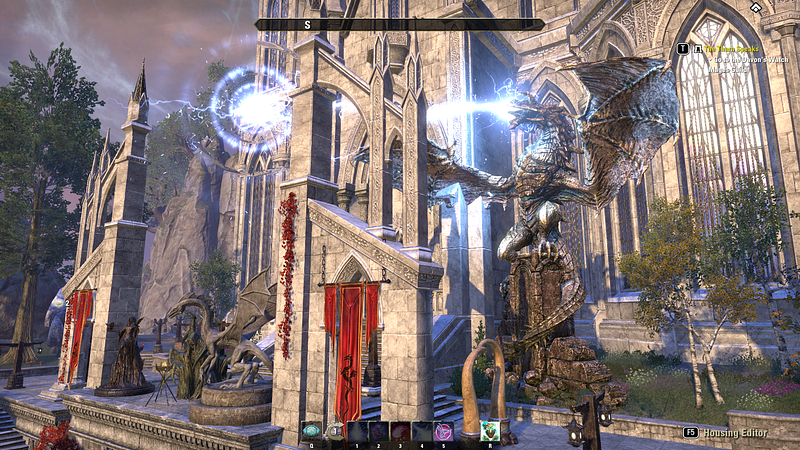
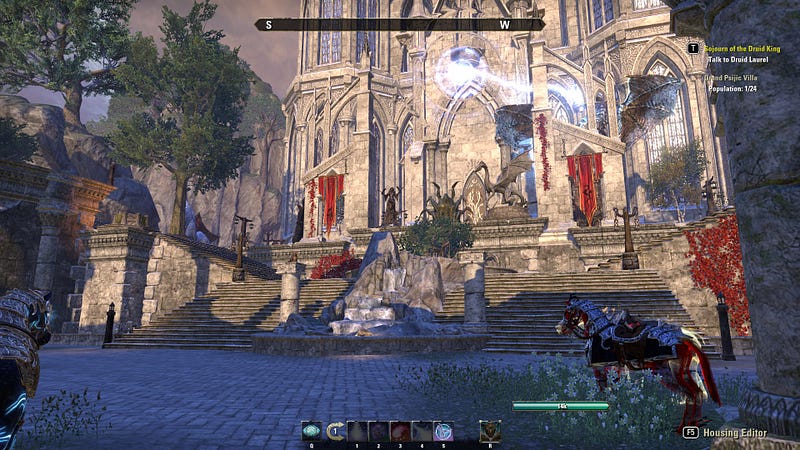
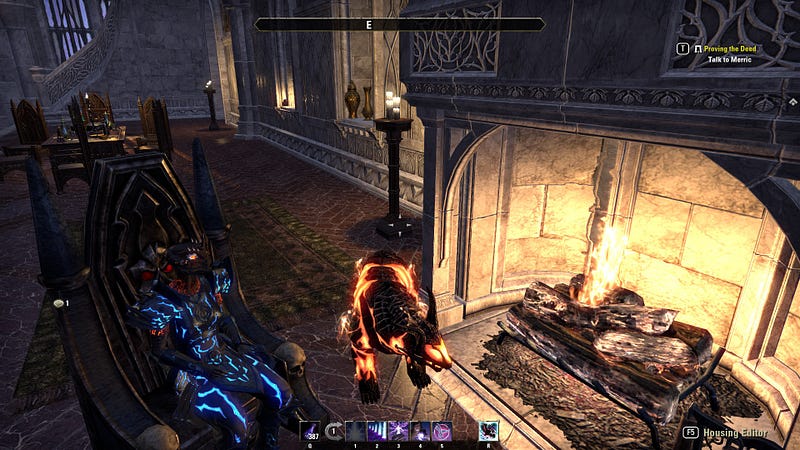
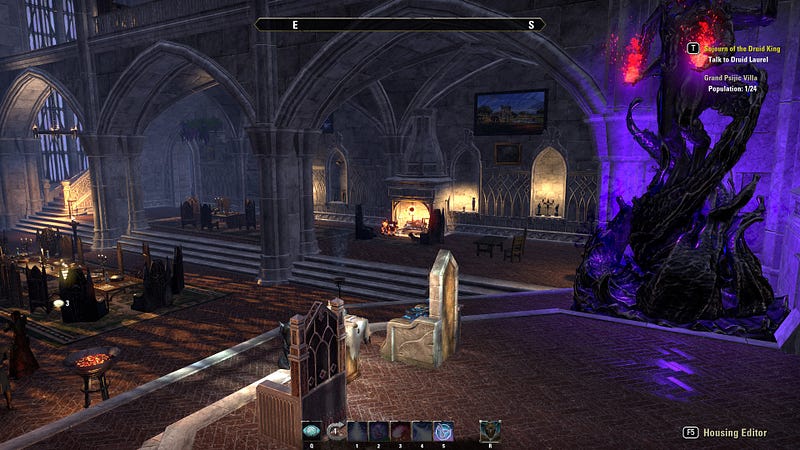
Elder Scrolls Online comes in for me with high marks for the player housing system they have. Developers should look at this system closely *side-eyes Blizzard*. The key here is regional availability, culturally themed, and budgeted for several tiers of financial access. Just about every single region of this world has housing opportunities from attic rooms of an inn to an expansive and luxurious castle (or a large piece of land in Coldharbour, on the Daedric plane… if that is more your flavor). These are one-time purchases that’ll be with you forever, and you can fill them with decorations, trophies, mounts, NPCs, etc. Each decoration can be individually positioned, rotated, and even scaled in size to fit your desires. Many of the decorations are looted or purchased in their Crown system, but players can also create many of the decorations by hand through the trade/craft system.
While ESO does not have Guild Halls specifically, they DO allow a guild member to assign their personal house as a “guild house” that everyone in the guild can visit. This is an elegant solution to avoiding the need for a separate Guild Hall, but it does require someone being that volunteer to offer up their personal space. Of course, a guild leader might be just fine with that, especially if the guild helps supply the furnishings. So it really depends, eh? Good idea though!
One of the more interesting features of this system’s decoration assets is the procurement through Archeology. You can literally go out and dig up decorations to put in your house! Quite a nifty thing, and that is something I believe is a brilliant integration that should be something developers consider. Offering multiple avenues for players to gain these things will further assist in the interest in multiple systems of the game, and of course, overall retention as well. For example, many games already have some kind of Archeology profession. Integrating object retrieval through that system is a great place to start considering such features for guild halls and player housing.
One way ESO incorporates subscription retention from the housing system is by adding optional decorations that can be claimed once a month (the player must go into the game store and collect it, each month). I have personally enjoyed this greatly, and have actually considered subscribing just to keep accumulating these things, many times. This is a brilliant strategy as most subscriptions allow for nothing more than to simply play the game. ESO goes a step further to offer additional benefits, which is certainly something to consider. In addition to that decoration, there is a small stipend of in-game currency given to the player that can only be used for the game’s store: Crowns. Another good move. By simply leaving a small trail of breadcrumbs every month, they give players a promise of additional rewards (decorations, saving up for a new home, bonuses, boons, skins, mounts, pets, crates, etc) at no extra cost. Great idea.
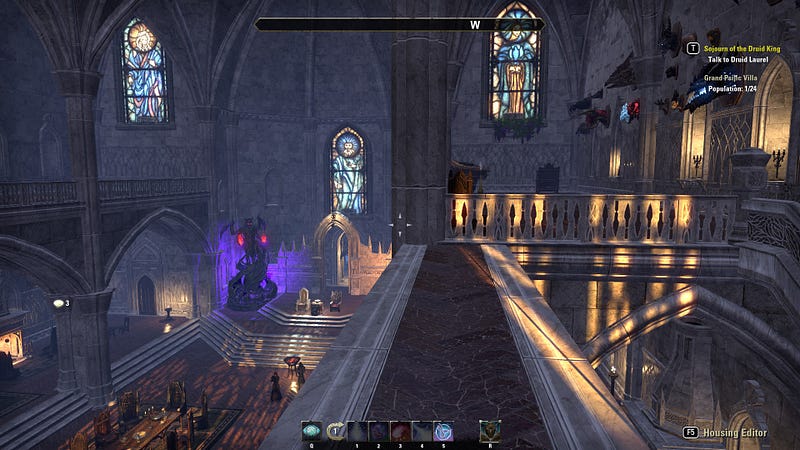
In the screenshots above, I have shared parts of the exterior and interior to the Grand Psijic Villa. This is a large and expensive piece of property… but I (and many others) obtained it for free for our participation in an expansion pre-launch event. They set up milestones for events and everyone who took part in it got various rewards outlined in the goals. For that particular expansion event, the house was the final reward. I have specifically spent a great deal of time, effort, and even additional disposable income furnishing that home, as have many others no doubt. While ESO didn’t get the initial money from the sale of those houses in the special event, what they did gain was member retention and additional sales in the game store directly because of it. Another brilliant idea to encourage such things with a mere gift; quite a delicious carrot.
Quick note: in the last image of that series above, in the top right you can see a wall filled with boss trophies. How awesome is that? This is a really fun way to memorialize some good victories!
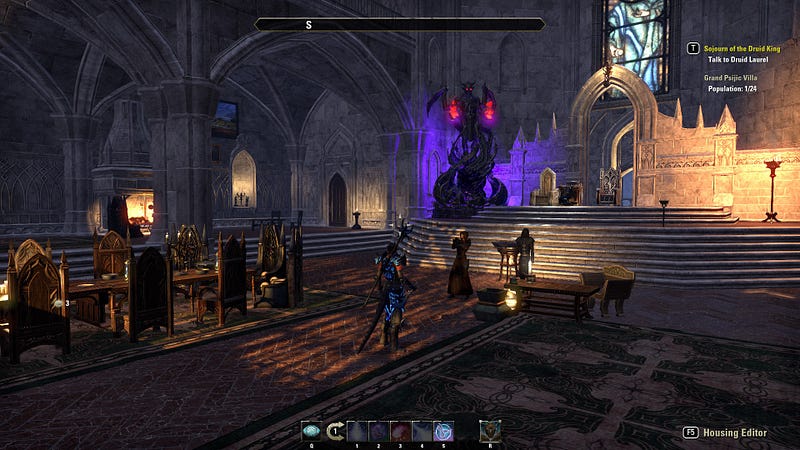
Another quick thing to consider: NPCs in your home (as seen above). Strange, right? But is it? Many of the complaints I’ve seen from the whiny haters crying about World of Warcraft Garrisons and Class Halls was that the main cities didn’t have as many players in them. That speaks to the desire to have people around… the kids got lonely. Awe. After feeling sorry for the lonely kids for a moment, we should really consider that: humans are social creatures, after all, and it would be a good idea to facilitate at least a shadow of that illusion in player housing and guild halls by having the option of NPCs being there. I can tell you from my personal experience that putting in a couple of them to my own Villa really made a huge difference, even more so than my mounts/pets! This is an emotional and psychological thing… and developers really shouldn’t ignore it. Guild Wars 2 and STO also addressed this by having NPCs in there. This is a subtle addition that could really make a huge difference! I know it adds a bit to the complexity/system load, but by all means, don’t make it free or even cheap for the player to obtain them in that case.
Finally, I wanted to point out the ESO crafting system’s relationship with player housing. This is something we should see more: integration and multi-use crafting systems into a living world. It isn’t too hard of a stretch to see MMOs with crafting systems make things available in such a way: blacksmiths to produce signs, lampposts, frames for various things, nails or other supplies of various stages to complete other projects, cauldrons for that strange lady in the woods, whatever. Leatherworkers, clothiers, and tailors, all have a massive world of furnishing crafts to offer. Herbalists and alchemists have options too. The point is that these kinds of systems can be used to encourage harvesters so they fund the producers who can then fill player-driven markets and facilitate a global economy of goods… which will lead me into Eve Online.
Elder Scrolls Online takeaways:
- Multiple themed accommodations are available regionally at several tiers of affordability, aiding in immersion.
- Decorations include a variety of acquisition paths: built via craft/trade system, recovered through professions (Archeology), won in various ways, purchased through in-game store, etc.
- Placement freedom of decorations within location’s capacity: interior vs exterior capacity limits.
- Player-driven market for decorations.
- Incentivised subscription.
- Desirable pre-launch and other event milestone reward system.
- Interactable NPC options within housing.
- Specific boss trophy decorations for display in housing.
#5 Istaria: Chronicles of the Gifted
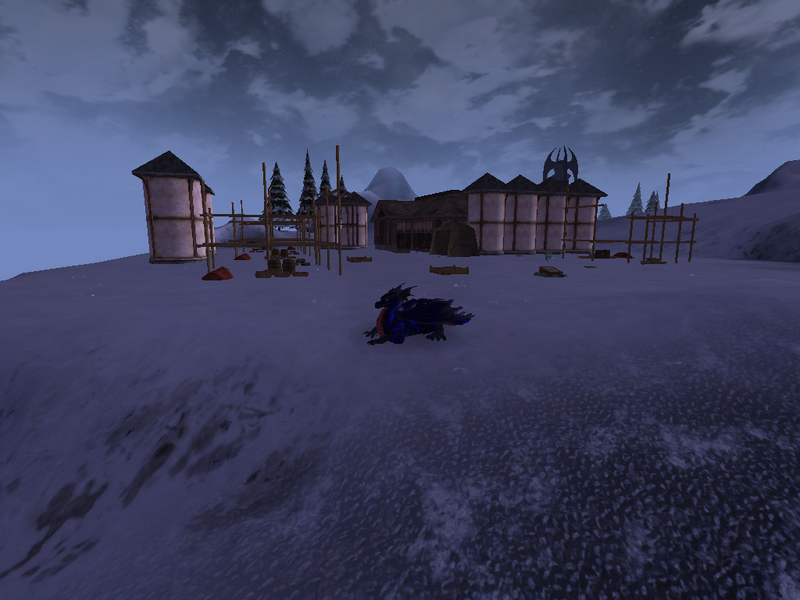
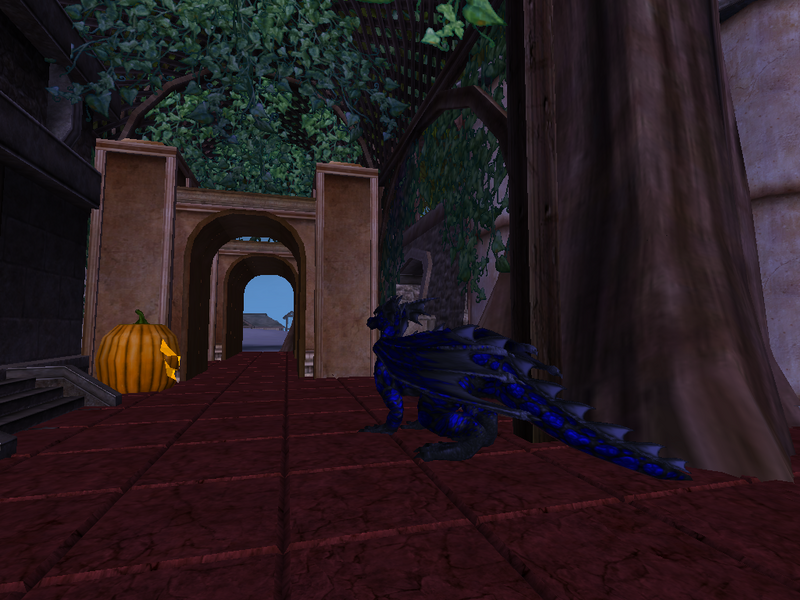
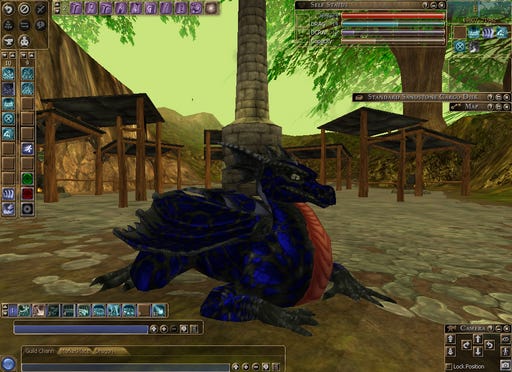
This brilliant gem is often overlooked by many due to its advanced age: it predates the World of Warcraft. Aside from the absolutely unique treasure of being able to play AS a dragon hatchling and then grow up and fly around the world, the crafting systems and player housing systems are very noteworthy. In this game, player housing is offered at various lots in communal clusters around the world. Open world means they are not hidden behind an instanced pocket dimension and they sit out in the public world for all to see. If you are with a group of players that are active, you can build a small community. Not quite doable these days when you have millions of players, but it was nice to see communities literally grow around you …or maybe it *IS* something to consider in a limited way? Something to consider: limited and expensive open world lots as expensive (in terms of money, in-game currency, or extreme success rewards) showcase for the best of the best to publically encourage housing competition. That is worthy of thought.
Multiple trade skills are required to create the various components needed to build these structures. Bipeds (humanoids) build structures as you see in the first two screenshots above. Dragons build their homes in mountains, and they are called lairs. Lairs were completely different than the structures bipeds created, and that brought a great deal of diversity into the game. This was an amazing touch that further elevated this game’s devotion to the unique player housing offered: they considered race. Of course, dragons wouldn’t live in a square box like humans do, right? Classic mountain lairs for dragons-and that was almost enough of a compelling reason for my wife and I to re-sub to the game and build our place. This kind of consideration should be evaluated by developers, especially if they have playable races exceeding standard humanoid sizes.
Istaria takeaways:
- Extensive crafting systems specifically support the player housing industry.
- Racially specific housing (humans vs dragons).
- Holiday decoration options add character and helps to establish themes.
- Feasibility of limited open world developments to encourage competitive nature in housing systems.
#6 Eve Online
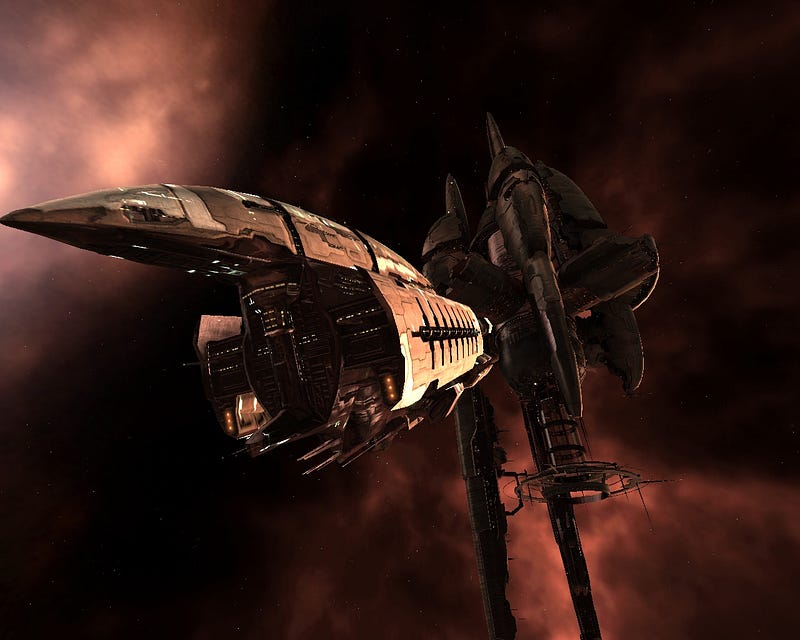
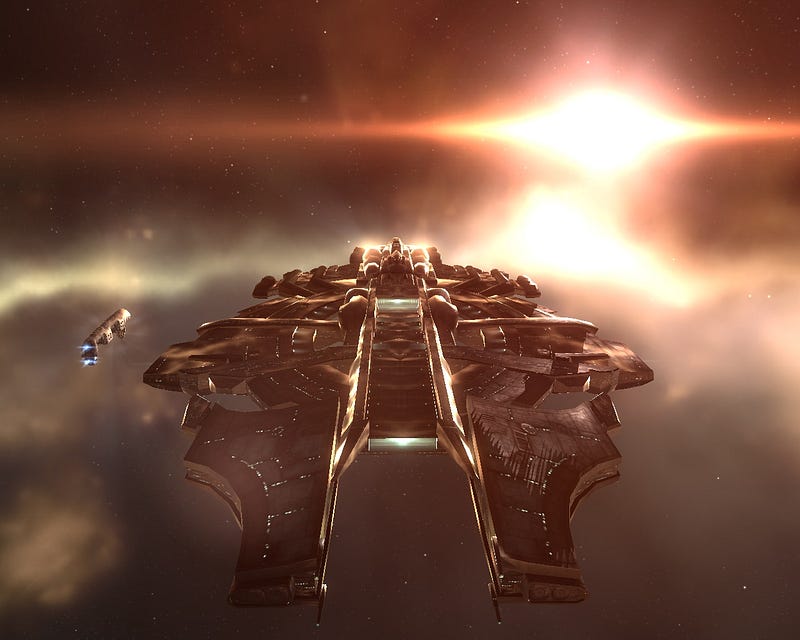

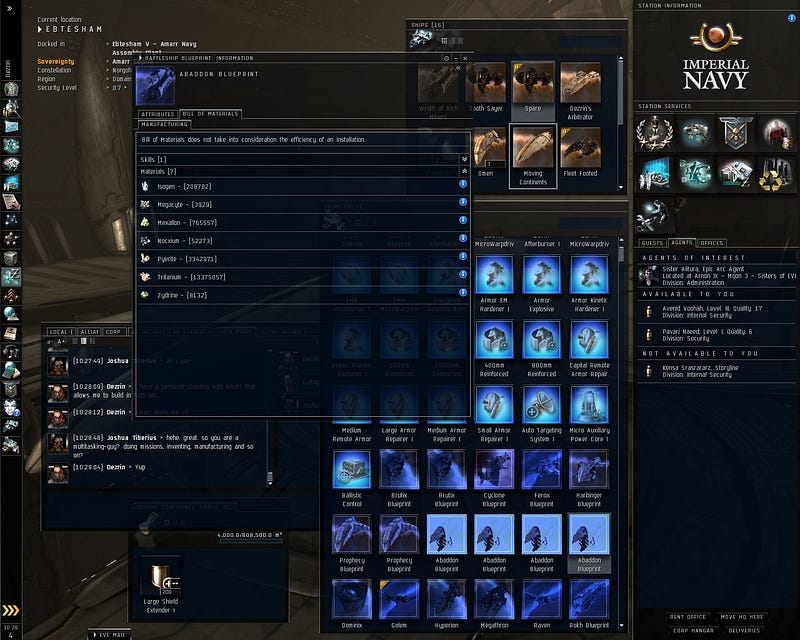
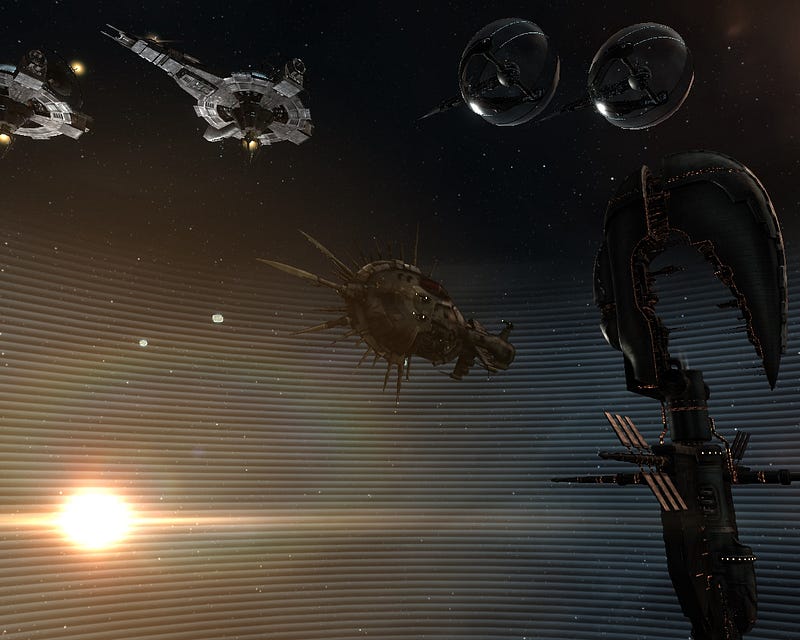
This game is the apex of realistic hardcore competitive sci-fi. You can build or buy your ships, turrets, armor plates, power cores, etc. When your ship is destroyed, that’s it. It’s gone forever. The only thing left is your ejected pod and a desperate hope you can warp away before the enemy’s targeting scanners lock on to your tiny little egg. If it’s a bad day and your egg is popped (leaving your frozen corpse floating among the stars to be collected as a trophy), your clone will wake up in the last place you visited the med facility, soaking in regret (depending on the situation of course). That is the reason the Eve Online player-driven market is so lively: thousands lose their ships daily, especially during major alliance battles (Dec 2020 system B-R5RB, ~5k players: 1k Titans, 400 Super Carriers, 400 Dreadnoughts, etc). The desire for a player’s little piece of the game is exceptionally fierce here.
Despite a lack of actual housing, the player-anchored stations around moons sorta count here. They are bought or built by the players, placed in space, filled with facilities of all kinds to accomplish their goals, and defended with turrets or allied forces. For a time, CCP had the ability for players to actually disembark their ships inside primary system stations and walk around. They gave everyone a chance to redesign their character in a 3D model just for that purpose.

So while there isn’t a specific ‘player housing’ or ‘guild hall’ in this game, the POS (player-owned stations) exemplify the importance of personal stakes in the world/galaxy/etc. Another noteworthy mention of these stakes is the Planetary Industry feature that utilizes resource heat maps and player skill levels to place and maintain harvesting facilities on worlds around the galaxy. The enthusiasm and effort put into this aspect should be recognized as a critically important part of any game.
I made a YouTube video for a Political Econ class over a decade ago final project that went over this stuff of the Eve market and what drives people:
Eve Online takeaways:
- Powerful example of just how fiercely determined players can be for their own claims, even in a consequence-heavy environment.
- Long-term investments in complicated industrial processes to support player-driven markets.
#7 Final Fantasy Online
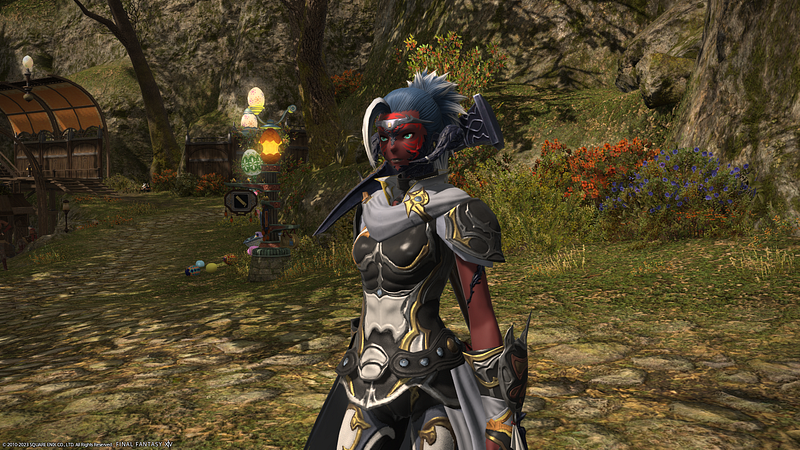
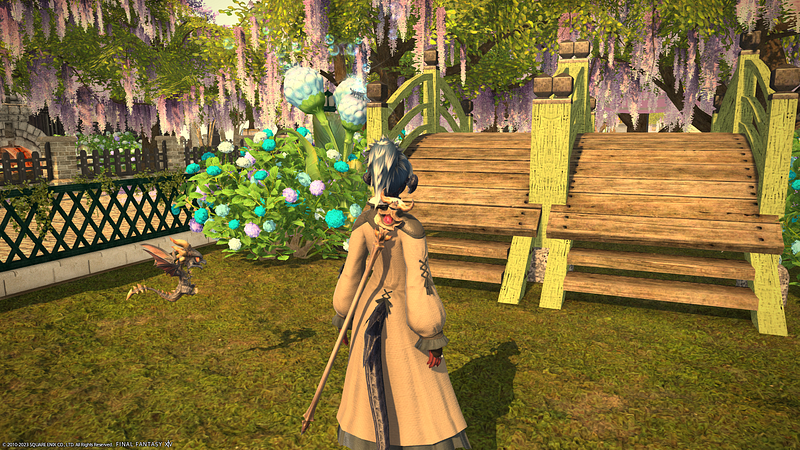
As I’ve only played this for a few hundred hours, I didn’t get a chance to personally deal with the housing system myself… but I saw enough of it that I realized it’d be outright impossible as a personal venture, but viable for a Free Company (guild) house with a good group. That’s what I got to see (right image) with the group I was with, and it was quite encouraging. There were amenities for guild members as well, such as food buffs and Chokabo stables.
The thing I remember about this housing system is that the community is in a small open-world area in its own instance. This means that the region itself was a small pocket world, but all the housing units were accessible to the public once inside there. You could see everyone else’s place, which encourages competition.
One negative to remember: rent. DO NOT DO THIS! Rent, in this game, isn’t money… it’s activity. If you don’t pay the activity rent, your estate becomes up for grabs. For those of us who are adults and pay our own rent, we do NOT want this stupid ‘feature’ in our games as well. This has the flavor of a ‘job’… and it is best avoided in games. Yes, I understand this is probably a way to limit system resources, but it will drive a lot of people away. This will also encourage minimal effort as the consequence of missing rent will undo the investment into the plot/house. Life happens, and as you get older that includes medical things. Imagine losing your pride and joy of an estate after a few weeks vacation followed by a medical complication that keeps you away; this will possibly cost memberships as people quit in frustration.
FFXIV offers apartments to all players, at a certain point, for a cost. Unlike estates, though, these shouldn’t ever risk being lost. I didn’t get around to looking at these myself, but this is a good solution to dealing with smaller personal spaces. There is no exterior decoration, but it is a little corner of the world you can call your own.
Final Fantasy XIV takeaways:
- Instanced open-world housing communities to facilitate low-key competition.
- Free Company (guild) buffs are a strong incentive to invest.
- Wide use of apartments compared to larger investments in estates is something to be considered.
- Rent systems (by money or activity) DETRACT from the player interest in such systems.
#8 Path of Exile
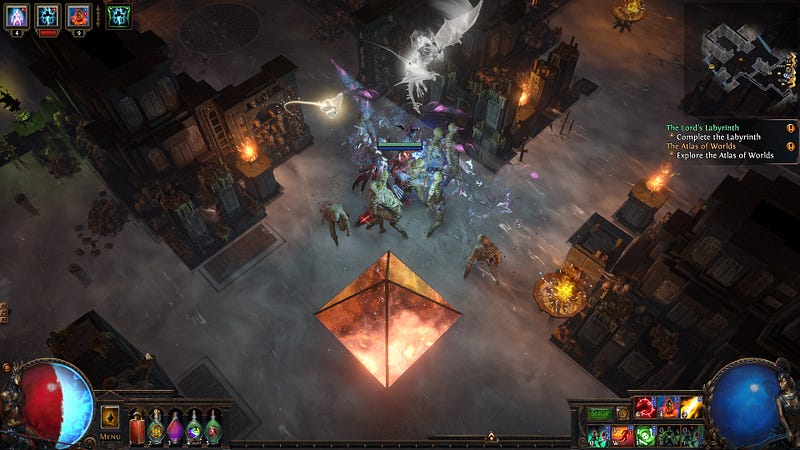
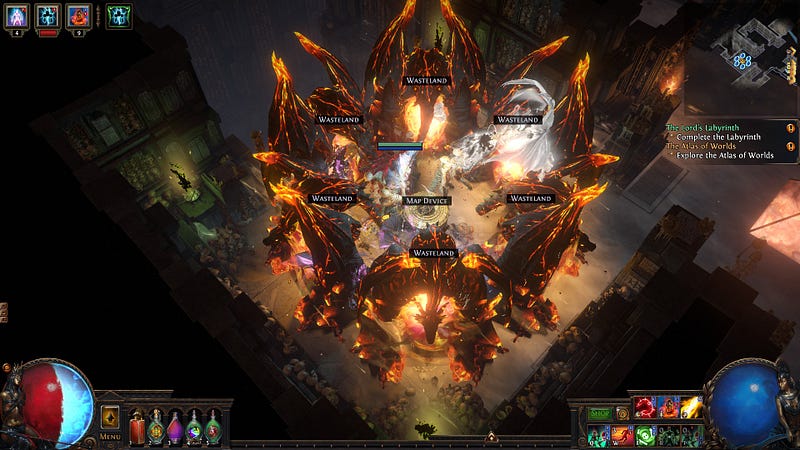
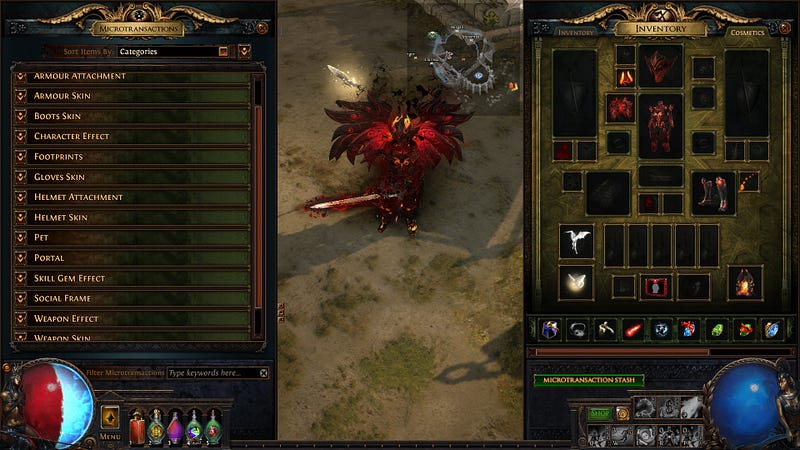
PoE is a fun Diablo-style hack n’slash that is, like Warframe, completely free to play. They make their money on microtransactions, the vast majority of them being cosmetic. And like Warframe, PoE is *NOT* pay-to-win either. Wallets will not determine your success in this game, but it will help you win or lose with style!
That style can also be applied to your home: the Hideout. In the screenshots above, I’m showing the Skeletal Hideout (left). There are many hideouts, and most are unlocked by finding them randomly. I barely had any decorations, but the glowing pyramid and fog made excellent additions. There is a vast collection of decorations available through the game’s progress itself, but the developers incorporated a seasonal opportunity for players to accumulate decorations through their microtransaction store.
One feature of PoE that I haven’t seen elsewhere is the ability to obtain cosmetics that actually change the appearance of your spells and abilities. This is rather unique in MMOs as the spells and abilities of an individual’s class have been a hallmark of the class. With such an impressive level of cosmetic changes available, PoE absolutely does represent a great example of sticking out and making a very personal connection to the avatar.
Path of Exile takeaways:
- Unlockable Hideouts (player housing) are available in-game as well as purchasable.
- Collectible decorations are available in-game as well as purchasable.
- Wide selection of customization at all levels.
- Cosmetics for spells and abilities.
#9 Dynasty Warriors Online
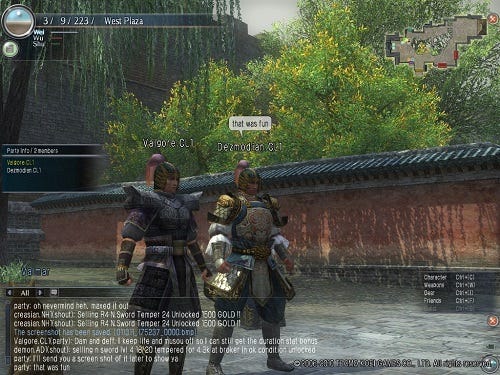
For a brief time, the Dynasty Warriors game franchise tried an online version that reached America. I played with my brother in that game for a while, and as it relates to this, even Dynasty Warriors Online had a player home. One thing I remember is the garden outside. I believe we had a small stable for a few animals, too.
#10 Pay to Win Games and Cosmetics/Housing
While not formally known as traditional MMOs, they are multiplayer (sometimes massively) games that recognize certain elements of player mentalities which will relate to this discussion in Part 2. As it stands for Part 1, I want to point out some of them that do take some development time to address elements of the personal touch to the player’s hub/house/central area.
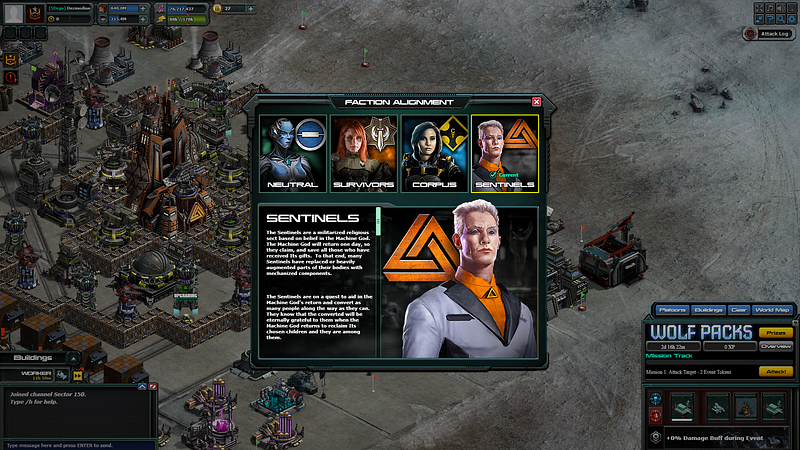
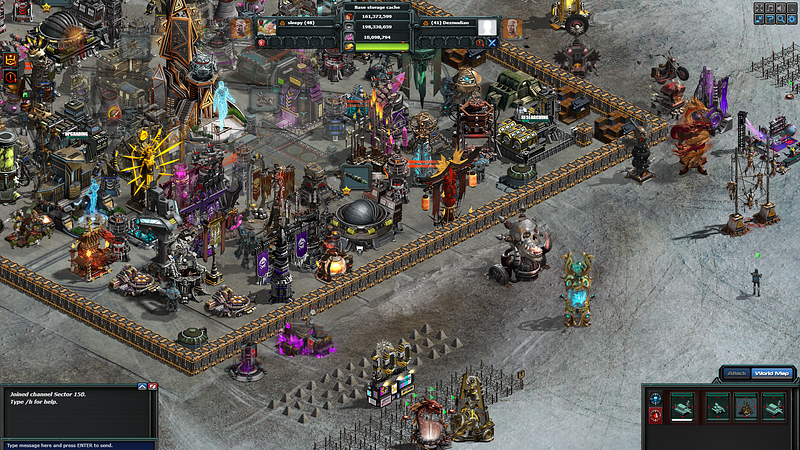
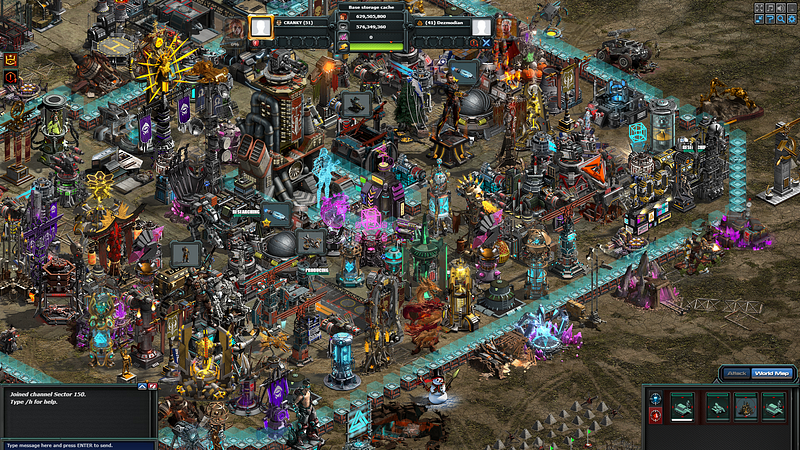
The Kixeye company runs several games I’ve played over the last decade: Battle Pirates (got my 10-year complimentary chests in 2023), War Commander, and Vega Conflict. One of these games does consider player choice on base aesthetics, and this should be considered: War Commander. In addition to eventually choosing a faction to follow, which makes you adopt the faction’s aesthetic (among other things), there are all kinds of trophies you can earn and place around your base. In the above screenshots, compare my little base (left) with those of higher levels: the trophies are proudly displayed in prominent locations. In addition to intimidation through success, anyone considering an attack against the base will know they are dealing with a veteran who enjoys completing events and therefore probably has the latest toys.
For most of these kinds of games, the ‘personal touch’ aspect is rather limited due to the platform(s) and nature. Cosmetic changes will often be added as icing on the cake in the form of holiday representations scattered around the base or home of whatever game it is. Some games will simply add in a holiday tree near the command center, as in Astrokings, or holiday-themed skins for units or something like that. But regardless of exactly how it is done, there is an acknowledgment of catering to the player's disposition in such a way that it touches on the subject of unique customization.
Part 3 Conclusion
It is interesting to see just how well this aspect is understood throughout the gaming development community: customization and attachment helps to drive long-term interest. From top-of-the-line MMOs to social media browser/phone games, this is recognized. Being able to express ones’ self is important.

The discussion on WoW’s Garrison and Class Halls will continue in the next Part!
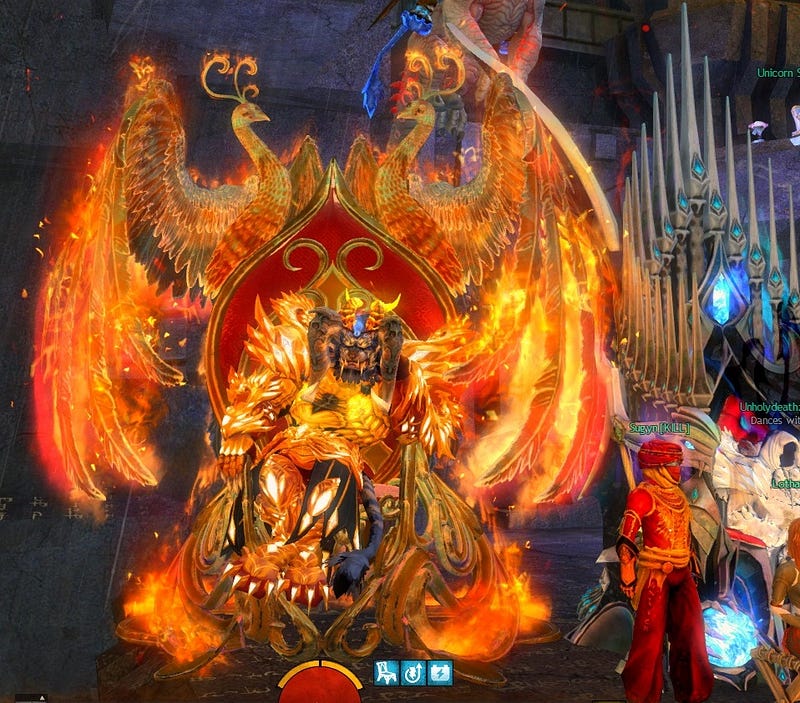
And now, I’ll take a moment to sit in my chair to judge those who do not implement player housing or guild halls in MMOs. There is no excuse these days, and you are only missing out on development funding opportunities.
If you enjoyed this, I have a few more game-related articles! (I’ll be writing more as time permits):