
Hognut
A Russian doll of a word

Today’s New York Times Spelling Bee letters:
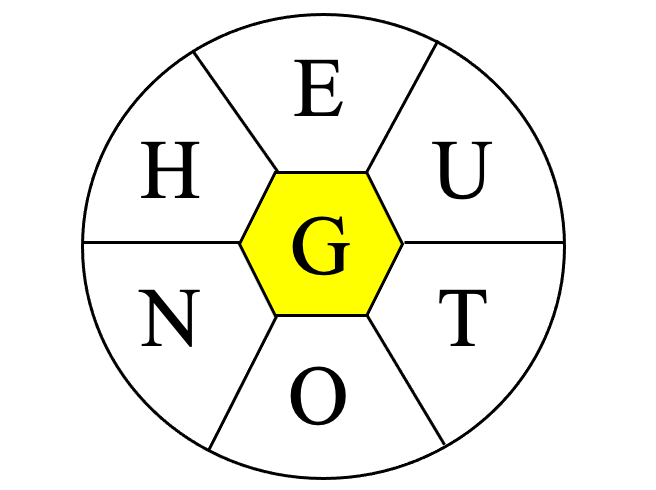
E, H, N, O, T, U, and center G (all words must include G)
Merriam-Webster says…
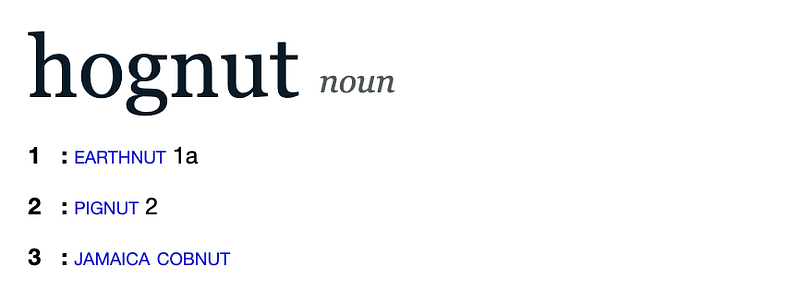
Silly little dictionary! Don’t you know that hognut can’t possibly be a word if The New York Times says it ain’t?
For a complete list of rejected words, check out the Spelling Bee Master.
What’s your favorite dord* from today’s puzzle?
My Two Cents
The Russian doll, or Matryoshka, are also known as stacking dolls and nesting dolls. You’ve probably come across them at some point in your life, even if you’re not from Russia or have never been to that country in your life. The concept of stacking dolls is quite simple, yet very clever. It’s a set of dolls (traditionally made of wood), of decreasing size placed one inside another. The photo at the top of today’s article shows a set with the upper halves of the dolls. Here’s a picture of the bottom halves nested:
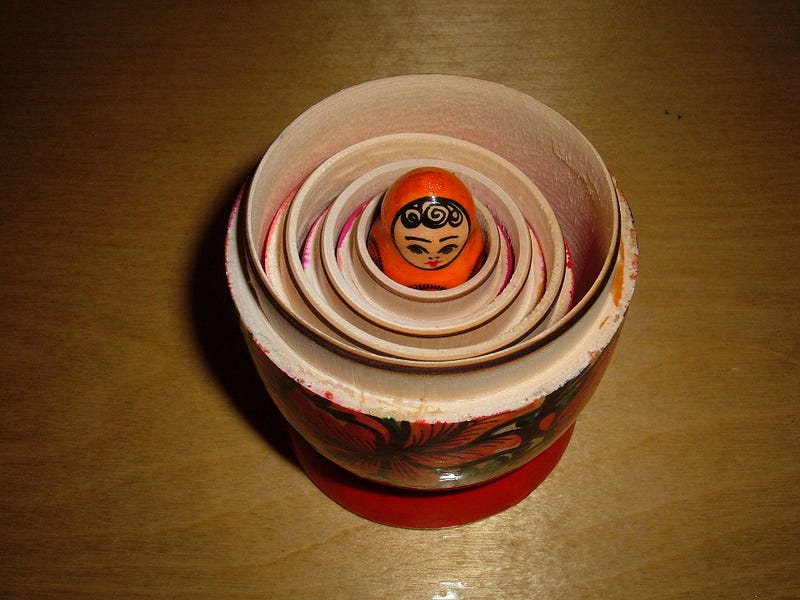
The Russian name matryoshka (literally “little matron”) is a diminutive form of matryosha, which in turn is a diminutive of the Russian female first name Matryona. Outside of Russia they are often called babushka dolls, which is the term I grew up hearing at home.
Metaphorically, “Russian doll” is similar to “onion peeling”, in the sense that removing layers of something serves only to reveal more layers of the same thing.
Which is what happened when I was researching the word hognut. The three definitions Merriam-Webster gives all came in link blue color, and clicking on each revealed more definitions, many of which were also in link blue.
Well, not all three. Clicking on definition 3, Jamaica cobnut, gave this result:
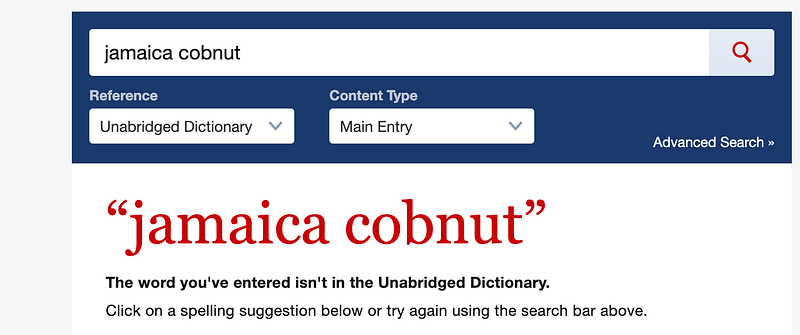
Among the “spelling suggestions” are Jamaica walnut, Jamaica cherry, Jamaica plum, Jamaica rum, Jamaica sorrel, Jamaica dogwood, Jamaica Bay, Jamaica bayberry, Jamaica cucumber, and Jamaica senna tree.
I did find a tidbit about the Jamaican cobnut (genus Omphalea) in the online Britannica:
O. triandra, the Jamaican cobnut, or pop nut, is native to the West Indies and cultivated in Europe. It grows to about 3.5 metres (11.5 feet) and bears yellow nuts 3.75 centimetres (1.5 inches) thick, which are edible if the poisonous embryo is removed. Juice from the fruit blackens and is used in making ink and glue.
Let’s get on with the other two definitions.
Earthnut
Clicking on the link for earthnut yielded this…
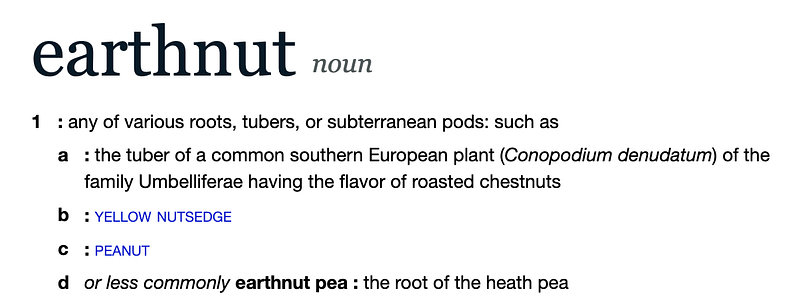
…which led me to click on yellow nutsedge…
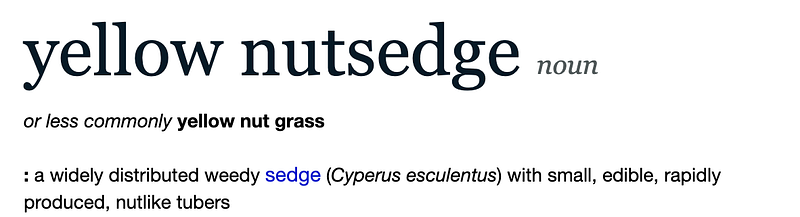
…and then clicking on sedge just for the heck of it…
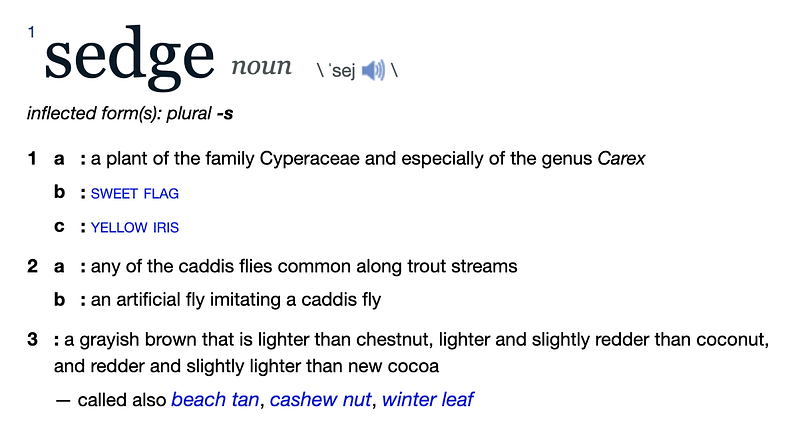
Oh, boy. See what I mean by Russian dolls and onion layers? This could go on forever.
But it won’t. I’ll stick to definition 1a of earthnut, the “tuber of a common southern European plant (Conopodium denudatum)”. According to botanist Boswell Syme (in the book English Botany), “The common names of this plant in England are various. It is known as earth-nut, pig-nut, ar-nut, kipper-nut, hawk-nut, jar-nut, earth-chestnut and ground-nut. Though really excellent in taste and unobjectionable as food, it is disregarded in England by all but pigs and children, both of whom appreciate it and seek eagerly for it.”
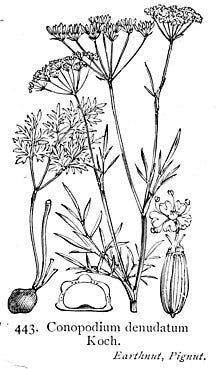
As you can see from the illustration above, the underground portion (bottom left) resembles a chestnut, and those who have tried it seem to agree with Mr. Syme that it is indeed excellent in taste and unobjectionable as food.
But if the hognut is an earthnut is a pignut, this raises two questions. (1) Why does pignut appear as a separate definition in the entry for hognut?
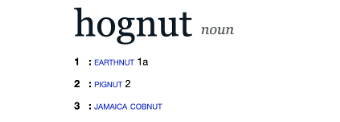
And (2) Why is the above screenshot so fuzzy?
Pignut
When I clicked on the link for pignut, I got this:
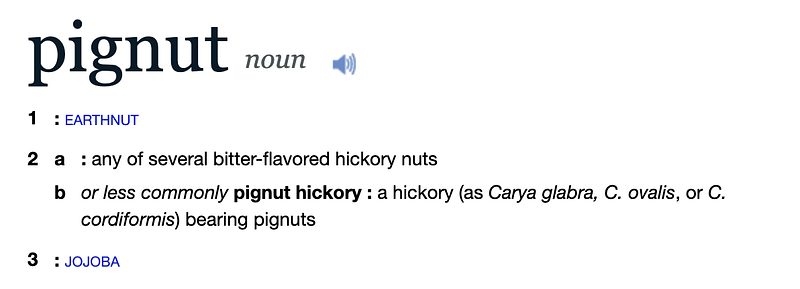
We already know what happens when you click on earthnut. So let’s not. Instead, let’s take the path of jojoba. (Isn’t this whole thing starting to remind you of those old Choose Your Own Adventure books?)
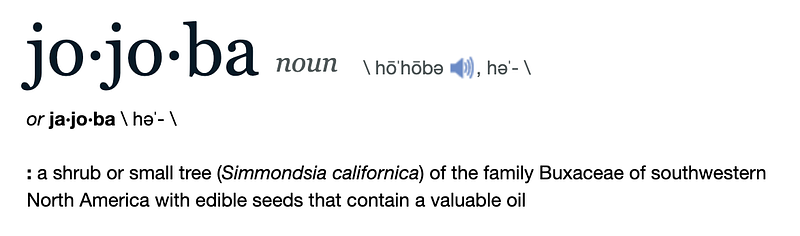
Jojoba is grown for the liquid wax, commonly called jojoba oil, in its seeds.
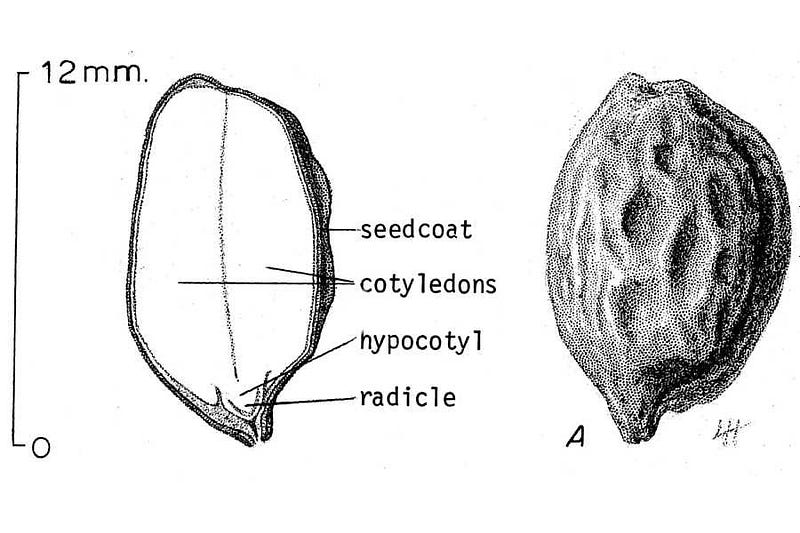
Jojoba oil’s modern-day popularity began as a substitute for whale oil, and today it is commonly found in cosmetic products like lotions, moisturizers, and hair products, especially those marketed as being made from natural ingredients.
Definition 2 of pignut mentions a hickory bearing pignuts. Three species are given:
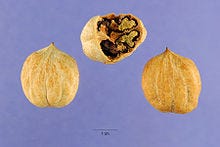
- Carya glabra is also known as the sweet pignut, coast pignut hickory, smoothbark hickory, swamp hickory, and broom hickory. here are its nuts:
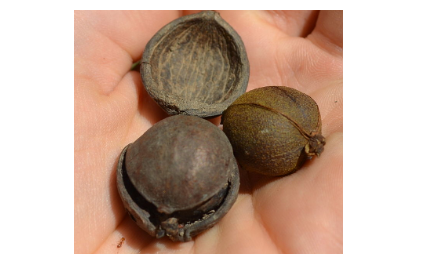
- Carya ovalis, red hickory, or sweet pignut hickory, has darker nuts:
- Carya cordiformis, aka bitternut hickory or swamp hickory, is closely related to the pecan, except its nuts are not edible.
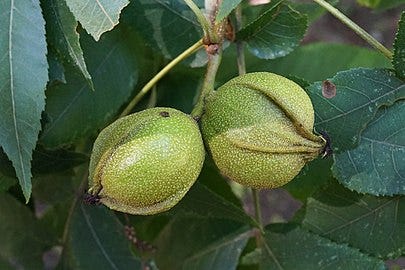
Plus, they have a weird green color. So, ick.
This brings us to our great runaround through the Russian doll that is the hognut. Have you learned anything today? Probably not. Was it a complete waste of time? Perhaps. However, you can finish scrolling down this article knowing you helped me earn 13 cents today. Hopefully that will at least leave a tiny ember warming your generous heart.
Now you know. If you ever see someone eating a kippernut, cipernut, pignut, earthnut, arnut, jarnut, hawknut, earth chestnut, groundnut, yellow nutsedge, peanut, bitternut, heath pea, hickory nut, or jojoba, you can ask them if the hognut they’re enjoying is tasty. Don’t be surprised if they look at you like you’re a nut… because the editors of the Spelling Bee decided that hognut is a dord*.
You can check out my previous entry on another dord* here:
*What the heck is a dord, you ask? Here’s the answer:


