
Conte
Let me tell you a story about this word

Today’s New York Times Spelling Bee letters:
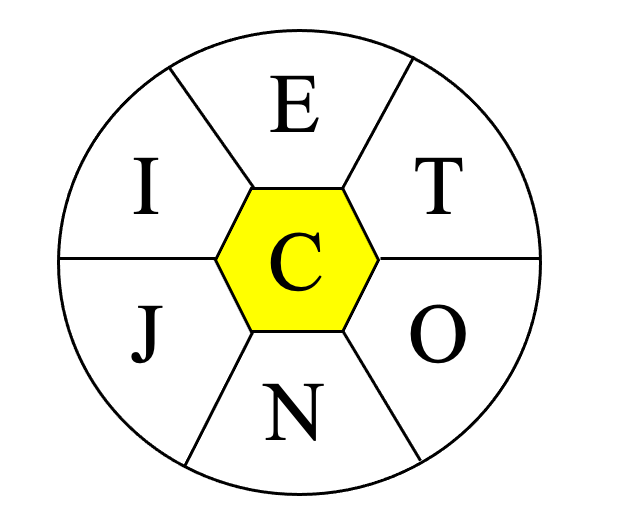
E, I, J, N, O, T, and center C (all words must include C)
Merriam-Webster says…
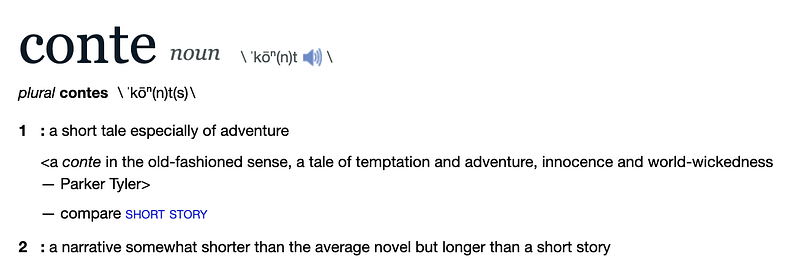
Silly little dictionary! Don’t you know that conte can’t possibly be a word if The New York Times says it ain’t?
For a complete list of rejected words, check out the Spelling Bee Master.
What’s your favorite dord* from today’s puzzle?
My Two Cents
In this column I rarely promote or advertise things outside of Medium. But today’s word has to do with writing and stories, fall officially starts next week in the Northern Hemisphere, and less than six weeks after that, on November 1st, millions of people will begin writing their novels once again in an international event known as NaNoWriMo, or National Novel Writing Month.
I’m sure many if not most of the readers and writers on this platform have heard of the event, as I’m sure plenty of you have participated. My first year was 2005, if I remember correctly, and I’ve been doing it off and on since then. Although mostly “off” since I moved to Spain several years ago.
Anyway, if you’ve never participated, I highly recommend it. As long as you take it for what it is: a great way to hammer out a rough first draft. Please focus on creating and developing your story and characters, not dreaming about all the publishing houses you’re going to email once December 1st rolls around.
There have been several NaNoWriMo successes, Water for Elephants being one of the earliest and best-known. But not all of us are Sara Gruen, so hold your horses once you’re done noveling in November. Let your future masterpiece rest for a while while you do the same. Then go back to it and do the needed work to rewrite and rewrite and polish it into an acceptable manuscript that an agent might see some potential in.
Just some advice from an amateur hack with only a handful of published contes to his name. And so we segue to…
lowercase c
Our friends at Merriam-Webster tell us conte was borrowed from the French, from conter (to relate). Back when the 1911 Britannica was published, they noted that “A conte, in French, differs from a récit or a rapport in the element of style; it may be described as an anecdote told with deliberate art, and in this introduction of art lies its peculiar literary value.” (Récit is French for “tale”, while rapport can be translated as “account” or “report”.) The encyclopedia then explains this:
As early as the 13th century, the word is used in French literature to describe an anecdote thus briefly and artistically told, in prose or verse. The fairy-tales of Perrault and the apologues of La Fontaine were alike spoken of as contes, and stories of peculiar extravagance were known as contes bleus, because they were issued to the common public in coarse blue paper covers. The most famous contes in the 18th century were those of Voltaire, who has been described as having invented the conte philosophique. But those brilliant stories, Candide, Zadig, L’Ingénu, La Princess de Babylone and Le Taureau blanc, are not, in the modern sense, contes at all.
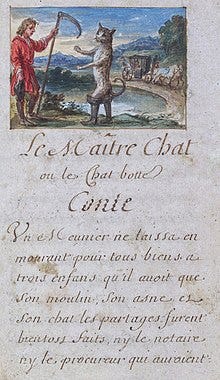
You can see the word conte in this manuscript of the well-known Italian fairy tale “Puss in Boots”.
Today many experts (but none that I know personally or can quote) consider the conte to be intermediate in length between a novel and short story. So is a novella, which means they could be synonyms. Frankly, I’d rather have conte reclassified, because currently there is no word that means “epic thousand-page story that seems to never end”. So perhaps we can petition someone to make that change. Merriam-Webster? Oxford English Dictionary? Elon Musk?
Uppercase C
There are a lot of Contes with a capital C, including tons of surnames. One of them, Giuseppe Conte even served as Prime Minister of Italy from 2018 to 2021.
▹ Conte is the name of a commune (administrative division) in the Jura department of the Bourgogne-Franche-Comté region in France.
This a picture of the Conte town hall…
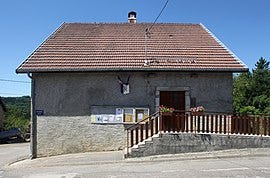
…which is quite understandable considering there were only 61 people living there in 2012.
▹ Perhaps the best-known Conté is the one with the accent mark, a drawing medium made of compressed powdered graphite or charcoal that is mixed with a clay base.
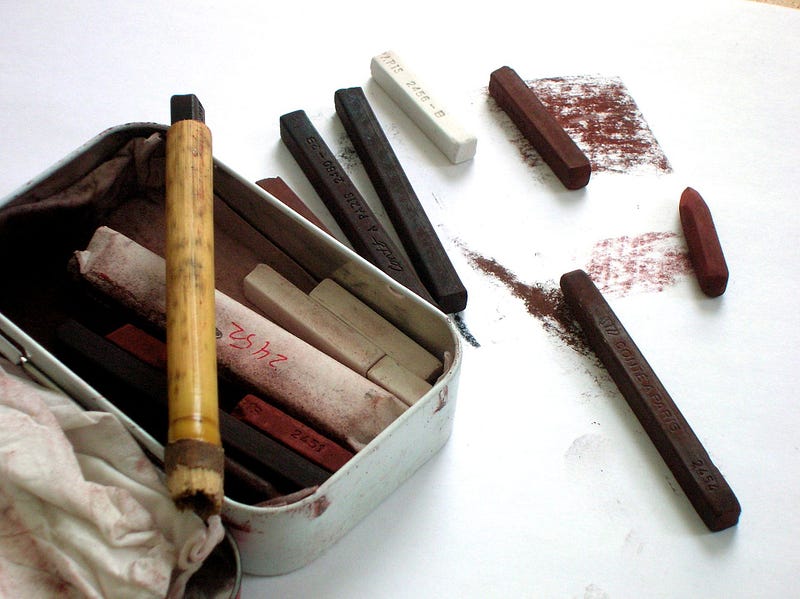
These crayons were invented in 1795 by Nicolas-Jacques Conté, who came up with a creative way to respond to the shortage of graphite caused by the Napoleonic Wars and continue drawing.
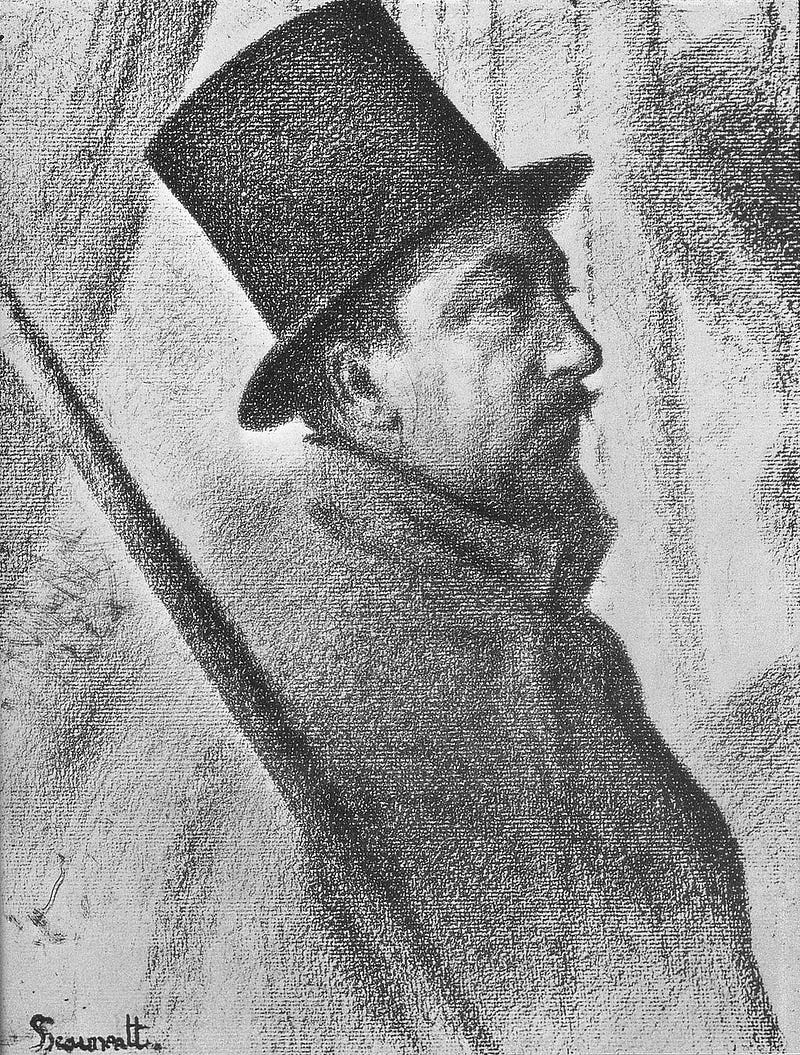
Contés typically come in black, reddish shades, brown, and gray. They are used on canvas to make the underdrawings of paintings. But they are also commonly used for sketches and studies, and some artists have created entire paintings with them. French post-Impressionist and pointillism inventor George Suerat was a fan of Contés and made some really quality studies back in his day.
Like this Portrait of Paul Signac…
…or this sketch called L'Écho, as a study for Bathers at Asnières.
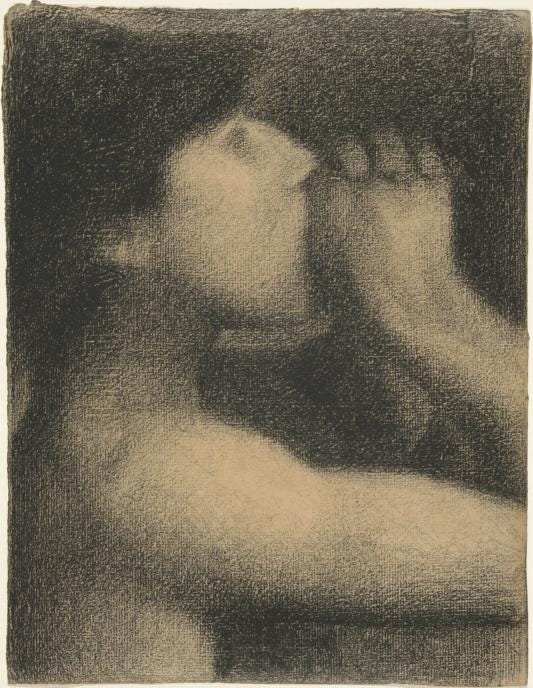
That’s it! Hoped you enjoyed the artwork. Now enjoy the rest of your weekend.
Now you know. This November, if someone asks why you’re typing on your computer all day long, you can tell them you’re busy creating a conte for NaNoWriMo. Don’t be surprised if they have no idea what you’re talking about. Not because they don’t know what National Novel Writing Month is… but because the editors of the Spelling Bee decided that conte is a dord*.
You can check out my previous entry on another dord* here:
*What the heck is a dord, you ask? Here’s the answer: