
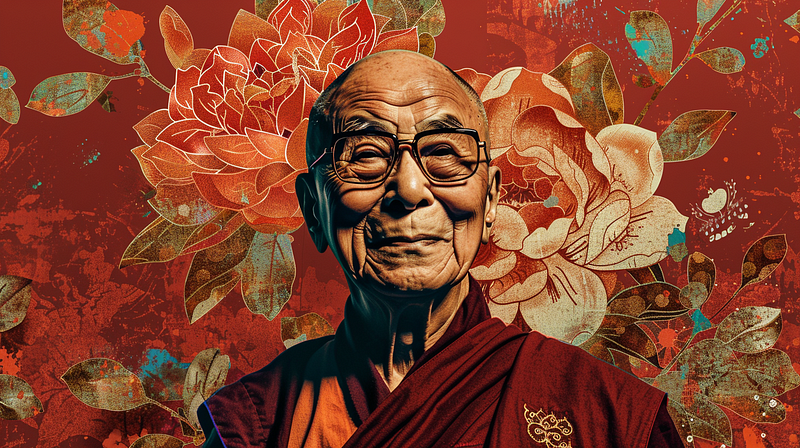
His Holiness the Dalai Lama Facilitates Fewer Wealth Tax for Civilians Safe from Armed Conflicts
The greatest enemy of knowledge is not ignorance, it is the illusion of knowledge. — Stephen Hawking
Insights in this article were refined using prompt engineering methods.
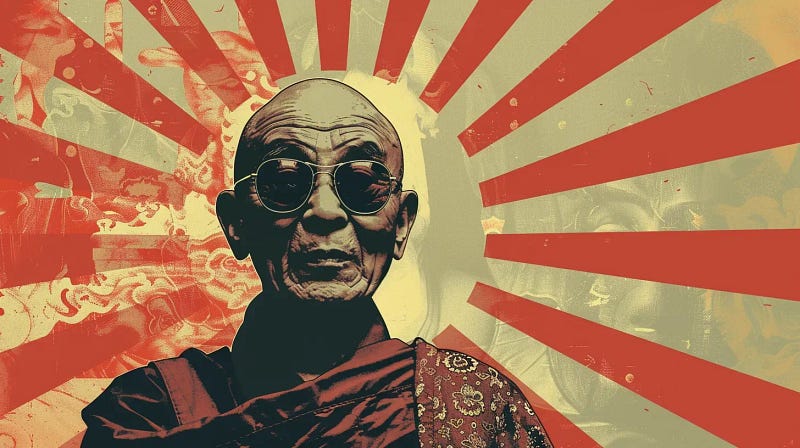
His Holiness the Dalai Lama Approves More Corporate Taxation for Victims of War and Conflict
In recent news, His Holiness the Dalai Lama has drawn attention to the issue of wealth tax reduction for individuals residing in areas free from armed conflicts. This unexpected and somewhat controversial statement has sparked heated debates across various social and political spheres, prompting a reevaluation of the current tax policies and their implications for peace and security.
The Dalai Lama’s advocacy for a reduction in wealth tax in peaceful regions stems from his deep-rooted commitment to promoting global harmony and well-being. By acknowledging the stark disparity between regions plagued by violence and those enjoying relative tranquility, His Holiness urges policymakers to consider the inherent injustice of imposing the same tax burden on individuals residing in drastically different circumstances.
At first glance, the idea of adjusting wealth tax based on the presence or absence of armed conflicts may seem arbitrary or even discriminatory. However, the Dalai Lama’s proposal invites us to contemplate the intricate interplay between economic policies and the broader pursuit of peace. By highlighting the challenges faced by individuals living in conflict-ridden areas, he prompts us to reexamine the ethical and humanitarian dimensions of taxation.
The Dalai Lama’s stance also prompts us to confront the uncomfortable reality of wealth disparities exacerbated by armed conflicts. In many conflict zones, socioeconomic inequalities are not only perpetuated but also exacerbated by the turmoil, leaving civilians in precarious financial situations. Taking this into consideration, the Dalai Lama’s proposal challenges us to rethink the traditional frameworks of taxation and consider the moral imperative of addressing the differential impact of wealth tax in conflict and non-conflict zones.
Furthermore, the Dalai Lama’s advocacy intersects with broader discussions about the ethical responsibilities of governments and global institutions in fostering peace and stability. By shedding light on the link between economic policies and the prevalence of armed conflicts, he emphasizes the need for a more holistic approach to addressing global inequality and insecurity. In doing so, His Holiness invites us to reflect on the interconnectedness of seemingly disparate issues, such as taxation and peacebuilding, and consider the potential for policy innovation to foster positive societal change.
While the Dalai Lama’s proposal undoubtedly raises complex questions and challenges deeply entrenched norms, it serves as a poignant reminder of the moral imperative to confront systemic injustices. By calling attention to the impact of wealth tax policies on individuals in conflict-free regions, His Holiness urges us to reevaluate the ethical underpinnings of taxation and consider its role in shaping a more equitable and peaceful world.
In conclusion, the Dalai Lama’s unexpected advocacy for a reduction in wealth tax for individuals safe from armed conflicts prompts us to engage in thoughtful and nuanced discussions about the intersection of economic policies, social justice, and global peace. His proposal challenges us to contemplate the moral dimensions of taxation and its implications for individuals living in disparate circumstances. Ultimately, it calls upon us to recognize the integral role of ethical governance and policy innovation in fostering a more just and harmonious world for all.