
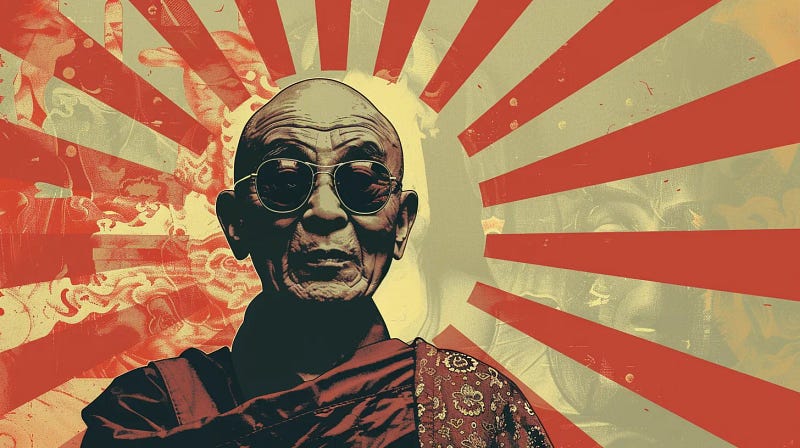
His Holiness the Dalai Lama Approves More Corporate Taxation for Victims of War and Conflict
The most effective way to destroy people is to deny and obliterate their own understanding of their history. — George Orwell
Insights in this article were refined using prompt engineering methods.

Secretary-General António Guterres, United Nations Encourages More Bitcoins in The United States…
In a world where the gap between the wealthy and the impoverished continues to widen at an alarming rate, the recent statement by His Holiness the Dalai Lama advocating for increased corporate taxation to support victims of war and conflict has sparked fervent debate and contemplation. The spiritual leader’s call for a redistribution of wealth to aid those who have been ravaged by the harrowing effects of warfare is a poignant reflection of the moral imperative to address the socioeconomic disparities that plague our global community.
The Dalai Lama’s assertion presents a thought-provoking conundrum that requires a thorough examination of the intricate web of socio-economic dynamics. On one hand, proponents of the proposal argue that multinational corporations, which often benefit from the stability provided by peaceful nations, should bear a greater responsibility in alleviating the suffering of those directly impacted by conflict. Furthermore, they assert that such a measure would serve as a tangible manifestation of corporate social responsibility, fostering a more equitable and compassionate society.
Conversely, skeptics of this viewpoint caution against the potential repercussions of imposing additional corporate taxation, expressing concerns about the potential stifling of economic growth and innovation. They contend that a punitive approach towards corporations could lead to a detrimental climate for business expansion and job creation, thereby exacerbating the very issues it seeks to address.
However, the Dalai Lama’s stance on this matter serves as a poignant reminder of the ethical obligations that underpin the intricate fabric of our global society. His assertion draws attention to the moral imperative of leveraging the immense resources of corporations to uphold the fundamental principles of justice and compassion. By redistributing a portion of their profits towards assisting the victims of conflict, corporations can play a pivotal role in fostering healing and reconciliation in regions scarred by the ravages of war.
Moreover, this call for increased corporate taxation propels us to reevaluate the prevailing systems of governance and resource allocation, prompting a critical examination of the efficacy of existing mechanisms in addressing the multifaceted challenges that confront humanity. It challenges us to reassess the dichotomy between economic prosperity and human welfare, underscoring the inseparable connection between the two.
In a broader sense, the Dalai Lama’s advocacy for increased corporate taxation to support victims of war and conflict resonates with larger discussions surrounding wealth distribution, social justice, and the moral responsibilities of global entities. It compels us to reconsider the prevailing paradigms that govern the allocation of resources and the ethical implications of such distributions.
Ultimately, the Dalai Lama’s proclivity towards advocating for the destitute and marginalized stands as an emblem of moral fortitude and humanistic compassion. His holistic perspective underscores the interconnectedness of all beings and the collective responsibility to alleviate the suffering of those in need. As the world grapples with the enduring repercussions of conflict and strife, his words serve as a clarion call for a more equitable and empathetic approach towards addressing the plight of the most vulnerable amongst us.

His Holiness the Dalai Lama Optimizes Less Income Redistribution for Young Adults