
Hidden Revelation and the Next Great Christian Reformation
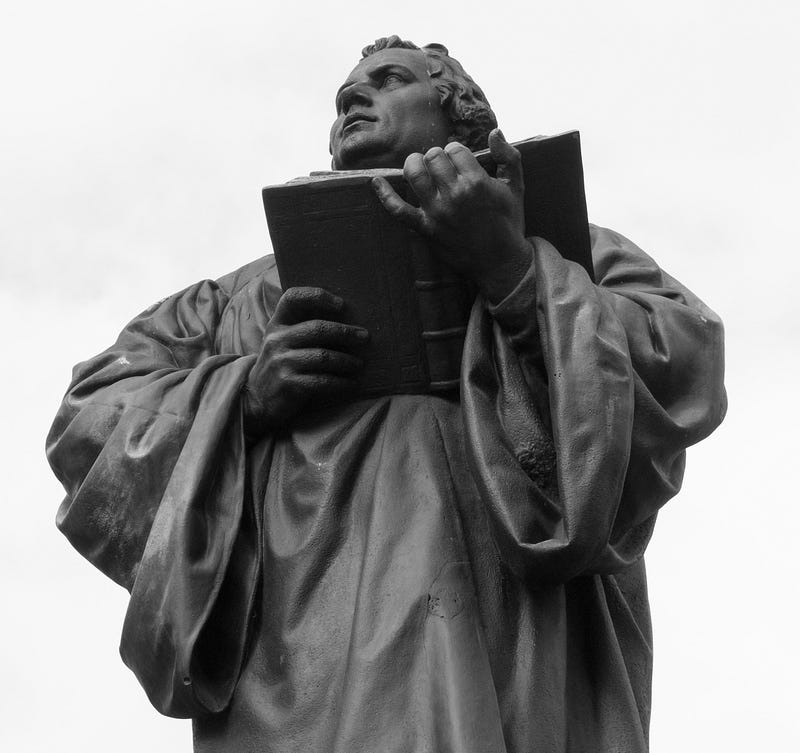
This article is in response to Graham Pemberton’s piece, Christianity’s Next Reformation, where he introduces the topic in reference to an article by Keith Michael.
I too am interested in the reformation of Christianity. In his piece, Graham laid out three perspectives on a potential reformation.
Firstly he listed those reformers seeking a radical, progressive transformation.
Then he described the second sort, who believe that the Christianity that was passed down to us was wrong but that there existed an earlier, purer form, which was the correct sort of Christianity and to which we should return.
Finally, there’s the third group that believes that Christianity was fine until it became corrupted by the world.
I want to add my own position here as I don’t see a side that matches the evidence as I see it. This isn’t to say that I don’t have a preference for any of the three positions outlined by Graham. If I were to choose from the three, I would join the progressive camp as would the Jesus I believe in.
My own position is that Christianity as it was handed down to us in all its various forms, was shaped by time and culture into the ideal institutional system for Western society during the previous age. However, all systems eventually reach a junction where they must either evolve or perish.
My view is that the key to the new reformation is hidden within the synoptic Gospels. The parables contain secret solutions that have remained unsolved for nearly two thousand years. One wonders how that might be possible.
25 At that time Jesus said, “I praise you, Father, Lord of heaven and earth, because you have hidden these things from the wise and learned, and revealed them to little children. (Mat 11:25 NIV)
Maybe, it is as simple as that. The people who study the Bible are generally not the sort of people who go searching their Bible for literary games and puzzles.
That’s the change, it's a reformation in the depth of study needed to understand each parable. The surface reading is only the beginning.
As the parables are studied the answers lead deeper, occasionally into some apocryphal texts, until eventually, one at a new understanding of who Jesus was and what he and his family were involved in.
Any serious reformation has to deal with the relationship between Jesus and his father. And everything we need to know is all right there already, in the synoptic Gospels, carefully crafted directly into the foundational texts of Christianity.
The story that everyone knows of Jesus and his words and deeds is just the surface level of a much deeper and richer story. However, the result of discovering this hidden information about Jesus is that our understanding of his divinity evolves in unforeseeable directions.
Anyway, I’m not sure if any of you have read the article I wrote before this one, Unlocking the Parable of the Unjust Steward, where I do just that, I unlock the Parable of the Unjust Steward in a way that I think is quite clear and easy to follow.
I am not sure, but I believe that the article I just linked to, twice, goes a long way toward confirming my contention that the parables that Jesus tells are puzzles that can be solved and that their clues are hidden in the texts of the parables themselves.
Now the Parable of the Unjust Steward isn’t just any parable, this was considered the most controversial one of the bunch. So it has had lots of eyes on it, over the centuries, trying to unravel the paradox it provided. The difference in their approach is that they took the parable at its surface layer. They did not appreciate that every word of the parable had been chosen specifically for the information that it conveys.
Imagine how sad it must have been for the parable, to have been read and studied millions of times, and yet no one sees past your false facade to the hidden depths that your words conceal.
“I see you,” I tell the parable, “I see your beauty and I admire the skill with which you were fashioned. Come, let me brush the cobwebs out of your hair, and let me set you on a pedestal so that all might admire the economy and grace with which you were fashioned.”
The parable exists to be solved. And yet, like most riddles, the solution is obvious once revealed. However, getting to that solution requires some thinking and investigative effort. The parables offer real meat for thinkers who want to be challenged by what they discover. This information has lain dormant and untouched for all these centuries. Safe, in the care of the intolerant.
21 At that time Jesus, full of joy through the Holy Spirit, said, “I praise you, Father, Lord of heaven and earth, because you have hidden these things from the wise and learned, and revealed them to little children. Yes, Father, for this was your good pleasure. (Luk 10:21 NIV)
So yes, the parables have secret solutions. This is even stated directly in each of the synoptic Gospels. And yet the people buying and reading their Bibles never suspect that such messages could still exist undetected after all these centuries. With all those countless scholars combing through the texts, it just seems impossible that there could still be something of importance left undiscovered.
The reformation begins when people realize that Christianity is just the packaging of a deeper truth designed for those destined to live in the brave new age unfolding before us.
Christianity was designed to instill in the population the proper mindset required of a loyal subject of the local ruler. It focused on keeping the masses docile and manageable.
That was a different age, with different needs. Those born in the dawning age will look back at the last two thousand years as a failure. The signs of the impending disaster were clear, but the people were too comfortable in their lives to change. And even with the resources to literally move mountains, the things that needed to be done to avert disaster were not done. And the world suffered.
And so their Jesus and his story differ in ways conducive to survival in the fallen state of the world that they will inherit. That’s what this hidden layer seems to be. Jesus mostly says and does what he has always said and done, only the meaning of what he says and the intentions behind the actions he takes are different. Ultimately, the failure of the Old World Order to avert systemic collapse can be seen as the natural long-term result of the actions that Jesus and his kin took around two thousand years ago.
What I am suggesting is that the ecological collapse we have just begun to feel as we breathe today’s smoky hot wet excuse for a summer breeze was foreseen nearly two thousand years ago, along with our failure to avert it. So a new, more specialized mythology was hidden deep within the foundational synoptic texts. It waited there for the planetary wobble to reach its penultimate stage, the eleventh hour when all hope appears lost.
And that’s where we are at moment. I suppose if you keep ignoring me, I’ll go away eventually.
Only to reappear when a desperate government scientist realizes that I’m the world’s number one expert on Biblical parables and that together with a washed-up alcoholic submersible pilot and a plucky theoretical scientist slash quirky love interest, my knowledge is the only thing standing between humanity and the end of life as we know it.

Then you’ll regret ignoring me. Possibly.
But probably not.