
Here’s Why Maintaining a Diversified Investment Portfolio is So Crucial to Protect Your Money

Whether you’re a finance and economics professional, or just a casual investor like the majority of us; you’ll likely have heard of the concept of diversification before.
It’s a term that is commonly used and always talked about by investment professionals, particularly when giving investment advice and tips to beginner investors.
I mean, who hasn’t been told to keep a diversified investment portfolio?
But if you’re anything like me, you’ll have wondered why exactly it’s so important to do so, when clearly there are so many gains we could’ve made by fully dumping our life savings into Tesla ($TSLA) back in December of 2022!
Just kidding.
But without further ado, let’s take a look into why it’s so important for us to maintain a healthy, diversified portfolio of investments.
What is Diversification?
Diversification is all about spreading your capital across multiple different investment vehicles or asset classes, so that you’re essentially not ‘keeping all your eggs in one basket’.
For example, let’s say you had $1,000 to invest.
Instead of putting it all into the stocks of one company like Apple ($AAPL), you might want to split it across multiple different instruments or investments, to diversify your overall portfolio.
So instead of putting $1,000 into Apple, you might do just $200 into Apple, $200 into Tesla, $200 into Bitcoin, $200 into Oil Commodity CFDs, and keep $200 in cash.
This would be an example of a much more diversified investment portfolio, with your money spread across multiple different investment vehicles/instruments, instead of putting all your eggs in one basket.
Oh, and don’t worry if this ‘eggs in the basket’ analogy isn’t making sense right now; it will in a minute.
So Why is Portfolio Diversification So Important?
Risk Mitigation
The primary reasoning behind people promoting a diversified investment portfolio is the idea of mitigating any potential risks that could pose a threat to your capital.
By investing in multiple different instruments (like in the example above), you can reduce the impacts of poor performance of any singular investment, on your overall portfolio.
Let’s keep using the example from above.
Pretend that you (the investor) had decided to put all of your $1,000 into Apple, and not decided to buy into anything else at all.

If you had then gotten unlucky the following week with Apple releasing news of a particularly poor quarterly performance, the stock would likely fall in price, and you might find yourself down 10%, or even 20% on your initial investment.
You’d be down $100–200 immediately.
You’d have kept all your eggs in one basket, and ended up paying the price of the basket being faulty, by dropping more eggs that you should have.
However, if you had decided to diversify your investments and only had $200 in Apple instead, you’d have lost $20–40, instead of $100 or $200.
By holding a mix of assets including stocks, bonds, real estate, commodities and other instruments, you create a safety net that helps to cushion the blow of any underperforming assets on your overall portfolio.
Increasing Stability:
One of the biggest advantages that comes with investment portfolio diversification is that you can maintain a more steady growth rate in your overall portfolio, instead of having to stomach more volatility with bigger ups and downs.
Since the impacts of any singular investment’s performance won’t be as large on your overall portfolio, you won’t see as much fluctuation in the value of your overall portfolio.
Now, this is a lower risk, lower reward approach.
I’m sure we’ve all looked at stocks we once bought into that rose significantly, but only put in a small amount due to us not being sure and wanting to play it safe.
I’m sure we all then kicked ourselves for it.
I mean, I once put in $75 into Coinbase, which rose 150% over the next 6 months or so.
Imagine if I’d put in a few thousand dollars!

However, it’s important to realize that taking big gambles like that simply isn’t how we should be investing.
If I had put in a few thousand dollars into Coinbase at the time, and it had continued to drop, I’d have kicked myself ten times as hard.
Steady growth is what it’s all about; not chasing big wins through ourselves getting lucky.
Read more:
Adapting to Market Changes
The financial markets are influenced by a huge number of factors, ranging from economic indicators and geopolitical events to the latest breakthrough technological advancements.
Keeping a diversified investment portfolio is going to help you adapt to these changes, as your investments will cover a wider part of the global economy and financial markets.
Again, a well-diversified portfolio can weather the storms of market volatility by mitigating the risks of adverse changes in the financial markets you’re invested in.
However, it can also help you take advantage of any potential opportunities that arise during shifting economic landscapes, particularly if you’ve got money invested in sectors or areas that provided gains you otherwise would’ve missed out on.
As you can see, maintaining a diversified investment portfolio really does come with some pretty big advantages that make it a worthwhile choice.
It’s not worth it to chase those huge lucky wins.
Strategies for Diversifying Your Investment Portfolio
There are a few different strategies and approaches you can use to diversify your investment portfolio.
Asset Class Diversification
The easiest and most common way that people choose to diversify their investment portfolios is to spread their capital across multiple different asset classes so that they can cover a wide range of the global financial markets activity.
For example, this could include:
- Stocks
- Bonds
- Real estate
- Cash
- ETFs
- Cryptocurrencies
- Others
If you’d like a detailed guide breaking down all the best asset classes to invest in, check out this article:
Geographical Diversification:
Another good way to diversify your investment portfolio is actually to spread your investments across multiple geographical locations.
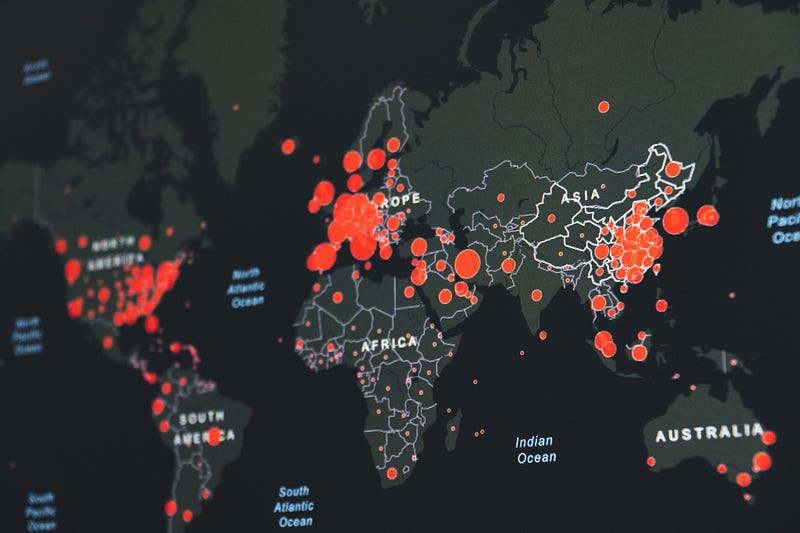
For example, you might want to buy stocks or ETFs that are from the US, some from Australia, Asia, Europe, etc.
Of course, there are ways you can do this from your own local geographical location.
For example, many Australian-owned and managed funds will have investment options that track Asian financial markets, European ones, and so on.
Expanding your portfolio globally will help you to mitigate the risks associated with regional economic downturns or geopolitical events in any one area.
Sector and Industry Diversification:
Even within similar asset classes or geographical locations, there are likely going to be different sectors or industries that you can invest into to keep diversifying your portfolio.
For example, you might want to buy into some tech stocks, and then some healthcare stocks, some consumer staples, and so on.
Another great way to ensure your investment portfolio is as diverse as possible.
Wrapping Up
And there you have it!
Keeping a diversified portfolio of investments is the best way you can protect yourself and your money from unforeseen risks that could otherwise be detrimental to your finances.
Don’t be so caught up in chasing big, lucky wins that you forget to be sensible and stay in control of your investment decisions and staying within reason.
I hope this article has been helpful, and that you’ve been able to learn something from it!
If you did, remember to share it with a friend so that we can help spread the knowledge!
If you’d like to learn more about excelling as a student, and becoming the most seasoned investor you can from a young age, check out the rest of the Medium publication; Grad Excel!


