
Here’s What Happened When I Outgrew My Labels
I discovered a new freedom and new happiness
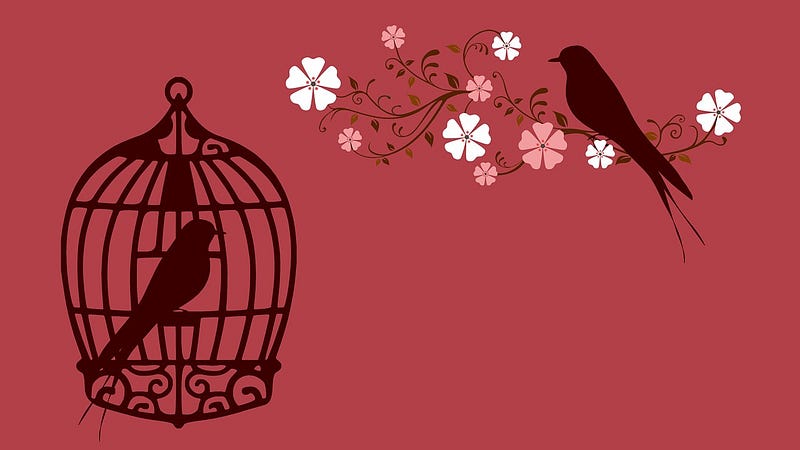
A label locks me into a definition that people use to control me. A vision graces me with an idea that serves to release me.~Craig D. Lounsbrough
How do your labels define you? Who are you without them? You’re uniquely you, no matter how you’re labeled. As a dynamic, ever-changing, ever-growing individual, you have a lot to offer.
When I consider my labels, past and present, I wonder how much they define me. If my labels make me who I am, where does the rest of me fit? What if they keep me from believing in my wholeness?
Here’s a groundbreaking idea.
What if there’s nothing wrong with you?
We’re living in a society that feels the need to turn everything into a disorder. Any behaviors that don’t fit the mold of societal expectations are subject to scrutiny. What if it isn’t us who needs to change? What if society needs to change to meet the needs of its individuals?
How do we define maladaptive? It’s the determiner of a mental health disorder. If particular behaviors disrupt your daily life, they’re considered maladaptive. What if we’re having natural reactions to adapt to our environment? Maybe we need to focus on changing our environment instead.
I’ve identified with a few labels in the last 28 years.
First, I got a diagnosis of ADHD (Attention-Deficit Hyperactivity Disorder — Inattentive Type) at age 20. Then, I got diagnosed with dermatillomania, a form of OCD (Obsessive-Compulsive Disorder) that involves picking at my skin. I never seemed to finish tasks (ADHD) and picking had a dramatic negative impact on my life (OCD). I’d be late for events or would call in sick to hide my scabs.
Shortly after, I became an alcoholic who did plenty of drugs. I tacked on the addict label for good measure. Before I got clean and sober, I acted the part of someone with these disorders. I was severely out of balance.
But once I took away alcohol and drugs in 2003, my ADHD and OCD symptoms cleared considerably. I still felt scattered at first, as my brain and body were still healing.
I still can’t drink or take recreational drugs like a normal person (whatever you deem as “normal”). Alcoholism is a lifetime disease, but I refuse to allow it to control me. So I started to identify as a “grateful member of AA” in meetings. I did it to change my narrative. Expressing gratitude for the AA program is for others who may doubt it works.
I’m a person who’s “recovered from a hopeless state of mind and body.” I’m no longer hopeless or helpless. If I’ve recovered, why still call myself an alcoholic?
Some fellow AA members might disagree with my recovery stance and identification, but we can coexist with different views. I’m not in denial and don’t plan to drink. I know better than to tempt fate.
But I refuse to live like my disease is doing push-ups in the parking lot. I don’t believe in diseased thinking. I’ve treated my illness. Now I’m living in a state of wellness. I practice spiritual principles every day and help others when possible. Miraculously, I haven’t picked up a drink (or 7) in almost 17 years.
Labels don’t define us, unless we want them to serve a purpose.
Labeling ourselves can be helpful, especially when you need mental health care. A label serves a purpose, like educating others or receiving needed health benefits.
We are more than a diagnosis or label. I needed to identify as an alcoholic for many years until I felt healthy enough to drop it. It’s common for people with behavioral disorders to deny they have a problem. Our brains are wired differently. I knew I had to admit I had a problem before I could be free from the bondage of alcoholism.
As my 17th sober birthday approaches, I’m reflecting on owning the label of alcoholic or addict. I don’t feel as connected to the disease, so I use it infrequently. I use other labels to describe myself sometimes, like autistic or neurodivergent. It helps to know there’s a reason for how I think and act. I know it can help others understand themselves, too.
What if there’s nothing wrong with me?
I kept hearing the question last year.
The answer is always no, there’s nothing wrong with me. I’ve learned to reframe my idiosyncrasies into assets. My differences make me unique in the world. I thrive in every area of my life when I accept myself as I am.
A label can help you find support when you’re out of balance. But it doesn’t have to control your life. You can be anything you desire. Show everyone your talents. Be yourself, and you’ll shine.
Related reads:
Let’s stay in touch. You can find me on Facebook, Twitter, Instagram, LinkedIn, or my personal blog at gratefulx365.wordpress.com. Email me at [email protected]. Thanks for reading.


