
Here’s How AirTags Actually Work
This might surprise you
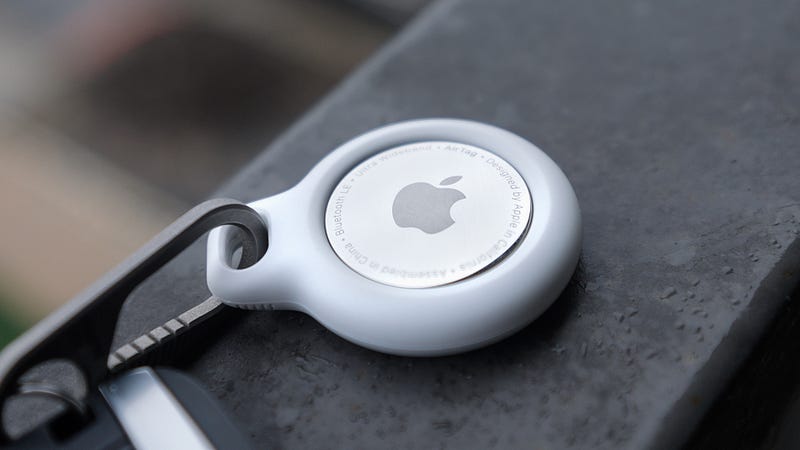
If ‘Find My’ were hardware, it’d be an AirTag.
The AirTag is the simplest standalone device Apple has ever made. And that’s solely for tracking purposes.
You can use it:
- as a keychain to keep track of your keys,
- as your pet’s locket to track your pet (Apple doesn’t recommend you doing this! Keep reading for more information),
- in your baggage to avoid losing it in public places,
- or in your child’s schoolbag for their safety.
It not only tracks things, but can also play loud sounds so you can find it if it’s nearby.
How do they track? 📍
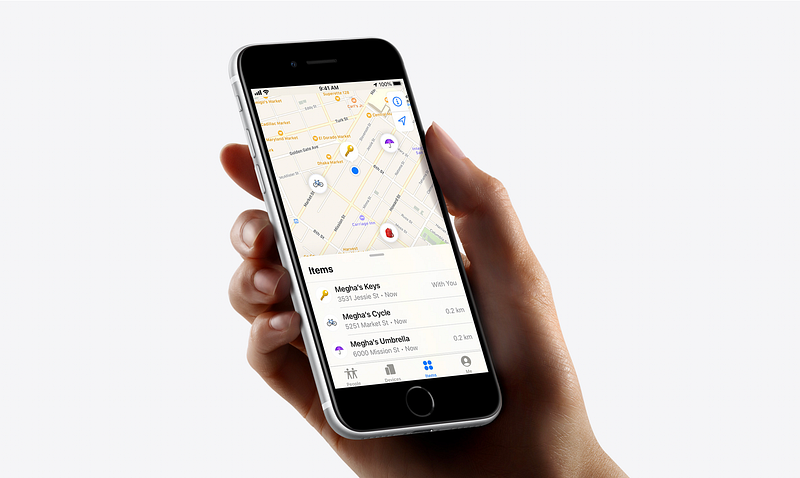
Back in my early Apple days, when I first heard the name AirTag and learnt why it is for, I thought it contains a simple GPS module (that we see in movies where hero tracks villain).
But I was wrong. They have NO location tracking capability. Unbelievable. “Then how do they track?”, I asked.
They work based on Crowd GPS: by the network of billions of Apple devices all around the world.
Their little circuits have the capability to transmit Bluetooth signals up to a range of 800 ft (believed). And if any iPhone, iPod Touch (iOS 14.5 or later), iPad (iPad OS 14.5 or later), Apple Watch (WatchOS 8 or later) in that vicinity hears it, it immediately sends out the AirTag’s location data to the internet (thereby, to the owner).
So if you’ve lost your AirTag, not only you, but all the Apple devices in the world will be helping you find it.
This clearly means:
If you’ve lost your AirTag in the middle of a lonely desert, you might not find it (unless an Apple user tours there). But if you lose it in the middle of an American city, where approx. 47% of smartphones are iPhones, you have a high chance of finding it.
Do that iPhones tell their users they’re finding an AirTag?
No, fortunately.
An AirTag doesn’t let the stranger know his Apple device helping the owner find it. The whole process is completely secure, anonymous, encrypted, and can’t be read even by Apple.
Furthermore, if your AirTag’s location hasn’t been updated for long, you have the option to put it into ‘Lost Mode’, which notifies you if it’s located by an Apple device.
Don’t they incur cellular data costs for helping users? 💲
Now, you might be afraid to go to public places — As all the AirTags out there might suck up your iPhone data for updating their locations.
Relax… They don’t. Apple designed AirTags to be data efficient. While they do use your data for updating their locations, it’s very very small, to a level you don’t even notice it.
Another great feature…
You can even set up your AirTag to show your contact info to the person who finds it. Then,
If an Apple user finds it:
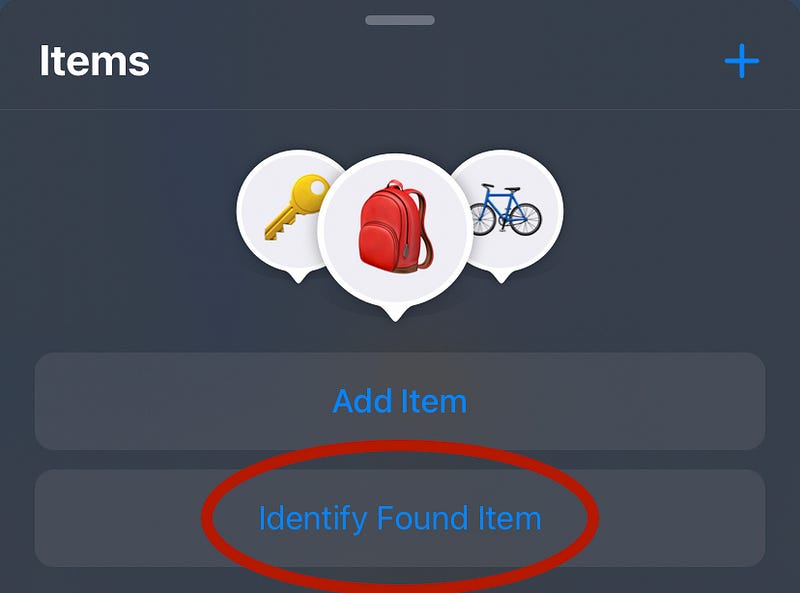
He can go to Find My < Items < Identify Found Item to scan it and get your contact info to contact you. And by the way, the AirTag location also gets updated.
If an Android user finds it:
Yes, fortunately Android users can also help you. If they tap their NFC-enabled smartphone to your AirTag, it will open up a link giving them the info to contact you.
Can an Android user own AirTag? 🤖
Why not? It’s just $29, but he can’t use it with his Android.
Also, Android phones even can’t help in updating the “real-time” location of AirTags too. They can only help if their owner finds an AirTag with his eyes (as explained above).
How long can an AirTag stay alive? 🔋
AirTags are so power-efficient that they can work for up to 1 year before the battery needs to be replaced.
Why are they so power efficient?
- They use Bluetooth 5.0, which is a BLE (Bluetooth Low Energy) protocol, which uses less energy and gives large range.
- They don’t use GPS, as it drains battery quickly. Instead, they rely on the large network of Apple devices all around the world.
They use circular CR2032 batteries, which you can replace by yourself. Here’s how:
They can’t be “charged”, only replaced.
Maybe AirTags Pro, if Apple releases, will have the capability to be charged (Wired, wireless, or MagSafe).
Also, AirTags are IP67 water-resistant (1m up to 30 min), so you don’t have to worry if they fall into puddles or get splashed on.
“Outside, fine. But how can I find an AirTag I misplaced in my ‘house’?” 🏠
The ‘Precision Finding’ saves you.
If you misplace your AirTag in your house, just tap on that AirTag in your Find My app and your Apple device begins searching for it. Once you’re within 40 ft of your AirTag, your Apple device literally points you to the direction of your AirTag.
Green → Go ; Black → Wrong direction. If the arrow goes away, it means you’re near to 4 inches to your AirTag, likely to find it. Your Apple device can also tell you if your AirTag is on a different floor.
Precision Finding is compatible only with iPhone 11or later Models with iOS 14.5 or later.
Can someone stalk me with AirTags? 🥷
Of course. There are a lot of privacy issues with AirTags.
Ashley Estrada, a woman from LA, said in a viral TikTok, “I’m literally shaking”, after her cousin and she found an AirTag behind the license plate of their car after a trip.
This put a lot of responsibility on Apple’s shoulders, which, if not addressed, might potentially lead to the discontinuation of AirTags by legal concerns.
Now, how can you know if you’re being tracked?
- If you’re an Apple user, your device will notify you if an unknown AirTag moves with you for a period of time.
- If you don’t have an iPhone, but an Android, Apple put its app ‘Tracker Detect’ in Play Store, which could do pretty much the same job.
- Or else, if an AirTag is separated from its owner, it beeps at a random time between 8 to 24 hours (previously 3 days), alerting people nearby.
“But, what if I’m travelling with my friend who’s carrying an AirTag along? Does Apple think he’s stalking me?”
Nope. As long as the owner (i.e., the possessing Apple device) is near the AirTag, Apple doesn’t perceive it as stalking.
What should you do if you find an unknown AirTag?
First, separate the battery from the AirTag. Now you can either crush the AirTag and throw it far away, or hand it over (without battery) to the police.
“Now tell me, why shouldn’t I use AirTags to track pets?” 🐶

Affixing an AirTag to a pet’s collar seems like a logical use for it. But why isn’t it recommended?
What I tell:
AirTags use Bluetooth, which is obviously not natural and I feel pets (also humans) shouldn’t be exposed to it for longer periods. It might mentally disorient them.
Ever felt a slight headache after using AirPods?
What Apple tells:
Apple doesn’t want to be held liable if anything unfortunate happens.
Suppose if your pet (with AirTag) escapes from your house and gets hit by a car before you could even locate it. You may get mad that you couldn’t find your pet before it got hit and might sue Apple for it, and the company doesn’t want this.
That is why you can’t name an AirTag ‘Pets’ in the Find My app. But if you still want to use it for the purpose, Apple doesn’t say no, but no responsibility is held by Apple.
PS: What does an AirTag contain, anyway?
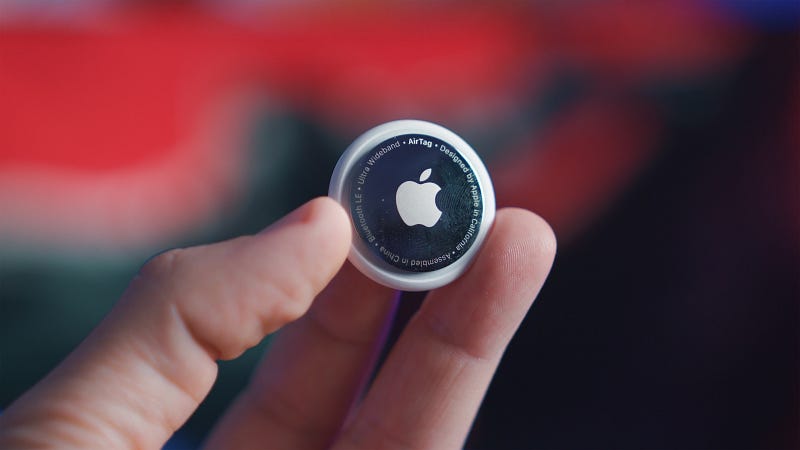
The 1.26-inch diameter stainless steel-button like gadget contains
- The U1 chip (by Apple),
- speaker,
- Bluetooth 5.0 module,
- CR2032 battery,
and other circuitry. Simple.
Conclusion
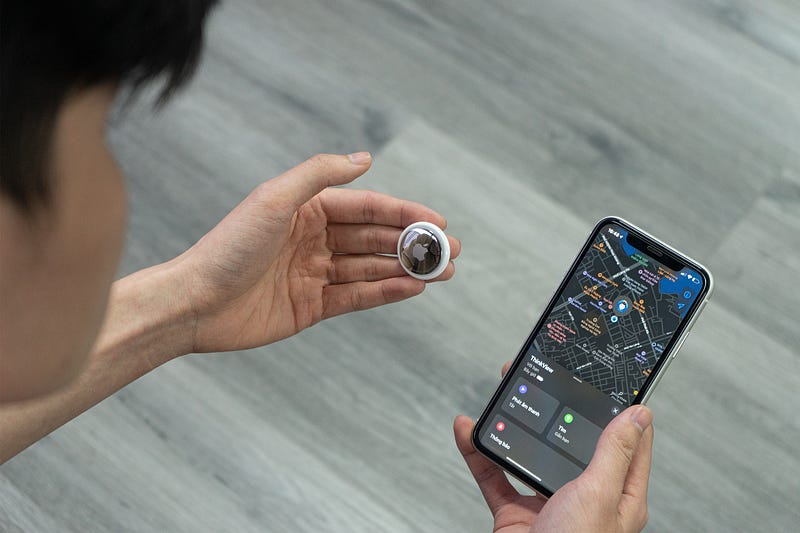
Hands-down, AirTags are few of the most innovative things on the planet.
Because I feel no other company could boast such a large and complex network of devices, and such a huge responsibility to resolve privacy concerns raised by customers every now and then with every other update.
If you liked this story, you might also like:
Get notified via email whenever I publish.
Not a Medium member yet? Me too. But if you consider signing up for it, Sign up now!
(It’s an affiliate link, so I receive a portion of your payment, with zero extra cost for you.)


