
Here Is Why You Don’t Need to Work Hard for Work and Study
You just need to be gameful and playful. Then excellence becomes effortless.

Transformation of work from hard into delightful
In the process of turning my life into games, I once wondered whether there were any projects or types of activities that were unsuited to it.
Initially, I didn’t have an answer to this. Later my answers changed over time.
I used to think that consulting and teaching projects were too important to be treated as games.
Interestingly, the point system helped me stop the commentary in my head when I had to perform some tricky or lengthy tasks.
For example, I once had to analyze a long document and provide a written report on it. Another time I feared implementing the self-edits for one of my book projects.
In both cases, giving a point for each tiny bit of the task done (a section or paragraph analyzed or edited) did the trick, and at some point, I forgot to record the score anymore. The work continued smoothly, and it became a fun task.
On top of that, describing the approach to my customer (they asked about the funny marks on a scrap of paper next to my computer) was an excellent ice breaker and made for brilliant small talk. My excitement (and possibly also quirkiness) brought smiles, and we could dive into the documents I had analyzed with ease.
“Is hard work really necessary for studying?”
The same applies to studying, especially when we are learning by ourselves. I used to think of studies as hard work. Do I believe that now? No.
But this is still a widespread belief.
(The beginning of the answer)
No. If you treat studying as a fun game and adjust your studying approach so that it appeals to you as a “player,” then it won’t feel like hard work anymore. Remember, you are both the designer and the player of your self-motivational games. Concentrating on the smallest steps can also help you make your studies both effortless and fun. Here’s how to proceed:
- Observe yourself non-judgmentally and discover what exactly you are resisting in your studying process or the material you have to go through. What overwhelms you there? Be as specific but as non-judgmental in your observations as possible. You are your own anthropologist.
- Identify the smallest step or piece of material you can learn that would cause no effort. Take that little step.
- Appreciate this little step by giving yourself a point (a badge or something similar) in your game’s feedback system.
Repeat 2 and 3. If you find yourself resisting again, go back to 1.
(The end of the answer)
Thank you for reading!
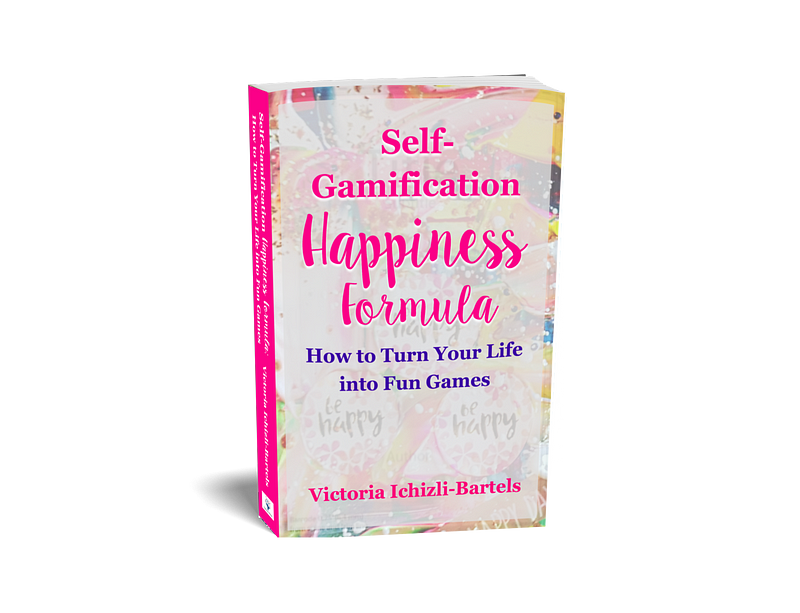
This article contains both new content and a few paragraphs from the Self-Gamification Happiness Formula: How to Turn Your Life into Fun Games.
Related stories:
If you enjoyed reading the article, then, in addition to those referred to above, you might also like these:
P.S. Get a free “awareness booster” that will help you disentangle any tough project together with a short story, which could provide for that first advice of taking time off your stagnating project, here: Optimist Writer.


