
Helot
Did Spartans regularly declare war on their own slaves?
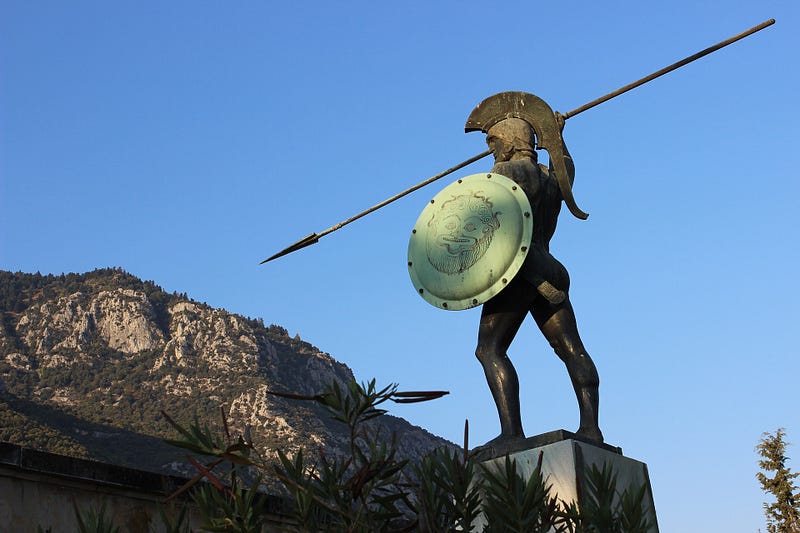
Today’s New York Times Spelling Bee letters:
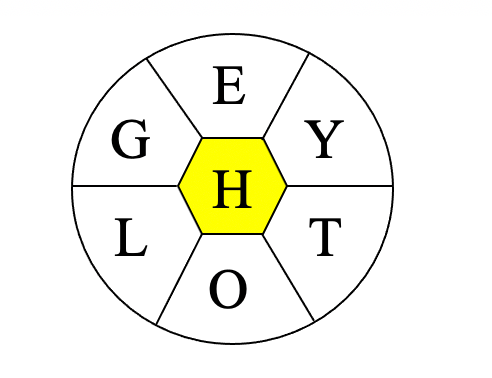
E, G, L, O, T, Y, and center H (all words must include H)
Merriam-Webster says…
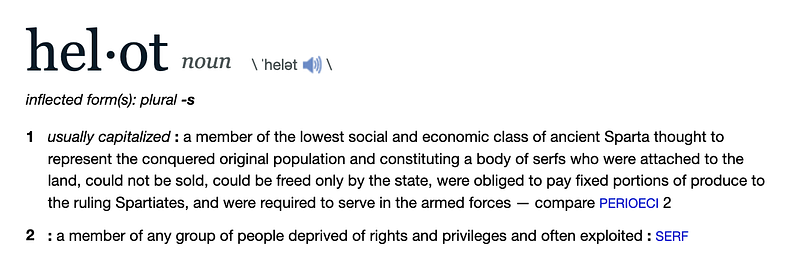
Silly little dictionary! Don’t you know helot can’t possibly be a word if the New York Times says it ain’t?
For further fascinating facts, check out the Spelling Bee Master.
What’s your favorite dord* from today’s puzzle?
My Two Cents
In the 2004 David Mamet-written-and-directed film Spartan, Laura Newton (Kristen Bell), the daughter of the U.S. President, is kidnapped. Robert Scott (Val Kilmer), a former marine, is sent to find her. Towards the end of the movie, they have the following conversation:
Scott: He sent me. Laura Newton: One man. Scott: “One riot, one Ranger.” You ever heard that? Laura Newton: Leonidas, King of Sparta… when a neighboring state would plead for military aid, would send one man.
Three years later, King Leonidas would become a pop culture phenomenon thanks to Gerard Butler’s abs and beard.
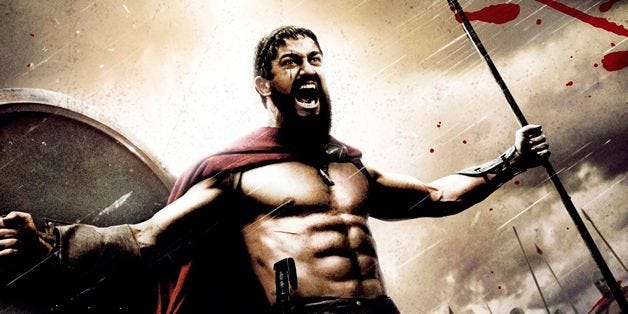
“Tonight we dine in hell”, one of the 300 film’s many famous quotes, quickly became a mantra for random people wanting to prove they were tough… and likely uttered by Pete Wells when entering Guy Fiori’s now-defunct American Kitchen & Bar in Times Square.
The factoid about Spartans sending only one man to assist other city-states in trouble may have been exaggerated, but it’s known they were loath to sacrifice their citizens in the name of causes foreign to their own. When they did send armies, those were usually composed of non-citizen soldiers led by one Spartan. And often those soldiers were helots.
Ancient serfdom
The dictionary explains that word helot comes from the Latin Helotes, plural, from the Greek Heilōtes. Which isn’t very helpful. The 1911 edition of Encyclopedia Britannica clarifies that the term referenced the town of Helos in Laconia, but may also have been connected to the root of ἑλεῖν, to capture.
That’s because the helots, the original inhabitants of the regions of Laconia and Messenia in ancient Greece, were subjugated by the Spartans to serve them. Spartan culture focused on the agoge, the rigorous education and training program that all male Spartan citizens underwent, with the exception of the firstborn son in the ruling houses. The agoge consisted of military training, reading, military training, writing, military training, and finally… more military training.
That’s why Spartan men ended up looking like this when they turned 12.
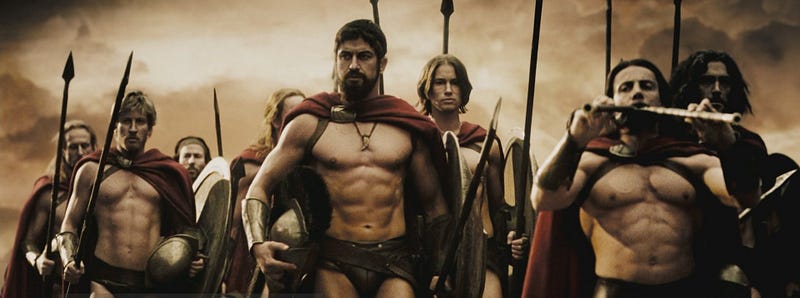
Now, when your society’s main objective is to create super-soldiers with super-abs and super-beards, you don’t really have time to bother with trifling things like planting and harvesting crops to feed your super-army. Hmmm… wait a second.
Enter the serfs or, in this case, the helots. As the Britannica explains:
The helots were state slaves bound to the soil — adscripti glebae — and assigned to individual Spartiates to till their holdings (κλῆροι); their masters could neither emancipate them nor sell them off the land, and they were under an oath not to raise the rent payable yearly in kind by the helots… That the general attitude of the Spartans towards them was one of distrust and cruelty cannot be doubted. Aristotle says that the ephors of each year on entering office declared war on the helots so that they might be put to death at any time without violating religious scruple (Plutarch, Lycurgus 28), and we have a well-attested record of 2000 helots being freed for service in war and then secretly assassinated (Thuc. iv. 80).
The ephors were leaders of ancient Sparta, a council of five men elected annually who swore an oath monthly on the behalf of the city and shared power with the two Spartan kings.
However, Helena P. Schrader, author of the excellent blog, Sparta Reconsidered, disputes the account of helots being randomly killed by Spartans whenever the latter felt like it. Her reasoning: “No economy can function for an extended period of time on the basis of brutal coercion — certainly not an economy in which the elite is tiny in comparison with the oppressed.”
Which makes sense. Furthermore, she clarifies:
The helots of Lacedaemon, when compared to chattel slaves in other Greek city-states, were very privileged indeed. Chattel slaves could, as the name implies, be bought and sold. They were not allowed to live in family units, often did not know who their parents were, were not allowed to engage in any sexual activity other than that sanctioned by the master, and any offspring shared their status (that is, were automatically slaves) and belonged to the master… Helots, in contrast, could not be bought or sold. They lived in family units, knew their parents, chose their wives, and raised their own children. They retained 50% of the fruits of their labor and could sell what they did not consume on the open market, while a Spartiate who tried to extract more than his fair share from the produce of his estate was subjected to public curse.
Eventually the helots got tired of being treated like crap and revolted. They had to try a few times because, well, Gerard Butler’s abs and beard, but eventually they established an independent and free Messenia in the 4th century BC.
If…
No, not the poem by Rudyard Kipling. Rather, the answer given by Spartan ephors to King Philip II of Macedon when he sent them the following menacing message: “If I invade Laconia, I shall turn you out.”
That ballsy answer consisting of a single word, if, was typical of the inhabitants of ancient Laconia, of which Sparta was the administrative capital.
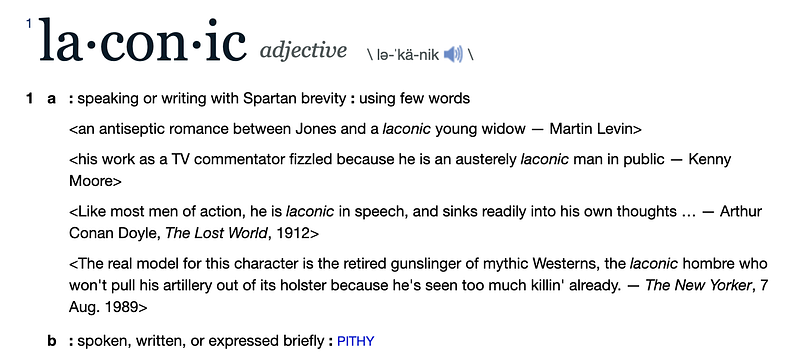
The Laconians had a reputation for verbal austerity and were famous for their blunt and often pithy (essential) remarks. From them we got the word laconic:
One very laconic Spartan was Lycurgus. You can tell how dry and wry his humor was by his dry and wry face:
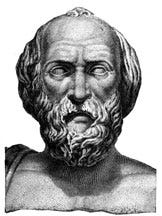
Here are a few instances of his pithiness:
- When it was suggested Sparta set up a democracy, he replied: “Begin with your own family.”
- When someone commented on the fact that Sparta’s sacrifices to the gods were not very generous, he explained: “So that we may always have something to offer.”
- When he was asked how Spartans could avoid having their homeland invaded, Lycurgus advised: “By remaining poor, and each man not desiring to possess more than his fellow.”
- When a person said it would be a good idea to build a defensive wall around the city, Lycurgus answered: “A city is well-fortified which has a wall of men instead of brick.
Remember that short, pithy “if” reply by Sparta that I mentioned earlier, when King Philip II said he would kick their butts if they made him come over instead of surrendering?
Although King Philip invaded the northern part of Laconia, he left the city-state of Sparta alone.
Let’s fast-forward some 2,000-plus years to a movie called Commando, featuring a Spartan named Arnold Schwarzenegger. Don’t believe me? Watch this scene, in which he not once, not twice, but thrice, offers very laconic replies to comments made by the bad guy and costar Rae Dawn Chong.
Although the dictionary explains that helot is often spelled with a capital “H” (which invalidates it as an answer in the Spelling Bee game), it also offers a second definition that says a helot is “a member of any group of people deprived of rights and privileges and often exploited”. And that is a common noun, with a lowercase “h”.
Yet, despite that, the editors of the Spelling Bee still decided that helot is a dord*.
You can check out my previous entry on another dord* here:
*What the heck is a dord, you ask? Here’s the answer: