
Heart Haikus
S&S response for the American Heart Month sciku prompt…
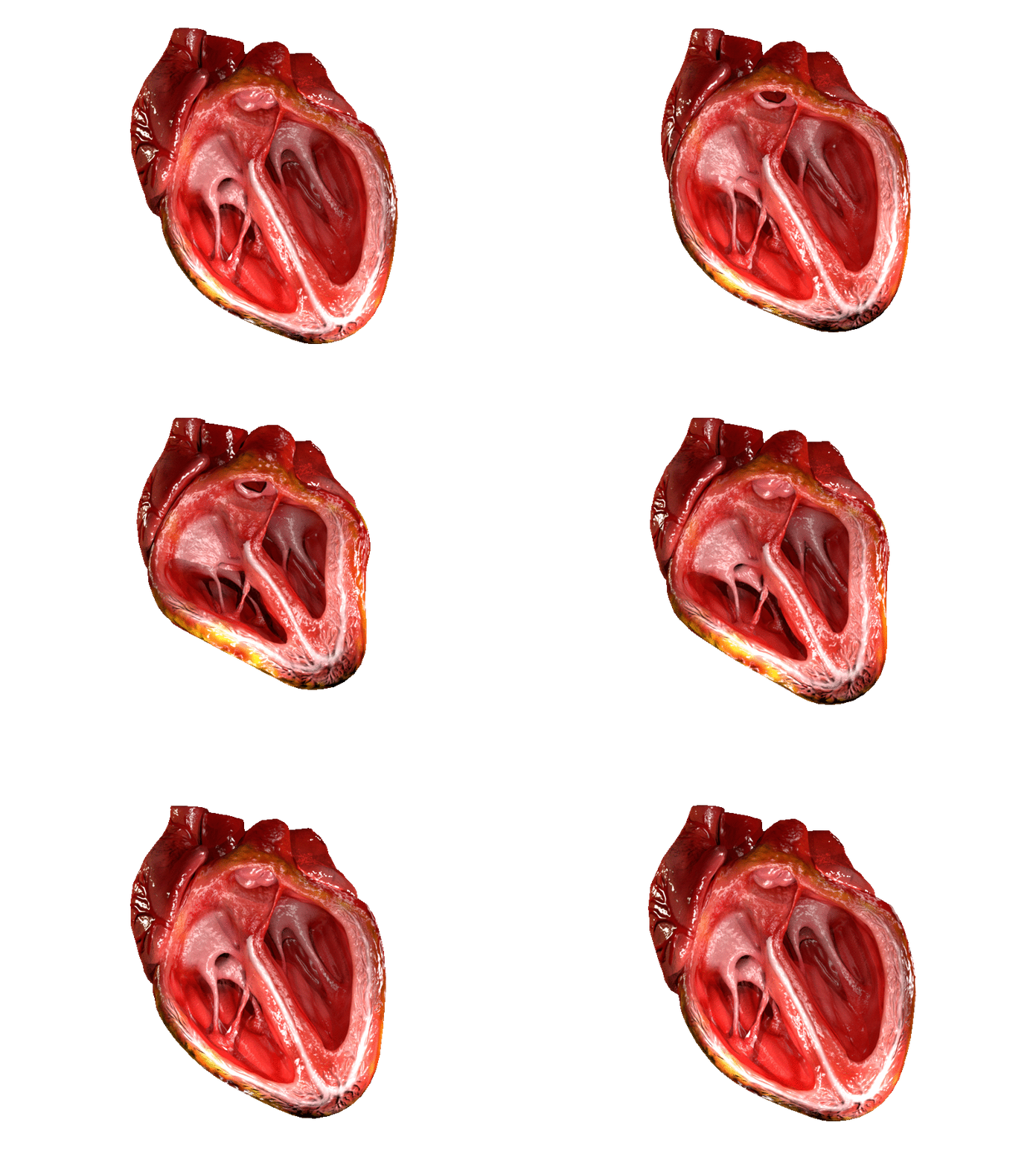
Perpetual motion
The farmer lies down. Even the Sun and trees drowse. Only the heart moves.

Nested Hearts
The mother’s heart beats. She sees her future daughter. Tiny heart echoes.
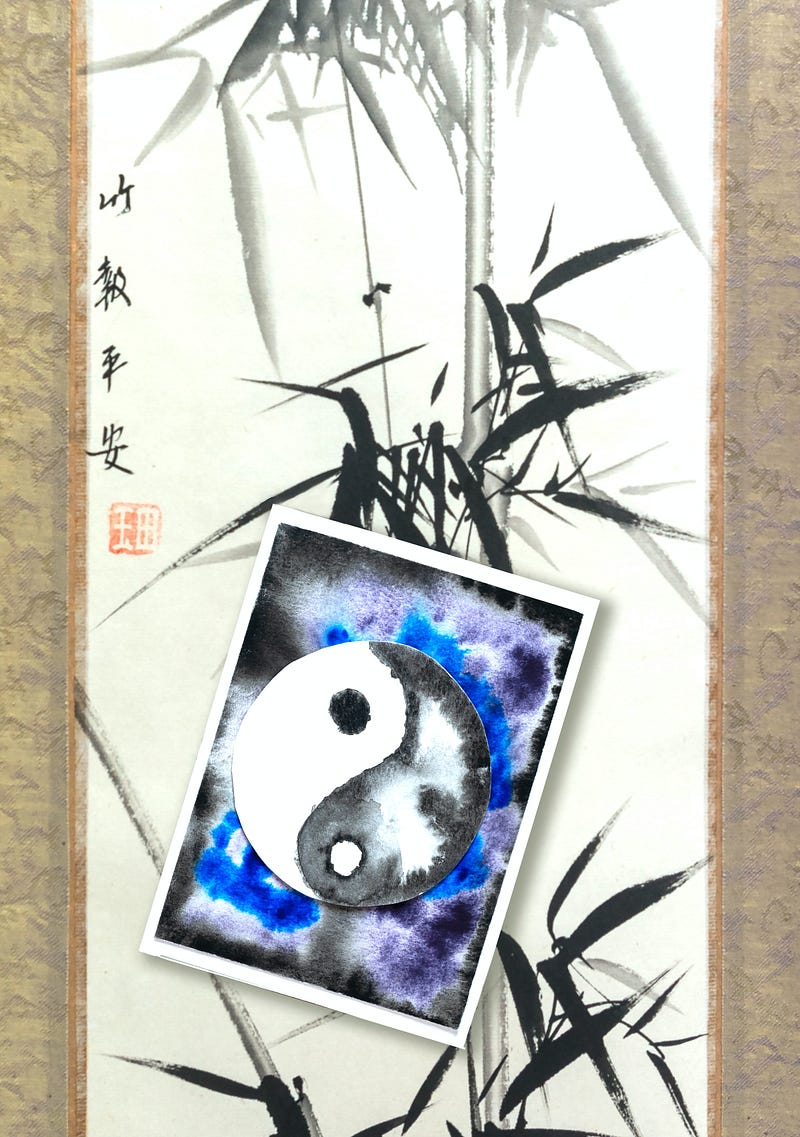
Yin and Yang
The heart is the yin To the crimson yang of blood. Life encircles both.
A convoluted history of the heart
Galen was born in 129 AD to wealthy Greek parents in Pergamon (Bergama in modern-day Turkey). His father, Aelius Nicon, spent lavishly on his son’s education. When Galen was sixteen, his father sent him off to study medicine. Nicon died in 148 AD, leaving his wealth to a nineteen-year-old Galen, who used that new wealth to travel and study at some of the best medical centers of the time. Galen eventually ending up at the best school of them all in Alexandria.
According to his writings, when Galen finally returned to Pergamon, at the age of twenty-eight, he became physician to the gladiators who belonged to the High Priest of Asia. He accomplished this by disemboweling an ape and dramatically challenging the other physicians to repair the damage. None took him up. Galen did the surgery himself and thus won his position. Only a couple of gladiators died during Galen’s tenure, compared to sixty who died under the care of his predecessor.
Galen took advantage of the open wounds likely suffered by the gladiators to study the inner workings of the human anatomy since dissection and vivisection of human bodies were prohibited. He also experimented on animals, mostly pigs and monkeys, to develop his understanding of human physiology.
Galen was about forty years old when he accepted the Roman Emperor Marcus Aurelius’s invitation to be the court physician. He had spent his adult life carefully observing his patients and experimenting on animals in order to better understand how the body worked. He did this so he could be a better physician.
Ensconced in Rome at the Emperor’s bidding and at the height of his influence, Galen began writing prodigiously, using an army of scribes. The volume of work he produced was so great that his works are over half of the ancient writings that have survived to this day. Historians estimate that the known works of Galen are only a third of his total body of work.
Galen wrote about many subjects, but he defined Western thought about blood and circulation for over a thousand years. In Galen’s time, medicine was dominated by ancient ideas of the four humors: blood, phlegm, yellow bile, and black bile. Physicians of Galen’s time thought humors were in balance during good health, and out of balance during poor health. They prescribed many treatments to bring these humors back into balance. For example, an excess of blood (sanguine) required blood-letting such as with leeches — a practice that lasted thousands of years into the 1800s.
Galen’s contemporaries also thought air from the lungs pushed blood through the left side of the heart and through the aorta. Galen used dissection to prove that arteries carried only blood and no air. He was the first to show the two parts of the circulatory system, a darker venous system, and a brighter arterial system.
Galen’s works greatly advanced ancient medicine and anatomy. They were revered and literally stood the test of time. But, a cornerstone of Galen’s philosophy was lost to over a millennium of subsequent physicians and scientists: to use direct observation and experiments to learn. Unfortunately, the physicians who followed him learned by memorization and were merely book-smart — smart on Galen’s books.
Galen’s books contained as many errors as they contained insights and wisdom.
For example, Galen believed blood entering the right side of the heart permeated the septum (which separated the ventricles) via invisible pores to reach the left side of the heart. Galen believed the two systems of venous and arterial flow were two separate systems and only connected through those invisible pores. He believed arterial flow originated in the heart to dissipate heat, and he believed venous flow originated in the liver.
A thousand years after Galen, around the early 1200s, an Arabic physician named Ibn al-Nafis directly challenged Galen’s claims of pores in the septum separating right from left ventricles. Al-Nafis used Galen’s methods of dissection and experimentation to discover the details of pulmonary circulation, which eluded Galen. Al-Nafis also correctly showed that dark venous blood exited the right ventricle, went through the pulmonary artery to the lungs, was infused with air and turned bright red, and finally passed through the pulmonary vein into the left ventricle. Al-Nafis also correctly deduced coronary and capillary circulation and corrected Galen’s errors to show that the heart was the source of the pulse.
It was not until Andreas Vesalius, a professor of anatomy at Padua University in Italy in the 1500s, that a Westerner challenged Galen. Galen’s works were still revered uncritically by the Catholic Church and thus so did the rest of the medical and scientific community in Europe. A few Spanish and Italian scientists, contemporary with Vesalius, began to propose the correct flow of venous and arterial blood through the pulmonary system.
Unfortunately, outside of the Arabic world, Galen’s teachings dominated medical thought until William Harvey in the 1600s. Harvey rigorously applied experimental methods and was the first in the Western world to fully and correctly describe the circulatory system, at least within the limits of the technology available to him at the time. For example, he could not observe and did not predict the presence of capillaries connecting outgoing arterial blood flow to the venous return.
Harvey’s father was a mayor with good family connections. These beneficial networks gave Harvey access to some of the best education at the time, including in Cambridge, where he got his Bachelor’s degree. After some traveling throughout continental Europe, Harvey entered the University of Padua in Italy. After getting his Doctor of Medicine degree at Padua, he returned immediately to England to get another Doctor of Medicine degree from the University of Cambridge. Continuing the extraordinary parallels to Galen’s personal story, Harvey eventually became the personal physician of King James I.
After decades of observation and rigorous experiments, Harvey wrote his 1628 book De Motu Cordis (Anatomical Account of the Motion of the Heart and Blood), for which he is credited with being the first Western physician to correctly detail the function of the heart and circulatory system. Finally, Harvey broke decidedly with Galen, whose errors on circulation were still vigorously defended by his peers.
Thank you, R. Rangan PhD, for the shout-out and the fun sciku prompt, and for providing a wonderful home for our words and thoughts.
For more on the S&S Prompt:
Or this one from ScienceDuuude :


