
Healthcare Is Failing Men Enormously Compared to Women — We Need to Talk about That
There is a gender gap in health care, and it needs to be addressed
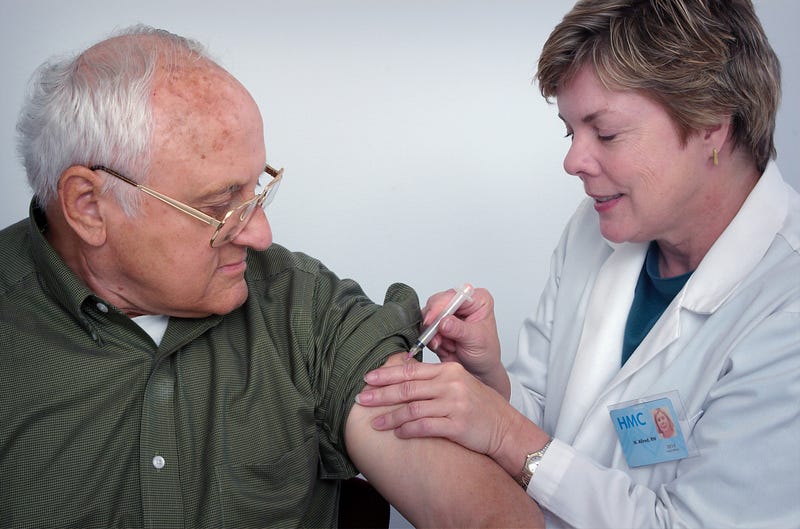
If you look anywhere across popular culture you would think that healthcare favours men over women, virtually every story you read is about how healthcare practitioners don’t take women seriously enough, how men get taken more seriously, how men are more likely to get diagnosed, and how women are more hard done by through the healthcare system.
I used to buy into this and you might think on one level it is logical that men would get more support in the healthcare system, this is because due to having two X chromosomes, women have many advantages over men when it comes to good health, least of all that we are more able to bat off viruses.
This reality can be seen across all sexually reproducing species where one sex has two different chromosomes and the other has two identical ones. For example, a 2020 study when looking across all species found that having two of the same chromosomes provides you with a 17.6 percent greater chance of living than having two different ones.
In humans the average has varied across history, for example, in ancient Egypt it was estimated to be 30 to 40 percent — the average age for men was 22.5 to 25 versus 35–37 for women. However, all historical numbers are distorted by how many men died through hard labour, violence and war. Western cultures, which have seen relative peace and a step away from hard labour show a more realistic result, which is around 5 to 10 percent.
So, once you take out war and the high death rate from hard labour, women still outlive men and it’s not surprising. For example, take cancer, it has been consistently found that there is a 1 in 2 chance a man will be diagnosed with cancer over his lifetime; however, for women, the figure is 1 in 3. That means there is a 30 percent chance a woman will get cancer, but there is a 50 percent chance a man will.
The reasons for this are complex but a large factor is that the two X chromosomes in women lead to women having fewer genetic defects overall than men, mainly because if there is a defect in one of the X chromosomes, the other one can step in. In men, this process cannot occur because they have an X and a Y chromosome.
Considering this, it would perhaps be logical that more effort would have been put into male cancers, and considering the inequality between men and women as it is sold you would think men would be desperate to protect themselves first, and that they had the power to make it happen. I know I’m guilty of endlessly saying when it comes to women-only problems that if this was a man problem, it would have been solved long ago.
However, despite popular belief that this is the case, the more you look at the data the clearer it becomes that this is completely false, in fact, it is so wide of the market is crazy. We have more ways to diagnose and detect cancer in women and cure cancers in women, we make more effort to routinely check for cancers in women, like the smear test, and we put a lot more effort into educating women on how to check themselves for cancer and reminding them to do so consistently.
It’s actually scary how much more I understand about how to check for cancer in myself than my partner does himself, and how much easier it is to find information on how to do so in me than him, and how many more options are available for consistent cancer screening in me than him.
So, we are better at detecting cancers in women, and at curing them in women, and we better teach women how to detect whether they have them sooner than men, and are more active in making sure women do check for them — even down to bringing them in for regular screening.
The results of this gender disparity in our behaviour can be seen in the data where across OECD countries, men are 70 percent more likely to die from cancer than women, which considering the latter is not surprising. To further amplify how bad the statistic is and how much of a failure of care towards men it is, a study from South Korea found that once age, stage mix and case mix are taken into account, the figure is 11 percent.
That means if we put more effort into creating regular screening systems for men, getting men to go to the doctors and teaching men how to identify if they have cancer, we could immediately massively reduce the number of men who die from cancer.
Yet we are not doing this, we still seem to be obsessed with selling the idea that women need more support, and that the system is failing women and favouring men, which is false. It’s failing both, but men more and by a big distance, as is society — at least when it comes to healthcare. As a mother with a son, this especially worries me, as I’m sure it does many mothers with sons.
What worries me even more is that it isn’t just failing men when it comes to cancer, it is failing them when it comes to everything healthcare-related — bar reproduction of course.
Men go to the doctors a lot less than women — that is a societal failure
I often think that the reason it can feel like men get taken more seriously by doctors than us is not because of some bias, but because men attend so rarely compared to women that when they do attend, the doctors have reason to really pay attention because as studies consistently show, men typically don’t attend unless there is a serious serious problem.
For example, a 1998 study by the CDC found that women were twice as likely to maintain screening and preventative care than men, and were 33 percent more likely to go to the doctor. In terms of what has changed since, nothing.
For example, a 2012 study by the UK National Pharmacy Association found that men only visited the doctor 4 times a year versus 6 for women. Also, men only visited a pharmacy on average 4 times a year versus 18 for women. On top of that, men were more likely to admit they had a poor understanding of medicine and healthcare in general.
Across all countries and across every single study — both new and old — the findings are the same, men go to the doctors less, have less understanding of healthcare and how to look after themselves, and are less likely to look after themselves.
It would be easy to blame men for this, saying they only have themselves to blame, it would be easy to blame it on the patriarchy, toxic masculinity, this and that, everything. It would be wrong to do so, the blame is on us as a society because we as a society have not made a concerted effort to do so like we have with women.
For example, if we didn’t teach women how to look after themselves, and drill it into them to look after themselves, if we didn’t give them endless screening opportunities, and endless amounts of information on healthcare in general, would we really be any different to men? History says we would not be.
We only look after ourselves more now and get better healthcare because men and women together made it that way, just as men and women together have made it so that men still don’t. Only men and women together can change that.
Mental health care provides an even more shameful indictment of the gender gap in healthcare
Women are three times more likely to suffer common mental health problems than men, and are twice as likely to suffer from depression; however, men are 4 times more likely to commit suicide. However, there is a caveat to the data about women being more likely to suffer mental health problems and depression, we cannot trust its accuracy simply because men are so much less likely to seek help for mental health problems.
This massively distorts the data and exposes a massive problem. Whereas as a society we have worked very hard to get women talking and seeking help for mental health problems, which is why women are substantially more likely to seek help, we have cataclysmically failed when it comes to men. We have failed to understand men, we have failed to even learn how to listen to men, let alone actually help them deal with their problems.
This can be seen everywhere, from online writing to books, to campaigns, women are encouraged in a way that resonates and connects with us to talk about our problems. For example, the “It’s okay to be not okay” campaign is brilliant when it comes to women, I know because I really connected with it, but it’s not good for men on the whole — it resonates with some men, but not enough. Simply speaking to men provides solid enough proof on this front.
For men, a more useful campaign would be “It’s okay to not be able to admit you’re not okay,” but even then, that’s not likely to do it, you need to do it in a way that makes men still feel like, and I’m going to use that word, men. For example, women would not seek help if doing so stopped us from feeling like women, I know I wouldn’t. That’s why we need campaigns and systems that take into account that men need to still feel like men when they seek help, just like we have ones that allow women to still feel like women when they seek help.
We aren’t doing that though because we aren’t listening to men. We don’t even know how to listen to men, which is why the few campaigns out there often do more damage than good. I learned that when I started working in therapy, all the training I had set me up very well when it came to female patients, but when it came to men, it often felt like I had read a book on Venus and yet I needed to know about Mars. I only got past this when I started looking past my education and looking to my past experiences as an escort, which I found helped me more when trying to help male patients, mainly because it taught me how to better listen to men.
Yes, that is how f****d up our lack of support systems for men are and how inadequate our understanding of how to help them is, a degree level education along with countless other training courses provided me less help than being an escort when it came to understanding how to listen to men, and how to help men.
And speaking of sex and the world of relationships, when it comes to break-ups there is a massive gender gap in available support.
Women get over break-ups better than men but only because they get more support
If I break up with somebody, as a woman, I look online and find an abundance of help for how to handle a breakup. Even if I didn’t read advice, there are endless shows talking about it, then there is the world of fiction and the world of movies and TV shows which are full of stories for managing and getting over break-ups.
All women are flooded with these from childhood. Where is the help for men that shows them from childhood how to deal with breakups, how to handle rejection or relationship difficulties?
It doesn’t exist is the answer, at least not in a form that is of any use to men — at least that is what I have found from speaking to men. This is why it’s not surprising women handle breakups on average better than men, everywhere there is support for us that really resonates, but nowhere is there support for men that does the same, and the support that does exist is not adequate because it’s not properly tailored for men.
Again, speaking to men reveals this resoundingly.
Who can blame men for not seeking help
From top to bottom, the systems of support for men are simply nowhere near adequate, even if they were, men are not taught from a young enough age about how to access them, again, speaking to men provides proof enough of this. It doesn’t work for women in a lot of ways as well, I can personally vouch for that, but it works for us a lot better than it does for men. That’s a problem.
This is because the lack of support systems leads to the inevitable, making it not surprising that men are more likely to turn to alcohol, drugs, violence, suicide, and men like Andrew Tate and Donald Trump rather than seek help. Why would they not, where else do they have to turn?
That’s what we need to change. We can only do that by starting to reach out to men properly and listening to them, more than that, actually hearing them without prejudice against what they say and feel. Until we start doing that, the Donald Trump’s and Andrew Tate’s of the world will only grow stronger.
Final words
There are many places where men still have advantages over women; however, healthcare is not one of them, when it comes to healthcare, the advantage is very much with women. As a lifelong feminist and believer in equality, this has to be called out and change needs to be brought about.
The greatest reward if we start doing this, it has the power to not only bring men and women back together, but to silence the extremists of the world because if we listen, and truly hear, they lose all power.
Special thanks to my partner for aiding me in this piece. Thanks for reading! If you enjoyed this, you may also enjoy the following: