avatarDaniel Hopper

Free AI web copilot to create summaries, insights and extended knowledge, download it at here

6249

Abstract

negotiating relationships.</p><p id="4fda">This use of hashtags goes against their original function, as they provide no value for making a post more findable.</p><p id="0610">However, this makes sense as most social media users are not trying to grow an audience; they want to engage with others. It can show social affiliations, or it can be emphasising a humorous observation.</p><p id="c9de" type="7">“Hashtags remain a popular means of coordinating social media discussion, referencing ideas, cracking jokes and producing metacommentary… The act of tagging, once an act of classification, has emerged as a means of forging and contesting social bonds.” (Zappavigna, 2018)</p><h2 id="a498">Hashtag communities & branded hashtags</h2><p id="f9f2">Popular hashtags, especially those created around a specific cause or event, often have communities developed around that hashtag.</p><p id="07a7">Large scale participation in sharing memes, for example, #nekminnit (only New Zealanders may know that one). Organisations can create these hashtags for a specific cause to raise awareness, such as #BLM or #BlackLivesMatter.</p><p id="5b83">Creating a personalised <a href="https://brandyourselfbetter.com/blog/post/41549/managing-your-brand-to-attract-more-customers">branded</a> hashtag can be an effective way to start conversations, personalise your content and make it easier to find. The use of personalised hashtags a great way to <a href="https://brandyourselfbetter.com/blog/post/41549/managing-your-brand-to-attract-more-customers">grow your personal brand.</a></p><p id="605a">For example, I hashtag some of my LinkedIn content with #brandwithdan, so if people click on that hashtag, they find more <a href="https://brandyourselfbetter.com/blog/post/53808/ten-ways-your-business-can-create-marketing-content-to-reach-more-customers">marketing content</a>.</p><p id="d5f4">I run a networking event called LinkedIn Local Hamilton, and I hashtag those posts with #LinkedInlocalHamilton so that people can find more event content. If people start to follow those hashtags, they automatically get their content.</p><p id="85b7">The goal is to begin communities around these branded hashtags. But do not use too many; one post is enough.</p><figure id="a0af"><img src="https://cdn-images-1.readmedium.com/v2/resize:fit:800/1*pAIeYh_sM8FbdNVQlwTrng.jpeg"><figcaption>Photo by <a href="https://unsplash.com/@garybpt?utm_source=unsplash&amp;utm_medium=referral&amp;utm_content=creditCopyText">Gary Butterfield</a> on <a href="https://unsplash.com/s/photos/hashtag?utm_source=unsplash&amp;utm_medium=referral&amp;utm_content=creditCopyText">Unsplash</a></figcaption></figure><p id="3fb7" type="7">“These networks/communities can be ephemeral and arise in response to emergencies and crises, or they can be more stable, long-term communities of practice or knowledge that develop to spread ideas, news, or opinions on a given topic.” (Saxton, Niyirora, Guo, & Waters, 2015)</p><h1 id="d131">How to choose hashtags</h1><p id="e37d">Now we know the benefits of using hashtags, here are some guidelines to help get the best result from using hashtags.</p><p id="5bbc">Stuffing a post with 20 random hashtags such as #likeaboss or #dansrandomthoughts will not post any good. Choosing the right hashtags can be quite strategic.</p><p id="106e">At one end of the scale is using random personalised hashtags that nobody would search for is at one end of scale, while at the other end are generic and common hashtags.</p><p id="93bf">Just using the most popular hashtags is not going to do much good either. For example, if a hashtag has 10 million search results, peoples’ chances of finding your content are meagre. They also do not add much meaning to a post or say much about your brand. Use these popular hashtags sparingly.</p><p id="7130">The first way you can research hashtags is to check out relevant <a href="https://brandyourselfbetter.com/blog/post/115793/influencer-marketing-in-2020">influencers</a> in your niche and your established competitors and see what hashtags they are often using.</p><p id="6c55">There tools such as <a href="https://hootsuite.com/">Hootsuite</a> that analyse current social media trends and what hashtags are the best fit for your brand. Other research tools that will help you find relevant and useful keywords in your niche are <a href="https://ritetag.com/">RiteTag</a> and <a href="https://hashtagify.me/hashtag/smm">Hashtagify.me</a></p><h1 id="a585">Hashtags best practice</h1><p id="db41">Knowing how to use hashtags will help boost your brand’s social media engagement. The annoying part is that every social media platform treats hashtags slightly differently. However, some general rules apply across platforms.</p><p id="d478">People can use a hashtag anywhere in a post — in the body of text to emphasise a specific keyword or at the end to provide context. You cannot use spaces, punctuation or symbols in a hashtag.</p><p id="2770">Posts must also be public — if it is private, only followers can find the post, defeating the purpose.</p><p id="e4b0">Do not string too many words together — the best hashtags are short and easy to remember. If a word is difficult to spell, it will not make for a highly effective keyword either.</p><p id="9027">Detailed and specific hashtags will lead to better results than broad ones.</p><p id="5a01">More is not better when it comes to hashtags, contrary to widespread belief. The world of Instagram has popularised the use of numerous random hashtags across other platforms, even though they provide no benefit or function.</p><p id="e3a4">Some people on LinkedIn finish a post with 10–20 personalised hashtags. To me, it just seems vain and spammy. Some platforms even penalise content for using too many.</p><p id="1af4">Limit the number of hashtags you use. More is not always better. It looks spammy, and people tune out from spam.</p><figure id="3f00"><img src="https://cdn-images-1.readmedium.com/v2/resize:fit:800/1*1AhvLErBY35OcEheopYZoA.jpeg"><figcaption>Photo by <a href="https://unsplash.com/@dole777?utm_source=unsplash&amp;utm_medium=referral&amp;utm_content=creditCopyText">dole777</a> on <a href="https://unsplash.com/s/photos/social-media?ut

Options

m_source=unsplash&utm_medium=referral&utm_content=creditCopyText">Unsplash</a></figcaption></figure><p id="4cce">These are some guidelines for hashtag use on major social media platforms.</p><h2 id="7b13">Twitter</h2><p id="1bcc">Research has shown one to two hashtags on Twitter is optimum. Engagement reduces when you include more than two. It can be valuable to search hashtags to find conversations related to your niche to be involved in — type the hashtag into the search bar.</p><p id="451c">You can also click on exploring and then trending, finding current ‘hot’ hashtags, and using any relevant content to reach a wider audience. People and businesses can also add hashtags to their bio/profile.</p><h2 id="32be">Facebook</h2><p id="7990">On Facebook, it is again important not to use too many hashtags. One or two is the recommendation also.</p><p id="527a">There is no real benefit to using them on your private personal account as people who are not friends will not find your content, but on a public business page, they can. Because of personal accounts' privacy, it is also hard for brands on Facebook to monitor branded hashtags' performance.</p><p id="a89b">Inside Facebook groups, hashtags are useful for grouping together content by topic.</p><p id="eab8">Read this <a href="https://brandyourselfbetter.com/blog/post/214991/a-guide-to-facebook-marketing-for-2021">guide to Facebook Marketing</a>.</p><h2 id="7f1e">LinkedIn</h2><p id="fa2a">LinkedIn has only utilised hashtags over the past few years. LinkedIn does not have privacy on personal accounts, which means there is a lot of value in using hashtags to make content more findable by people outside your network. You can even start trending in particular hashtags.</p><figure id="4e47"><img src="https://cdn-images-1.readmedium.com/v2/resize:fit:800/1*Jj8_Ni3LGv8PeHpxsXsnVQ.jpeg"><figcaption>Trending in hashtags on LinkedIn (Source — author)</figcaption></figure><p id="bad9">Two to five hashtags are the recommendation, and the first three used in the posts URL to help with search engine optimisation.</p><p id="64fb">LinkedIn even suggests keywords for you when you write a post, and you can also follow hashtags.</p><p id="a5d9">Using one personally branded hashtag to follow your content is beneficial but uses specific hashtags that indicate a post's topic for your others.</p><p id="f55f"><a href="https://brandyourselfbetter.com/blog/post/81273/tips-on-how-to-use-linkedin-to-attract-more-leads">Improve your Linkedin Strategy with these 10 tips</a>.</p><h2 id="84c9">Instagram</h2><p id="18f0">Using multiple hashtags on <a href="https://brandyourselfbetter.com/blog/post/278559/a-guide-to-instagram-marketing-in-2021">Instagram</a> is more embraced than any other social media platform and even encouraged.</p><p id="c92d">In posts, you can use up to 30, but around 10–12 is the sweet spot. In stories, you can use up to 10. People do not use hashtags as a keyword, as was their initial intention on Twitter. Instead, hashtags such as #picoftheday and #instadaily have become some of the most popular hashtags. Hashtags are more lifestyle based.</p><p id="ef2c">Unlike other platforms, people on Instagram often use hashtags in their comments. Because of the vast number of content (over a billion users) and keywords, it is essential to know what hashtags are prevalent in your niche.</p><p id="ee28">They are likely to be far different to LinkedIn, for example. You can also use hashtags in your bio, so use them more like a keyword there.</p><h2 id="9fe4">YouTube</h2><p id="afd0">As well as adding tags to a video on YouTube, you can also use hashtags in the title and description.</p><p id="f86e">Clicking on one of these hashtags helps a user find more content with that hashtag. Again, there is no point using random personalised hashtags; instead, use them as a keyword.</p><p id="6bcf">The optimal number of hashtags to use is less than 10, and YouTube will penalise any video that employs more than 15 — ignoring the hashtags, and the post may be flagged. YouTube views this as spam. If you do not include hashtags in the title, the first three hashtags in the description will show above your video's title.</p> <figure id="a4aa"> <div> <div> <img class="ratio" src="http://placehold.it/16x9"> <iframe class="" src="https://cdn.embedly.com/widgets/media.html?src=https%3A%2F%2Fwww.youtube.com%2Fembed%2F2FI8ekkOmE8%3Ffeature%3Doembed&amp;display_name=YouTube&amp;url=https%3A%2F%2Fwww.youtube.com%2Fwatch%3Fv%3D2FI8ekkOmE8&amp;image=https%3A%2F%2Fi.ytimg.com%2Fvi%2F2FI8ekkOmE8%2Fhqdefault.jpg&amp;key=a19fcc184b9711e1b4764040d3dc5c07&amp;type=text%2Fhtml&amp;schema=youtube" allowfullscreen="" frameborder="0" height="480" width="854"> </div> </div> </figure></iframe></div></div></figure><p id="3956">That is the lot for this week’s blog about Hashtags.</p><p id="5ab7">I hope you learnt something new about Hashtags and implement some changes into your social media strategy that helps you get more engagement.</p><p id="dd12">Remember not to overload your social media posts with hashtags. As a general rule of thumb, you can’t go wrong with between one and four or five.</p><p id="76cc">#Seeyounextweek,</p><p id="f9dc">Dan.</p><p id="cc74"><a href="https://brandyourselfbetter.com/">BYB Marketing</a></p><p id="8cfb">If you enjoyed the content, this article on pay-per-click advertising (PPC) might be of interest.</p><div id="9021" class="link-block"> <a href="https://readmedium.com/how-to-optimise-pay-per-click-advertising-to-convert-more-leads-435c952178b2"> <div> <div> <h2>How To Optimise Pay-Per-Click Advertising To Convert More Leads</h2> <div><h3>Investing money into Google Ads is not cheap — having a strategy will get you better results</h3></div> <div><p>medium.com</p></div> </div> <div> <div style="background-image: url(https://miro.readmedium.com/v2/resize:fit:320/1*SmdeEnVAg0C29IMBaNYbZw.png)"></div> </div> </div> </a> </div></article></body>

How to Use Hashtags to Engage Your Audience

Anybody scrolling Instagram is bombarded with hashtags. But what purpose do they actually serve?

Photo by Jan Baborák on Unsplash

Hashtags are everywhere on social media posts. Even LinkedIn was using hashtags in 2020.

People can use hashtags to define a topic like #Marketing, or it might be something a bit more random like #Dansmarketingtips.

But what do they actually do? What is the benefit of hashtags?

Is there such a thing as too many hashtags?

Yes, there is.

Here’s everything you need to know about hashtags

What is a hashtag?

A hashtag is a keyword or phrase preceded by a hash (#). North Americans also refer to the hash symbol as a pound symbol (also an octothorpe), and the original use was to mark numbers.

“Hashtags have been seen as a way of increasing the communicative reach of a social media text by attracting a great audience who might ‘engage” with a post.” (Zappavigna, 2018)

Vastly popular on social media, these hashtags help a piece of content become more discoverable by other users. It is a form of social tagging to embed metadata in posts.

Social tagging is “the act of annotating a digital text with user-generated tags so that other users can find it” (Zappavigna, 2018), whilst metadata summarises necessary information about data.

A small piece of data about a more significant amount of data!

This social metadata facilitates ‘real-time’ search, which is an essential function of social media. It allows users of a social media website to find other posts containing that keyword.

Twitter marketing specialist Chris Messina sent the first-ever tweet containing a hashtag in 2007 after pitching his bosses' idea to help group related Tweets (posts) together.

Because of the character-constrained aspects of Twitter (also called microblogging), a hashtag was an uncomplicated way to provide more context for a post without using too many characters.

The decision to use the # symbol was because it was an easy keyboard character to reach on a Nokia phone (remember when people used Nokias!?)

Hashtags have since become popular and spread to other social media platforms such as Facebook, Instagram, and LinkedIn, and have even to television and advertising. Some tags have short life cycles based on a trend or cause, while others are relevant over an extended period.

Functions and benefits of using hashtags

The use of hashtags has grown from the initial purpose of indicating a post's topic to support visibility and participation and to have the additional function of a social resource for forming relationships and communities.

Social media users now commonly use hashtags to give interpersonal meanings to a piece of content. Because users choose their hashtags, they inevitably have become personalised and can even start trends—these two broad functions of hashtags providing numerous benefits.

“Hashtags operate as social metadata in the sense that they are a form of descriptive annotation produced by users, rather than assigned by the microblogging service.” (Zappavigna, 2015)

Indicate topics or themes

Hashtags are an information-organising tool in the same way as keywords are for search engine optimisation (SEO). They add context to a social media post and act like a

“decentralised, user-generated tagging, organising, and classification system” (Saxton, Niyirora, Guo, & Waters, 2015).

Hashtags classify a piece of content into a specific topic, theme or conversation. For somebody browsing their feed, a hashtag might capture a user’s attention enough to engage in the content if the subject is of interest.

Help your target audience find you.

Hashtags enhance the searchability of content by helping people find more content about a topic of interest. Accordingly, it helps a brand create content that their target audience can see.

With an added hashtag, a post becomes indexed by the social media network.

People who search that hashtag can then find your content even if they are not following you — using highly searched popular hashtags helps a new audience see your brand.

Some social networks even let users follow hashtags to help curate what kind of content they see in their feed and make sure it is relevant.

Interpersonal hashtags

Social media users now often use hashtags to portray an attitude towards a particular topic or current affair. For example, #getoverit or #supportlocal.

People use hashtags like this to engage with other users and form relationships. These are interpersonal functions — the motivation of asserting opinions and negotiating relationships.

This use of hashtags goes against their original function, as they provide no value for making a post more findable.

However, this makes sense as most social media users are not trying to grow an audience; they want to engage with others. It can show social affiliations, or it can be emphasising a humorous observation.

“Hashtags remain a popular means of coordinating social media discussion, referencing ideas, cracking jokes and producing metacommentary… The act of tagging, once an act of classification, has emerged as a means of forging and contesting social bonds.” (Zappavigna, 2018)

Hashtag communities & branded hashtags

Popular hashtags, especially those created around a specific cause or event, often have communities developed around that hashtag.

Large scale participation in sharing memes, for example, #nekminnit (only New Zealanders may know that one). Organisations can create these hashtags for a specific cause to raise awareness, such as #BLM or #BlackLivesMatter.

Creating a personalised branded hashtag can be an effective way to start conversations, personalise your content and make it easier to find. The use of personalised hashtags a great way to grow your personal brand.

For example, I hashtag some of my LinkedIn content with #brandwithdan, so if people click on that hashtag, they find more marketing content.

I run a networking event called LinkedIn Local Hamilton, and I hashtag those posts with #LinkedInlocalHamilton so that people can find more event content. If people start to follow those hashtags, they automatically get their content.

The goal is to begin communities around these branded hashtags. But do not use too many; one post is enough.
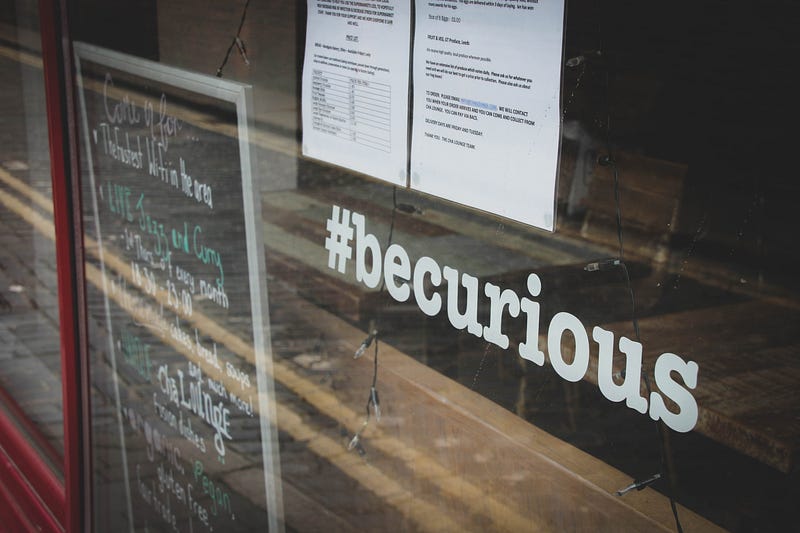
Photo by Gary Butterfield on Unsplash

“These networks/communities can be ephemeral and arise in response to emergencies and crises, or they can be more stable, long-term communities of practice or knowledge that develop to spread ideas, news, or opinions on a given topic.” (Saxton, Niyirora, Guo, & Waters, 2015)

How to choose hashtags

Now we know the benefits of using hashtags, here are some guidelines to help get the best result from using hashtags.

Stuffing a post with 20 random hashtags such as #likeaboss or #dansrandomthoughts will not post any good. Choosing the right hashtags can be quite strategic.

At one end of the scale is using random personalised hashtags that nobody would search for is at one end of scale, while at the other end are generic and common hashtags.

Just using the most popular hashtags is not going to do much good either. For example, if a hashtag has 10 million search results, peoples’ chances of finding your content are meagre. They also do not add much meaning to a post or say much about your brand. Use these popular hashtags sparingly.

The first way you can research hashtags is to check out relevant influencers in your niche and your established competitors and see what hashtags they are often using.

There tools such as Hootsuite that analyse current social media trends and what hashtags are the best fit for your brand. Other research tools that will help you find relevant and useful keywords in your niche are RiteTag and Hashtagify.me

Hashtags best practice

Knowing how to use hashtags will help boost your brand’s social media engagement. The annoying part is that every social media platform treats hashtags slightly differently. However, some general rules apply across platforms.

People can use a hashtag anywhere in a post — in the body of text to emphasise a specific keyword or at the end to provide context. You cannot use spaces, punctuation or symbols in a hashtag.

Posts must also be public — if it is private, only followers can find the post, defeating the purpose.

Do not string too many words together — the best hashtags are short and easy to remember. If a word is difficult to spell, it will not make for a highly effective keyword either.

Detailed and specific hashtags will lead to better results than broad ones.

More is not better when it comes to hashtags, contrary to widespread belief. The world of Instagram has popularised the use of numerous random hashtags across other platforms, even though they provide no benefit or function.

Some people on LinkedIn finish a post with 10–20 personalised hashtags. To me, it just seems vain and spammy. Some platforms even penalise content for using too many.

Limit the number of hashtags you use. More is not always better. It looks spammy, and people tune out from spam.
Photo by dole777 on Unsplash

These are some guidelines for hashtag use on major social media platforms.

Twitter

Research has shown one to two hashtags on Twitter is optimum. Engagement reduces when you include more than two. It can be valuable to search hashtags to find conversations related to your niche to be involved in — type the hashtag into the search bar.

You can also click on exploring and then trending, finding current ‘hot’ hashtags, and using any relevant content to reach a wider audience. People and businesses can also add hashtags to their bio/profile.

Facebook

On Facebook, it is again important not to use too many hashtags. One or two is the recommendation also.

There is no real benefit to using them on your private personal account as people who are not friends will not find your content, but on a public business page, they can. Because of personal accounts' privacy, it is also hard for brands on Facebook to monitor branded hashtags' performance.

Inside Facebook groups, hashtags are useful for grouping together content by topic.

Read this guide to Facebook Marketing.

LinkedIn

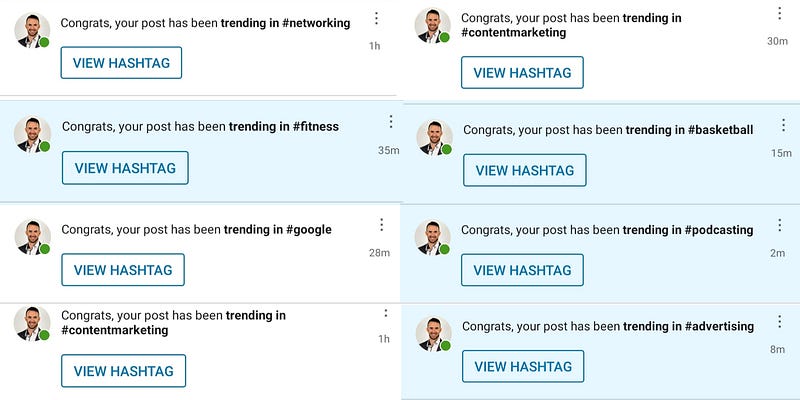
LinkedIn has only utilised hashtags over the past few years. LinkedIn does not have privacy on personal accounts, which means there is a lot of value in using hashtags to make content more findable by people outside your network. You can even start trending in particular hashtags.
Trending in hashtags on LinkedIn (Source — author)

Two to five hashtags are the recommendation, and the first three used in the posts URL to help with search engine optimisation.

LinkedIn even suggests keywords for you when you write a post, and you can also follow hashtags.

Using one personally branded hashtag to follow your content is beneficial but uses specific hashtags that indicate a post's topic for your others.

Improve your Linkedin Strategy with these 10 tips.

Instagram

Using multiple hashtags on Instagram is more embraced than any other social media platform and even encouraged.

In posts, you can use up to 30, but around 10–12 is the sweet spot. In stories, you can use up to 10. People do not use hashtags as a keyword, as was their initial intention on Twitter. Instead, hashtags such as #picoftheday and #instadaily have become some of the most popular hashtags. Hashtags are more lifestyle based.

Unlike other platforms, people on Instagram often use hashtags in their comments. Because of the vast number of content (over a billion users) and keywords, it is essential to know what hashtags are prevalent in your niche.

They are likely to be far different to LinkedIn, for example. You can also use hashtags in your bio, so use them more like a keyword there.

YouTube

As well as adding tags to a video on YouTube, you can also use hashtags in the title and description.

Clicking on one of these hashtags helps a user find more content with that hashtag. Again, there is no point using random personalised hashtags; instead, use them as a keyword.

The optimal number of hashtags to use is less than 10, and YouTube will penalise any video that employs more than 15 — ignoring the hashtags, and the post may be flagged. YouTube views this as spam. If you do not include hashtags in the title, the first three hashtags in the description will show above your video's title.

That is the lot for this week’s blog about Hashtags.

I hope you learnt something new about Hashtags and implement some changes into your social media strategy that helps you get more engagement.

Remember not to overload your social media posts with hashtags. As a general rule of thumb, you can’t go wrong with between one and four or five.

#Seeyounextweek,

Dan.

BYB Marketing

If you enjoyed the content, this article on pay-per-click advertising (PPC) might be of interest.

Social Media
Marketing
Strategy
Business
Entrepreneurship
Recommended from ReadMedium