
Harry Potter: The Fatherless Son
Like most heroes, Harry Potter is an orphan who must become a man without a father to guide him. Given the prophecy surrounding his pivotal role in the struggle between good and evil, his death and resurrection, and his being a counterpart to a resurrected devil, it is not hard to see Harry as a Christ figure. As an adolescent, he is what we are denied in the Gospels short of the Apocrypha of Thomas: a depiction of a savior between his divine babyhood and his fulfilled manhood.
Harry’s coming-of-age moment occurs in The Prisoner of Azkaban: Harry is attacked by Dementors who are raping his soul from him. This metaphysical lobotomy renders a being void of consciousness even beyond death. Just as Harry is about to succumb to this worst of all tortures, he sees a deer made of light who releases a Patronus that fends off all the Dementors. He later tells Hermione that he believes the luminescent deer was in fact his deceased father helping him from beyond the grave.
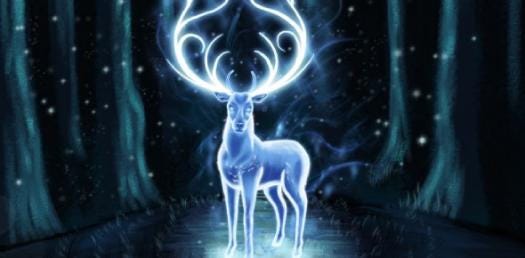
Later, with the aid of time travel, future Harry and Hermione watch past Harry being attacked by the Dementors. Like Hamlet, future Harry stands paralyzed in inaction, waiting for his dead father to save him. Despite being the only wizard powerful enough to defeat Voldemort; despite knowing the recent torture of these demons; despite having every reason to act and none to wait, Harry does the unthinkable. He does nothing.
Nietzsche tells us what I had to learn as a man who buried his father 31 years before I cut my daughter’s cord. 31 years between the shovel and the scissors, between his death and her birth. My father died on the 31st. Voldemort was born on the 31st. The story becomes my own. Nietzsche, whose own father died in his childhood, says:
He who has no father must become his own father.
That this is what this moment is truly about is made all the clearer, for Harry is not alone. Laying beside him is Sirius Black: unconscious, unable to help, even closer to losing his soul than Harry. And who is Sirius? Harry’s godfather. The symbol of fatherhood: the one who was meant to father Harry in the event that Harry’s parents should die. And he, too, lays prone, helpless. Harry cannot hide his boyhood behind another man, for he must become his own father, not find another.
All this future Harry watches with a helpless foolishness only a fatherless son could know. He stands, patiently watching his own metaphysical rape, and says, ‘Any minute now, my Dad will come.’ Easier to believe in our ancestors than ourselves. Easier to believe in a dead man’s manhood than his own. Easier to believe anything that would prevent him from becoming his own father. Easier to believe that it is only coincidence that he is standing in the exact time and place in which he witnessed the deer made of light, as if this were only coincidence.
Hermione is no fool. She tells Harry, ‘No one’s coming.’ As his anima, she relates with clarity what he denies with torpid fear. And yet he resists a while longer, resists becoming himself. And then, finally: Harry saves himself. He releases a Patronus.
Not only does future Harry save past Harry, he also saves past Sirius, whose soul returns to his body. We now have Jung’s enantiodromia: the opposites turning into each other. The son saves the father as the father is saved by the son. A new age has come.
The Messiah Complex is a difficult one to bear. For before Harry can believe he can save others, he must believe he can save himself. And so he does. This is Harry’s initiation to manhood.
When Harry tells Hermione he believes the stag who saved him was his father, he is projecting his manhood. Whatsoever saved me could not have been myself. So I will project my greatness on another because I see it as an other.
As a therapist, I experience this everyday — when my patients believe I can heal them. This is called the transference. And what are they transferring? The belief in their ability to heal themselves. The true healing will be found in the core wound. For Harry, this is clear: before he is a wizard, he is an orphan. His wound is abandonment, which for him means, death. And so he turns to death to save him because whatever kills your father becomes your father.
Harry is unable to perceive the luminous being as himself because he has not yet become what he needs. Rather than see himself, Harry sees a stag, for it is easier for him to outsource his strength than claim it. Like a boy, he turns to others by instinct because he has yet to identify:
What I need = What I am
We perceive in terms of our beliefs. Harry believes the being who saves him must be beyond him, so he perceives future Harry as a luminescent being even though he is not dead. Death is an allegory for death of an ego state so as to allow the transcendental consciousness to embody. Hence this projection is fitting, for Harry must resurrect to fulfill his prophecy. The Avatar of Christianity was only Jesus while he lived, Christ once he had risen. Neo had to die and resurrect to his ‘next life’ as the Oracle had foretold to become the One. Darth Vader had to die and resurrect as Anakin to fulfill his prophecy of bringing balance to the Force. And Harry? He had to die as a boy to become a man.
Harry the Man saves Harry the Boy
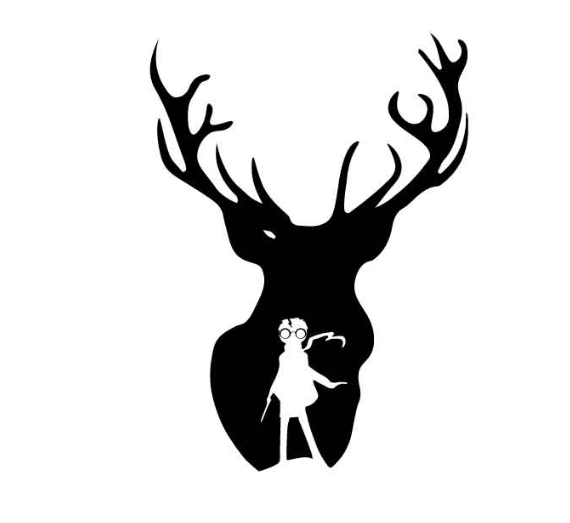
But what distinguishes the boy and man as they are only hours apart in age? The boy turns to the man for saving whereas the man saves the boy. JK Rowling was a single mom pursued by her baby’s father, an abusive stalker. I often sense Hermione’s strength and punching of Malfoy as having much to do with what Rowling endured. Rowling could not write a strong female character and then succumb to the drivel of the damsel in distress. So Harry becomes both the damsel and the hero. This is what happens when the inchoate aspects of the hero stop getting projected onto weak female characters and start becoming the very stuff of the hero’s path.
When I saw Harry staring at a deer made of light, I knew this story was mine, too. My father’s name was Tzvi: Hebrew for deer.
Also read The Other Virginity in Lord of the Rings, Star Wars as Christian Allegory and Moana I: Converting Gods and Devils.
To follow me: https://medium.com/@myartman
To subscribe: https://medium.com/@myartman/membership


