avatarAvi Kotzer

Free AI web copilot to create summaries, insights and extended knowledge, download it at here

3595

Abstract

og</h2><p id="7643">Our friends at Merriam-Webster explain that the word <i>haar</i> may have developed from a Low German or Dutch dialect word similar to the Dutch dialect <i>harig</i>, meaning “damp, misty”, from the Middle Dutch <i>hare</i> (sharp wind, piercing cold), from the Frisian <i>harig</i> (misty), from the Old Norse <i>hārr</i> (gray, hoary). In case you’re wondering, <b>Frisia</b> is a cross-border region that covers parts of Germany and the Netherlands.</p><p id="bd89">Sea fog is typically called <i>haar</i> in Scotland, while the English prefer <b>fret</b>. According to an <a href="https://www.bbc.co.uk/wales/surfing/sites/features/pages/seafog.shtml">article</a> in the BBC, one usually sees <i>haar</i> between April and September on the east coast of the United Kingdom, before the sea has begun to warm up. As is the case with many meteorological phenomena, warm and cold air are involved. In this case, <i>haar</i> forms when a patch of warm air passes over a cold sea. (Hence the nickname “sea fog”.) As the article explains:</p><blockquote id="1aef"><p>The warm air at the bottom of the parcel is cooled by the cold air below, until it can no longer hold the moisture that was previously contained within. Therefore, it releases some of the moisture in the form of liquid water through condensation. Add an onshore component like a wind of 5–20 mph, and the cooling in the bottom of the warm parcel of air is spread upwards and generates a fog; sea fog. Moreover, if the wind is coming from a direction between North and South East, the sea fog will make its journey from the sea over the land.</p></blockquote><p id="0c61"><i>Haar</i> can unexpectedly ruin a spring or summer day at the beach. If your day isn’t being ruined by the haar, however, you might find it quite beautiful. And it doesn’t matter whether you get a color version of the haar…</p><figure id="88c2"><img src="https://cdn-images-1.readmedium.com/v2/resize:fit:800/1*U0_pJ4qKltjk-OFk5Fga_g.png"><figcaption>Photo by Brocken Inaglory</figcaption></figure><p id="949d">…or the back and white one…</p><figure id="1a6b"><img src="https://cdn-images-1.readmedium.com/v2/resize:fit:800/1*38ERqHDXVAHAeX6LSpnpog.png"><figcaption>Photo by George Gastin</figcaption></figure><p id="61cb">That warm air mass that passes over the cold water is known as a <b>marine layer</b>. That term is sometimes used synonymously with <i>haar</i> or sea fog, but they are not the same. The marine layer is a simply a medium within which clouds may form under the right conditions. Sort of like Medium making people rich under the right conditions. But the marine layer is not the clouds or fog <i>per se</i>. Sometimes what forms in the marine layer is polluted air, or smog, as this photo of Los Angeles shows.</p><figure id="b135"><img src="https://cdn-images-1.readmedium.com/v2/resize:fit:800/1*072FjNfIcJryYSF25Xo8-g.png"><figcaption>Photo by Boqiang Liao</figcaption></figure><p id="8a52">The further north you go during summer, the likelier it is you can experience <i>haar</i> during August. And some clever dude or dudette came up with <b>Fogust</b> as a term when there is heavy fog during the eighth month of the year.</p><h2 id="6b1c">Where haar you? Germany?</h2><p id="e877">As I mentioned before, <b>Haar</b> is a municipality in Bavaria, Germany, not too far away from Munich. It may or may not be the place where that castle entrance photo at the top of today’s article is from.</p><p id="d2a1">This is Haar’s coat of arms…</p><figure id="8c20"><img src="https://cdn-images-1.readmedium.com/v2/resize:

Options

fit:800/1gxztdVM1QsmuechJ03vD8A.png"><figcaption></figcaption></figure><p id="e030">…and its town hall…</p><figure id="8d4e"><img src="https://cdn-images-1.readmedium.com/v2/resize:fit:800/0*aSlwUdlqlz6bUp3O.jpg"><figcaption></figcaption></figure><p id="564c">…and the current standing of its baseball team.</p><figure id="091e"><img src="https://cdn-images-1.readmedium.com/v2/resize:fit:800/1*zkSuSAQ3j_dUgpZTEkxhMA.png"><figcaption>Screenshotted by Iva Reztok</figcaption></figure><p id="ed91">Yep, that’s right. Not only does Haar have a professional baseball team, they’re pretty good, too. At least when it comes to playing against other German baseball teams.</p><p id="3124">The team, founded in 1990, is called the <a href="http://bundesliga.disciples.de/">Disciples</a>, which I admit sounds more like a Netflix movie about aliens that come to Earth with a cookbook. Oh, wait, I think that was already done <a href="https://www.youtube.com/watch?v=NIufLRpJYnI">decades ago</a>. The Disciples have a men’s team and a women’s team that play in the first baseball and first softball leagues, respectively. The men’s team also played in the first and only European Baseball League in 2016, and came in third place. Which may not sound terrible until you realize there were only three teams in the whole league.</p><p id="5f63">Here is the baseball team photo from last year. (At least I think it’s from last year; my German is quite rusty to the point of knowing only <i>gesundheit</i>.)</p><figure id="6639"><img src="https://cdn-images-1.readmedium.com/v2/resize:fit:800/1*onwhV3tLJDfP7uQmrIXPIg.png"><figcaption>Screenshotted by Iva Reztok</figcaption></figure><p id="4046">And to answer the question that immediately popped into your mind: no, those are not Pittsburgh Pirates moonlighting in Germany.</p><p id="e2dd">Now you know. Next time you’re in Bavaria and some sea fog rolls in, you can tell your friends excitedly that “there’s a haar right here in Haar”. Your friends will think you’re crazy, of course. Not because you’re so far away from the ocean that it’s impossible to get any sea fog in the southern part of Germany… but because the editors of the Spelling Bee decided that <i>haar </i>is a dord.</p><p id="15ce">You can check out my previous entry on another <b>dord* </b>here:</p><div id="61f0" class="link-block"> <a href="https://readmedium.com/lunule-3067c585714e"> <div> <div> <h2>Lunule</h2> <div><h3>You can bet your last sand dollar on this word</h3></div> <div><p>medium.com</p></div> </div> <div> <div style="background-image: url(https://miro.readmedium.com/v2/resize:fit:320/1*cv3XiOSu16Pnqohbh6jWng.jpeg)"></div> </div> </div> </a> </div><p id="d0c6">*What the heck is a <b>dord, </b>you ask? Here’s the answer:</p><div id="28fe" class="link-block"> <a href="https://www.merriam-webster.com/words-at-play/dord-a-ghost-word"> <div> <div> <h2>'Dord': A Ghost Word</h2> <div><h3>One of the questions people like to ask lexicographers is this: Can you sneak something into the dictionary? Can you…</h3></div> <div><p>www.merriam-webster.com</p></div> </div> <div> <div style="background-image: url(https://miro.readmedium.com/v2/resize:fit:320/0*4xF7DX68M57DgY2w)"></div> </div> </div> </a> </div></article></body>

Haar

You may not have the foggiest idea what this word means

Photo by Jordan Loaiza on Unsplash

Today’s New York Times Spelling Bee letters:
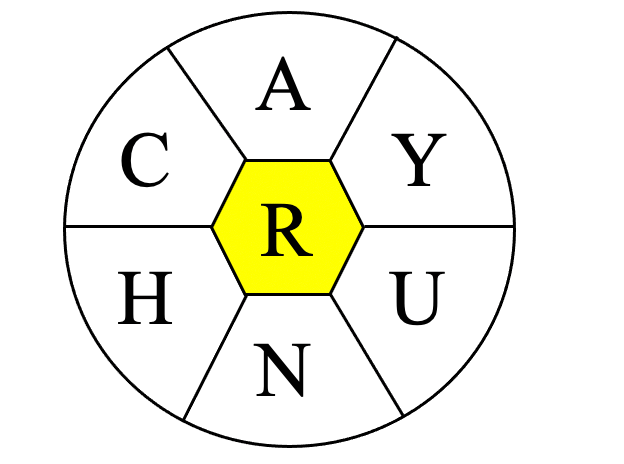
Art: Iva Reztok

A, C, H, N, U, Y, and center R (all words must include R)

Merriam-Webster says…

Credit: merriam-webster.com

Silly little dictionary! Don’t you know that haar can’t possibly be a word if the New York Times says it ain’t?

For further fascinating facts, check out the Spelling Bee Master.

What’s your favorite dord* from today’s puzzle?

My Two Cents

Why is there is something that seems to be the entrance to a castle (minus the castle itself) in the picture at the top of today’s article? Search me. I typed “haar” into the search function of Unsplash and that’s what I got, among other results that have nothing to do with the dictionary’s definition of today’s daily dord*.

It’s possible that the structure seen in the photo is in Haar, Germany. More about that later.

Spoiler Alert: I am going to discuss some answers in today’s puzzle. Skip ahead to the next section if you’d like. Just please scroll slowly when you do.

There were a couple of surprising entries in today’s list of rejected words. First off was anarch, which the dictionary defines as “a leader or advocate of revolt” and a synonym of anarchist. What I found interesting was that anarchy is one of the accepted answers. So why did the editors of the Spelling Bee think that someone playing the game wouldn’t just remove the “y” and try anarch? I mean, if anarchy isn’t obscure, anarch can’t be either. Right?

The other word I was expecting to be accepted was unary, as in “having or consisting of a single element, item, or component”. In fact, had it been a valid answer, it would have provided today’s game with a bingo, which happens when there is at least one word that begins with each of the letters in the puzzle. Today, only “u” is missing.

So when I saw that unary had been rejected, I thought about picking that word to write about. But then when I checked Wikipedia to get a better idea of what my angle would be, I found this:

Yeah, I agree! Friday night is not the best time to write an article about a word with so many math meanings. Although Hemanth might disagree. But then again, he’s much better at tackling and explaining math than I am. I’ll save unary for a rainy day, then.

The war of fog

Our friends at Merriam-Webster explain that the word haar may have developed from a Low German or Dutch dialect word similar to the Dutch dialect harig, meaning “damp, misty”, from the Middle Dutch hare (sharp wind, piercing cold), from the Frisian harig (misty), from the Old Norse hārr (gray, hoary). In case you’re wondering, Frisia is a cross-border region that covers parts of Germany and the Netherlands.

Sea fog is typically called haar in Scotland, while the English prefer fret. According to an article in the BBC, one usually sees haar between April and September on the east coast of the United Kingdom, before the sea has begun to warm up. As is the case with many meteorological phenomena, warm and cold air are involved. In this case, haar forms when a patch of warm air passes over a cold sea. (Hence the nickname “sea fog”.) As the article explains:

The warm air at the bottom of the parcel is cooled by the cold air below, until it can no longer hold the moisture that was previously contained within. Therefore, it releases some of the moisture in the form of liquid water through condensation. Add an onshore component like a wind of 5–20 mph, and the cooling in the bottom of the warm parcel of air is spread upwards and generates a fog; sea fog. Moreover, if the wind is coming from a direction between North and South East, the sea fog will make its journey from the sea over the land.

Haar can unexpectedly ruin a spring or summer day at the beach. If your day isn’t being ruined by the haar, however, you might find it quite beautiful. And it doesn’t matter whether you get a color version of the haar…

Photo by Brocken Inaglory

…or the back and white one…

Photo by George Gastin

That warm air mass that passes over the cold water is known as a marine layer. That term is sometimes used synonymously with haar or sea fog, but they are not the same. The marine layer is a simply a medium within which clouds may form under the right conditions. Sort of like Medium making people rich under the right conditions. But the marine layer is not the clouds or fog per se. Sometimes what forms in the marine layer is polluted air, or smog, as this photo of Los Angeles shows.

Photo by Boqiang Liao

The further north you go during summer, the likelier it is you can experience haar during August. And some clever dude or dudette came up with Fogust as a term when there is heavy fog during the eighth month of the year.

Where haar you? Germany?

As I mentioned before, Haar is a municipality in Bavaria, Germany, not too far away from Munich. It may or may not be the place where that castle entrance photo at the top of today’s article is from.

This is Haar’s coat of arms…

…and its town hall…
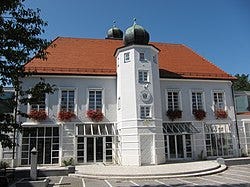
…and the current standing of its baseball team.
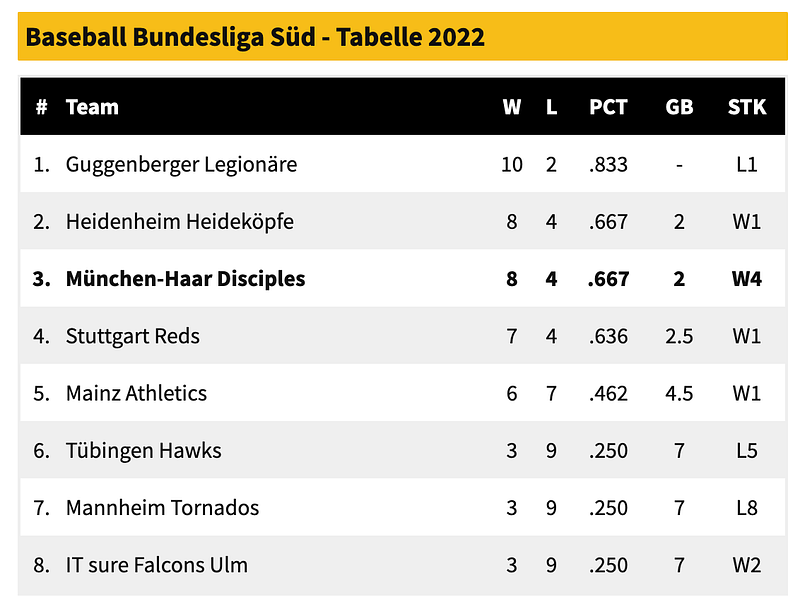
Screenshotted by Iva Reztok

Yep, that’s right. Not only does Haar have a professional baseball team, they’re pretty good, too. At least when it comes to playing against other German baseball teams.

The team, founded in 1990, is called the Disciples, which I admit sounds more like a Netflix movie about aliens that come to Earth with a cookbook. Oh, wait, I think that was already done decades ago. The Disciples have a men’s team and a women’s team that play in the first baseball and first softball leagues, respectively. The men’s team also played in the first and only European Baseball League in 2016, and came in third place. Which may not sound terrible until you realize there were only three teams in the whole league.

Here is the baseball team photo from last year. (At least I think it’s from last year; my German is quite rusty to the point of knowing only gesundheit.)

Screenshotted by Iva Reztok

And to answer the question that immediately popped into your mind: no, those are not Pittsburgh Pirates moonlighting in Germany.

Now you know. Next time you’re in Bavaria and some sea fog rolls in, you can tell your friends excitedly that “there’s a haar right here in Haar”. Your friends will think you’re crazy, of course. Not because you’re so far away from the ocean that it’s impossible to get any sea fog in the southern part of Germany… but because the editors of the Spelling Bee decided that haar is a dord*.

You can check out my previous entry on another dord* here:

*What the heck is a dord, you ask? Here’s the answer:

Spelling Bee
Language
Baseball
Weather
Germany
Recommended from ReadMedium