avatarAvi Kotzer

Free AI web copilot to create summaries, insights and extended knowledge, download it at here

3783

Abstract

g/wiki/Ian_Hancock">Dr. Ian Hancock</a>, director of the program of Romani Studies and the Romani Archives and Documentation at the University of Texas at Austin and former Roma ambassador to the United Nations.</p><p id="1b0b">The <a href="https://worldromacongressart.com/"><b>World Romani Congress</b></a> is a series of forums created to discuss issues relating to Roma people around the world. The first one took place in 1971, in England, and as of 2022 there have been ten. The last one took place in 2015, if my research does not fail me. The first congress also adopted the national anthem of the Roma (<a href="https://en.wikipedia.org/wiki/Romani_anthem"><i>Gelem, Gelem</i></a>) and a flag to represent them.</p><figure id="d196"><img src="https://cdn-images-1.readmedium.com/v2/resize:fit:800/0*JF_GqD5U6xeJKJJH.png"><figcaption>Credit: AdiJapan</figcaption></figure><p id="f577">Apparently the Roma were called <b>gypsy</b> because many people thought they had come from Egypt. In reality, <a href="https://www.livescience.com/25294-origin-romani-people.html">studies have shown</a> that Romani likely from northwest India, and migrated from there more than 1,500 years ago. They should also not be confused with the ancient Romans or the Rumanians, although Romani have lived for many centuries in both Italy and Rumania. They are a traditionally nomadic people and have no officially-established country they call their own.</p><p id="44dd">Although the term gypsy has usually been understood and used in a much less offensive manner in other languages (for example, the Spanish <i>gitano</i> or the Italian <i>zingaro</i>), the Romani want to be called what they want to be called, and that should be respected if only out of common courtesy. In Spanish –– and possibly a few other Romance languages–– this will undoubtedly cause confusion with the demonym of Rumanians, who are called <i>rumanos</i>. But it is what it is.</p><p id="8884">In English the word <i>gypsy</i> has given rise to both adverse connotations of the word itself as well as other negative expressions derived from it. These include <b>gyp</b> ––both the noun (a cheater or swindler) and the verb (to cheat or swindle) and today’s daily dord*. Which brings us to…</p><h2 id="26f9">The woodsman cometh</h2><p id="68ea">A <i>gyppo</i> or <b>gypo logger</b> is a logger who either works independently or for a small-scale logging operation, in contrast with those who are employees of established sawmills or lumber companies. The latter are sometimes called “company loggers” to distinguish them from the <i>gyppo</i>.</p><figure id="7f72"><img src="https://cdn-images-1.readmedium.com/v2/resize:fit:800/0*kOhb_meroD8v4nSF.jpg"><figcaption>Photograph by Russell Lee (1903–1986); no copyright claimed</figcaption></figure><p id="c45e">The term <i>gyppo</i> appears to have originated and stayed within the confines of the Pacific Northwest region of both the United States and Canada, traditional hubs of logging activity. In his 1923 article “<a href="https://www.journals.uchicago.edu/doi/10.1086/253566">The Gyppo System</a>”, E.B. Mittelman argued that <i>gyppo</i> “may be a derivation from the Greek word, signifying vulture, or may be simply a derivation or corruption of the word gypsy.”</p><p id="fcc3">I’m thinking the latter, especially because Mittelman added this historical evidence:</p><blockquote id="4838"><p>Cartoons in the <i>Industrial Worker</i> of Seattle, inveighing against the system, often pictured a sly gypsy fathoming the hand of an honest workingman. An editorial in the same paper dubbed “The Gypy’s Warning” states, “At present the master class of capitalists call it ‘contract labor,’ ‘piece work,’ and other fancy names…For us, the proletarians, it is ‘gyppoing’

Options

and it means all that the name connotes. The gyppo is a man who ‘gyps’ his fellow workers and finally himself, out of the fruits of all our organized victories in the class war.</p></blockquote><p id="407f">The<i> Industrial Worker</i> is the magazine of the <a href="https://www.iww.org/"><b>Industrial Workers of the World</b></a> (IWW),an international labor union founded in Chicago in 1905. IWW is a general union subdivided between the various industries which employ its members. The philosophy and tactics of the IWW are described as “revolutionary industrial unionism”, with historical connections to socialist, syndicalist, and anarchist labor movements. In the first couple of decades it existed, the IWW was actually able to achieve many of their short-term goals, particularly in the American West. One of the areas it was highly active in, of course, was the logging industry.</p><p id="ca46">According to Mittelman, the IWW first introduced the term <i>gyppo</i> during the unsuccessful 1917–18 Pacific Northwest loggers’ strike, which called for an eight-hour day for loggers. G<i>yppo</i> loggers existed before this date, but they were probably not referred to with that moniker.</p><p id="dd42">William Robbins’ explains this in his 1985 article, “The Social Context of Forestry: The Pacific Northwest in the Twentieth Century”:</p><p id="e53f"><i>The immediate postwar years in southwestern Oregon were the heyday of the storied gyppo logging and sawmill operator — the hardy individual who worked on marginal capital, usually through subcontracts with a major company or broker, and whose equipment was invariably pieced together with baling wire.</i></p><p id="fc48">However, this boom did not last long. Excessive logging in the 1950s began reducing the profits of <i>gyppos</i> and, by the 1970s, environmental regulations and other changes in the logging industry had driven many of these independent loggers out of business. Today many in the industry consider the <i>gyppo</i> to be “an endangered species.”</p><p id="331f">Which may be good for the slur, but bad for these freelancers.</p><p id="48db">Now you know. Next time you’re in the woods and you see an independently contracted logger felling some trees, ask them if they happen to be a <i>gyppo</i>. Don’t be surprised if they get upset. Not because you’re offending them… but because the editors of the Spelling Bee decided that <i>gyppo </i>is a dord*.</p><p id="9d68">You can check out my previous entry on another <b>dord* </b>here:</p><div id="74e0" class="link-block"> <a href="https://readmedium.com/calcaneal-eda6b6d5a549"> <div> <div> <h2>Calcaneal</h2> <div><h3>Don’t be such a heel!</h3></div> <div><p>medium.com</p></div> </div> <div> <div style="background-image: url(https://miro.readmedium.com/v2/resize:fit:320/0*rD5pd6pLtUsSB7jK)"></div> </div> </div> </a> </div><p id="c985">*What the heck is a <b>dord, </b>you ask? Here’s the answer:</p><div id="f79f" class="link-block"> <a href="https://www.merriam-webster.com/words-at-play/dord-a-ghost-word"> <div> <div> <h2>'Dord': A Ghost Word</h2> <div><h3>One of the questions people like to ask lexicographers is this: Can you sneak something into the dictionary? Can you…</h3></div> <div><p>www.merriam-webster.com</p></div> </div> <div> <div style="background-image: url(https://miro.readmedium.com/v2/resize:fit:320/0*j2Ar5tcLk31tjpgk)"></div> </div> </div> </a> </div></article></body>

Gyppo

Logging on before the internet
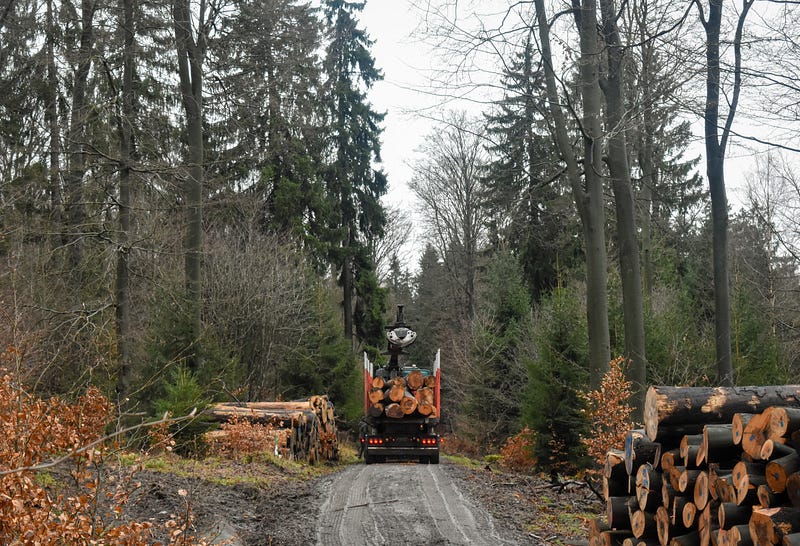
Photo by Kai Bossom on Unsplash

Today’s New York Times Spelling Bee letters:
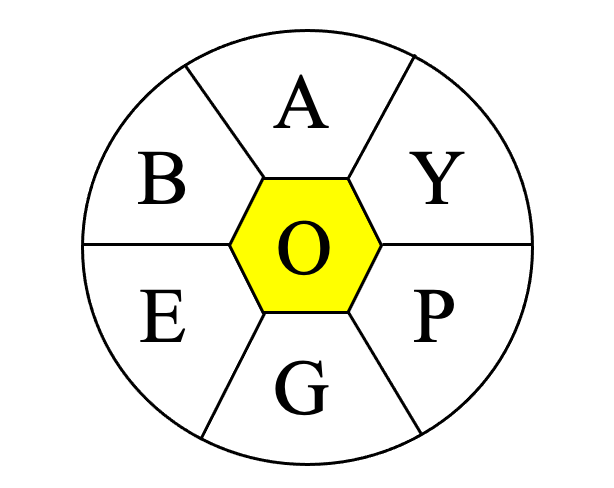
Art: Iva Reztok

A, B, E, G, P, Y, and center O (all words must include O)

Merriam-Webster says…
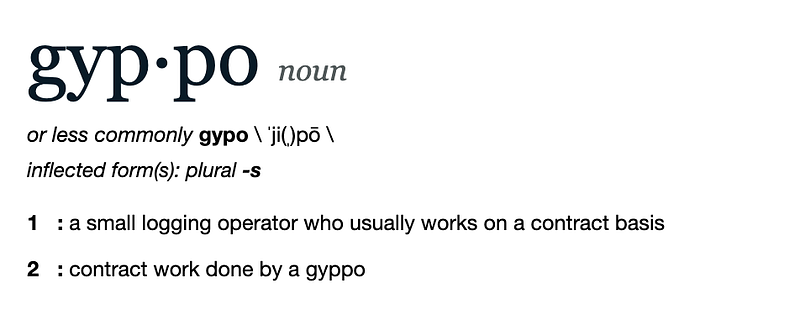
Credit: merriam-webster.com

Silly little dictionary! Don’t you know that gyppo can’t possibly be a word if The New York Times says it ain’t?

For further fascinating facts, check out the Spelling Bee Master.

What’s your favorite dord* from today’s puzzle?

My Two Cents

There aren’t many criteria listed in the Spelling Bee rules for accepting or rejecting words. That doesn’t mean the rules are straightforward. With most of them ––words must have at least 4 letters and contain the center letter, words cannot be proper nouns or hyphenated, and letters can be used more than once–– there is not much room for debate. But the two other rules are open to interpretation: no obscure words, and “no cussing”.

When the movie Gone with the Wind came out in 1939, many Americans were scandalized about the use of the word damn in Rhett Butler’s famous line to Scarlett O’Hara. Today damn is accepted by the Spelling Bee. I don’t recall if goddamn, is, too, though I wouldn’t be surprised.

As for obscure words, well, we here at Silly Little Dictionary! have been listing them on a regular basis since January of last year. So far we’ve covered over 400 of them in the hopes that we can convince Sam Ezersky to include them in the future. But we won’t hold our breath. Not because Ezersky never changes his mind, but because I doubt he has ever heard of ––much less read–– this column.

Anyway, I’m commenting about the Spelling Bee rules because I’m not sure in which category gyppo falls. Does Ezersky think it’s obscure? A slur? An obscure slur? (That would be a good thing, though, right? A slur no one knows.) How is gyppo even a slur, you may be wondering? Well, read on to find out.

What’s in a slur?

Our friends at Merriam-Webster tell us the origin of gyppo is a “shortening & alteration from gypsy”. When we look up the gypsy they link to, we see this:
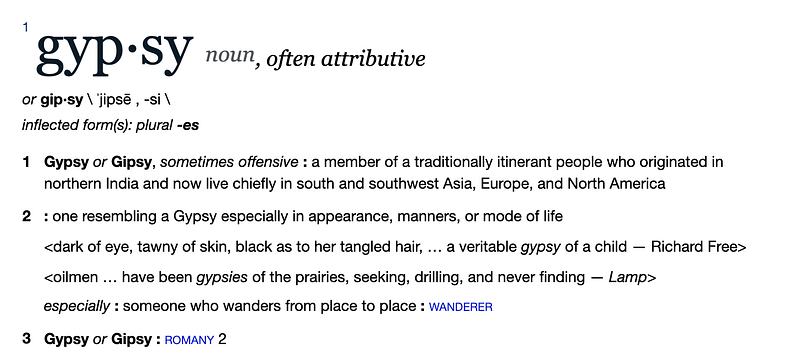
Credit: merriam-webster.com

I’ve included only the first three meanings. The interesting part is how the first definition says “sometimes offensive”, when “at the first World Romani Congress, it was voted unanimously to reject all externally-applied labels for our people, including ‘Gypsy’, since it had such stereotypical and negative associations”, according to Dr. Ian Hancock, director of the program of Romani Studies and the Romani Archives and Documentation at the University of Texas at Austin and former Roma ambassador to the United Nations.

The World Romani Congress is a series of forums created to discuss issues relating to Roma people around the world. The first one took place in 1971, in England, and as of 2022 there have been ten. The last one took place in 2015, if my research does not fail me. The first congress also adopted the national anthem of the Roma (Gelem, Gelem) and a flag to represent them.
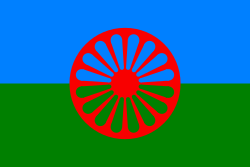
Credit: AdiJapan

Apparently the Roma were called gypsy because many people thought they had come from Egypt. In reality, studies have shown that Romani likely from northwest India, and migrated from there more than 1,500 years ago. They should also not be confused with the ancient Romans or the Rumanians, although Romani have lived for many centuries in both Italy and Rumania. They are a traditionally nomadic people and have no officially-established country they call their own.

Although the term gypsy has usually been understood and used in a much less offensive manner in other languages (for example, the Spanish gitano or the Italian zingaro), the Romani want to be called what they want to be called, and that should be respected if only out of common courtesy. In Spanish –– and possibly a few other Romance languages–– this will undoubtedly cause confusion with the demonym of Rumanians, who are called rumanos. But it is what it is.

In English the word gypsy has given rise to both adverse connotations of the word itself as well as other negative expressions derived from it. These include gyp ––both the noun (a cheater or swindler) and the verb (to cheat or swindle) and today’s daily dord*. Which brings us to…

The woodsman cometh

A gyppo or gypo logger is a logger who either works independently or for a small-scale logging operation, in contrast with those who are employees of established sawmills or lumber companies. The latter are sometimes called “company loggers” to distinguish them from the gyppo.
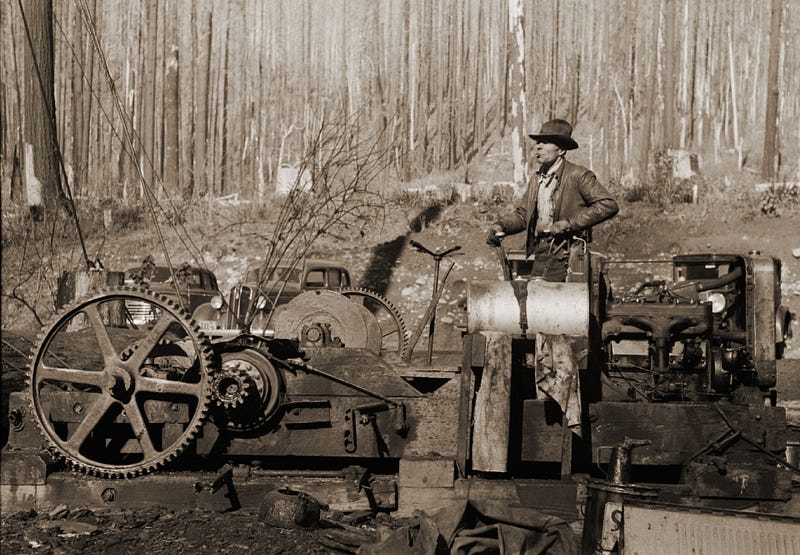
Photograph by Russell Lee (1903–1986); no copyright claimed

The term gyppo appears to have originated and stayed within the confines of the Pacific Northwest region of both the United States and Canada, traditional hubs of logging activity. In his 1923 article “The Gyppo System”, E.B. Mittelman argued that gyppo “may be a derivation from the Greek word, signifying vulture, or may be simply a derivation or corruption of the word gypsy.”

I’m thinking the latter, especially because Mittelman added this historical evidence:

Cartoons in the Industrial Worker of Seattle, inveighing against the system, often pictured a sly gypsy fathoming the hand of an honest workingman. An editorial in the same paper dubbed “The Gypy’s Warning” states, “At present the master class of capitalists call it ‘contract labor,’ ‘piece work,’ and other fancy names…For us, the proletarians, it is ‘gyppoing’ and it means all that the name connotes. The gyppo is a man who ‘gyps’ his fellow workers and finally himself, out of the fruits of all our organized victories in the class war.

The Industrial Worker is the magazine of the Industrial Workers of the World (IWW),an international labor union founded in Chicago in 1905. IWW is a general union subdivided between the various industries which employ its members. The philosophy and tactics of the IWW are described as “revolutionary industrial unionism”, with historical connections to socialist, syndicalist, and anarchist labor movements. In the first couple of decades it existed, the IWW was actually able to achieve many of their short-term goals, particularly in the American West. One of the areas it was highly active in, of course, was the logging industry.

According to Mittelman, the IWW first introduced the term gyppo during the unsuccessful 1917–18 Pacific Northwest loggers’ strike, which called for an eight-hour day for loggers. Gyppo loggers existed before this date, but they were probably not referred to with that moniker.

William Robbins’ explains this in his 1985 article, “The Social Context of Forestry: The Pacific Northwest in the Twentieth Century”:

The immediate postwar years in southwestern Oregon were the heyday of the storied gyppo logging and sawmill operator — the hardy individual who worked on marginal capital, usually through subcontracts with a major company or broker, and whose equipment was invariably pieced together with baling wire.

However, this boom did not last long. Excessive logging in the 1950s began reducing the profits of gyppos and, by the 1970s, environmental regulations and other changes in the logging industry had driven many of these independent loggers out of business. Today many in the industry consider the gyppo to be “an endangered species.”

Which may be good for the slur, but bad for these freelancers.

Now you know. Next time you’re in the woods and you see an independently contracted logger felling some trees, ask them if they happen to be a gyppo. Don’t be surprised if they get upset. Not because you’re offending them… but because the editors of the Spelling Bee decided that gyppo is a dord*.

You can check out my previous entry on another dord* here:

*What the heck is a dord, you ask? Here’s the answer:

Spelling Bee
Language
History
Logging
Roma
Recommended from ReadMedium