
Rascal & Mystic of the Early 20th Century
Gurdjieff ‘s “the Work”— a teaser
a short story on the human dilemma, the basic “work” & recommended books
Modern Peoples’ Dilemma — an Allegory
Gurdjieff described modern peoples’ dilemma in the following way:
There is a covered carriage with a sleeping passenger within. The body of the carriage or coach is in disrepair with rusted parts, the harnesses and bridles for the horses are worn and frayed. The driver is drunk all the time. The horses go where they want and are skittish.
The sleeping passenger is the sleeping master within us all. The body of the carriage and the harnesses represent the state of the human body. The driver is the ego unable to control the horses due to his/her/their state of inebriation. The horses are the emotions following their whim [read clickbait]. The carriage, the driver, and the horses represent the sleeping awareness of the human being. Each is separate from one another with varying roles and is part of a fragmented whole. The master inside the cab of the carriage needs to be awakened — to get the driver to sober up. The sober driver becomes the steward to assist the horses with blinders on and the carriage parts to be well maintained to work together to fully awaken the master within on the way to presence and higher consciousness.
Of course, I’m paraphrasing Gurdjieff’s story.
A Thumbnail Sketch of “The Gurdjieff Work”
The Gurdjieff Work or the Work as it is known employs the scientific method applied to one’s experience in a fashion. By working to observe ourselves objectively through the use of sensation and a self-observation technique the novitiate learns to see themselves objectively without judgement. The observer learns to see all of the good and bad habits indiscriminately. It learns to see the worst possible shadow elements of the onself. Gurdjieff referred to this darkness as “the terror of the situation”. A steward develops and eventually a master appears through “ruthless work”.
Gurdjieff brought Sacred Dances from the east (also called The Movements) as a language of the body. See below for links of performances of the dances on You Tube and in the film Meetings with Remarkable Men of a book written by Gurdjieff.
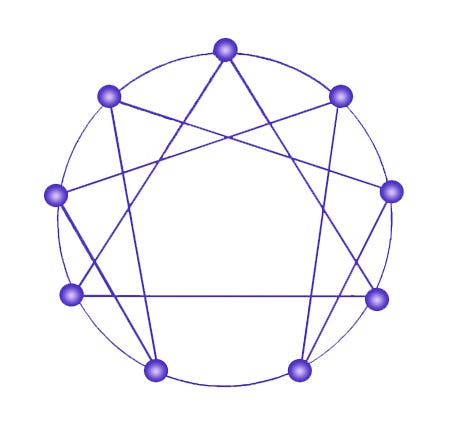
Gurdjieff introduced a variety of techniques including: Sensation Self-Observation Morning Exercise (a kind of specific self-guided meditation) Practical Work (including self-observation) Work with Themes (likes and dislike, gossip, unnecessary talking, work with habits-as a drain in energy…) The Decision Exercise The Movements (Men’s and Women’s Movements included) The Enneagram as a Process tool.
Links to pieces on The Gurdjieff Work by this Author
Books by and about Gurdjieff as an Introduction to His Work
A logical text laid out — mirroring Gurdjieff’s early lectures is this work by P.D. Ouspensky — In Search of the Miraculous. It is written in great detail in an older style of the mind. It was my introduction to “the Work” after having participated in a Gurdjieff’s Sacred Dance — The First Obligatory. I was an intellectual in those days so it was appealing to me at that time.
Gurdijeff’s most accessible book is “Meetings with Remarkable Men” which was made into a major motion picture of the same name. With the sacred dances at the end of the film. This nearly 10 minute clip (on You Tube) shows some of the movements (all of which I have participated in) — it is near to the ending of the film.
Robert de Ropp was a follower of Ouspensky and had met Gurdjieff. I had the happy accident of working with him — in “the Work” in Glen Ellen, California on Sonoma Mountain. He had a rough acerbic exterior. It was clear he could “see” into the character of his students, me included. de Ropp wanted me as his driver and executive assistant to help him visit “intentional communities of the west and southwest” for a book he was thinking of writing. I declined, having put the Bhante experience behind me. I had served Bhante Dharmawara in a similar capacity. Both of these men altered my life in profound ways.
My favorite and most useful of his books are (in order of usefulness): Self Completion The Master Game Warriors Way — an autobiography
I went to a Bennett-Gurdjieff Course in West Virginia:
JG Bennett was a voluminous author and mathematician who studied with Gurdijeff. The books he wrote after having met and subsequently wrote about the Shivapuri Baba in The Long Pilgrimage were more easily accessible such as:
Transformation Masters of Wisdom The Way to Be Free
And use of the enneagram as a process tool of completion:
The Intelligent Enneagram by AGE Blake (I knew him as Tony).
Comments and Questions welcome.
Thank you for reading.