Gun ownership rates do not predict gun violence rates
Every few months in America we have some mass shooting atrocity, people eagerly read the details in the news, and go on Facebook to post frustrated comments about gun violence. A few flawed arguments get repeated over and over — there’s a series of graphs that gets reposted after every shooting, one of them shows that gun deaths are correlated with gun ownership:
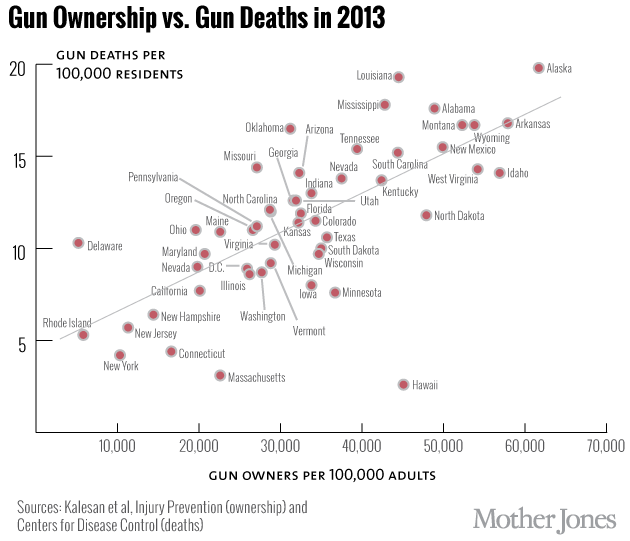
That graph looked suspicious to me, so I went to the raw data and recreated it. The graph makes it look like Wyoming and Alaska are bad states for violent crime, when they’re actually quite safe.
The problem is that the graph includes suicides and homicides. If you break the numbers down separately, they tell a different story.
Here’s gun homicides (Y axis, murders per 100,000 people per year) vs. gun ownership rate (X axis):
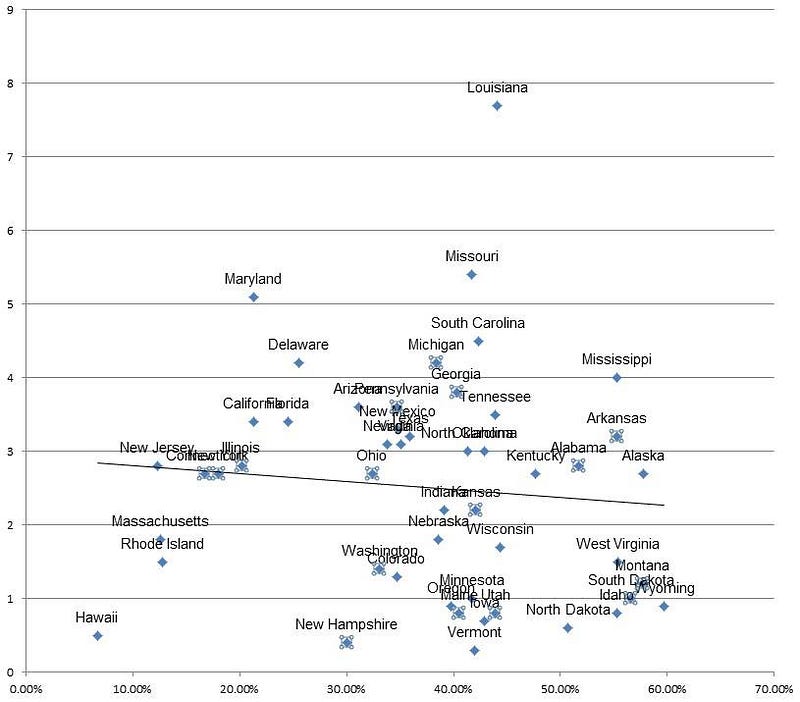
So, homicide isn’t correlated with gun ownership, that graph looks like a random scatter plot. There’s a slight downward slope to the trendline — I guess you could use that to claim that more guns make the world safer, but I think it’s far too subtle. You can say that an armed society doesn’t have to be a violent one.
On the other hand, here’s suicides vs. gun ownership rate:
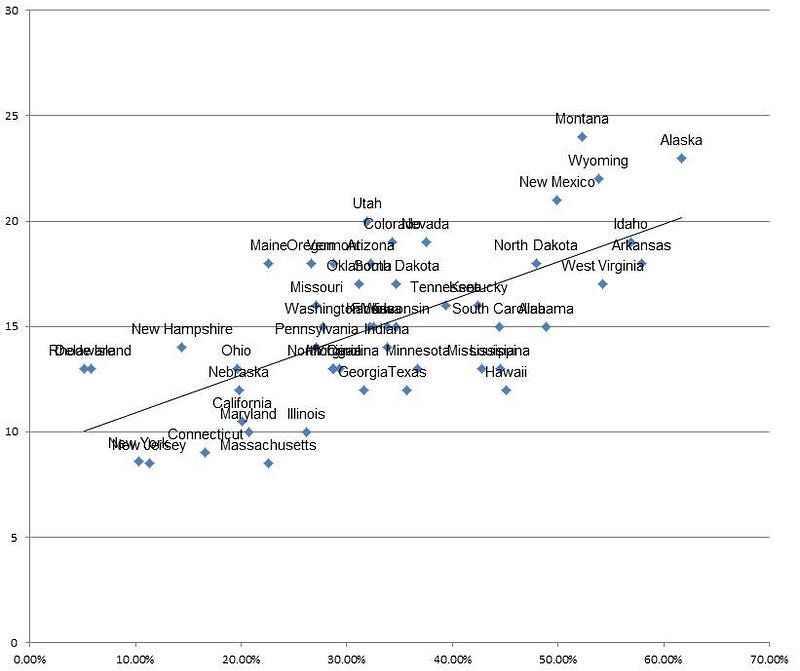
There’s a clear correlation there. The numbers I used are total suicides, not just gun suicides. So, it looks like owning guns increases the suicide rate overall (that is, people without guns don’t just pick different ways to do it).
If gun ownership doesn’t explain the variance in murder rates, what does? I don’t think there’s any simple explanation, but I graphed gun violence against a few other things. Here’s gun murders vs. poverty rate:
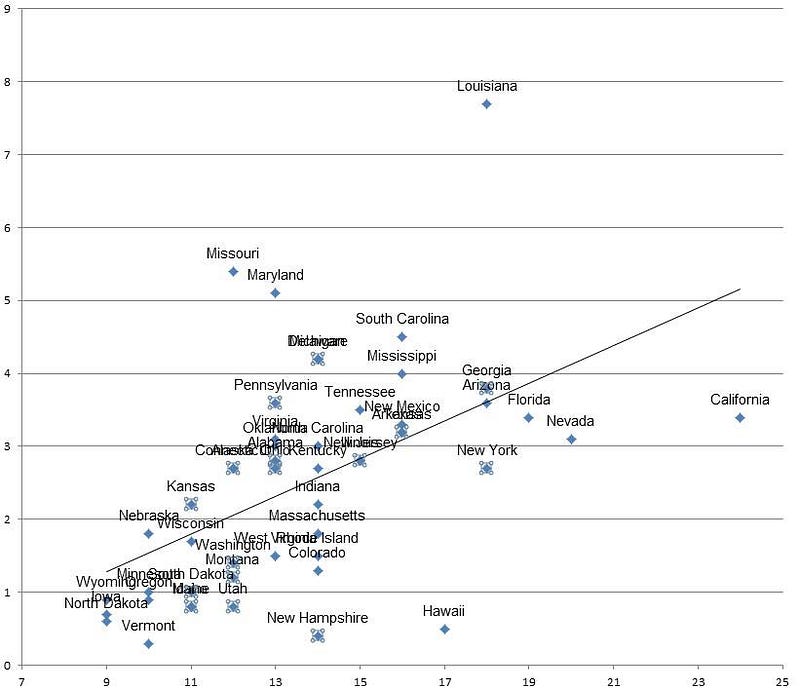
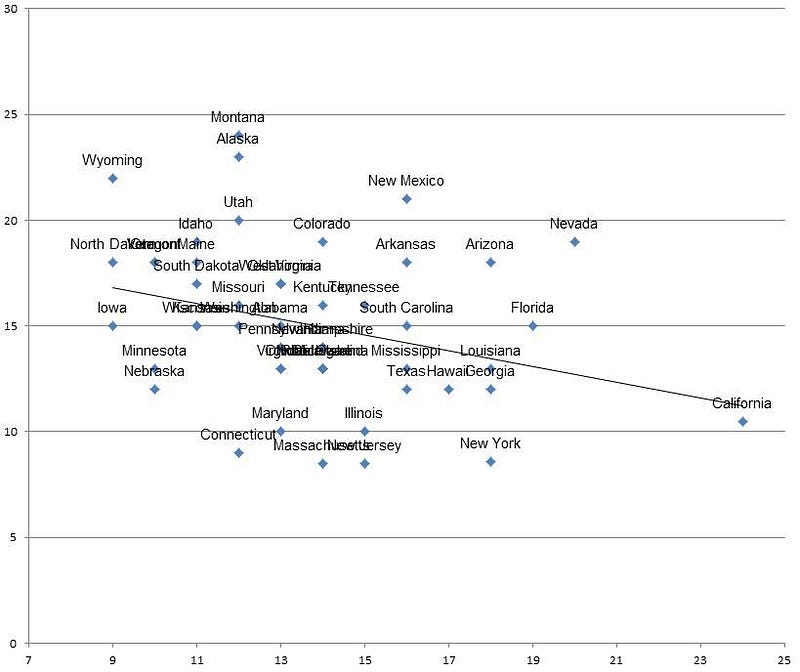
To quantify poverty, I used the supplemental poverty measure, which accounts for cost of living variation across states, so California ranks poorest. Creating the graph with a variety of other poverty indices makes a similar trend, though. There’s a clear upward slope, unlike with the gun ownership graph. Incidentally, poverty seems to reduce the suicide rate: (It’s hard to find time to kill yourself when you’re working two jobs)
Here’s gun homicides vs. percentage of black people in the population:
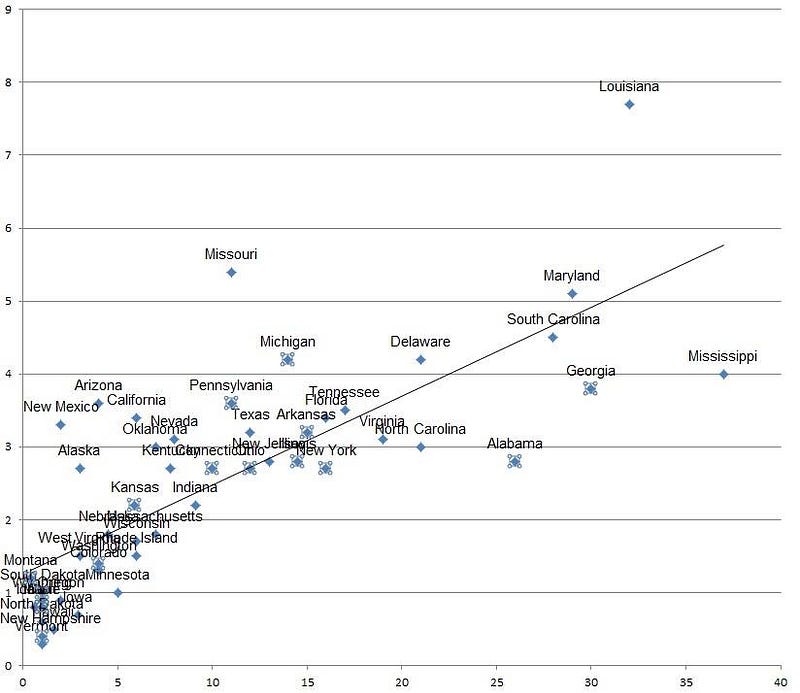
For whatever reasons, black people shoot and get shot at about 6 times the rate that white people do. Black people account for over 50% of all gun murders and deaths in the US. The firearm homicide rate among young black men is on par with some of the most violent 3rd world countries.
People often claim that America has more murders than Europe because we have more guns. We also see more homicide in America because of large problems with racial inequality, not just because of lax gun laws.
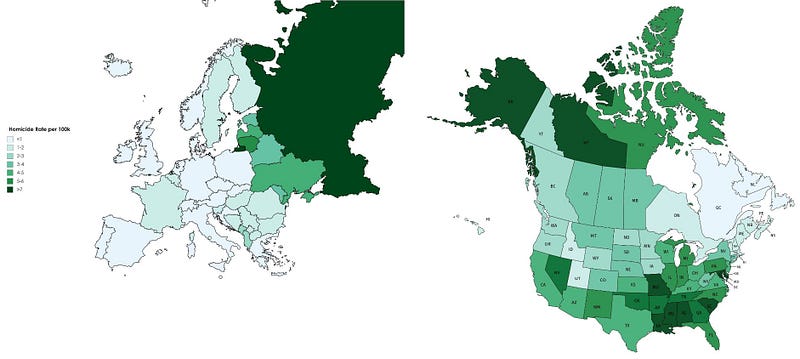
Many northern states have homicide rates that are as low as Canada:
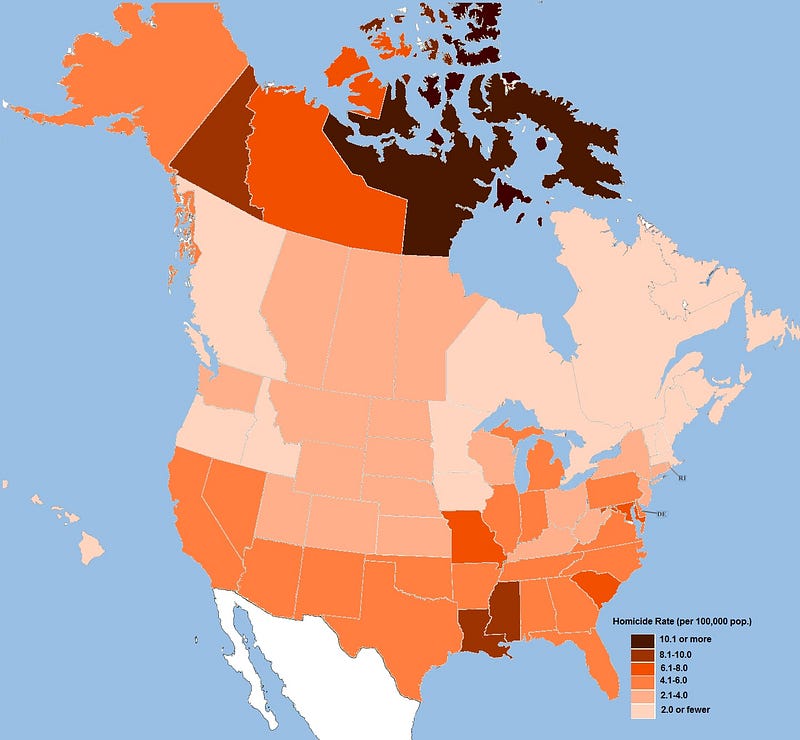
A few northern territories of Canada (with mostly indigenous populations), have very high murder rates.
Most of Western Europe is much safer than the US, but former soviet republics are similar and Russia is worse:
It’s not clear what would happen if the US adopted similar gun laws as in Europe.
The low murder rates in Europe may have as much to do with poverty and demographics as they do with guns.
Guns are banned in the UK. But murder was low in the UK before the ban and murder rates actually went up in England and Ireland, after guns were banned. Australia tried a partial gun ban, and murder rates didn’t change much.
Moving on, here’s gun homicides vs. Hispanic population percentage:
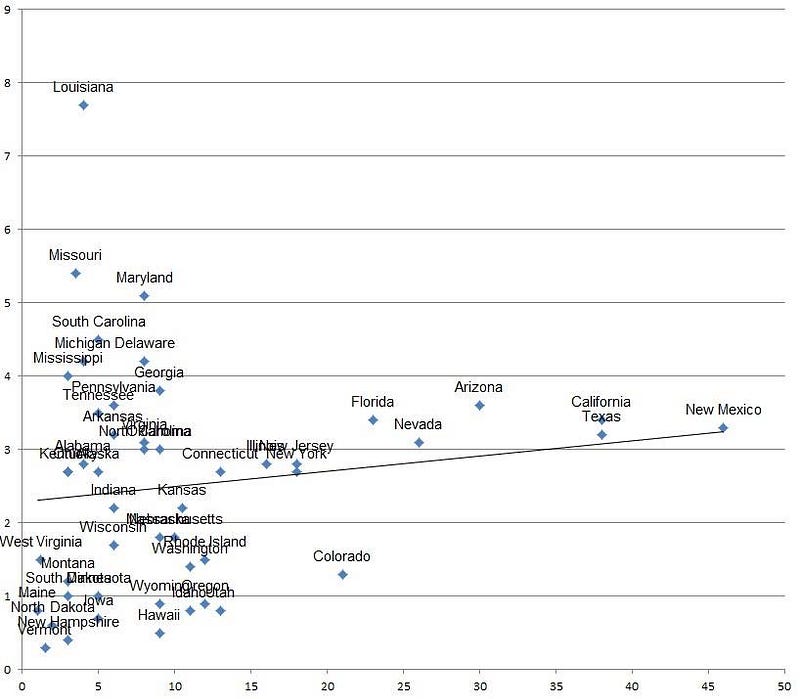
Doesn’t look like a strong trend to me.
Gun homicides vs. Asian population:
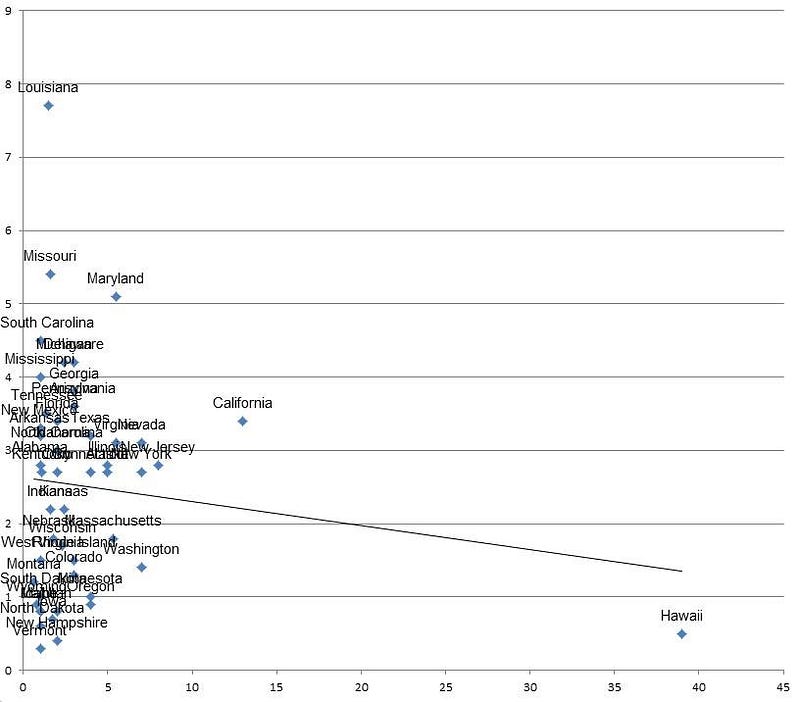
All this graph shows is that Hawaii is a nice place to live.
Here’s gun murders vs percent of people that finish high school:
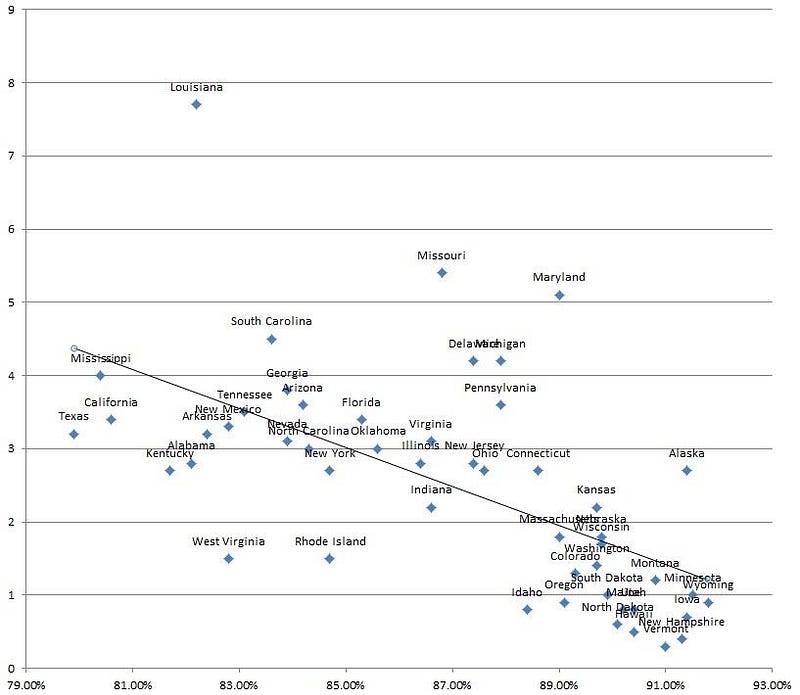
Education is a good thing, maybe we can agree on improving that even if we can’t agree on gun control? Here’s gun murders vs. college education, sending more people to college helps a little, too:
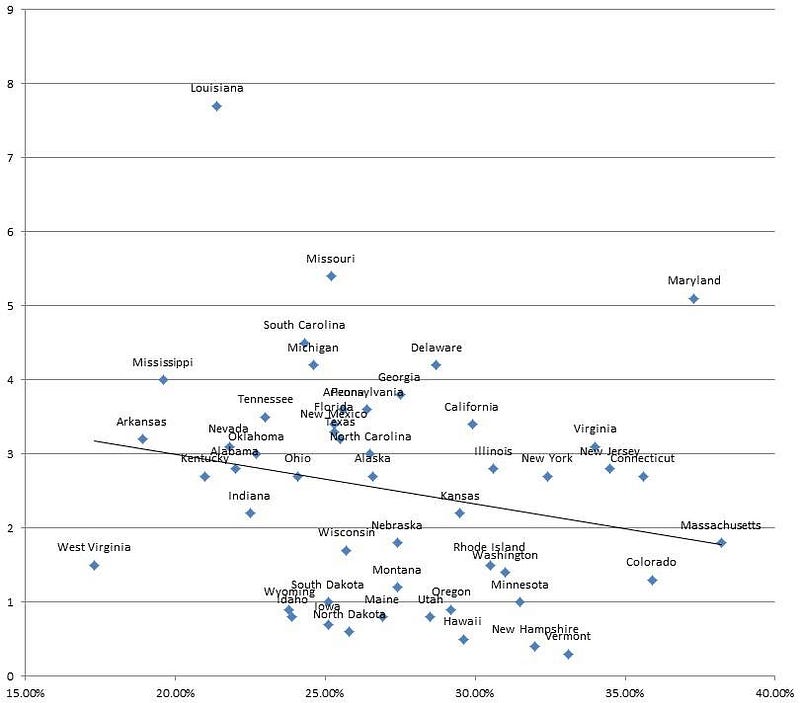
But sending people to grad school doesn’t seem to help at all:
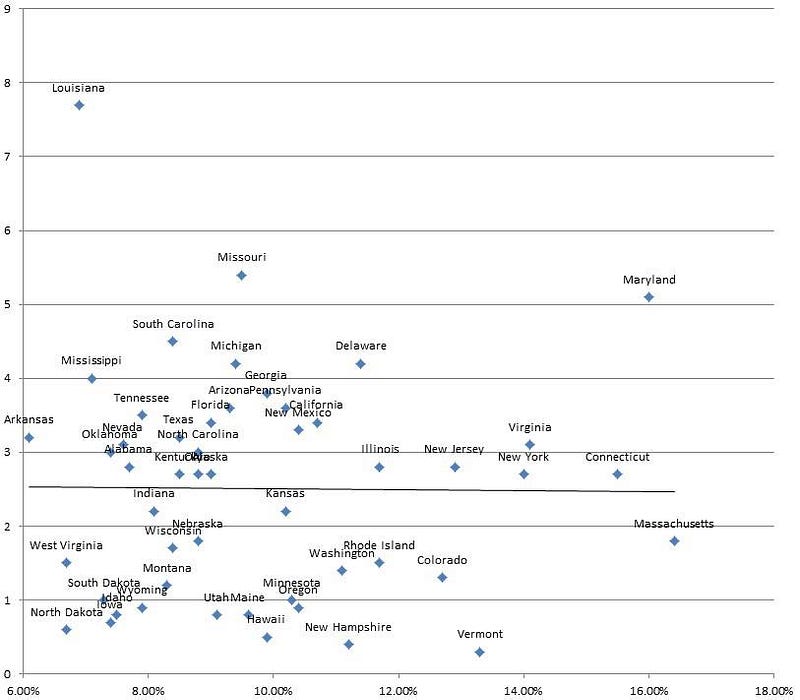
While gun violence makes the news every time there’s a mass shooting, it’s important to remember that those types of events are a small minority, maybe 2% of all gun murders. Most people are shot one at a time, with handguns:
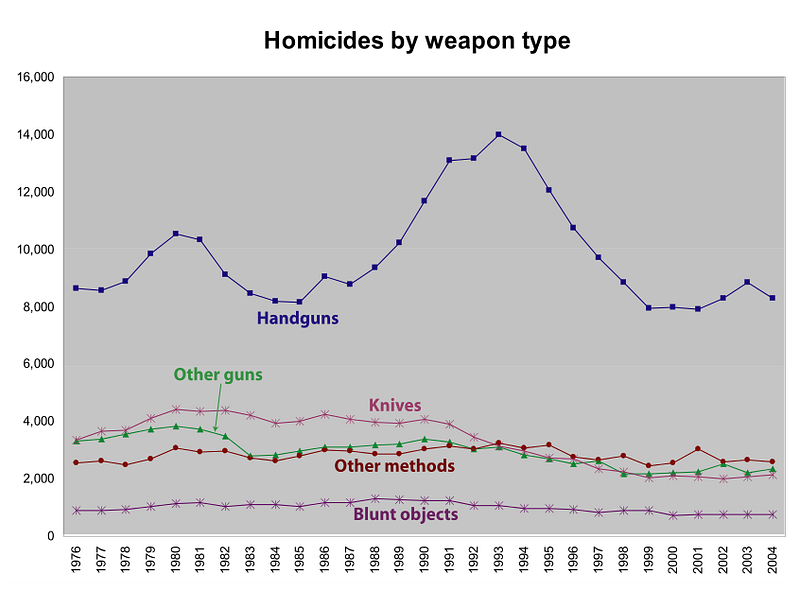
An interesting question about that last graph is what caused the big spike in killings, from about 1987 to 1997. Violent crime in general experienced a broader rise through the 70’s, peaked in the early 90’s, and has been declining since then:
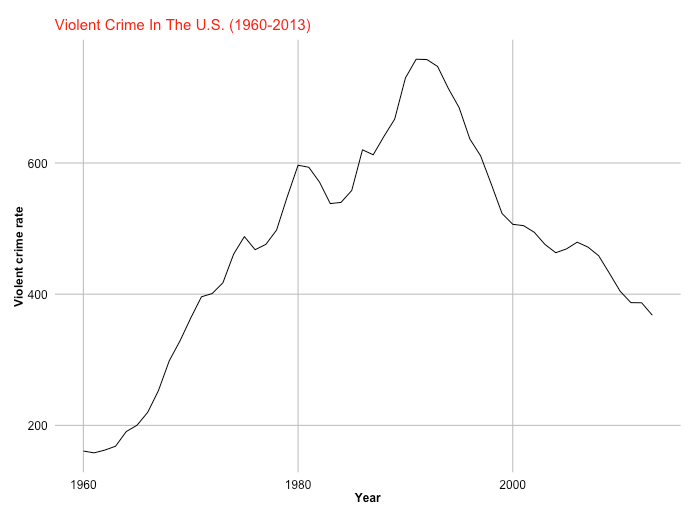
There are a lot of theories to explain those trends, from demographic shifts to drug epidemics to changes in policing.
The most interesting one of those theories is that some violence originates from chronic low level lead poisoning. People like narratives about moral decline, but it’s possible that the big spike in violent crime was a lagged result of using leaded gasoline, the ongoing decline in violence is a result of getting rid of it. It’s an interesting theory, it might be partially true, but the effect looks too weak to explain such a large decline in crime.
I don’t have a strong agenda here. I’m not a gun owner, and I agree with the liberal side of many political issues. I’m not confident, from my reading of the data, that gun control would do much to reduce America’s gun murder rate.
I’d gladly vote for some kind of better background checks, I suspect that would help in some cases, but I’m not sure how much it would change the murder rate — common crime is often done with illegally purchased handguns. Some mass murderers go out and buy an AR-15 legally. Others buy guns illegally (Columbine) or steal them (Sandy Hook).
I might vote for a ban on assault rifles, but I’m not sure if that would work, either. Mass murders have been done without these (The Virginia Tech shooter killed 32 people with pistols). There’s some ambiguity in how you define the weapons and where you draw the line and whether gun manufacturers can easily circumvent the banned categories. The Democrats passed an assault weapons ban, in 1994, which didn’t have an obvious effect on murder rates.
In any case, assault rifles only account for a few percent of murders. If you got rid of them, the country would still have a (much bigger) problem with handgun murder, and an even bigger problem with gun suicide. I’m optimistic that we could keep the strongest weapons away from the mentally ill, but skeptical we’d ever ban all handguns. So… if the latter isn’t possible, maybe we ought to just think about other ways to reduce violence — reduce poverty, fix racial inequality, educate people better, look at mental health, and focus on things that we can actually solve. And, we should probably consider that different states have different cultures and different gun problems.