
Gothic Cathedrals: The Origins and Evolution of Gothic Architecture
What are the key characteristics of Gothic architecture?
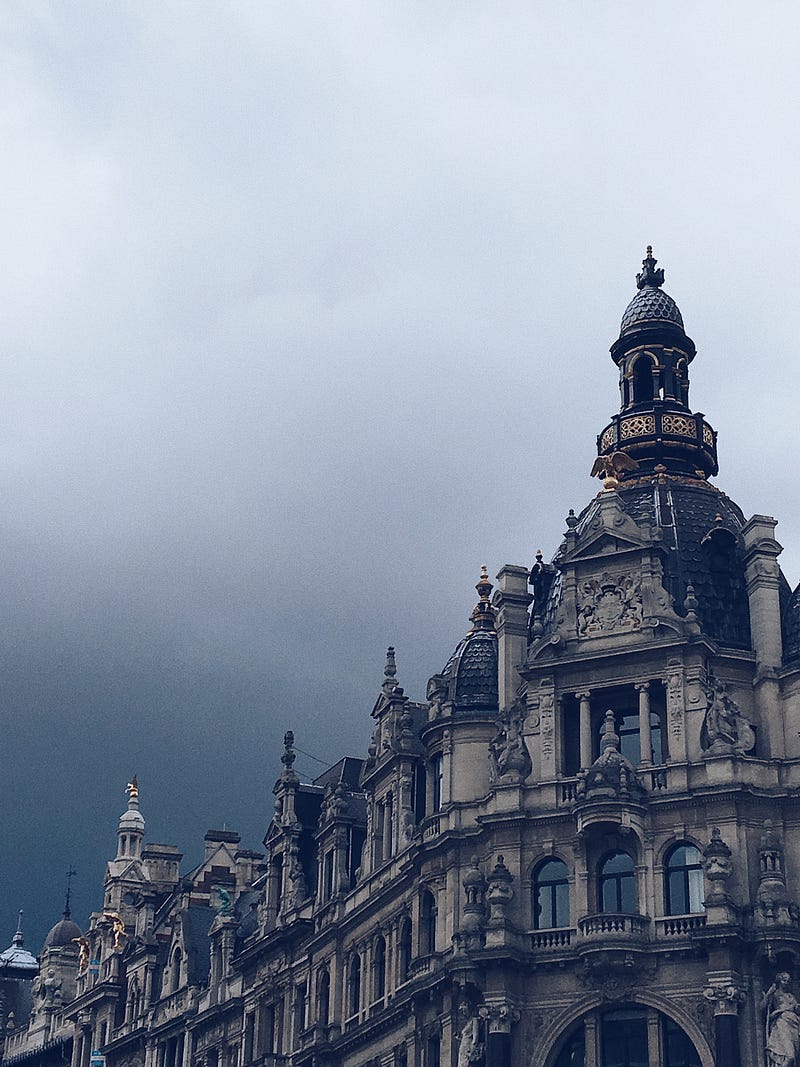
Gothic architecture is a style of architecture that evolved from Romanesque architecture during the medieval period.
As opposed to Romanesque architecture, Gothic architecture focuses on a more depressing view of Jesus. Its characteristics include pointed arches, ribbed vaulting, and a vertical, almost skeletal look. Gothic churches were very common during the medieval period and they made use of light in a way that allowed the visitors to experience certain feelings more fully. Their ceilings seemed to point towards heaven, emphasizing the idea of judgment and deliverance as well as separating the places from the earth.
England embraced Gothic architecture during the medieval period and one of the cities it had a major impact on was York. York is a historic, walled city and many buildings that were brought to life in the medieval era are still standing. The most important historical attraction York has is York Minister, which is the cathedral of the city. It is known to be one of the largest cathedrals in Northern Europe. It is also the second-largest Gothic architecture in Northern Europe.
York Minster used to be a Norman (Romanesque) cathedral but was re-constructed in the style of Gothic, the only Norman remains being below ground level. One of the most important factors that separates Gothic architecture from the other styles is the fact that no two Gothic buildings are similar. In other words, we can easily identify different Gothic cathedrals when we see pictures of them, as they do not look alike despite being made in the same style. For this reason, Gothic architecture was extremely unconventional at the time. Thomas Jackson commented on this by saying:
Gothic is the style of freedom from convention and of individuality. Romanesque had only achieved half liberty; it was still held back by Roman tradition, though it no longer obeyed strict Vitruvian rules.¹
This makes a significant reference to the history of the town as the north of England rebelled against the Normans in the late 11th century. Re-building the cathedral in Gothic style was a representation of their freedom from the Norman rule. In other words, the architecture of the city changed from Norman to Gothic to suit the change in power. The way Gothic architecture created its own style by refusing to follow strict rules and regulations can be considered to symbolise rebellion.
The period in which Gothic architecture was popular lasted for about 250 years.
During this period, the Gothic style evolved and changed to the point where the difference between late and early Gothic architecture was as big as the difference between the first examples of Gothic architecture and Romanesque architecture. The process of re-constructing York Minster began in the 12th century and continued until the 15th century. This makes it a significant part of the Gothic architecture period as it came to represent all three periods of Gothic architecture: Early English Gothic, Decorated Gothic, and Perpendicular Gothic.
York is one of the largest of the English cathedrals, and one of the most consistent in that it expresses an almost continuous trend of later medieval development.²
The north transept was one of the parts that was built during the 13th century becoming the location of the Five Sisters Window. Expensive interior decorations were always a part of the Gothic style and windows were especially important. The coloured glass used to construct the Five Sisters Window was only produced abroad during that time. It consists of 100,000 glass pieces, adding to the cathedral’s glory. By using coloured glass, the impact of light was heightened. Gothic architecture aimed to represent the idea of reaching toward heaven. As light is associated with heaven, the use of it in a church represented divinity. In addition, by using coloured glass, a dimension of colour was added to a light, allowing its display to be more effective.
The use of expensive windows in Gothic architecture continued during the 14th century but the emphasis on decoration and detail was greater.
The nave of York Minster was built between 1291 and 1321 and it made use of geometry and repetition. This was inspired by the French Gothic architecture. This new attitude towards Gothic architecture was because a former theology professor at Paris University was elected the archbishop of York. He brought a different interpretation of Gothic architecture, which caused a change in style, contributing to the evolution of the movement at the same time. Christopher Wilson commented on this by saying:
The details of tracery, mouldings and foliage sculpture show a grasp of the ornamental vocabulary of Rayonnant…³
In addition to these windows, the nave also featured a specific kind of clearstory, which also differed from the usual. Wilson also emphasized this point by saying:
The tallness and flatness of the clearstory and the extension of the mullions of its treachery to form the supports of a triforium must have seemed revolutionary, especially in York…³
One of the characteristics of Gothic architecture, which separated it from Romanesque, was the progressive increase in the height and the size of the windows of the clearstory. This can clearly be noticed at York Minster as the difference between the clearstory windows of the north transept and the nave is significantly large.
The South Quire Aisle of York Minster was built during the 15th century and therefore represents the final stage of Gothic architecture.
Once again, light and windows were of extreme importance but the way windows were designed changed into shapes that were more perpendicular. During the 14th century, the tracer of the windows had become somewhat flamboyant and jubilant. Introducing perpendicular lines was an attempt to avoid such concepts and focus on death and despair.
The simplicity and even starkness of the new style, its rigid verticals and horizontals, have often been attributed to poverty and lack of skill subsequent to the Black Death of 1348–49 when so many of the older generation artists died.⁴
The carvings became formal and stiff as well as shallower. They stood out very little from the stone background. However, the advances in architecture, especially in the use of the pointed arch and flying buttress, also contributed to this style, allowing window openings to be extremely large. This was used to maximise the window area and have fewer walls. The South Quire Aisle is an example of this, as, in comparison to the nave and the north transept, it has more windows. Having more windows allowed more light in, once again emphasizing the importance of displaying light as well as what it represents.
Gothic architecture shows us the advancements of the medieval ages and comments on the society of the time. John Stevenson explains this:
The development of the style was doubtless influenced not only by the mechanical requirements of which we have traced the development, but by the sense of beauty in the mind of its inventors, and by the environment in which they found themselves placed.⁵
By analysing York Minster and how it came to be the structure it is today, it is possible to understand what kind of life people led in York between the 13th and 15th centuries.
This is crucial as their lives and beliefs are the things that determined how Gothic architecture presented itself in York as well as its results. Early English Gothic was a way to represent the changes in York. The freedom people gained after the rebellion inspired their creations. The fact that York Minster used to be a Norman church but was transformed into an English one is symbolic of the English victory over the Normans. Decorated Gothic is what followed the first period, introducing more artworks and details to architecture. This can be seen as a result of York turning into a politically important city, allowing people, especially the merchants to become wealthier.
York also became somewhat of a second home for successive kings which was because of its strategic importance. The intricate work of the decorations was the result that caused the architecture to become more elegant and flamboyant. The windows in the nave were donated by a variety of people during this period, which is another sign of their wealth as stained glass art was expensive. When Perpendicular Gothic arose, the situation had changed greatly. Between 1348 and 1349, a plague (the Black Death) killed around half of the population in England only to return in 1361 to kill the fifth of the rest. People became more pessimistic causing the art and culture to become more morbid. Death and despair became the focus point and the use of flamboyant decorations was no longer justified. The decrease in workers also affected the construction process.
York Minster dominates the skyline of the city today like it did in medieval York.
The towers were built in the 15th century, when enthusiasm for Gothic architecture had started to wane, however, due to the presence of the cathedral the effect it had on the city remained. The fact that a cathedral at such a scale was built and became the most significant building in York shows the effect Christianity had on people. Gothic architecture was predominantly used in churches and cathedrals because the reason why it emerged in the first place was to promote a different understanding of the Christian God and Jesus.
The characteristics of Gothic architecture exist to symbolise these new interpretations. Jesus was seen as a tortured human carrying the sins of humankind. There was also a need to segregate holy places from the Earth — the pointed arches pointing towards heaven and the use of light as an expression of godliness and cosmic order were all results of this. By managing to reflect these new interpretations of Christianity, York Minster became an important part of the city.
…the city did not owe its development to the building of a great new church, but rather had to contrive to accommodate one within its walls on a site that necessarily grew in extent as the cathedral was enlarged through Middle Ages.²
When the reconstruction of the cathedral started, York was not what it was in the 15th century. As the construction continued, the city also grew in terms of space, wealth, and political importance. It was important that such an influential city had a cathedral that represented its religion as well as wealth and significance. York Minster is one of a kind in terms of the artworks it possesses as well as its size. Only a few cathedrals in the world take up as much space, making it a tourist attraction at the time just like it is today. The cathedral is symbolic of the success of York during the medieval times.
Renaissance architecture followed Gothic architecture and took over in the 16th century.
The transition in England took longer in comparison to other countries due to the fact that after over 200 years of Gothic churches and cathedrals, Gothic architecture had become a part of the culture. It was strongly associated with traditional values and hence, people were hesitant to make changes. In the end, however, Renaissance did take over. Roger Smith explained the difference between the two styles stating:
the plan of Renaissance buildings was uniform and symmetrical, and the picturesqueness of the Gothic times was abandoned.⁶
One can suggest that this is a result of the change in social ideas in the West in regard to whether the concept of private property is a natural right or whether it is an evil that has made people more inclined to luxury. Renaissance architecture got rid of the characteristics that were considered luxurious, such as extreme details and heavy decorations. Instead, the Renaissance promoted perspective and proportion, signifying a reflection of God in man as well as celebrating simple orders.
The Shambles in York is an example of such architecture. It was a street of butchers’ shops and houses and has a Renaissance feel to it even today. Preferring usefulness over luxury, its architecture has a simple and practical purpose. (For instance, the close-set fronts of the buildings were made to shelter the walls below, protecting the meat from direct sunshine.) The way people saw religion and politics changed because of the advancements the period brought with it. The translation of the Bible was one of them and it caused people to gain more knowledge and explore new concepts of thinking. As a result, architecture was reborn as a theoretical idea and a concept rather than simply being seen as a tradition during the Gothic era.
References:
[1]: Jackson, T. (1915) Gothic Architecture in France, England and Italy: Cambridge University Press
[2]: Batsford, H. and Fry, C. (1934) The Cathedrals of England. B. T. Batsford Ltd
[3]: Wilson, C. (1990) The Gothic Cathedral: The Architecture of the Great Church 1130–1530. Thames and Hudson
[4]: Harvey, J. (1971) The Master Builders: Architecture in the Middle Ages. Thames and Hudson
[5]: Stevenson, J (1876) Gothic Architecture: The Harpers Monthly: A. Strahan and Co; J.B. Lippincott & Co; Daddy, Isbister & Co; Sir Isaac Pitman and Sons Ltd; The Amalgamated Press Ltd
[6]: Smith, R. (1880) Architecture and Gothic Renaissance. London
If you enjoyed this post and would like to read more, you can subscribe here — https://medium.com/subscribe/@ella_harris to get an email whenever I publish a story. You can also buy me ☕ via — https://ko-fi.com/ella_harris
This post contains affiliate links. If you use these links to buy something I will earn a commission. Thanks.


