
Google Bard Unveils Unbelievable Visual Revolution: 7 Incredible Use Cases That Will Blow Your Mind
From suggesting epic meals to identifying diseases, and so on.

Since the launch of ChatGPT, I have been deeply interested in AI tools and technologies.
The reason for my fascination is quite straightforward: they have the potential to enhance productivity and outcomes. With these advancements, individuals can focus on more than one skill, which will undoubtedly revolutionize the way we work.
However, I have admittedly neglected to explore Bard extensively, as it did not match up to the capabilities of ChatGPT. That being said, I am thrilled to inform you that Bard has recently released a series of updates that are truly impressive.
One of the most noteworthy features of the latest Bard update is its integration with Google Lens. With this update, you can search for information based on uploaded images, aggregating results from various sources on the internet.
This feature opens up a wide array of applications and possibilities, making Bard an even more versatile and valuable tool.
And that’s what we are going to talk about, let’s start.
1. Bard’s Image Uploads Bring Epic Meals to Your Home
I’m all about convenience and good food, and let’s face it, eating out every day isn’t great for our health. That’s why it’s better to enjoy healthy homemade meals.
And that’s where Bard comes in.
Imagine this scenario: you have a fridge stocked with various food items and you’re looking for a breakfast idea that works for any meal of the day.
This is where Bard can lend a helping hand.
You simply upload an image of the items to Bard and ask for suggestions.
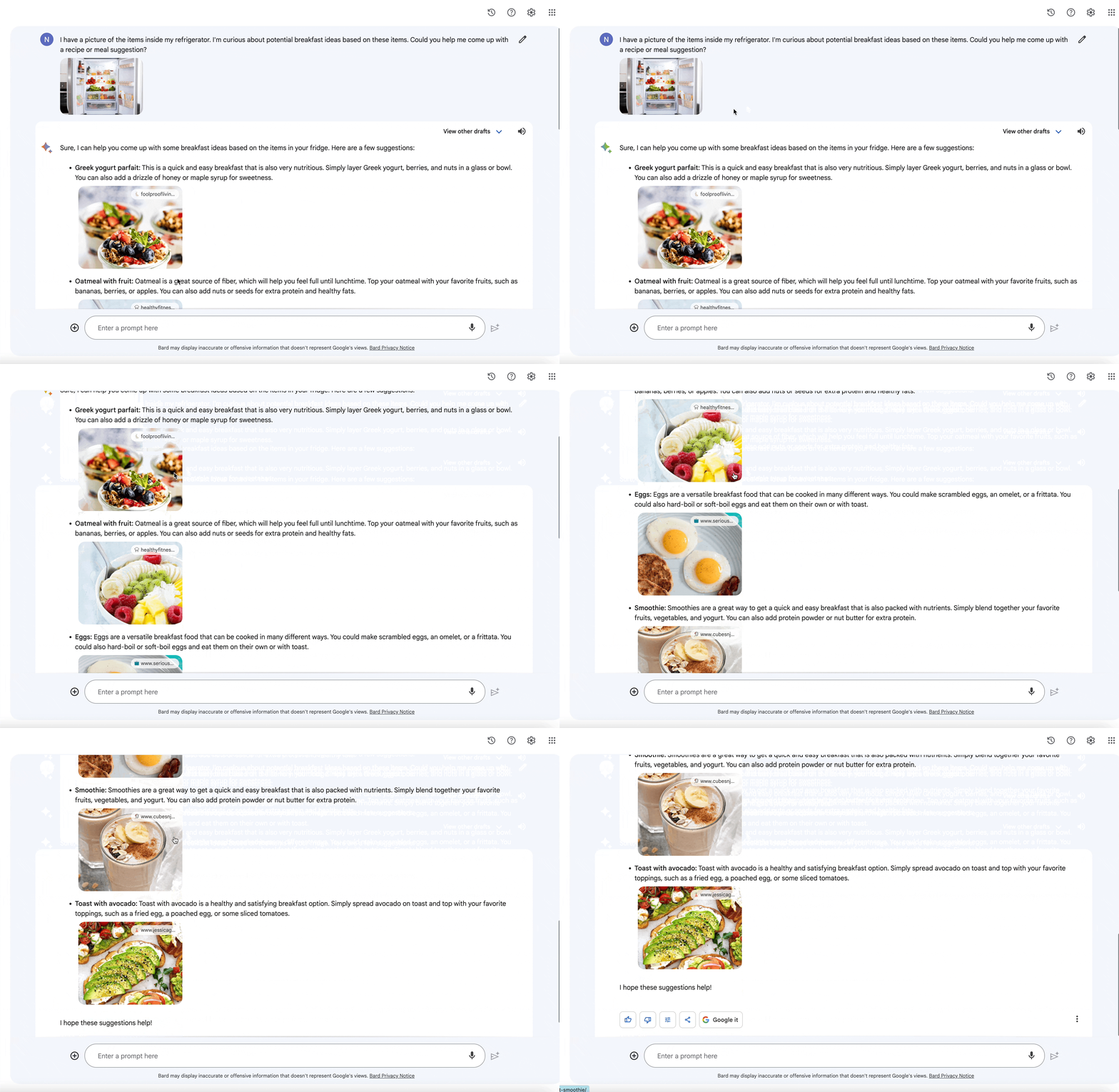
By using Google Lens, Bard analyzes the image and provides you with a wide range of breakfast recipes based on the ingredients you have available. This is just one example of the many practical applications of this integrated feature.
Insane, right?
2. Bard Can Convert Screenshots into Editable Text
Being a programmer, I often rely on YouTube videos to learn and incorporate specific functionalities into my work.
One common need I have is converting screenshots of text into actual editable text. Luckily, Bard can assist me in this aspect as well. Let’s consider an example where I have a screenshot containing a few lines of code.
I can simply ask Bard to convert it into code, and to my surprise, it accurately converts it into text format.
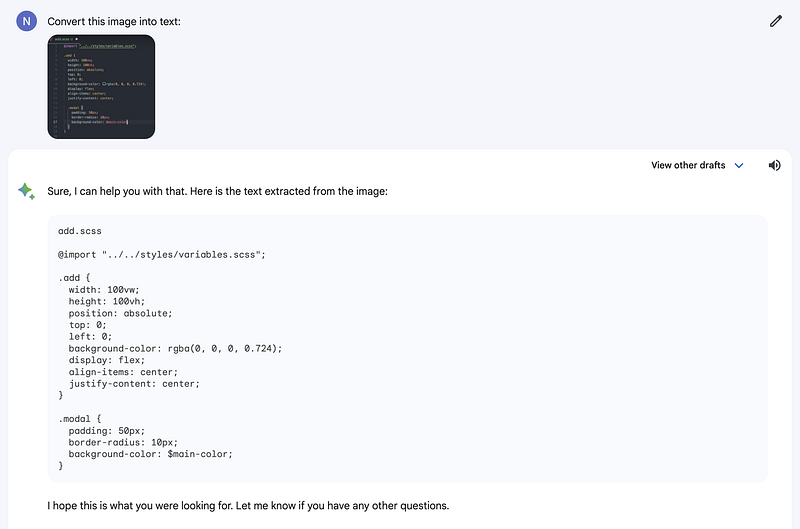
This feature proves to be immensely helpful in saving time and effort.
Likewise, I can also request Bard to convert images into a table format.
For instance, I recently uploaded an image that compared content writing with copywriting and instructed Bard to present it in a table format.
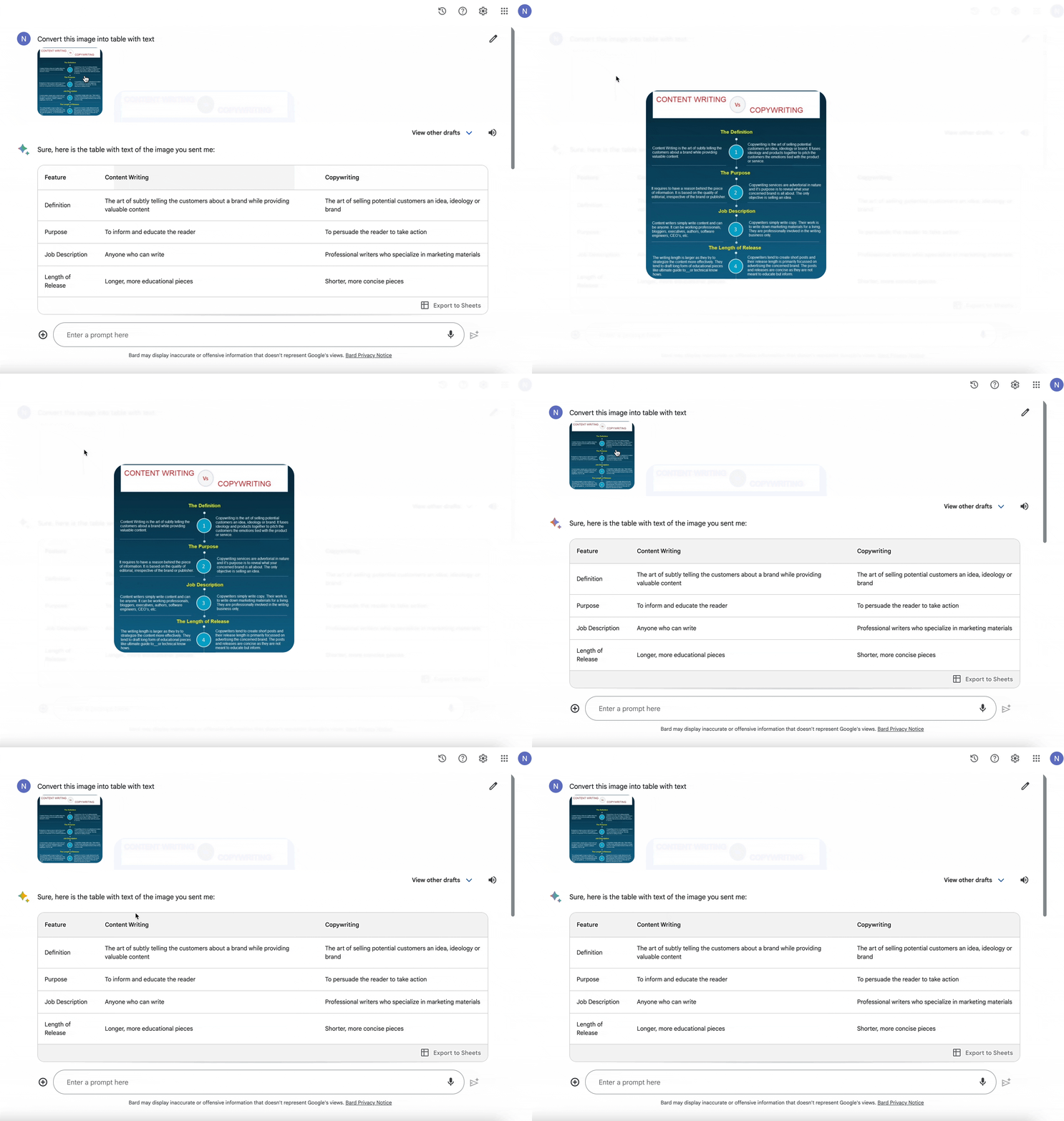
As you can see the result is impressive, with the image transformed into a neatly organized table.
3. Bard Can Transform Mockup Designs into Functional Code
Now, let me share another incredible use case that will leave you amazed.
There’s a Twitter user named Shubham Saboo who recently created a basic mockup design. To bring this design to life, Shubham uploaded it to Bard and asked it to generate the corresponding code.
In a matter of seconds, Bard worked its magic and produced functional code based on the design.
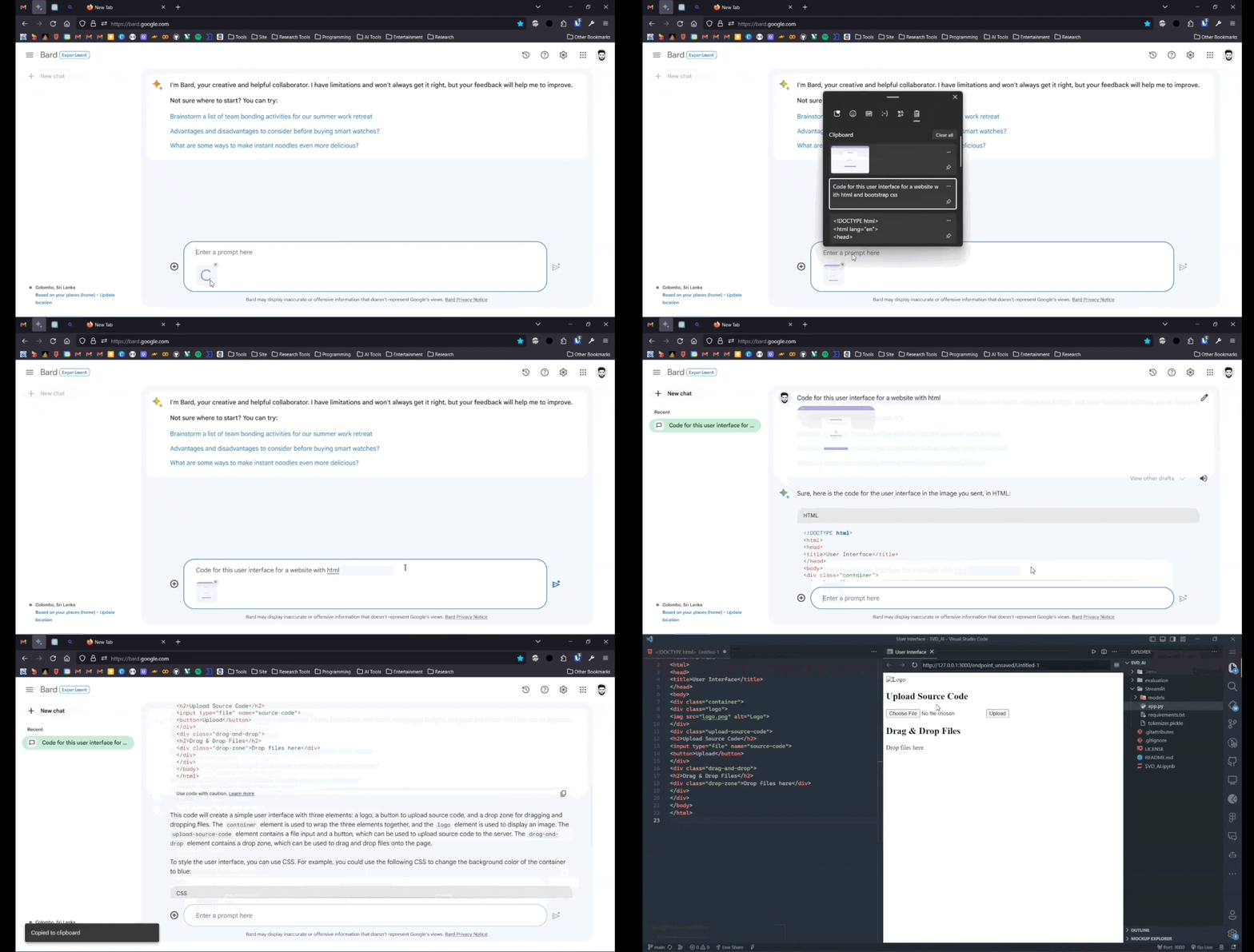
The result was truly impressive — a code that actually works, fully transforming the mockup into a functional implementation. This demonstrates the remarkable capability of Bard to not only convert images to code but also generate code that is ready for execution.
4. Bard’s Mind-Blowing Speed in Building Apps
Bard’s capabilities go beyond simple mockup creation.
In fact, you can leverage Bard to develop complex websites and applications with ease. Let me share an impressive example to illustrate this.
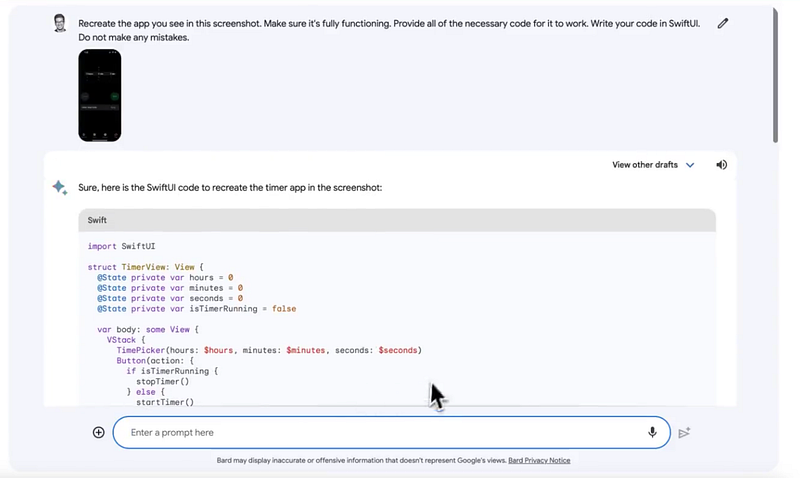
A Twitter user named Ammar Reshi recently put Bard to the test. In under four minutes, Ammar asked Bard to create a basic time app specifically designed for iPhone.
The results were astounding.
Bard swiftly generated the necessary code and components, enabling Ammar to quickly bring the app idea to life. Within minutes, Ammar had a functional time app ready for iPhone, thanks to Bard’s efficient assistance.
This remarkable use case highlights the immense power and versatility of Bard in app development.
5. Bard’s OCR Magic Simplifies Invoice Processing
Once again, Shubham Saboo has provided an impressive example that demonstrates the remarkable capabilities of Bard.
In this particular case, Shubham uploaded an image of an invoice and requested Bard to use optical character recognition (OCR) to extract the text from the image and present it in a well-structured table format.
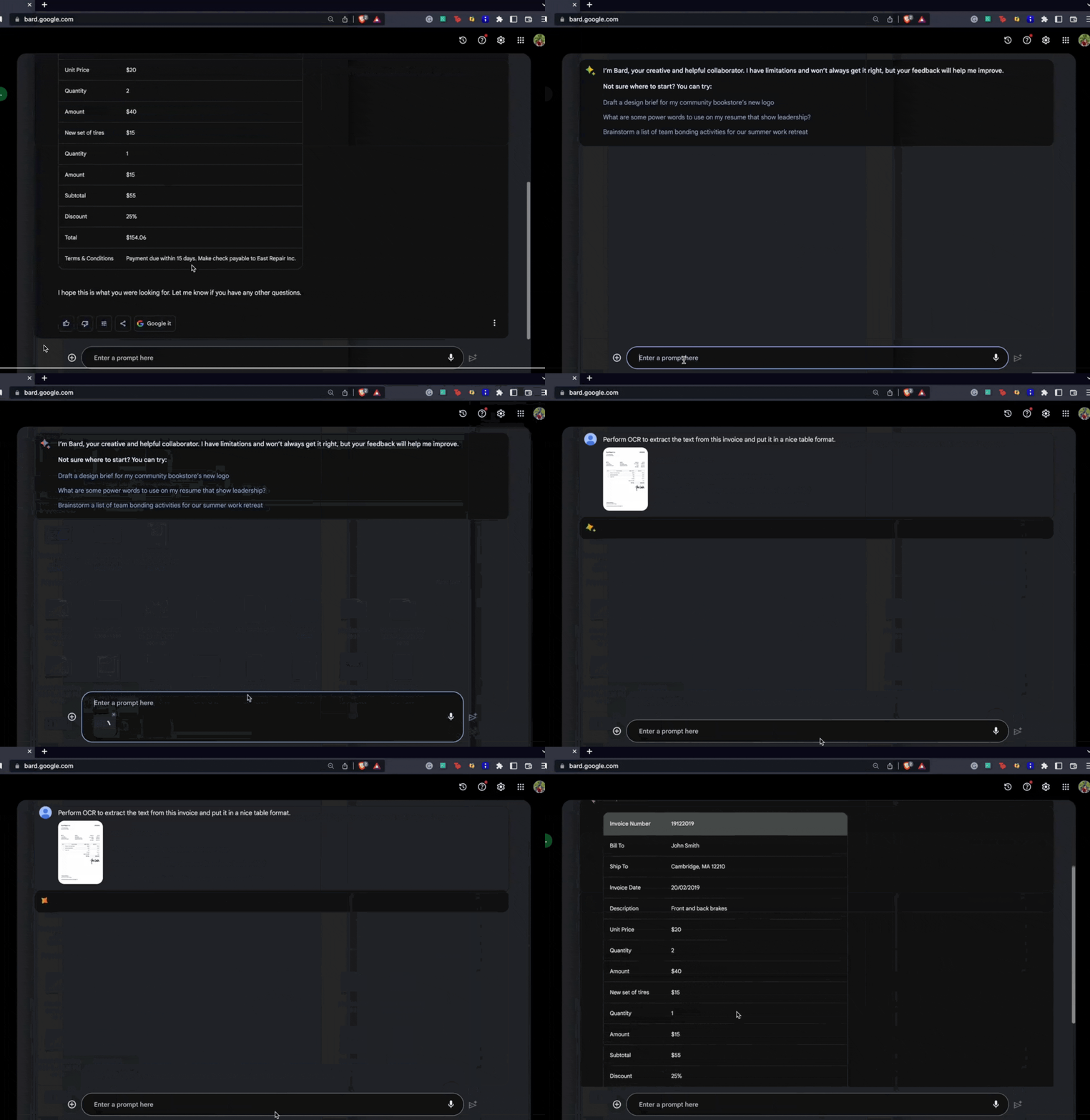
Without hesitation, Bard swiftly processed the uploaded image, accurately extracting the relevant information from the invoice. It then seamlessly organized the extracted data into a table, showcasing Bard’s proficiency in transforming images into organized and readable formats.
Shubham’s use case serves as a powerful testament to Bard’s ability to simplify the extraction of information from images, especially when it comes to tasks like processing invoices.
6. Bard Decodes Your Pictures with Precision
In addition, Bard allows you to upload images of various types and receive accurate answers based on the content of the image.
This means you can ask Bard about the breed of a dog or the type of cat, or even upload any image and get an explanation of its content.
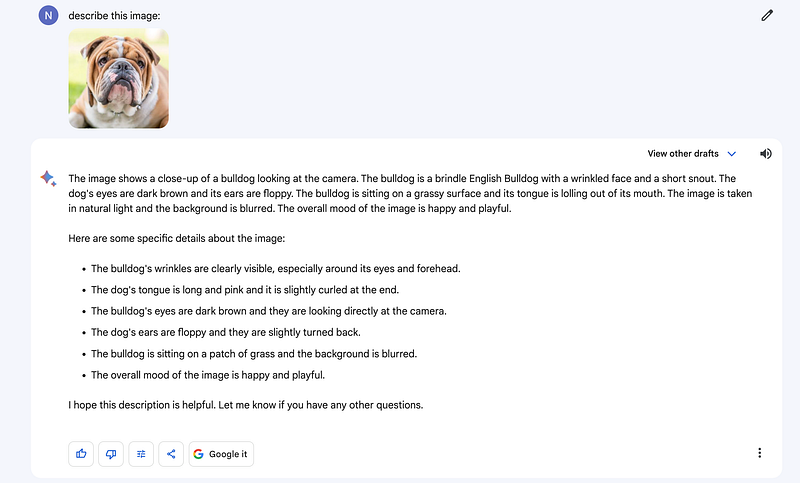
For instance, I recently uploaded a close-up image of a bulldog to Bard, and it provided me with a detailed explanation specifically about that breed.
This functionality showcases Bard’s remarkable image recognition capabilities.
Whether you’re seeking information about animals, objects, or any other visual content, Bard can analyze the image and provide you with accurate explanations. It’s a valuable tool that expands your knowledge and provides insights based on visual input.
7. Bard Identifies Diseases from Your Uploaded Images
Lastly, I want to share another incredible capability of Bard i.e. it can assist you in identifying diseases based on the images you upload.
This has significant implications for both doctors and patients.
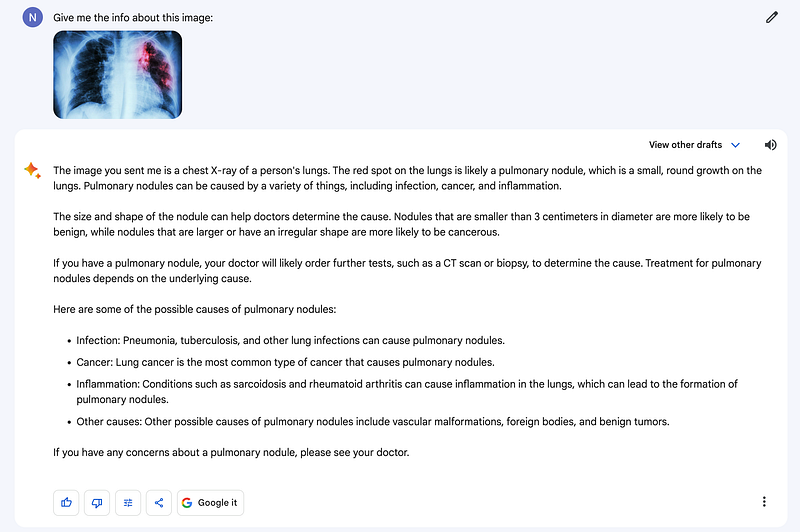
To illustrate, I uploaded images of a person’s lungs to Bard, and it accurately provided me with information about the diseases depicted in the images. This kind of analysis can be extremely valuable in the healthcare field.
Imagine the possibilities this opens up. Doctors can leverage Bard’s image recognition technology to aid in diagnosing illnesses, while patients can gain insights into their own health conditions.
This specific use case demonstrates the potential of Bard to make a real impact in healthcare and improve the lives of individuals.
It’s fascinating to consider how far we can advance with tools like Bard, as we continue to explore innovative ways to use artificial intelligence in various fields.
Hope you like it.
That’s it — thanks.
Consider becoming a Medium member if you appreciate reading stories like this and want to help me as a writer. It costs $5 per month and gives you unlimited access to Medium content. I’ll get a little commission if you sign up via my link.


