
God or Monstrous Nature? The Mother of All Dichotomies
And the relative triviality of most preoccupations

A million tribal grievances divide us into warring camps, as we leap to defend the symbolic caricatures that give our lives meaning.
But if a race of intelligent extraterrestrials visited our planet, I wonder whether they’d interpret all our cultural comings and goings according to a single, overarching distinction:
- Ultimately, there are those who think life is at the bottom of everything, and those who think life is an accidental by-product of something that’s in no way alive.
This is the great, inescapable dichotomy, which the worlds’ theologies and secular ideologies often obfuscate. What God does or doesn’t want from us is always, at best, secondary to whether it makes sense to think that whatever’s metaphysically fundamental is meaningfully or rationally deemed to want anything in the first place.
Now, there are mystical monists who might dispute the decisiveness of this choice between life-centered and life-decentering worldviews. Instead, they’d say, all binary choices are illusory since everything is really one. There are no real hierarchies of “primary” and “secondary” qualities, or of “metaphysical foundations” and “accidents” or “by-products.”
We may think that life or non-life gives rise to its opposite, but that thought is only a model that we use as a tool to make sense of things. The real world isn’t as divided as it seems to incessant thinkers, in that if everything’s interconnected, nothing is objectively more important than anything else.
This kind of monism is generally based not on abstract thought but on a special experience. The mystic feels that everything’s united and that everything’s of equal worth. Whether that selfless impression is objective is doubtful. But we can stipulate that the distinction between life and nonlife is bound to arise at least for living things like us that think to survive.
Let’s try to clarify what each scenario, then, looks like.
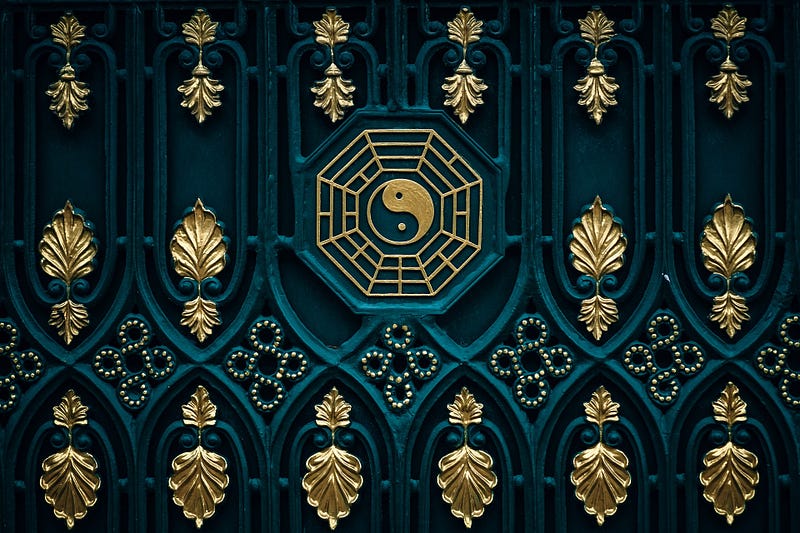
The mother of all dichotomies
What would it mean for life to be metaphysically primary? It would mean that as impersonal and indeed deadly as most of the universe seems, everything scientists call “natural” would rather be artificial since the evolving elements would have been forced and intended to generate life such that life’s emergence would crown or redeem the universe. Life’s importance wouldn’t be a mere accident or a self-serving conceit of ours but would be an indispensable fact that helps explain the universe’s existence and development.
One way we express this option is to posit deities, some divine intelligence that designs and creates the universe to generate and to socialize with living things. Another way is to say the universe has been predestined to give rise to life, so that atoms, stars, and rocks can’t be understood without understanding their role in life’s emergence. Life would be explanatorily central to the cosmos after all, the Copernican Revolution having been only superficial in depriving us of our spatial centrality.
The alternative is to assume that life is cosmically accidental, but what exactly does “accidental” mean here? It means that nonlife is more important than life. Life will come and go, whereas nonlife, as in the system of forces, elements, and patterns of nature is more intrinsic to the universe. The cosmos doesn’t evolve for our benefit, and there’s no objective tragedy in the eventual extinction of all species.
In a way, the second scenario is harder to understand than the first since the second violates our social instincts. We evolved to live in societies, so we prefer to relate to other minds. Isolation is bad for our health, so when we’re alone we find ourselves speaking to imaginary friends or searching for minds or languages in inanimate complexities, such as clouds or sequences of numbers. Intuitively, the first scenario satisfies because it gives us something like pride of place.
But in the scenario that dislodges life from its presumed privileged metaphysical position, we must stretch our minds to imagine that which is thoroughly not alive. We must objectify nature, detaching from our social intuitions and preferences. Moreover, we must exchange our natural, humanizing languages for an artificial, alien, scientific or mathematical one to grasp what it even means for an array of nonliving, strictly physical things to interact constructively or to obtain in the first place with no input from any mind or conscious entity.
For instance, if we objectify nature, does it still make sense to speak of natural causality? David Hume pointed out that as far as our senses are concerned, there are no necessary connections between natural events. Just because things have always worked in regular fashion in the past, doesn’t mean they’ll continue to work that way in the future. We add that guarantee to the phenomena in that our inductive models include a subjective bias.
But if there’s no physical causality in that prejudicial sense, what exactly is happening all around us in nature? What does it mean, for instance, for atoms to bond and to form molecules, when there’s no plan or purpose behind any natural happening. What could a natural “process” be in Aristotle’s sense without a “final cause,” a purposive dimension? Scientists still speak of natural “laws” and “forces,” and these, too, are vestiges of the life-centric perspective.
Thus, the nonliving, unintended, amoral, “natural” construction of molecules, solar systems, cosmic eons, and the like — not to mention the evolution of organisms themselves — is a very strange and even sinister prospect, but of course it’s the chief finding of scientific methods of inquiry.
A fundamentally physical cosmos has a body, as it were, but no mental guidance. Hence, as I’ve pointed out elsewhere, a fitting symbol of the cosmos is the shuffling zombie.
Yet the first scenario turns out to be just as bizarre and off-putting as the second one. The metaphor of a personal foundation of everything is fraught because people are encased in animal bodies and are thus natural beings. How could a supernatural foundation be comparable to one of its natural constructs? What could it mean to say that a person might exist while being bodiless? What could it mean to exist “outside” of space and time?
Moreover, if there’s a single personal creator of nature, why assume this mind is benevolent or fixated on morality? Wouldn’t this mind be a hermit suffering from the supernatural equivalent of cabin fever? If God is a person and is fundamentally alone in being unparalleled, how could he or she avoid being corrupted by that supremacy? Isn’t that the intuition that motivates the theological fantasy of an angelic rebellion against the Creator?
Ironically, too, the pride of belonging to the living metaphysical foundation resurfaces in the second scenario, despite all the scientific objectifications. Indeed, precisely by recognizing the outer wilderness’s inhumanity, and thus by suffering existential alienation, we divert our attention to the lone artificial constructs that exist, namely the ones we create in civilization. And we take tragic pride in those constructs, deeming them and us to be precious because of their anomalous status in nature.

The mother of all existential choices
This choice between perspectives, though, isn’t just as rarefied as theology or metaphysics since it’s emotional. Even if we don’t explicitly make any such choice, in that we’re unaware of the relevant concepts, or even if we fool ourselves into thinking we’ve chosen one way when in practice we’ve chosen the other, the truth of our cosmic orientation emerges in our moments of greatest authenticity.
Do we really think there’s a personal deity that makes everything alright in the end? Or are we alienated from life because we assume living things are meaningless and inconsequential in the big picture?
The ethical implications of assuming that life isn’t an accident are clear, and they stand in stark contrast to many secular conceits. In the Zoroastrian view, for example, we have a role to play in a cosmic war between good and evil, and if anything like that were true, how could we justify the myriad games and delusions that distract us from that purpose? Why shouldn’t we all be religious fundamentalists in that case?
Alternatively, if life’s emergence is a cosmic accident, we’re on our own as a species against the universe’s godless evolution. We’d have no reason to glorify what’s natural. We’d be what the painter Bob Ross called “happy accidents” — except that instead of there being a calm artist producing nature’s forms on a giant canvas, life would emerge from a monstrous, headless evolution of the physical order.
Either scenario here is immensely strange, and the strangeness only intensifies as we struggle to understand what either means.
I collect my Medium writings in paperback and eBook forms, and I put them up on Amazon. Check them out if you’d like to have them handy and to support my writing in that way. The newest one is Questing for Epiphanies in a Haunted House, and its 600 pages include 99 recent, wide-ranging articles of mine.