
Goalkeeper
When goalkeeping became a nightmare for the young boy
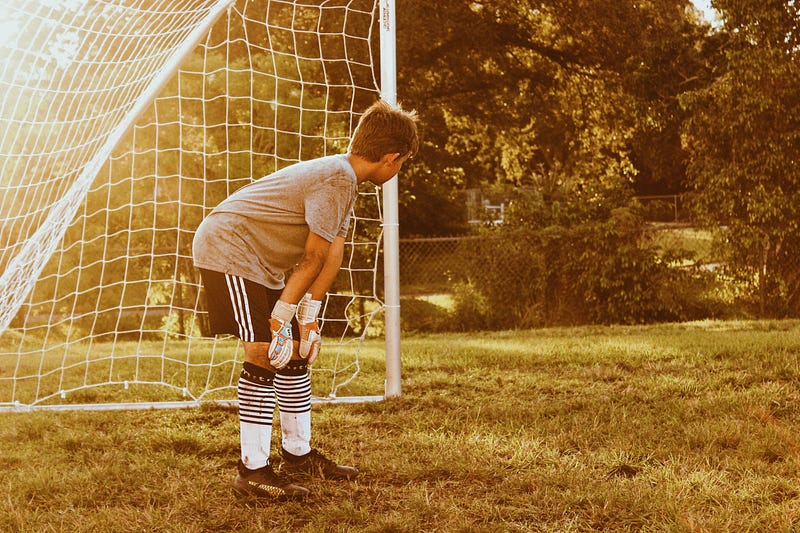
He wasn't one of those confident types. He never had the faith that sports and competition were for him. He still liked some sports like cricket, but in school, there was only one option: to play football during the sports period.
Though he had no confidence in himself (which was more of a lack of self-aggression) he was able to develop faith in his new role — the role of the goalkeeper.
He accepted the offer to become a goalkeeper — which, for his anxious mind, was far better than being in the middle of the ground. And to his surprise, his mind began to appreciate the joy of being a goalkeeper, especially due to the fact that he did not have to run like crazy after the ball and outsmart the other smart boys on the ground.
He could patiently focus on just that: watch the ball and make sure it did not enter the goal net — be it by kicking the ball away or blocking it with his body or catching the ball. And when he was able to defend the ball for the first few times his trust in his little ability improved. The nervous energy slowly began to transform into the pleasure of goalkeeping.
Finally, he found something to look forward to — a skill to concentrate and improve along with a sense of self-worth.
Little did he know that all the hope and self-worth building was soon to come to a halt.
Soon an elder boy, a neighbor, came to visit his home; he had a conversation with the father of the young boy. The boy, while not actively participating in their conversation, was listening to them from a distance. Soon the topic of their conversation shifted to football, and specifically towards the role of the goalkeeper. The elder boy, a football player himself, was a forward player in the team.
The elder boy made a cruel remark on the role of goalkeepers — words that had the power to create a psychological wound on the boy:
“Goalkeeping is the most worthless role in the football game. Being a goalkeeper is such a waste…”
They carried on with the conversation without the slightest clue on how that silly remark was going to affect the course of the young boy’s life.
It was the last thing the boy wanted to hear before he would be brutally taken over by the pre-existing beliefs about being inherently unworthy, not good enough, always wrong.
The new passion — the pleasure of being a goalkeeper and doing his little work within the little space between the goal post wholeheartedly — soon faded away into further self-doubt.
The interference of his mind — the constant replay of the remarks made by his neighbor — made it difficult for him to put his heart and soul into his new role. Instead, it became another source of worry.
He found his position as a goalkeeper quite meaningless. “It is not worth being a mere goalkeeper,” he thought “after all, that is what others think anyway, even a football player thinks so, so it must be true”.
He was not able to see it from any other perspective as his brain was shut off by the mind which by itself was bound by the cultural conditioning. The young boy did not have the capacity to break free from the bondage of rules of worthiness, good, bad, right, and wrong as set by society — it was too much for him to introspect and find a way out.
And gradually, as his interest declined, so did his abilities to be a good goalkeeper. Self-doubt transformed into fear and he was not equipped to handle it. He got kicked out of the team which was in fact a blessing for him compared to suffering from double-mindedness arising from self-doubt.
He will continue to be met with the same difficulty in different situations in his life, he will be forced to see through the toxic conditioning and beliefs, and how they suck his joy. And perhaps he will learn to trust in himself and stop measuring his self-worth based on the rules of society and what others think.
If you liked it, consider reading my other short stories:
Thank You. Pretheesh Presannan.


