
Doing Time Inside
A short story about an innocent doing his time in prison
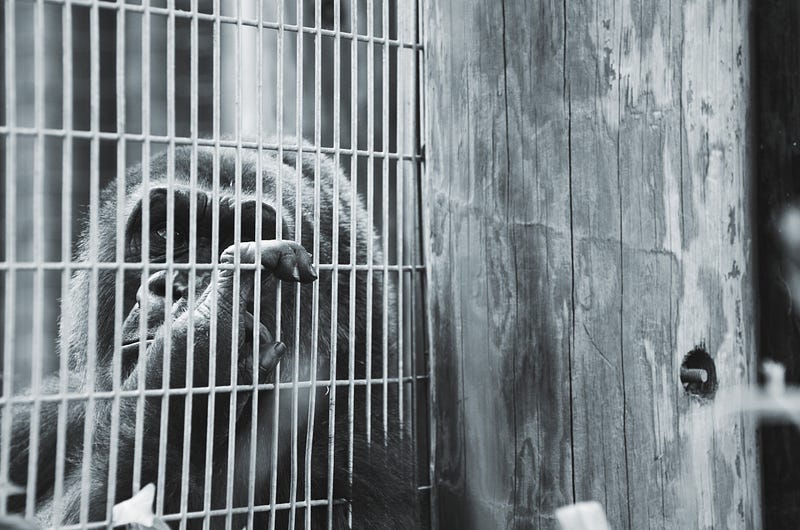
Leo sat in that chair; having all the time to himself to write freely, he thought of the beginning of his prison life and on how he ended up here in this library.
It was not the living conditions in the prison that disturbed him the most, but the thought of having to endure a prison life for a crime he did not commit.
He was innocent. It was the bad fate of being in the wrong place at the wrong time that had him end up in this prison.
The meaninglessness in his suffering made it difficult for him to endure it. In that sense, compared to the other inmates in his cell (most of them being real criminals), he found his condition quite difficult to accept. And this unacceptance just made his life more horrible in prison — not to mention the bullying from other senior inmates.
Nothing helped; neither the day work in prison nor the rest hours in the evening. Prisoners had the option to read books in their leisure time before sleep. None of his inmates (including him) had any interest in reading, except one, named Sen, the most senior in that cell. Besides reading he spent most of his time inside the cell writing in diaries he was provided with.
As time passed, one day it was time for his inmate, Sen, to leave the prison as his sentence was over. Before leaving, he handed over some diaries to Leo. Leo, for not showing disrespect towards the senior, took them half-heartedly.
“It would not bring me any relief in going through the diary and I would probably find nothing there except some trash talk.” — he thought. Nevertheless, at some point, he opened the diaries and tried to read. In the diary were short stories and Leo began to take some interest in it; he was able to connect with the central characters. Leo understood why Sen took interest in writing stories and that he was also probably wrongly convicted, like himself.
All of the central characters in his stories were subjected to bad fate and injustice. And part of the reason — he thought — that Sen wrote these stories might be to empathize with those characters and thereby strengthen his ability to accept his situation.
And for Leo, having his own share of unfairness, he was able to relate with the characters in the stories written by Sen. It opened up whole new ways of seeing his situation, and that the self-victimizing and the resentment-filled view was only one perspective. He gained the ability to put his feet inside others’ shoes. Shared-suffering (with the characters and also Sen, who had already been in his position) had a quality of taking away the pain when compared to individualized suffering.
It was not that easy for Leo to quickly let go of the unacceptance of his situation. He often fell back into the trap of his own mind, but eventually, those stories by Sen became his only source of inspiration to let the time pass sanely in the prison.
He realized that any worst thing that had happened to a single human being could happen to him or anyone else too. Though he could not have imagined such possibilities prior to ending up in the prison.
He was able to slowly not only come to terms with reality but also to find meaning in his existence. Finally, he was inspired to find joy in his current reality.
He began to see himself as a character in fiction. This helped him not only to maintain a safe distance from himself — so as to not fall into self-absorbed victimization — but also to have empathy for himself and others, and appreciation for being alive.
Every moment of daily life was filled with curiosity just like one would not know what the next page of a book contains, but whatever it was he took it as part of the story.
Reading the stories written by Sen further inspired him to take advantage of such books available from the prison library, and also it slowly opened a possibility for him to write stories in his own style. It became his way of doing time.
Having refreshed his memories of the past years, Leo is ready to fill his pages while being grateful to be allotted to work in the prison library during the day.


