
WEEKLY BUSINESS ROUNDUP
Global Business Week: Who are the Dividend Aristocrats in 2021?
The state of Financial markets & Economies, Weekly Charts, Business Trends & Statistics
Riding high on the bumper Jobs report out of the U.S, the native stocks logged yet another impressive performance to close the week. All three benchmark indexes posted fresh all-time highs before heading into a long holiday weekend. The Dow Jones Industrial Average DJIA closed+0.44% for a record close, its first since May 7th. The S&P 500 index was up 0.75%, closing at a fresh all-time high, and its 7th consecutive record high, a winning streak not seen since 1997 & the Nasdaq Composite Index climbed 0.81%, to a record 14,639.33.
After an opening half of the year which saw global equities put in one of their strongest performances of the last two decades, investors are expecting more volatility in the coming months. The start of stimulus reduction from the U.S Federal Reserve and the increasing realization that Covid-19 may be with us for a very long time seems set to be the dominant themes. Asia’s lower success in rolling out vaccine programs is already making the region less attractive to investors as the economic recovery stumbles.
The US Dollar had everything aligned to its favor through the first half of 2021 and yet the currency struggled to gain serious traction. It may just have been the case that most investors were not interested in the “unwanted” safe haven asset as they looked to book smart profits in equities right now. Looking ahead, the strong economic outlook for the U.S favors the Greenback. Although the benchmark dollar index (DXY) receded sharply on Friday from a high of 92.75 to close at 92.24 — it has nonetheless continued to march forward in the short term. With U.S Feds well ahead of their counterparts in the interest rate tightening cycle, DXY looks poised to make a recovery in the medium term.
For the cryptos, it was a bit of a dampener this week after a decent recovery the week before. The sideways consolidation continues to play out. Having said that, Bitcoin has guarded the significant support level around $30k pretty well against the onslaught of bears. At least in the short-term, BTC seems to be slowly turning a corner with its higher lows — at the time of writing, it is trading around $34,500. Ethereum, the second-largest crypto has scored a nice bounce from its major support in the $1,800 region as well — trading above $2,200 currently. Overall, the week was led by the Smart Contract Platform sector which ended with a positive return of 6%, followed closely by the DeFi sector with gains of 4.8%.
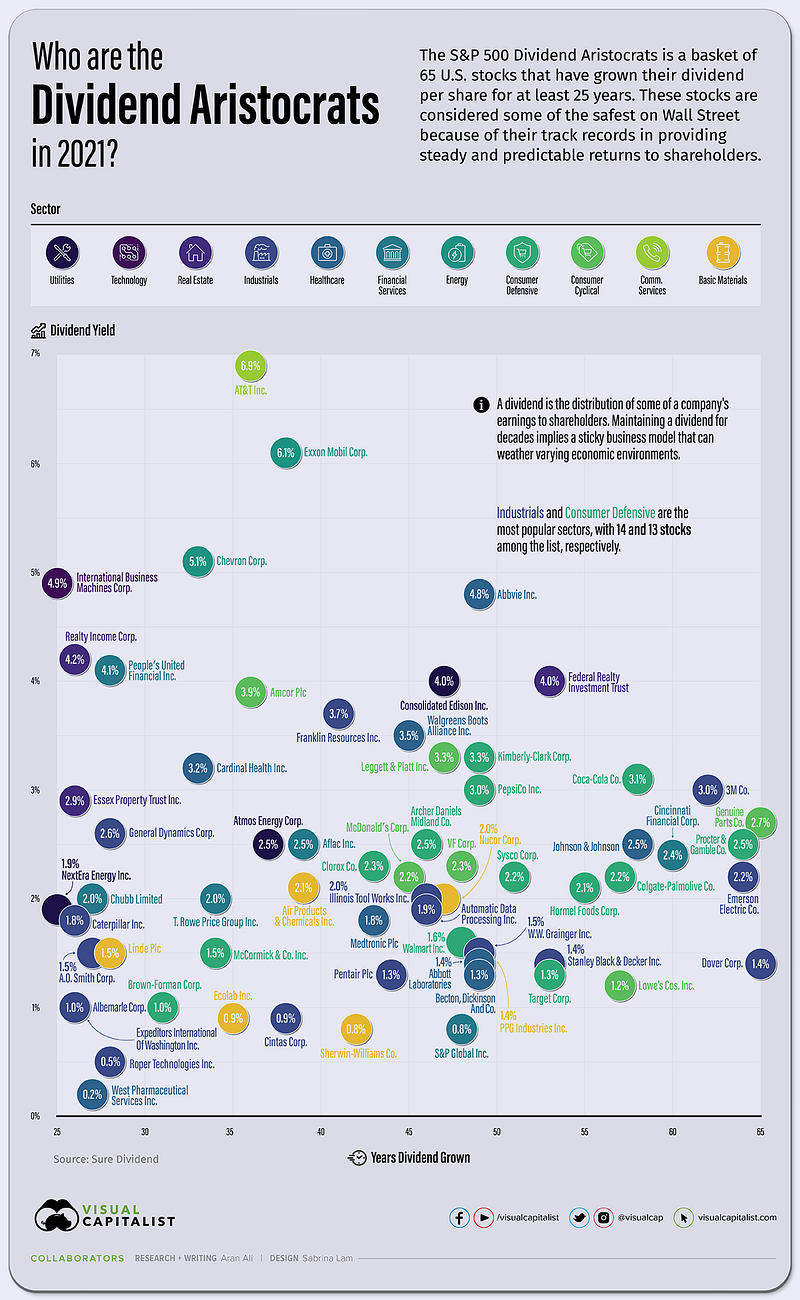
Today’s featured infographic (pictured above) looks at 65 Dividend Aristocrats — a basket of 65 U.S stocks that have consistently grown their dividend per share for the past 25 years. The data comes from Sure Dividend looks at all 65 Dividend Aristocrats, ranking them by their yield, sector, and years of growth.
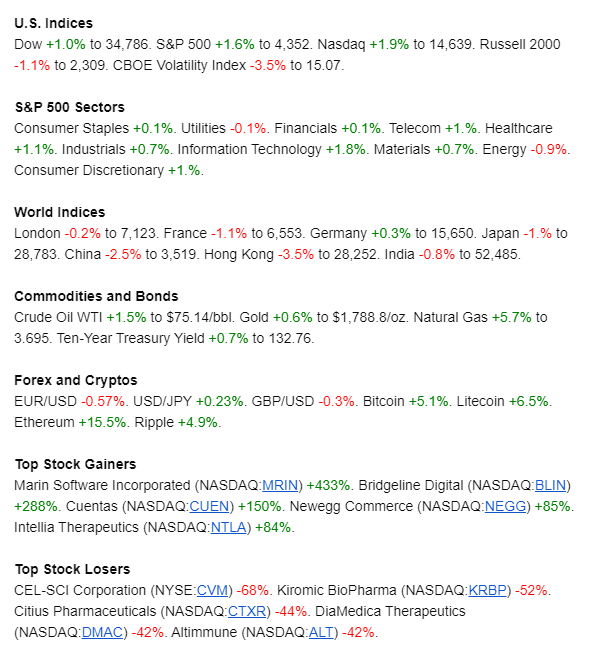
And finally, before moving on to some other statistics, here are the weekly & YTD numbers from various markets and different assets (Figure 1).
130 Countries agree on a Global Min. Corporate Tax
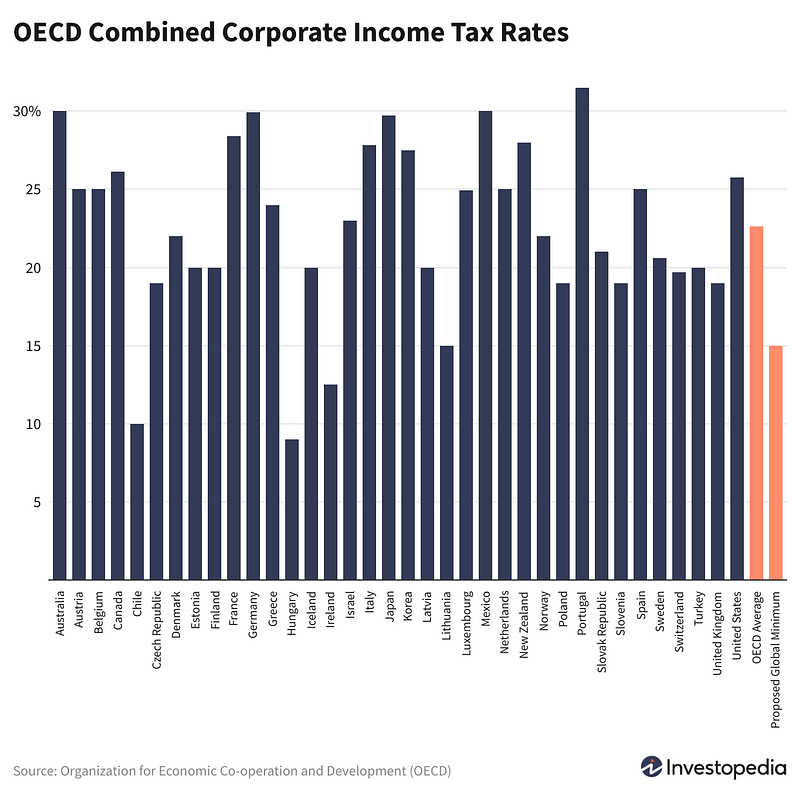
130 countries have given their blessing to the U.S.’s recently proposed global minimum tax (GMT) on corporations. Officials of all 130 countries met virtually and agreed to an outline of a broad overhaul of international tax rules. The group accounts for more than 90% of global GDP and includes all of the Group of 20 (G-20) countries (even China and India, both of which had previously expressed reservations about the plan). That overhaul would include a framework to eliminate digital services taxes which disproportionately target American tech companies, reforms to territorial tax systems, and, most importantly, a 15% GMT on corporations enforced through an internationally standardized set of national tax laws (Figure 2).
Ranking the Richest Countries
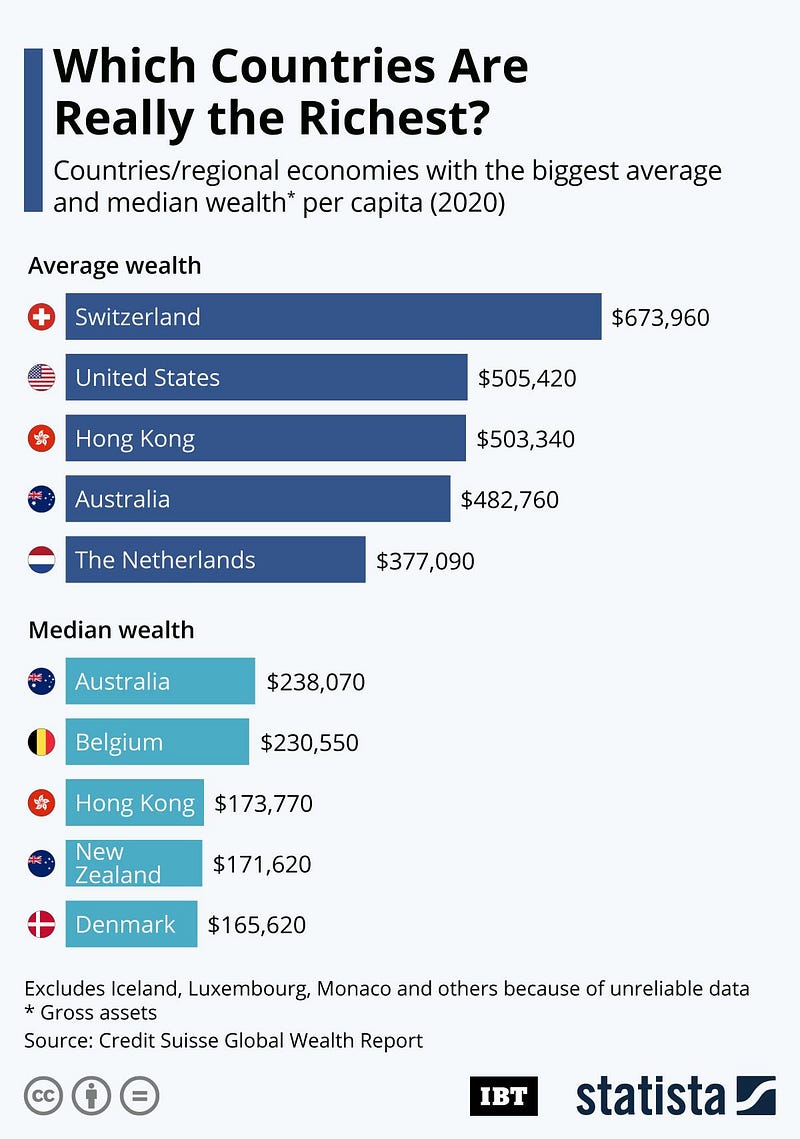
Ranking countries by the size of their economies and their overall net wealth, the U.S. can be found ahead of China, usually followed by the UK, Japan, India, or Germany. But sorting countries for their per-capita average wealth — or even for their median per-capita wealth — other countries come out on top. Using the two metrics, Switzerland was the richest country in the world with the highest average per-capita wealth of around US$674,000 per adult (Figure 3). The richest country measured by median per-capita wealth was Australia at around $238,000 in 2020. While the U.S. is the second wealthiest country for per-capita averages, Americans are not even in the top 20 for median wealth.
Another Grim Year for Global Tourism
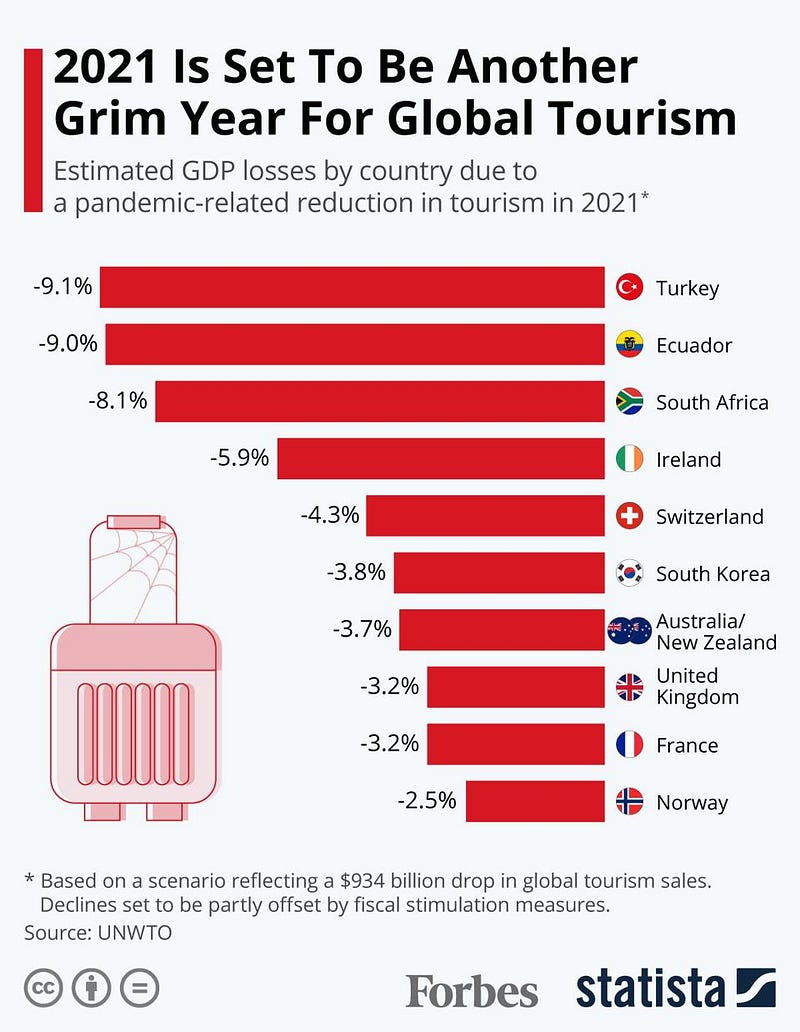
The pandemic-related collapse in international tourism could cost the global economy as much as $4 trillion for the years 2020 and 2021, according to a new United Nations report. The estimated losses have been caused by Covid-19’s direct impact on tourism as well as its ripple effects on other sectors closely linked to it. The steep drop in international arrivals led to a $2.4 trillion loss in 2020 and the UN’s report warns that a similar loss could occur this year (Figure 4) with the recovery largely dependent on the uptake of global Covid-19 vaccines. Experts don’t expect a return to pre-Covid-19 international tourist arrival levels until 2023 or later.
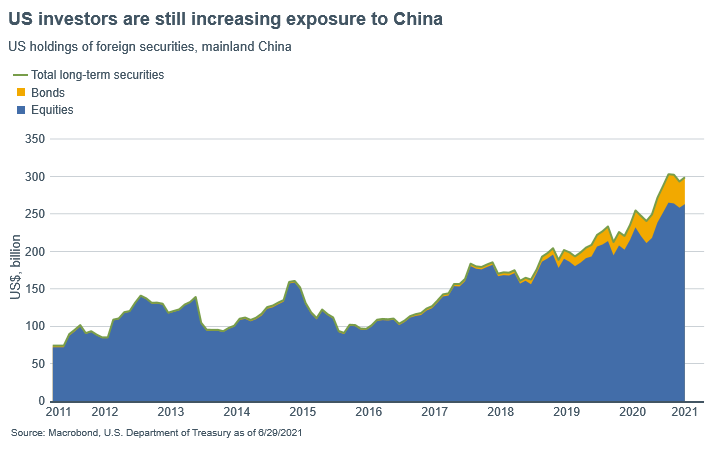
U.S Investors still interested in China
The MSCI China Index is only up around 2% in 2021, compared to a 14% rise for the MSCI USA Index. Prices look cheap compared to other markets. In addition, China has more powerful tools to combat inflation, including tightening monetary policy and letting the yuan appreciate considerably to offset the rising cost of imports. That didn’t go over well with the Trump administration, and it probably won’t with the Biden administration either. Still, as U.S. and European markets dance around record highs, investors are increasingly looking to China to find Alpha (Figure 5).
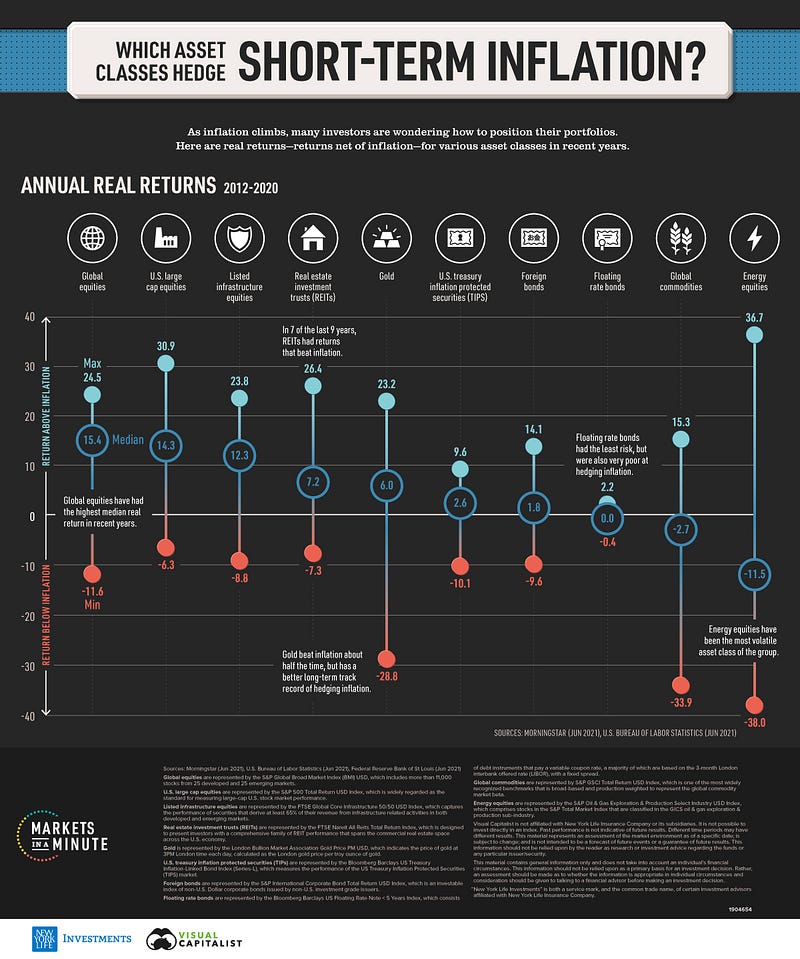
Which Asset Classes Hedge Against Inflation?
U.S. inflation has climbed 5% over the last year, the largest 12-month increase since August 2008. With this in mind, many investors may be wondering how to position their portfolios to hedge against inflation. The following chart (Figure 6) Markets in a Minute chart from New York Life Investments, shows which asset classes have beat inflation in recent years.
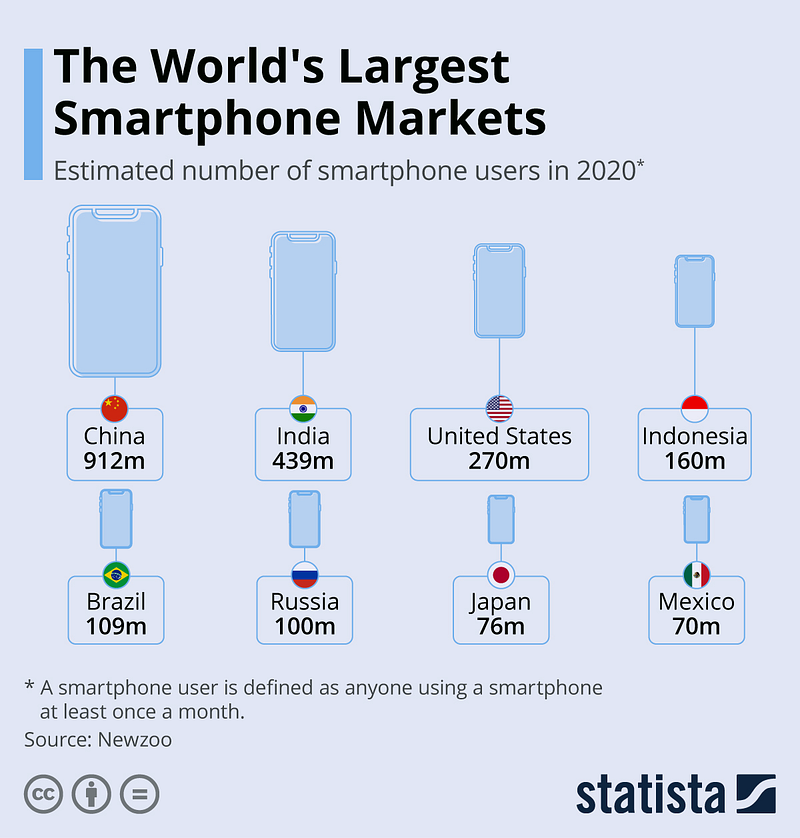
World’s Largest Smartphone Markets
According to estimates from Newzoo, China is far ahead of all other countries in terms of smartphone users. With more than 900 million users, the Chinese market is larger than those of India (Figure 7), the U.S. and Indonesia combined, illustrating why it’s so important for companies like Apple to cater to the needs of Chinese consumers.
Market Humor: Facebook joins the $1 Trillion Club

Previous Edition of GBW
