
WEEKLY BUSINESS ROUNDUP
Global Business Week: Visualizing the Rise of Mobile Commerce
The state of Financial markets & Economies, Weekly Charts, Business Trends & Statistics
Fed tightening, the spread of Omicron cases, and “triple witching” expiration of contracts, led to big moves for the major U.S averages. A late-day acceleration of selling on Friday dragged the Dow down more than 500 points, while the S&P 500 dropped 1%. All but five of the 30 stocks in the Dow were in negative territory. For the week, the Dow booked a 1.7% decline, the S&P 500 lost 1.9% and the Nasdaq Composite finished with a weekly drop of 3%.
Over the past four weeks, small-cap and value stocks have both entered correction territory. Cerner was the best-performing stock on the S&P 500 on a report Oracle is in talks to buy the computer and information technology company. The benchmark 10-year U.S. Treasury note dropped to its lowest yield in two weeks at 1.401%, while Oil futures dipped below $71 a barrel. Next week is a shorter one as markets close early for the Christmas holidays.
On the forex front, the benchmark dollar index (DXY) spiked on increased volatility associated with the risk-off sentiment in equities — benefiting the safe-haven global reserve currency. Trading in a tight range, DXY still seems poised to chart new highs as long as the short-term 95.50 support holds. The index closed the week near its highs of 96.67.
Globally, The Turkish lira plunged this week to a new record low of nearly 17 to the dollar, as concerns snowballed over President Erdogan’s risky monetary policy of keeping interest rates lower. The risky move caused the annual inflation figure to reach 21.3% alone in November. Soaring inflation has had devastating impacts on Turkey’s import-reliant economy, while sharply eroding Turks’ earnings and savings.
Cryptocurrencies are presenting somewhat of a mixed picture. Bitcoin remains under strong bearish pressure sliding to below $47k. Ethereum, on the other hand, is also sliding but the price drop is less pronounced — it is treading perilously close to its strong support around the $3,950 handle. ETH needs to clear the $4,000 level convincingly to come out of the short-term bearish channel in the daily chart. The impulsive rise in Dogecoin on Musk’s tweet didn’t last long as the meme coin gave up most of the gains, soon after.
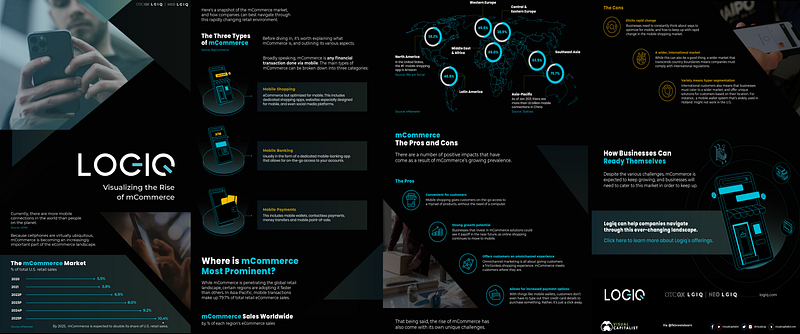
Cellphones are becoming increasingly more prevalent across the globe. Because of this, the mobile commerce (mCommerce) market is expanding fast. By 2025, mCommerce is expected to double its share of U.S. retail sales. Today’s featured infographic from Logiq provides a snapshot of the mobile commerce landscape, and how companies can capitalize on this rapidly changing retail environment.
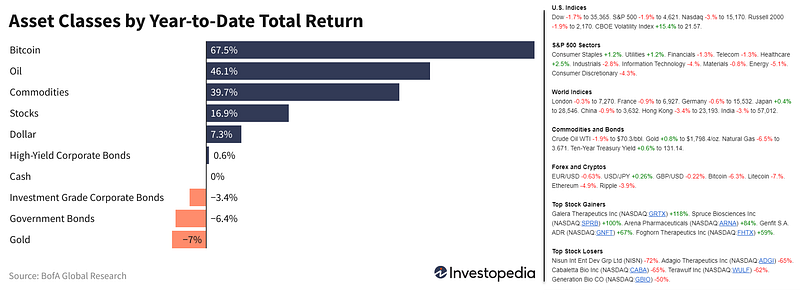
And finally, before moving on to some other statistics, here are the weekly & YTD numbers from various markets and different assets (Figure 1).
Chinese Domestic Assets in Favor
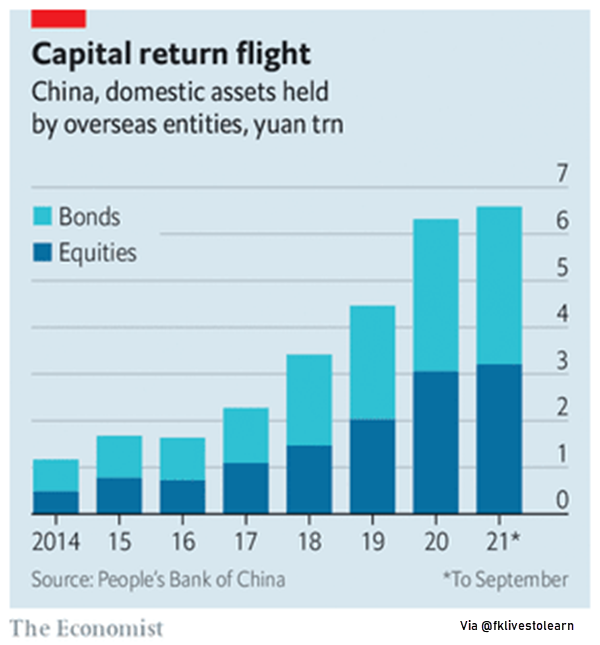
Foreign money has been flowing to Chinese securities markets. Overseas holdings of Chinese stocks and bonds, which have seen increasing inclusion in global indices, have reached about $1.1 trillion as of September (Figure 2). Given China’s crackdown on tech IPOs in the US, Chinese-listed companies have become more attractive as they may be able to respond to shifting regulations more quickly. In a parallel trend, venture investment in China-based startups has also been on the rise this year.
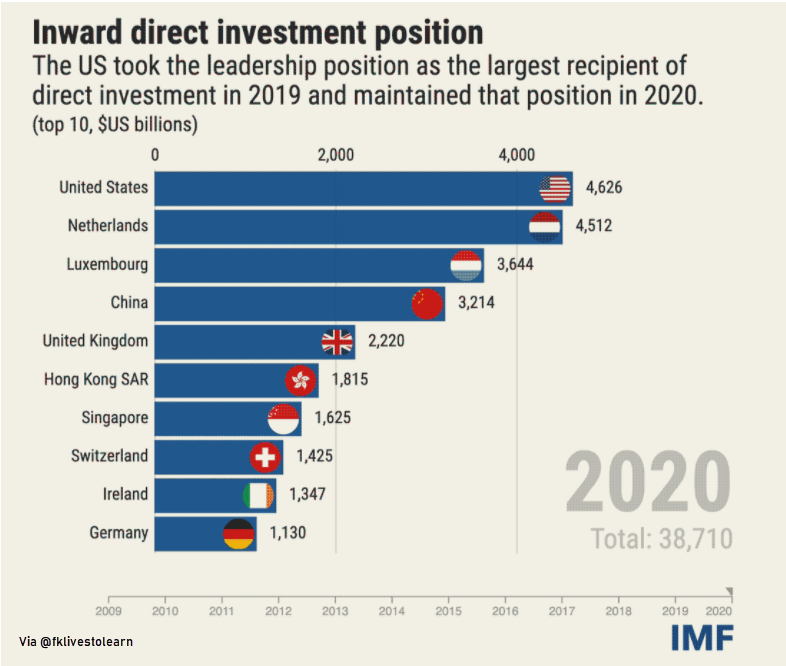
According to the latest results of our Coordinated Direct Investment Survey, and as shown in the chart below (Figure 3), the world’s top ten recipients of foreign direct investment by end-2020 were the United States, the Netherlands, Luxembourg, China, the United Kingdom, Hong Kong SAR, Singapore, Switzerland, Ireland, and Germany. Total reported foreign direct investment positions increased by $2.2 trillion or 6%— from 2019 to 2020 (Figure 3). Despite the uncertainties created by the COVID-19 pandemic, the increase in foreign direct investment positions is largely in line with the average annual increase over the past five years. Foreign direct investment in the reporting economy is also called inward direct investment.
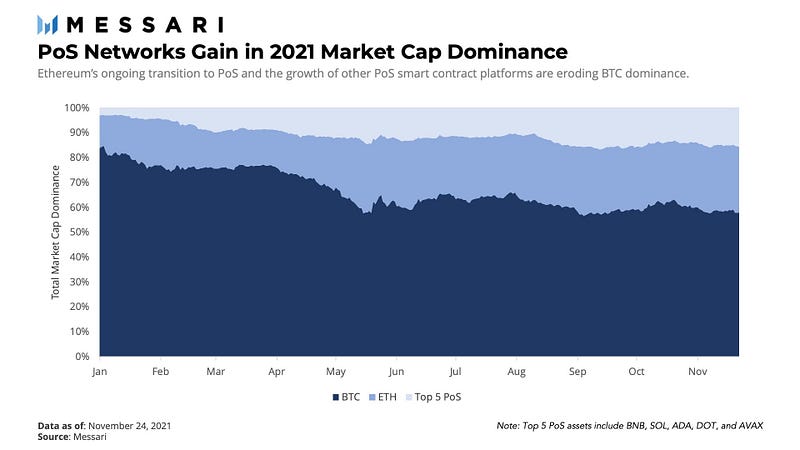
PoS Networks Gain in 2021
Today’s leading blockchains are undergoing a massive shift from Proof of Work (PoW) to Proof of Stake (PoS) consensus mechanisms. The original PoW model pioneered by Satoshi Nakamoto has fallen out of favor as critics point to the negative externalities created by its security model and its trend towards centralized mining pools. In its place, PoS designs are witnessing tremendous growth (Figure 4) for their promises of energy efficiency and greater decentralization. If the Ethereum 2.0 (Eth2) “merge” to PoS were finalized today, PoS based chains would account for 44% of Layer 1 market capitalization. If we ignored Bitcoin from that calculation, PoS chains would balloon to a 91% share. This shift away from PoW dominated networks is already creating second-order effects in the form of new business models that earn rewards for securing PoS networks.
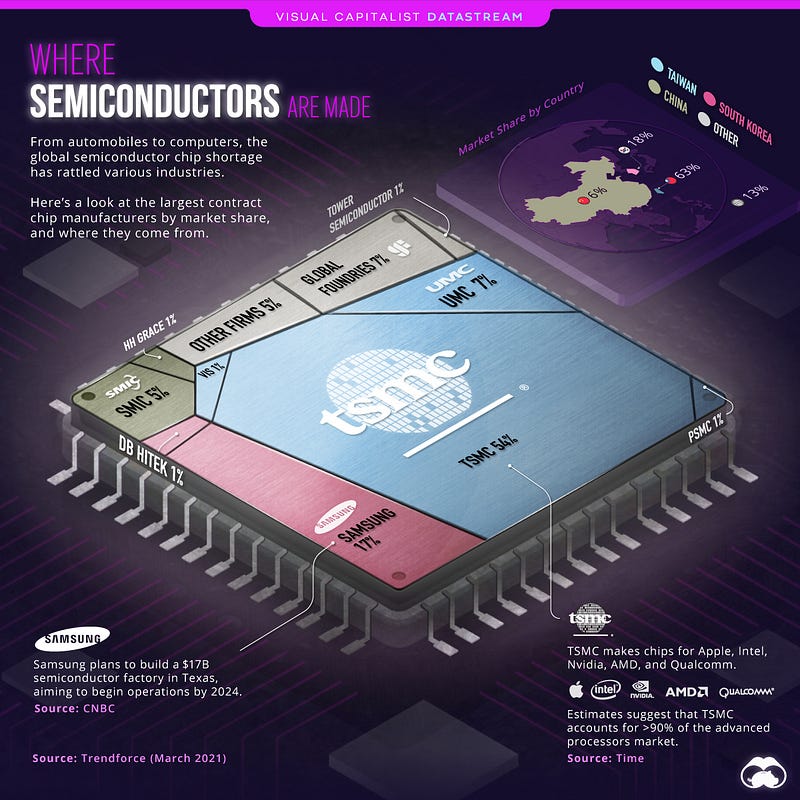
The Biggest Semiconductor Companies
Semiconductors are an essential component of the microchips that power virtually every modern electronic device. As the objects around us get “smarter” and demand for electronics grows around the world, the demand for semiconductors will continue to skyrocket. So, which companies currently make these chips, and where are they located? The infographic below (Figure 5) uses data from TrendForce to break down the top 10 semiconductor companies by country and market share. Taiwan, China, and South Korea combine for roughly 87% of the global foundry market. Here’s how it breaks down:
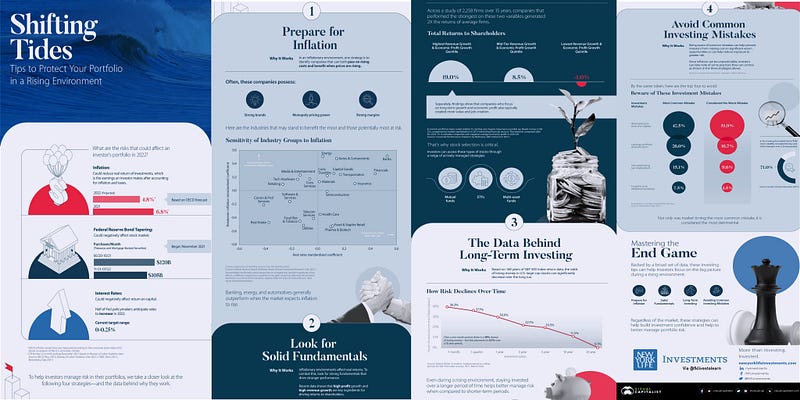
Protecting Your Portfolio in Rising Inflation
U.S. inflation hit a 40-year high in November, rising 6.8% on a year-over-year basis. Gas prices have jumped 58%, used cars are up 31%, and the price of food has risen over 6% over the same time frame. But whether inflation is short-lived or here to stay remains up in the air. In this infographic (Figure 6) from New York Life Investments, we take a look at four investment strategies to help investors manage risk during a rising environment.
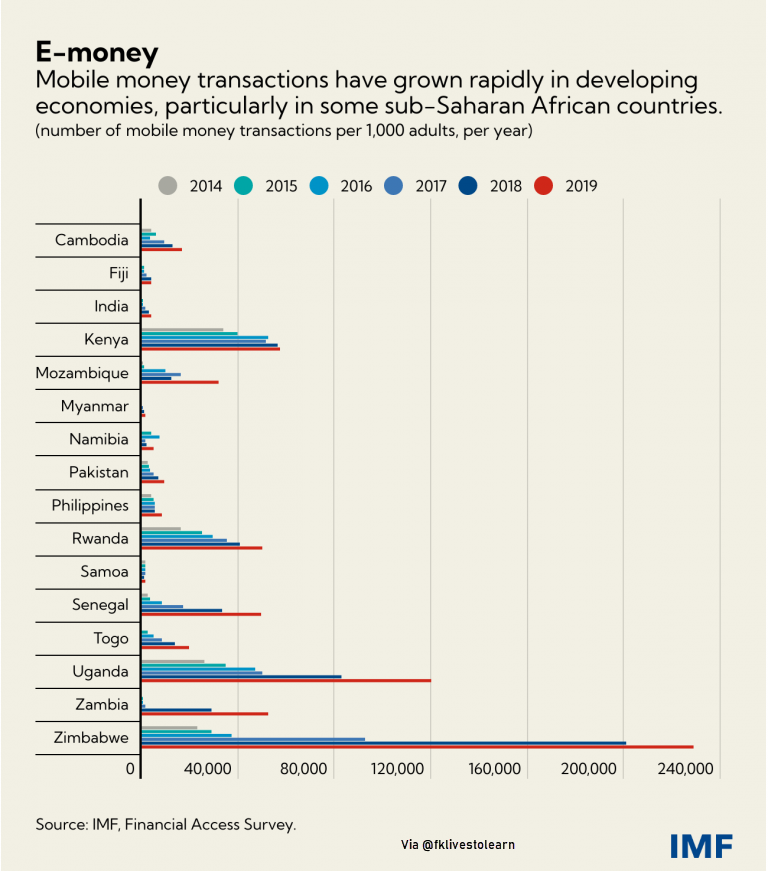
Mobil Money Growth in Developing Economies
E-money is already a vital part of daily life for billions of people, especially in many developing countries, where many lack access to the banking system. As shown in the chart below (Figure 7), a high percentage of the population across a number of East African countries now use e-money, making it important from a macro-financial perspective. It is estimated, for instance, that two-thirds of the combined adult population of Kenya (where M-PESA has reached a high degree of market penetration), Rwanda, Tanzania, and Uganda use e‑money regularly. Many of these people do not have bank accounts or other access to the formal financial system, so they store significant shares of their disposable funds in e‑money wallets and access them using mobile phones or computers.
Longest Serving CEOs in the S&P 500
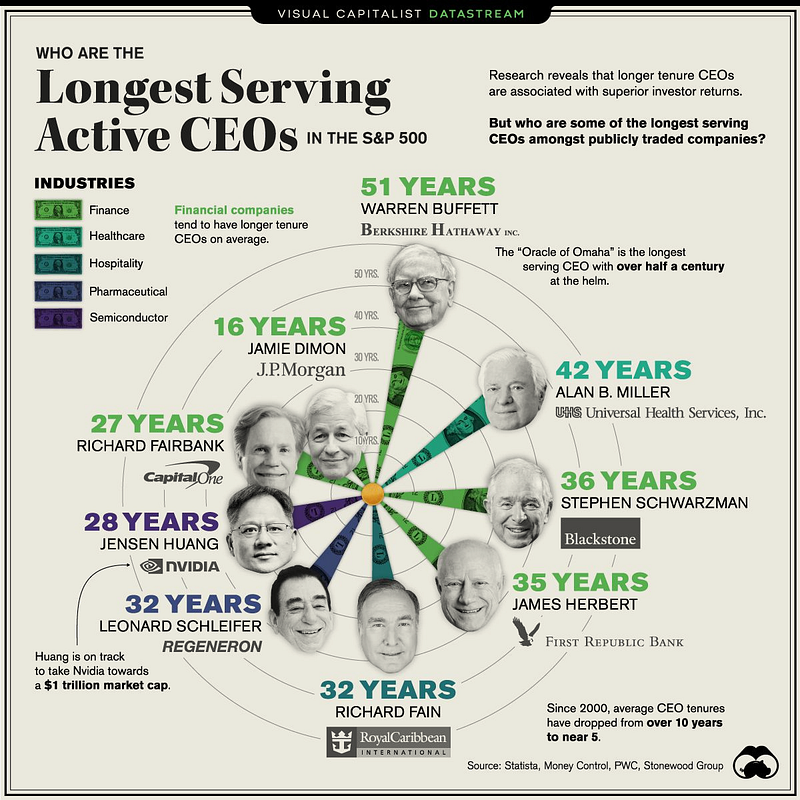
Have you ever wondered which chief executive officer has remained at their position the longest? As an investor, you might be interested to know that studies have linked CEO duration with superior stock returns. One study (Figure 8) in particular from the University of Sydney looked at some 19,000 CEOs across the NYSE and NASDAQ from 1992–2016. The data in this piece highlights several of the most tenured CEOs in the S&P 500. Warren Buffett is the longest-serving leader of the bunch, having maintained his position for over half a century.
Freelancing Growth is Global
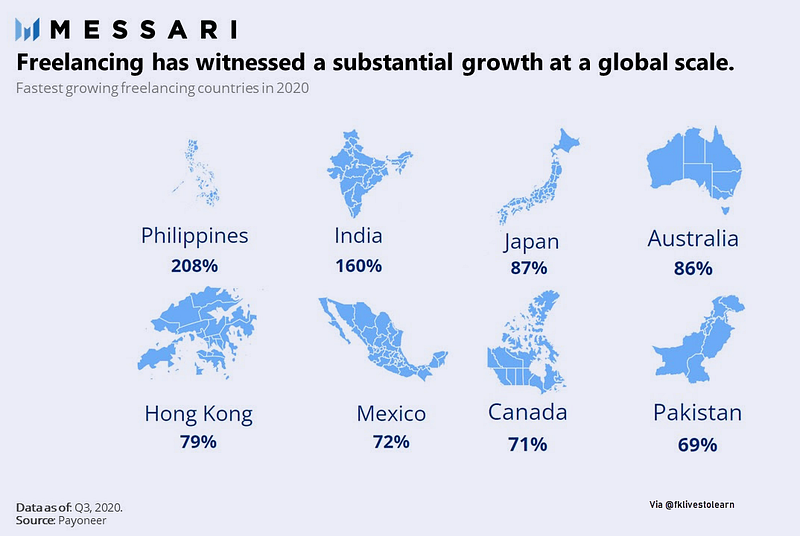
The rise of the online workforce economy in the last decade has been rewarding for millions of creators and freelancers. Workers benefited from the independence, flexibility, and additional personal growth and income opportunities by working on multiple projects. Meanwhile, companies were able to cut down on hiring costs and gained the ability to outsource operations and services, allowing them to build concentrated teams and enhance internal specialization. In turn, these mutual benefits created millions of job opportunities for workers and spearheaded the growth of the freelancer economy (Figure 9). Currently, there are 163 million freelancers registered on online labor platforms globally whose revenues totaled up to $520 billion in 2019, expected to grow at 7.7% annually over 7 years.
U.S. IPOs on Fire
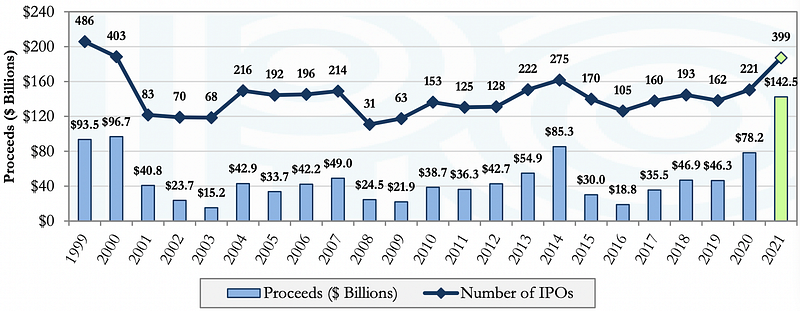
It has been a record-breaking year for U.S. IPOs. According to a new report from Renaissance Capital, a record 399 deals raked in a total of more than $142 billion in 2021 (Figure 10). It was the busiest year for deals since 2000, and the biggest year for money raised ever. According to Renaissance, 27 deals worth over $1 billion came to market this year. Electric vehicle maker Rivian led the pack with a $12 billion IPO, the biggest since Alibaba came public in 2014. Blank check IPOs also posted a record year of offerings. There was 604 special purpose acquisition company (SPAC) offerings that raised $143 billion. There were six direct listings that didn’t use an underwriter.
Market Humor: Financial Markets Go On Roller Coaster Ride Amid Fed Taper Talk


Previous Edition of GBW
Read more stories like this and others by Faisal Khan on Medium.
Stay informed with the content that matters — Join my weekly Newsletter