
WEEKLY BUSINESS ROUNDUP
Global Business Week: 10 Things to know about Plant-Based Foods Market
The state of Financial markets & Economies, Weekly Charts, Business Trends & Statistics
All three major U.S indices closed higher on Friday with the S&P 500 setting an all-time high. This is despite the fact that U.S consumer inflation rose in November the most since 1982 — just below the feared mark of 7%. Investors are also digesting what is expected to be a more hawkish tone from the Federal Reserve’s monetary policy committee next week at its meeting. Oil futures were up more than 1%, and that helped lift shares of energy companies. The yield on the 10-year Treasury note held steady at 1.48%.
Dow was up 4%, the S&P 500 Index gained 3.8% and the Nasdaq rose 3.6%. The Dow recorded its biggest weekly percentage gain since March, while the S&P 500 Index and Nasdaq each had their largest weekly percentage gain since February. Moderna was the worst-performing stock in the S&P 500 after the biotech firm said its mRNA flu vaccine was no more effective than current inoculations at preventing influenza. Shares of Oracle, Costco Wholesale & Apple reached record highs.
Despite a hawkish tone from the Federal Reserve & the hottest U.S inflation print in almost 40 years, the benchmark dollar index has remained range-bound for the past few weeks. DXY closed the week @ 96.05 and although it has shown resilience around the current price level, there hasn’t been any convincing move to the upside either. With the word transitory being phased out from inflation and FOMC poised to start winding down monetary stimulus, the overall picture remains bullish — provided that prices hold above a support test around prior resistance, taken from around the 94.50 level on the chart.
Slippage in cryptocurrencies continued last week as the rebound proved short-lived. Both Bitcoin and Ethereum dropped to new lows — with the prior going down to below $47k and the latter dropping to around $3,830. The weekend has brought a reprieve so far, as BTC is currently trading around $48.8k and ETH hovering around $4050. Ethereum still looks stronger of the two with strong support developing around in the $3,900 region. If this caves, it could drop to $3,300. Bitcoin, on the other hand, can revisit the fall to $42k on Dec. 04, if the bearish control remains in place.
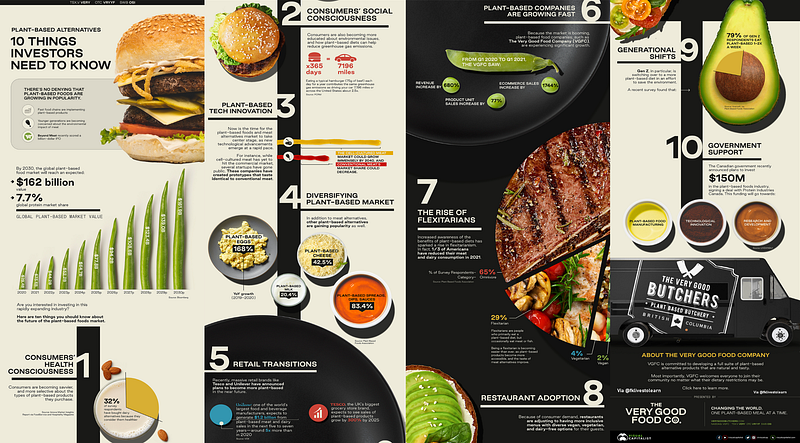
Plant-based foods are gaining traction. And the global plant-based food market is expected to reach $161.9 billion in value by 2030 — a 355% increase compared to 2021. Interested in investing in this rapidly expanding industry? Today’s featured infographic from The Very Good Food Company (VGFC) highlights what you should know about the future of the plant-based food market.
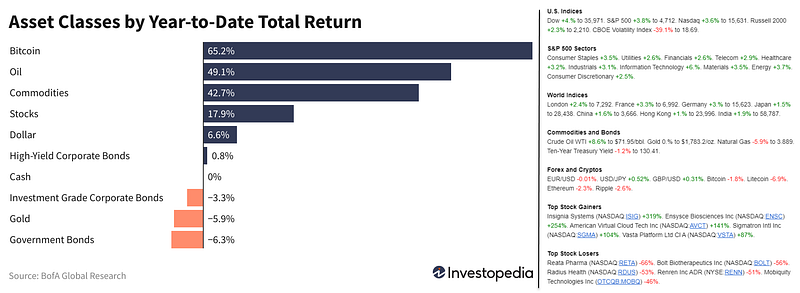
And finally, before moving on to some other statistics, here are the weekly & YTD numbers from various markets and different assets (Figure 1).
2021’s Largest U.S Tech IPOs in Trouble
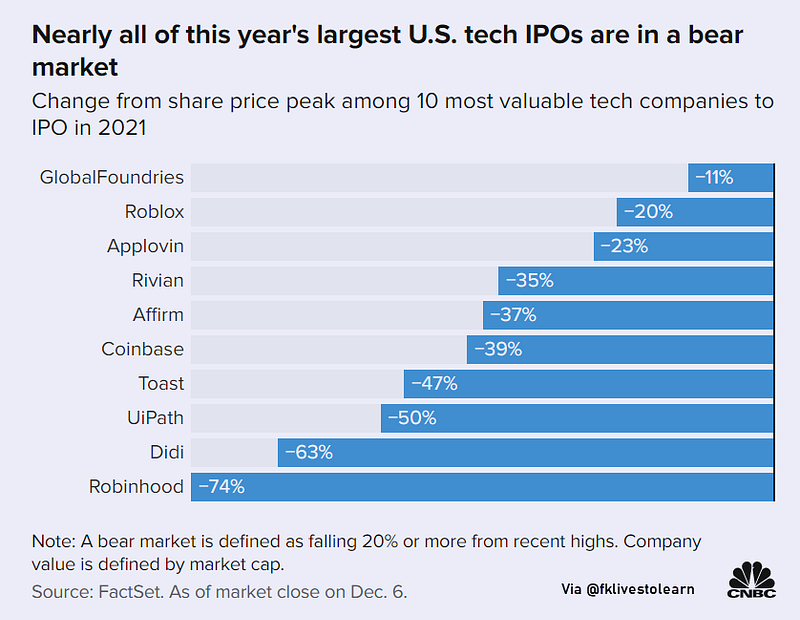
It’s been a rough start to the year for US tech IPOs. Only 1 of the 50+ tech companies that made their public debut in the US this year has fallen less than 20% from its peak price as of December 6 (Figure 2). Of the top 10 most valuable US tech IPOs this year, 4 — Robinhood, Coinbase, DiDi, and UiPath have dropped below their offer price. Concerns about inflation and rising interest rates, coupled with the “high-value, high-growth, money-losing” nature of these companies, have contributed to the sell-off.
Biggest Unicorns in 2021
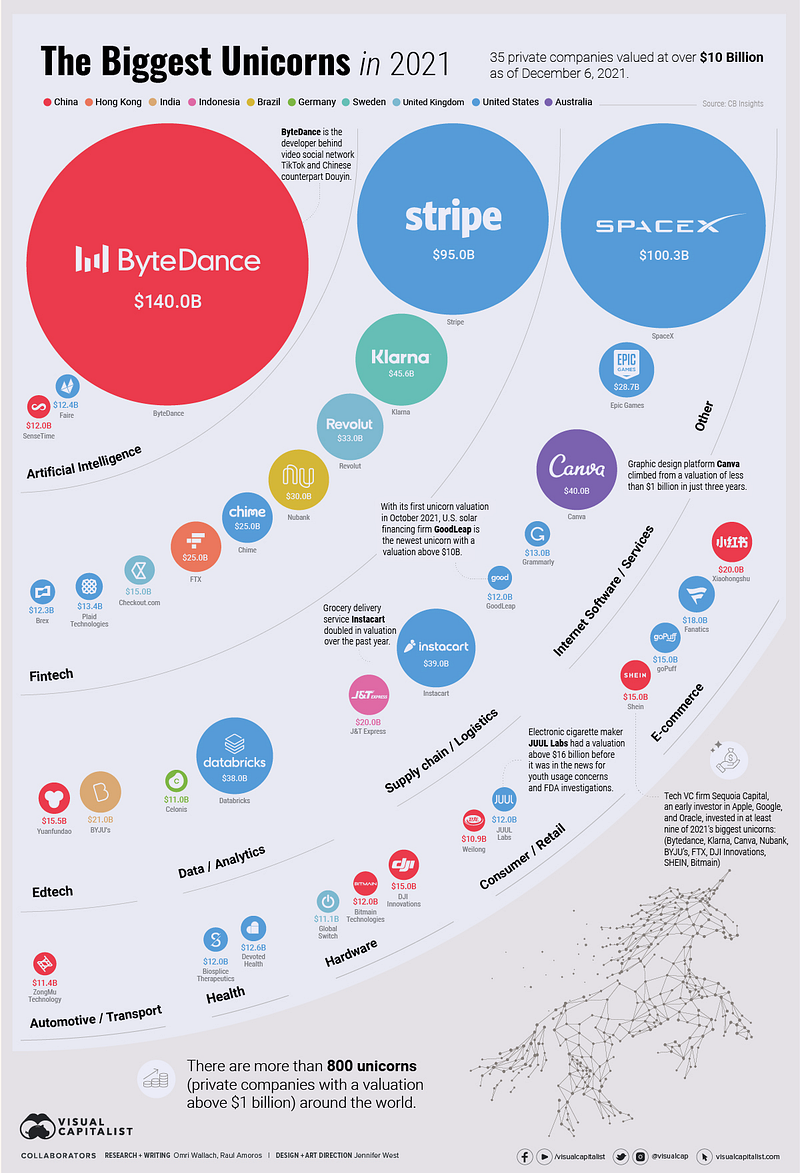
Many entrepreneurs start businesses around the world, but only the most successful new companies become “unicorns” — the biggest startups with a valuation above $1 billion. Some unicorns are little-known companies making quiet but impactful strides in software, healthcare, automotive, and other fields. Others have already become well-known industry leaders, like aerospace manufacturer SpaceX and game developer and publisher Epic Games. In total, there are more than 800 unicorn startups globally. That said, this visualization (Figure 3) by CB Insights specifically hones in on the world’s decacorns (unicorns with valuations above $10 billion) as of December 2021.
Producers of Green Energy Metals
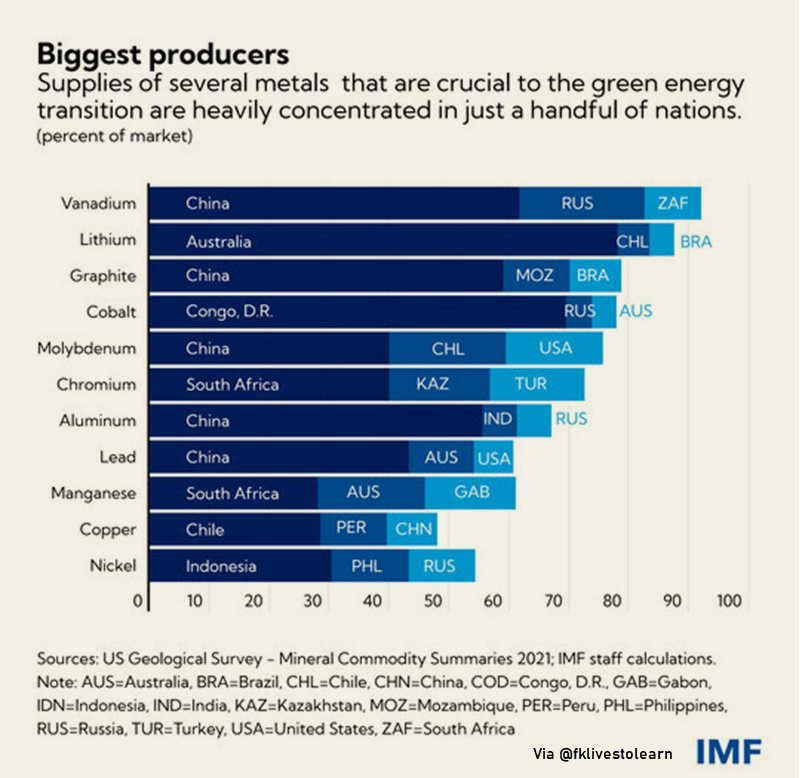
One complicating factor is that some important supplies are generally very concentrated. This implies that a few producers will benefit disproportionately from growing demand. Conversely, this lays bare energy transition risks from supply bottlenecks should investments in production capacity not meet demand, or in case of potential geopolitical risk inside or between producer nations. The Democratic Republic of the Congo, for example, accounts for about 70% of cobalt output and half of the reserves. The role is so dominant that the energy transition could become more difficult if the country can’t expand mining operations. Similar risks apply to China, Chile, and South Africa, which are all top producers (Figure 4) for some of the metals most crucial to the energy transition. Breakdowns or disruptions in their institutions, regulations, or policies could complicate supply growth.
Ethereum Issuance & Burn Rate
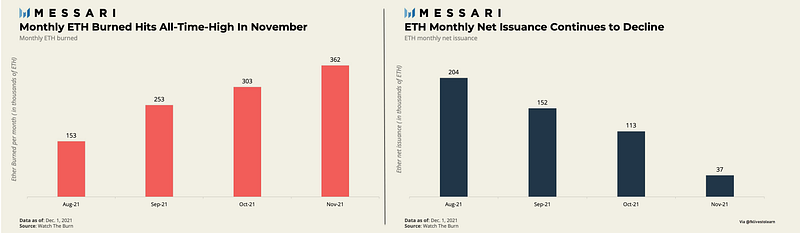
Ethereum base fee burns hit an all-time high in November with just over 360K ETH burned. The ETH burn rate has continued a 19% month-over-month growth rate over the past two months. OpenSea currently accounts for the largest percentage of ETH burns (~117k ETH) with ETH transfers (transfers of ETH on the network) coming in second (105K) and Uniswap V2 (100k) coming in third. Ethereum net issuance continues to decline with only ~37K ETH issued in November (Figure 5). At this rate, if market demand continues, Ethereum may see its issuance become deflationary relatively soon. In fact, it’s possible that December might become the first month in which Ethereum experiences negative net issuance (deflation).
Best Locations for Fintech
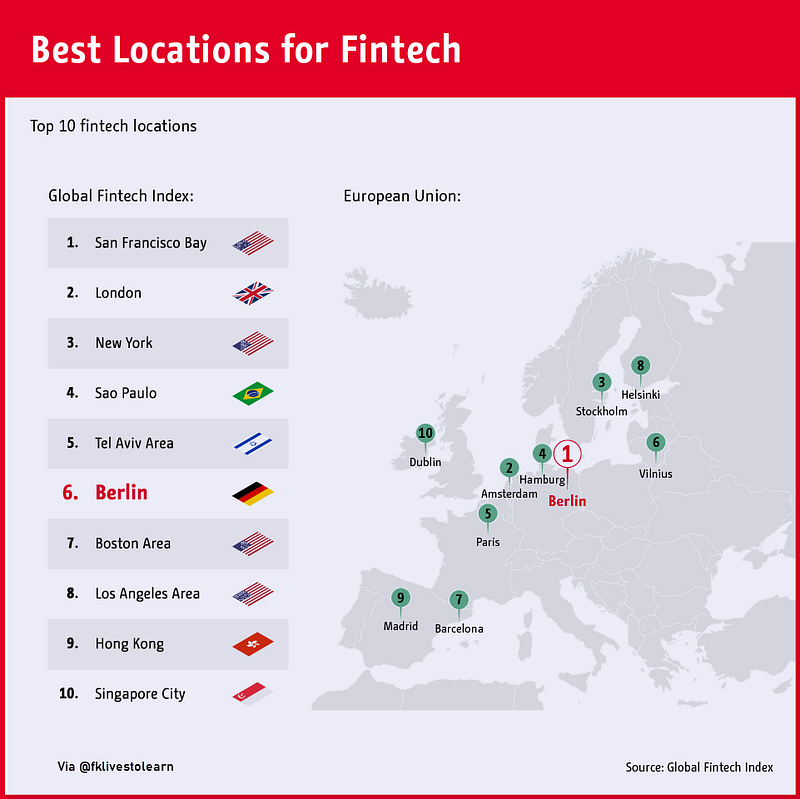
Digital and disruptive — these are the key concepts that innovators are bringing to the legacy banking landscape. Entrepreneurs want to make financial structures and processes easier and more transparent, applying automation to things like loans, payments, or investment models, merging ideas with tech to make purchases and trade faster and more convenient. This drive is revolutionizing the finance sector all over the world. In 2018 and 19, fintechs (financial services technology companies) in Berlin gathered approximately 1.8 billion euros in investment and venture capital, which is 70% of all investment made in German fintech in that period. In 2020 it was another 342 million, and in the first half of 2021, a staggering 1.6 billion. This puts Berlin in fifth place in the global city ranking (Figure 6) for fintech investments, behind San Francisco, London, New York & Palo Alto.
An Overview of Social Media Giants
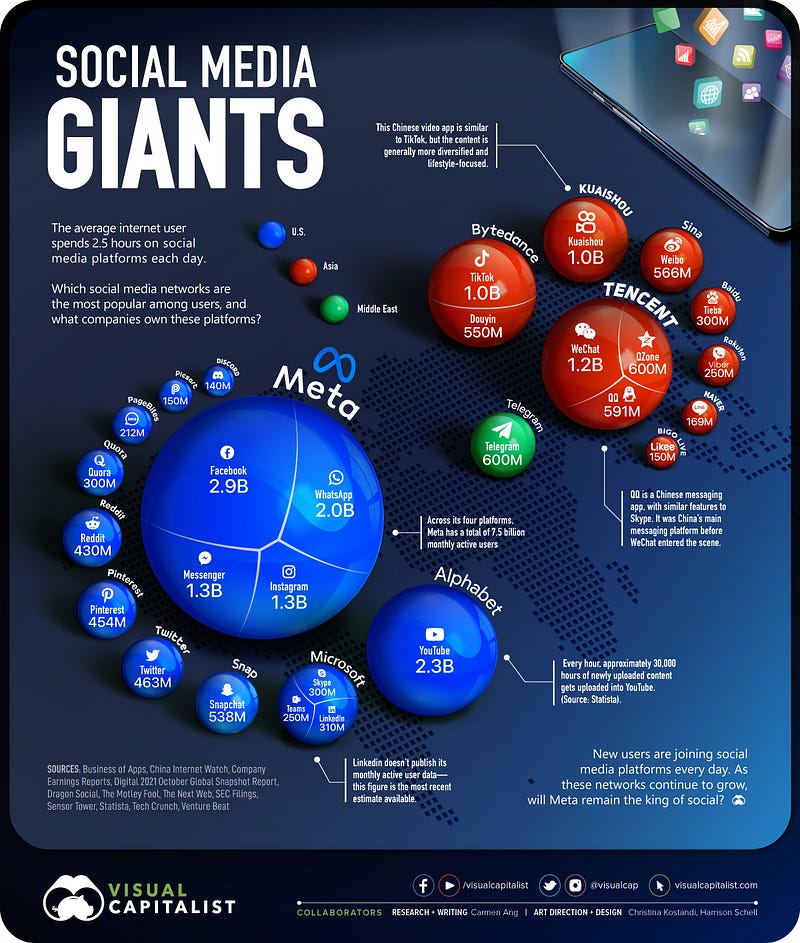
Currently, there are over 4.5 billion people around the world who use some form of social media — about 57% of the global population. Yet, while social media’s audience is widespread and diverse, just a handful of companies control a majority of the world’s most popular social media platforms. Meta, the tech giant, formerly known as Facebook, owns four of the five most widely used platforms. This infographic (Figure 7) highlights the biggest social networks across the globe, measured by their monthly active users (MAUs).
Phenomenal Growth of MetaMask
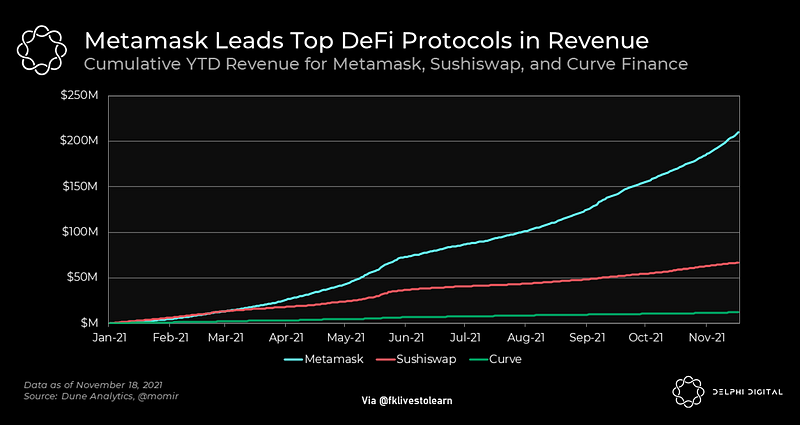
MetaMask is a non-custodial Ethereum wallet, allowing users to store Ether and other ERC-20 tokens and make transactions. With the growth of DeFi and NFTs over the past year, MetaMask has increased in prominence as an entry point for novice users. So much so that its user base is now over 20 million monthly active users (Figure 8).
Growth of Social Commerce in U.S & China
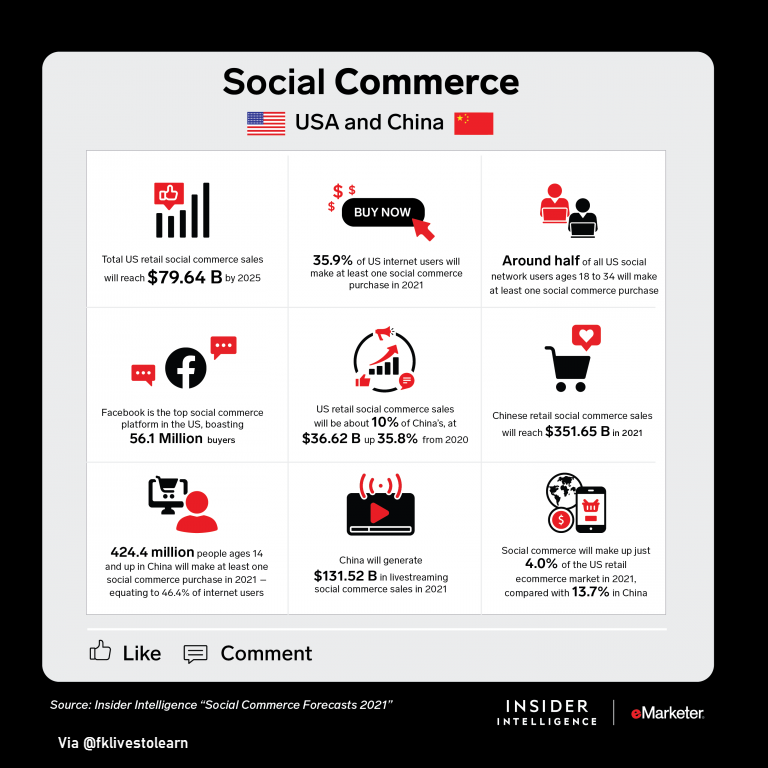
Social commerce is a huge trend driving more and more online sales in both the USA & China. Here’s how to numbers stack up between the two countries (Figure 9). Online shopping has been a growing trend for the past two decades, with the rise of Amazon and Shopify, but social commerce is a newer trend that is beginning to see exponential growth. It is estimated that by 2025 the total US retail social commerce sales will reach close to $80 billion. These sales skew towards the younger generations, with over half of people aged 18–34 making a social commerce purchase. What’s most shocking about the statistics on social commerce is its popularity in China relative to that of the USA. It is expected that social commerce will make up 4% of e-commerce sales in the USA in 2021, while it will make up 13.7% in China.
Top 150 Digital Health Companies
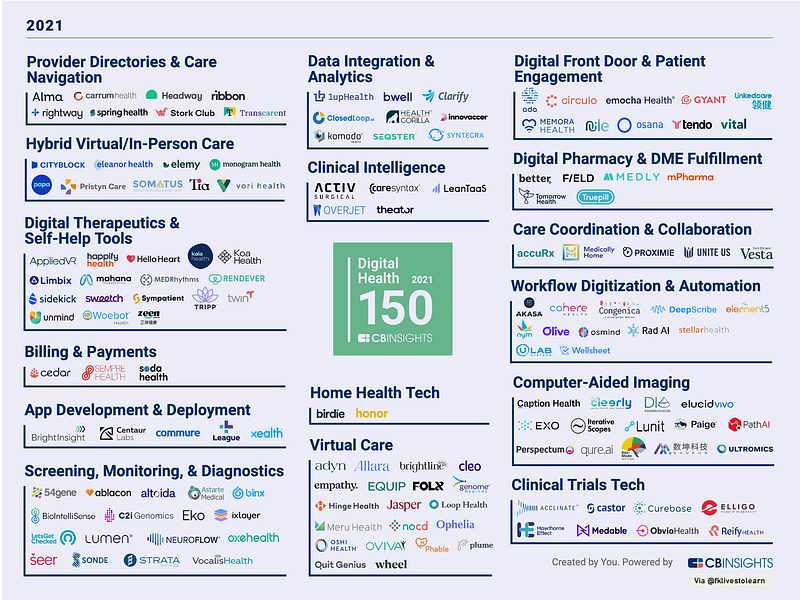
CB Insights has unveiled the third annual Digital Health 150 — a list of 150 of the top private companies using digital technology to transform healthcare. The 2021 Digital Health 150 cohort (Figure 10) has raised approximately $14.9B in aggregate funding across 522 deals since 2016 and includes startups at different investment stages of development, from early-stage companies to well-funded unicorns. The companies were selected from a pool of over 11,000 companies, including applicants and nominees. They were chosen based on several factors, including data submitted by the companies, company business models and momentum in the market, and Mosaic scores, CB Insights’ proprietary algorithm that measures the overall health and growth potential of private companies.
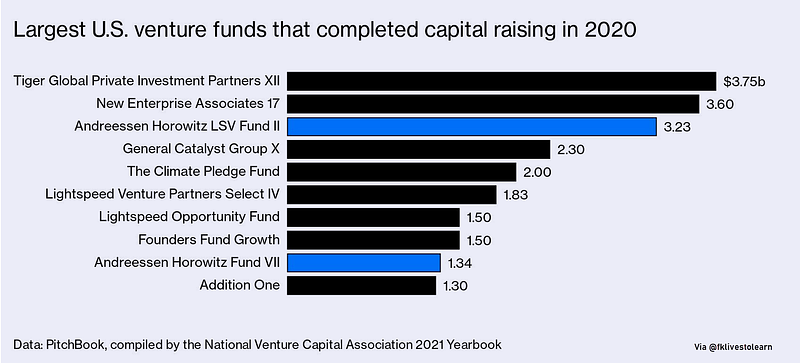
Largest U.S Venture Funds in 2020
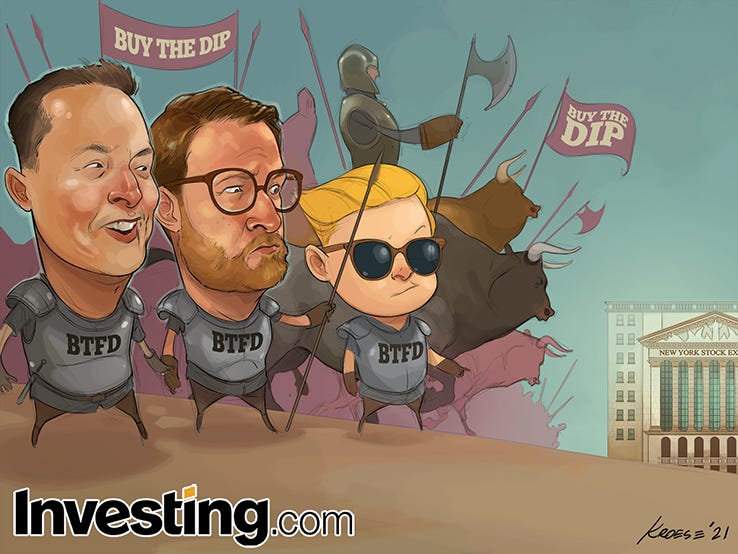
Market Humor: Dip Buyers Save The Day Again As Stocks Head Back Towards Record Highs!

Previous Edition of GBW
Read more stories like this and others by Faisal Khan on Medium.
Stay informed with the content that matters — Join my weekly Newsletter