
WEEKLY BUSINESS ROUNDUP
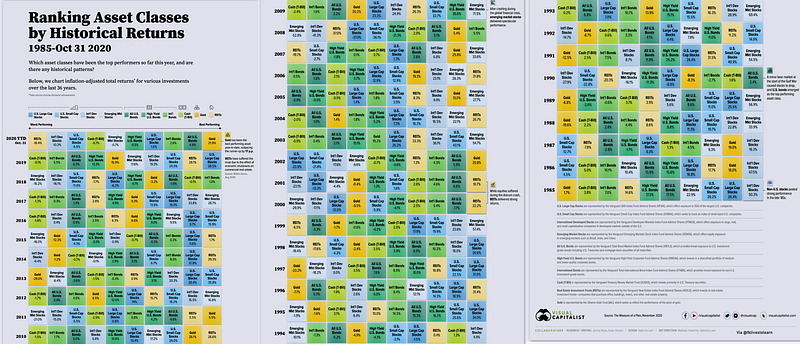
Global Business Week: Ranking Asset Classes by Historical Returns (1985–2020)
The state of Financial markets & Economies, Weekly Charts, Business Trends & Statistics
U.S markets are torn between gains and losses. On the one hand, continued vaccine optimism is lifting the investor sentiment, that we would return to some kind of normalcy by the end of Q2 2021, but the short term risks are dragging them down. America broke infection rates almost every day of the past week reporting more than 215,000 most recently. A disagreement between the U.S secretary of State & Fed Chair Jerome Powell over the continuation of emergency lending programs also threw cold water on the bullish sentiment.
All three major indexes tumbled into the red on Friday closing out a losing week. This tug of war between bulls and bears is expected to continue until there is clarity on the political front, vaccine deployment, and a new round of stimulus. The dollar index inched lower this week but was able to hold its own just above the Medium-term support. While Greenback may benefit from short term macroeconomic instability, the long term trend is still firmly bearish.
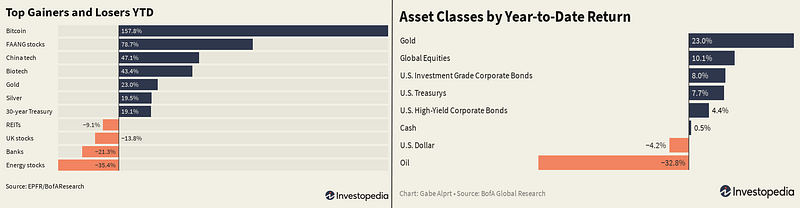
The biggest newsmaker in all this noise has been the premier digital asset, Bitcoin. The pandemic has propelled BTC to a newfound hedge status as institutional investors continue to pour money into it. The positive feedback loop created by these investors buying BTC even at these elevated price levels is keeping the demand strong. So far, Bitcoin has touched $19,000 and is a whisker away from the all-time high charted back in Dec. 2017. The dynamics, however, this time around are very different. BTC remains the top gainer of the year in assets (Figure 1 below).
Today’s featured infographic (above) is inspired by and uses data from The Measure of a Plan, which shows historical returns by asset class for the last 36 years. This analysis includes assets of various types, geographies, and risk levels. It uses real total returns, meaning that they account for inflation and the reinvestment of dividends.
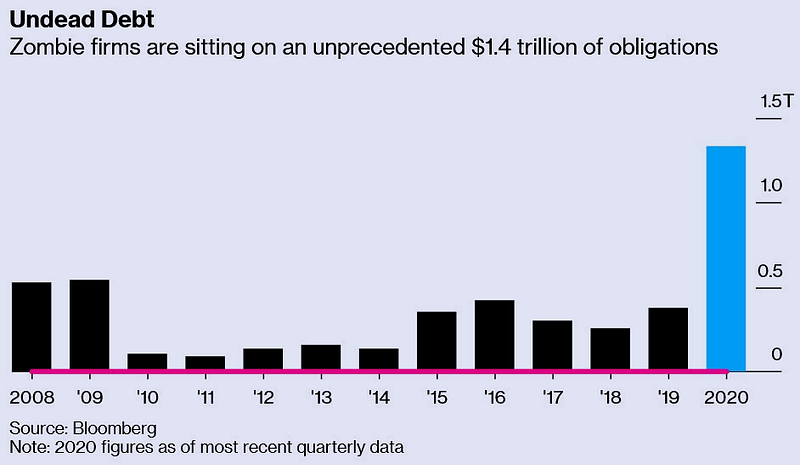
“Zombie Firms” owe almost $1.4 trillion in debt
Ultra easy money provided by the Federal Reserve, accompanied by generous stimulus packages by the U.S government has created a nation of zombie companies that aren’t earning enough to cover their interest expenses. These include some of the well-known brand names like Boeing, Delta Air Lines, Exxon-Mobil, and Macy’s.
According to Bloomberg analysis, almost 200 corporations have joined the ranks of so-called zombie firms since the onset of the pandemic. What’s scarier is that these companies have added almost $1 trillion of debt to their balance sheets in 2020, bringing total obligations to $1.36 trillion (Figure 2). That’s more than double the roughly $500 billion zombie companies owed at the peak of the last financial crisis.
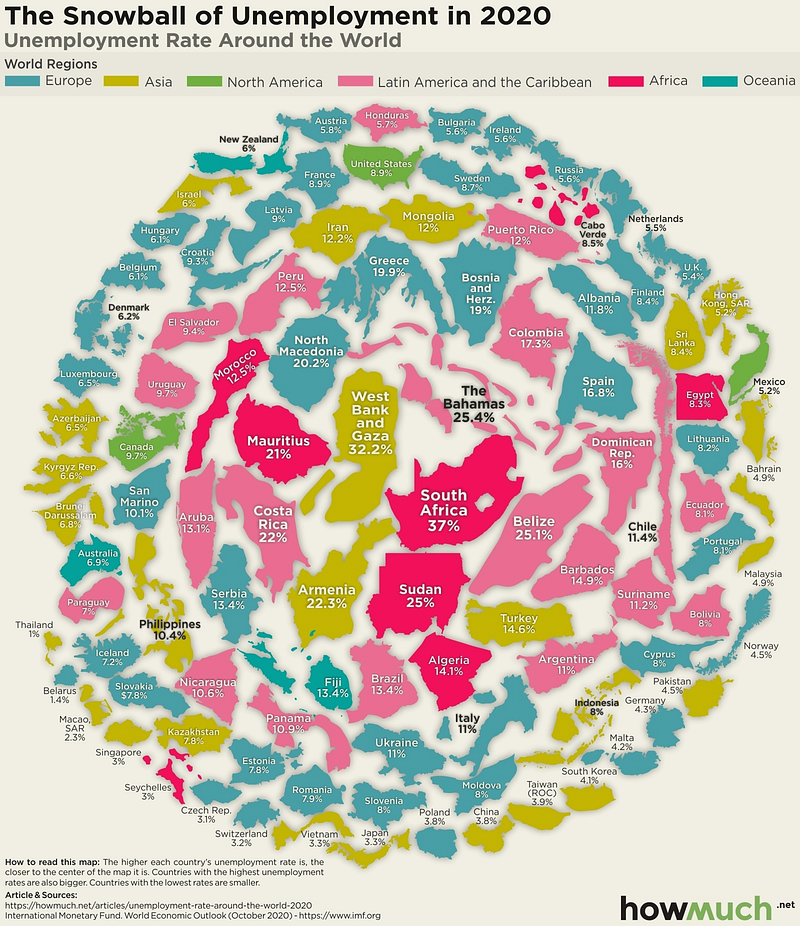
Global Unemployment caused by the Pandemic
Staying on the topic of the pandemic, it has caused severe financial hardship via massive job losses. Unemployment rates are significantly higher in underdeveloped countries compared to advanced economies. The worst rates are in South Africa (37%), the West Bank and Gaza (32.2%) and the Bahamas (25.1%). The two regions fairing relatively well compared to the rest of the world are Central and East European countries as well as parts of Asia. The rate is 4.3% in Germany and 3.3% in Japan (Figure 3).
IMF’s Response to COVID-19
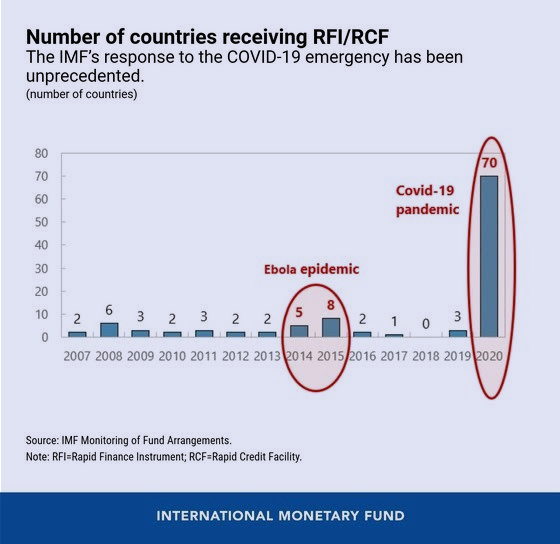
Since March 2020, 70 members, including many low-income countries, have received financial support under the two instruments created to address urgent financing needs that may arise from natural disasters (including pandemics, earthquakes, hurricanes) — the Rapid Credit Facility and the Rapid Financing Instrument. That support totaled over $29 billion. In April, the IMF also approved a broad package of reforms that built on previous changes to strengthen the reach and flexibility of financial assistance under these facilities. More countries also benefited from IMF support through other channels, including augmentations under existing programs, to the tune of over $70 billion (Figure 4).
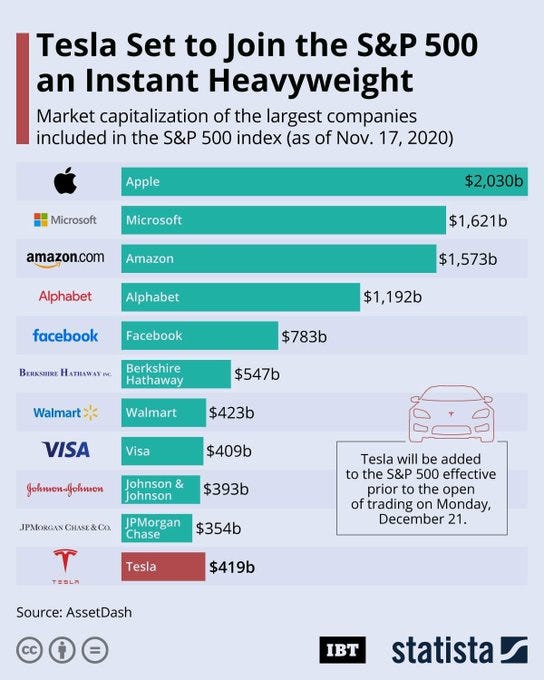
Tesla Set To Join The S&P 500
After a turbulent 12 months that saw Tesla’s share price soar by more than 500%, the world’s most valuable carmaker will soon be added to the S&P 500 index. Tesla will be one of the largest additions ever to the S&P 500, prompting S&P Dow Jones — the company operating the index, to contemplate adding the stock in two tranches rather than all at once. The EV maker will be a heavyweight on the market-cap-weighted index from the go, with its current market cap of $419 billion placing it among the top 10 companies included in the S&P 500 (Figure 5).
Open Interest in BTC Futures at an all-time High
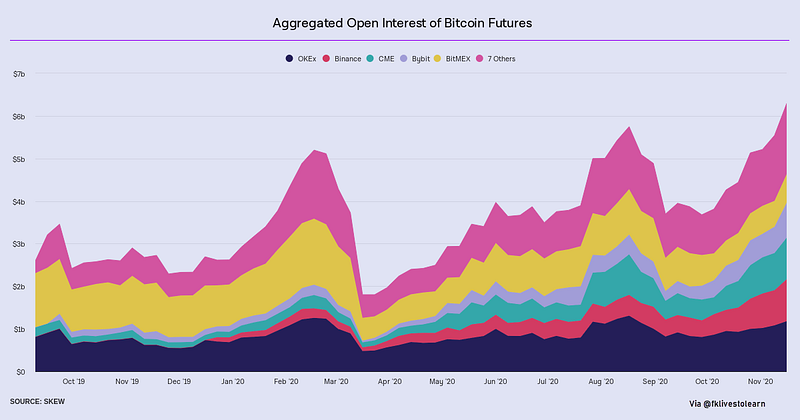
Bitcoin’s price has crossed $18,000 for the first time in almost 3 years. The largest cryptocurrency by market cap has returned over 150% this year and is rapidly approaching its all-time high of around $20,000. Bitcoin futures open interest reached a record high (Figure 6). Daily Bitcoin ETP trading volumes have also increased by an average of 53.5% over the past 30 days with Grayscale’s Bitcoin Trust Product reaching $9.1 billion in market cap, according to CryptoCompare.
ESG Investing sees a Phenomenal Rise
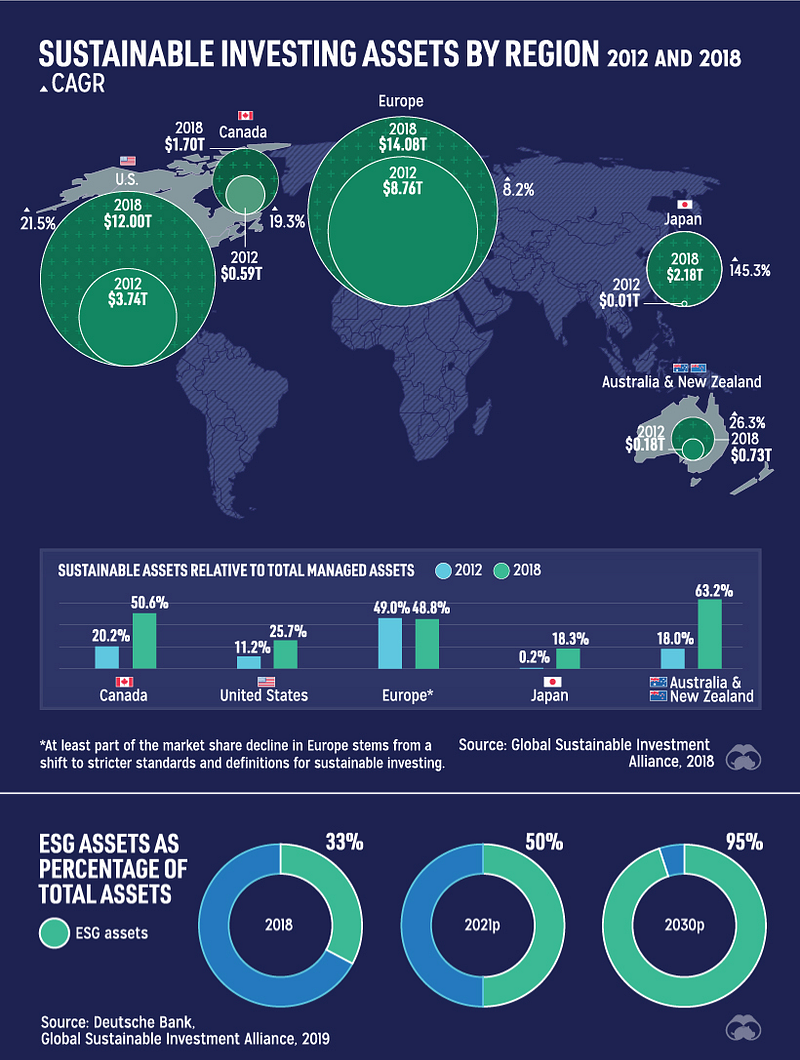
The investment universe has reached an interesting tipping point. Historically, the performance was all the mattered to most investors — but going forward, considering ESG criteria (environment, social, and governance) is expected to become a default component of investment strategy as well. By the year 2030, it’s expected that a whopping 95% of all assets will incorporate ESG factors (Figure 7).
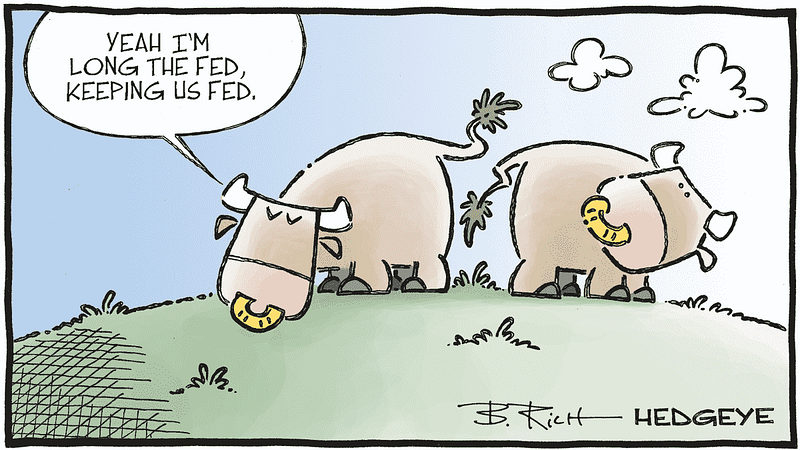
Market Humor: Bulls hinge hopes on the FED
Previous Edition of GBW:
