
WEEKLY BUSINESS ROUNDUP
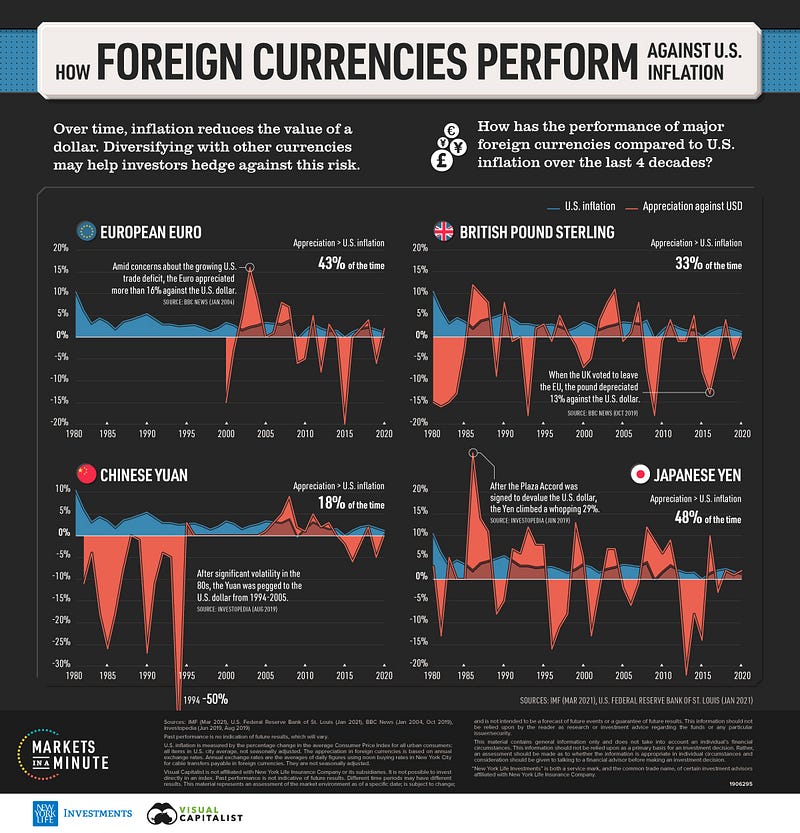
Global Business Week: How foreign currencies can act as a hedge against U.S inflation?
The state of Financial markets & Economies, Weekly Charts, Business Trends & Statistics
U.S Stocks shook off last Thursday’s selloff with a broad rally to end the week, lifting all three major market averages to new all-time highs. The benchmark S&P 500 rose 1.1%, one day after it had its biggest one-day drop in nearly three weeks. The Dow Jones index jumped 1.3% for the week, while the Nasdaq Composite rose 1%, helped by money moving away from cyclicals to find a base in tech stocks.
U.S. Treasury yields rebounded Friday, with the benchmark 10-year yield rising seven basis points to finish the week at 1.36% — with the 10-year yield falling to as low as 1.25% on Thursday, its lowest level since mid-February. Financial shares led gainers will take the spotlight next week with the latest earnings results from several leading banks. In a sign of the post-pandemic recovery, airline industry shares also gained.
The US Dollar, via the benchmark DXY Index) has dropped back as the calendar moved into mid-July on the back of declining Fed rate hike expectations and collapsing US Treasury yields. It closed the week @ 92.10. And even though another hot inflation report is anticipated, markets are actually becoming less convinced that the Fed will hike interest rates anytime soon. The action is expected to be limited to tapering off asset purchases. A softer inflation report, on the other hand, could justify another leg lower in yields and the dollar index.
Extremely congested and rangebound trading was the highlight of the Crypto market this week. Bitcoin swayed between $32k-$35k — a very narrow trading range for such a volatile asset. Having said that, such consolidation usually leads to breakouts and that’s what we might be expecting soon in the digital assets. BTC is currently trading just above $33.6k as Ethereum trends around $2,105. The bearish pressure has continued to reinforce itself in the larger trend.
Today’s featured infographic (pictured above) highlights how investors can use foreign currencies to hedge against U.S inflation. Inflation reduces the value of a dollar over time. To manage this risk, investors look for returns that are higher than the inflation rate. For example, a currency that appreciates 6% during 2% inflation may be considered a relatively good inflation hedge. But just how effective are they at managing inflation risk? The Markets in a Minute chart from New York Life Investments looks at how the performance of foreign currencies compared to U.S. inflation rates over the last four decades.
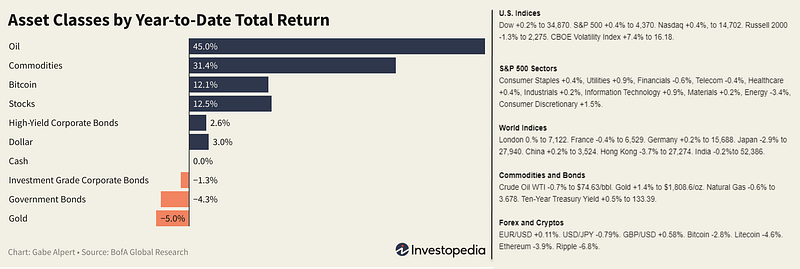
And finally, before moving on to some other statistics, here are the weekly & YTD numbers from various markets and different assets (Figure 1).
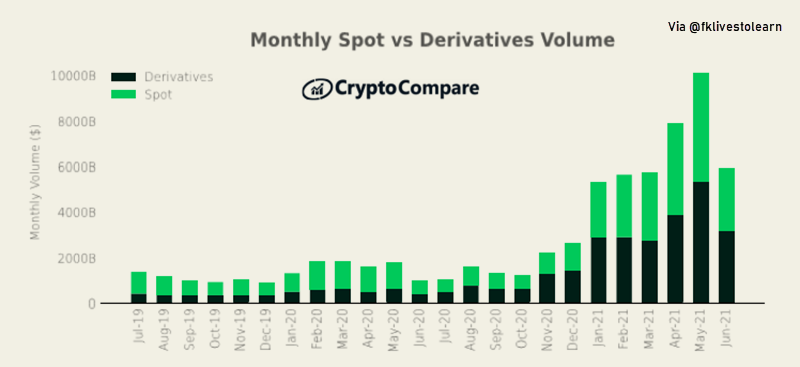
Crypto Spot & Derivatives Volumes Decline
The cryptocurrency market experienced mixed coverage in June — headwinds continued as China persisted with its crackdown on Bitcoin mining, while positive news arose as El Salvador became the first country to formally adopt Bitcoin as legal tender. As a result of both lower prices and volatility, spot volumes decreased by an immense 42.7%, while total derivative volumes decreased 40.7% (Figure 2). This was also the case for BTC and ETH futures open interest, which were down 31.8% and 29.3% respectively. Derivatives volumes decreased by 40.7% in June to $3.2 trillion. Meanwhile, total spot volumes decreased by 42.7% to $2.7tn. The derivatives market now represents 53.8% of the total crypto market (vs 49.4% in May).
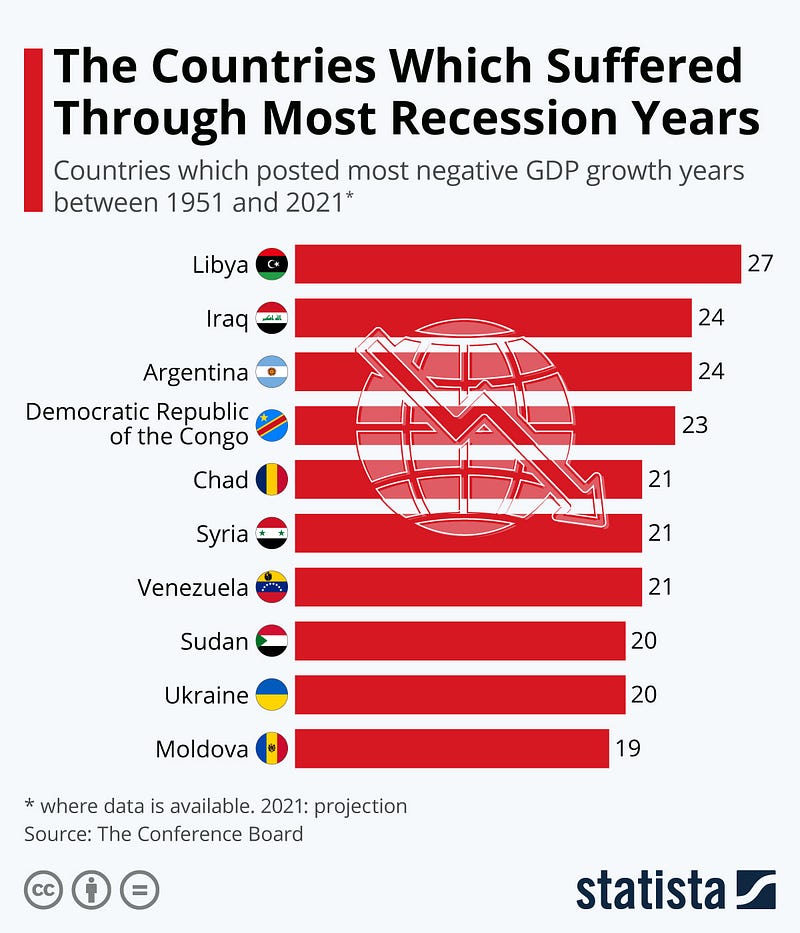
Countries with most Recession Years
An analysis of data by the Conference Board shows that Libya, Iraq, and Argentina are the countries that posted the most years of negative GDP growth since 1951. Argentina has been battling economic woes in the current age with on-and-off-again recessions (Figure 3). While Argentina might be more developed than others on the list, it has been caught up in a cycle of overspending, inflation, debt-making, unsustainable cuts to government programs & bad fiscal policy. Among the countries which currently are in a prolonged recession are Venezuela, Sudan & Lebanon, which are all expected to go into their fourth recession year in 2021. After three years in recession, Argentina is expected to grow again in 2021, but that prospect is more than shaky amid the ongoing coronavirus pandemic.
Return to Pre-Pandemic Employment Rates
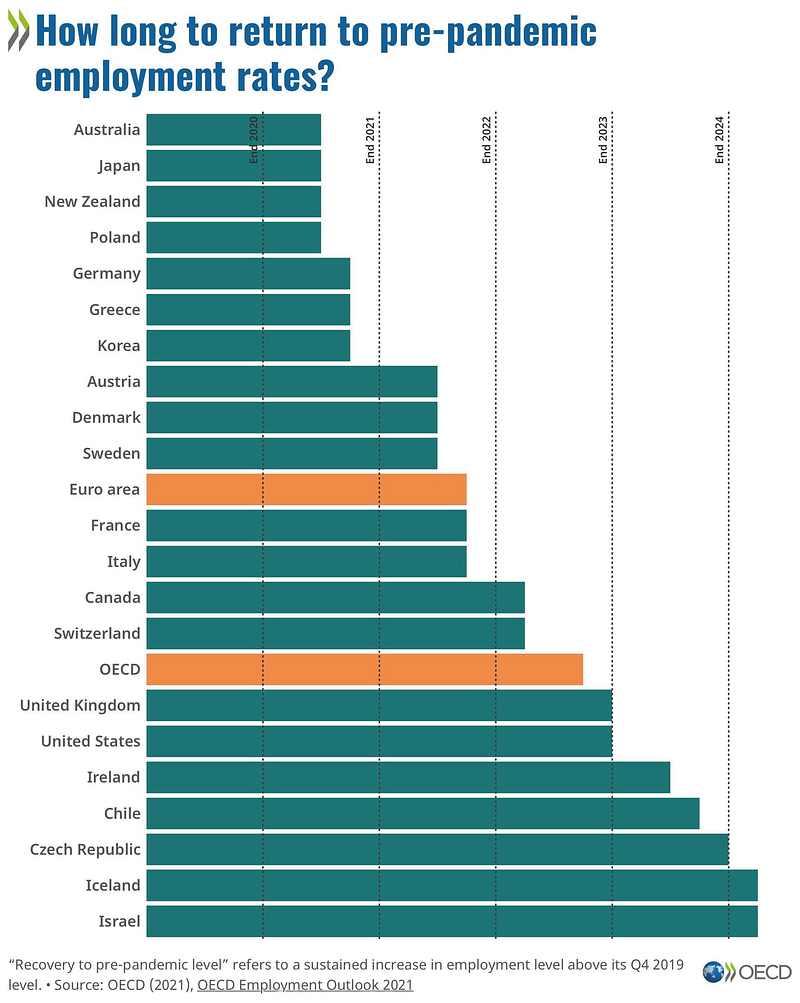
Countries around the world still have a long way to go to make up for the unemployment caused by the COVID-19 pandemic. That’s the conclusion of a new report by the Organization for Economic Cooperation and Development (OECD), which found 22 million jobs were lost in OECD nations from 2019 to 2020. The group said 8 million more people are unemployed than there were before the crisis, and 14 million are not seeking work. It is anticipated that the employment rate will still be below pre-pandemic levels at the end of next year (Figure 4). The report added that those most affected by COVID-related job losses were workers in low-paying occupations.
Countries with Most Crypto ATMs
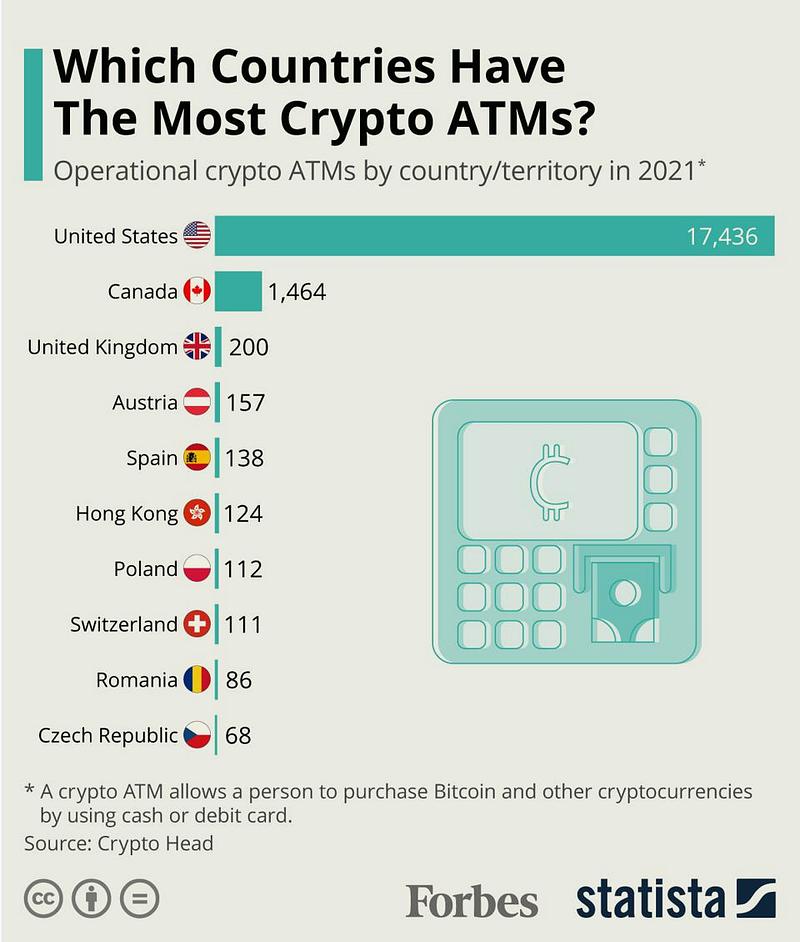
According to research recently published by crypto education platform Crypto Head, the United States is the world’s most “crypto-ready” country. The analysis looked at a variety of factors impacting cryptocurrencies in different countries such as public interest, the government’s legal stance on the ownership of digital currency, as well as accessibility, particularly the prevalence of crypto ATMs. Surprisingly, a crypto ATM is actually a real physical device that allows people to purchase Bitcoin and other cryptocurrencies with cash or their debit or credit cards. As of 2021, the U.S. has an impressive 17,436 crypto ATMs in service (Figure 5). North of the U.S. border, Canada was the first country to approve regulation of cryptocurrencies in 2014 and it comes at a distant second with 1,464 crypto ATMs. The United Kingdom is in the third position with 200 machines.
Chinese Companies hungry for Global Capital
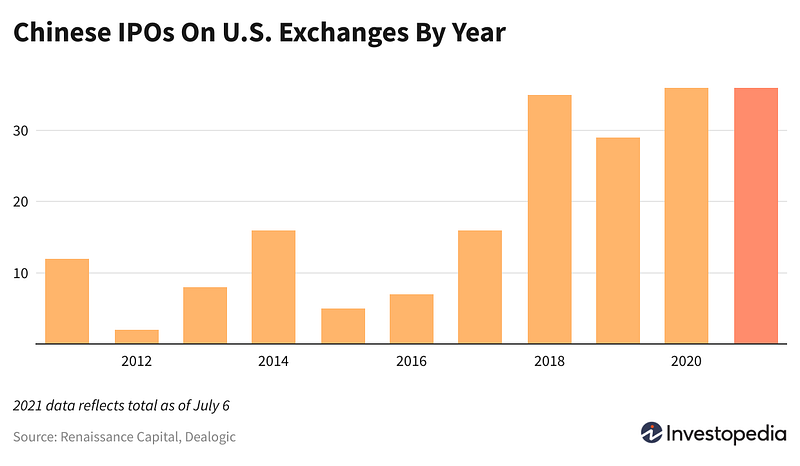
Beijing is clamping down on foreign-listed tech companies at a time when Chinese companies are hungry for global capital. According to Dealogic data, there have been 36 Chinese IPOs on U.S. exchanges so far in 2021 (Figure 6), the same total as in the whole of 2020. And while the mainland government may be tightening its compliance requirements for foreign-listed companies, Hong Kong is trying to make its own exchange more inviting to companies.
DeFi Futures Markets & their Volumes
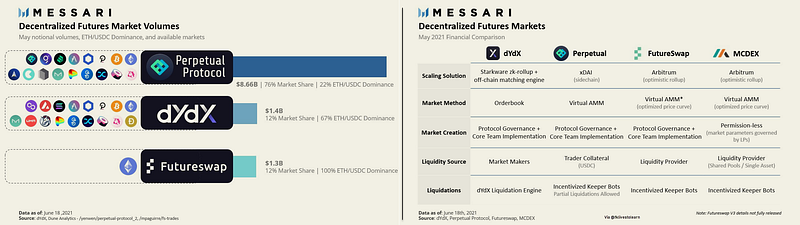
The largest business in DeFi today is a decentralized exchange. Specifically, the exchange of actual tokens where the token exchanged for is physically owned upon execution on protocols like Uniswap and Sushiswap. In trading parlance, this is called trading ‘spot’. By and large, trading is conducted in one of two methods: order books or AMMs. Each protocol utilizes one of these trading methods but implements with unique nuances in an effort to maximize trader experience or protocol market competitiveness (Figure 7).
Amazon’s Incredible Growth
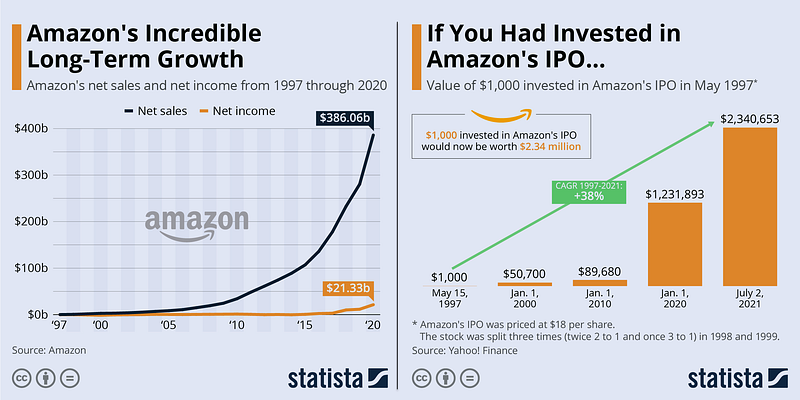
Exactly 27 years after Amazon was incorporated on July 5, 1994, the company’s founder Jeff Bezos is stepping back from his role of CEO. More than a quarter-century ago, on July 16, 1995, an unheard-of company from Seattle launched a website immodestly claiming to be “earth’s biggest bookstore”. While that may have sounded a little presumptuous back then, two and half decades later said company, Amazon, is not only the biggest bookstore on earth but arguably the biggest store, period. If there is one thing that Bezos has been (in)famous for during his time at the helm, it’s his relentless focus on long-term growth. Having ignored critics for years, Bezos’ willingness to sacrifice short-term profits for long-term growth has paid off big time, turning Amazon into a $1.86 trillion company and making him the wealthiest man on the planet (Figure 8).
Enormous Year for SPAC Growth
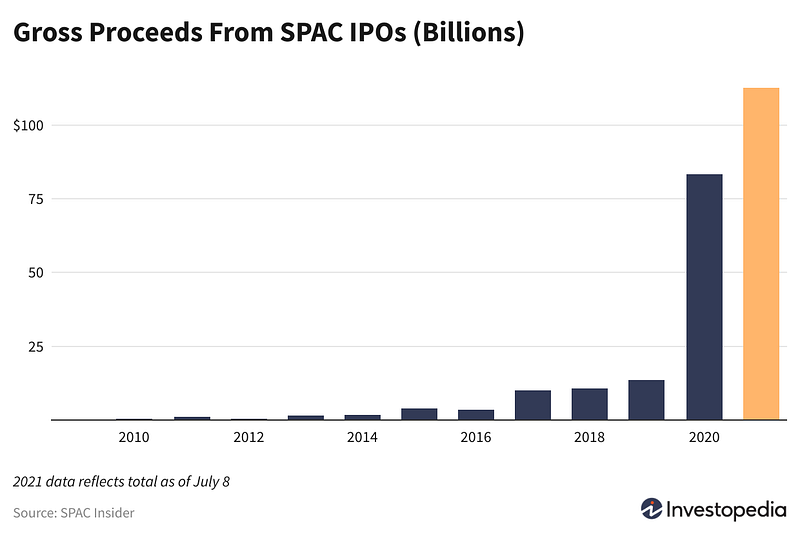
Bloomberg reported that Swedish electric vehicle maker Polestar is exploring a SPAC deal that could value the company at $25 billion. The Polestar 2 has consistently been one of the most successful EVs in Norway, which in turn is the most EV-heavy auto market in the world. The $25 billion merger between the EV company, which is a unit of China’s Geely Automobile Holdings, and SPAC Gores Guggenheim would be one of the largest SPAC deals in history, topped only by Grab’s pending $40 billion deal and Universal Music Group’s pending $36 billion deal. Gross proceeds from SPAC IPOs have already topped $100 billion for the first time ever (Figure 9).
Market Humor: Fatigue kicking in Stocks?
Previous Edition of GBW
